The Tool Desk
Outbyte Driver Updater FREEScan for outdated or missing drivers - takes under a minuteDriver Scan →Outbyte PC Repair FREEClear out junk files and repair common Windows errorsFree Scan →Many flies indoors usually mean they can reach food or waste, are breeding in wet organic buildup, or are entering the home to shelter. Pet owners should first remove waste and decaying material, secure garbage, keep pet food and water from sitting out overnight, and identify the fly before choosing a remedy.
Ordinary house flies, drain flies, blow flies, and seasonal cluster flies can have different sources. The place and time you see them offer clues, but persistent or difficult infestations may need professional identification.
1. Food, garbage, animal waste, or decay is available
House flies can lay eggs in garbage, manure, and decaying vegetation. Animal feces, soiled animal areas, food scraps, and dead animals can also attract or support different kinds of flies. Remove the source rather than relying on repeated adult-fly treatments.
Check these locations first:
- Dog feces in the yard, kennel, patio, or under a deck
- Dirty litter boxes, litter-tracking areas, and used-litter bags
- Pet-food bowls and food or water left out overnight
- Spilled kibble beneath appliances or furniture
- Open pet-food bags and treat containers
- Garbage and recycling bins, including residue beneath or inside them
- Soiled bedding or animal areas that remain damp
- Compost, mulch, clippings, and decaying vegetation near the home
- Dead wildlife in a chimney, attic, wall void, ceiling, or crawlspace
Metallic blue, green, or copper flies may be blow flies. A sudden appearance of large blow flies indoors can point to a dead animal in a wall, ceiling, or chimney. If flies are biting people or outdoor dogs around kennels, stable flies may be involved; check for soiled bedding or rotting grass and seek local professional advice if the problem persists.
#1 Best Overall
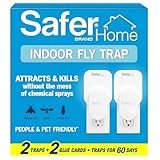
- PLUG-IN CONVENIENCE: Simply plug this indoor fly trap into any standard outlet and it starts working immediately to attract and capture fruit flies, gnats, moths, and other flying insects using UV LED light technology
- FAMILY-FRIENDLY PROTECTION: This gnat killer indoor uses no chemical insecticides, making it safe for use around children and pets when used as directed while providing effective pest control for your home environment
- DUAL-PACK VALUE: Includes 2 plug-in devices plus 2 StickyTech glue cards for comprehensive coverage, allowing you to protect multiple rooms or replace cards as needed for continuous insect trapping performance
- WIDE COVERAGE AREA: Each device protects up to 400 sq ft for a total of 800 sq ft coverage, making these fly traps indoor perfect for kitchens, bedrooms, living rooms, and other areas where flying pests gather
- DISCREET OPERATION: Versatile design rotates to fit any outlet orientation while the UV LED light attracts bugs 24/7 without disrupting your daily activities or sleep, keeping trapped insects hidden from view
House flies can be associated with garbage, manure, and decaying material. Their presence is a reason to maintain good sanitation around food and pets, not proof that a particular fly has made someone or an animal sick.
What to do
- Remove pet feces promptly and dispose of it appropriately. Clear decaying yard material and keep animal areas clean and dry.
- Put food-scrap garbage in tightly covered cans, remove it regularly, and clean the bins to remove residue.
- Wash pet bowls and do not leave pet food and water out overnight. Follow product directions and your veterinarian’s advice for feeding routines.
- Clean food spills, soiled bedding, and animal-area residue, then dry the area.
- Inspect outdoor waste, compost, and vegetation near entrances.
- If large flies continue to appear, investigate for a hidden carcass or other inaccessible source; get professional help if needed.
A flyswatter can help with a small number of adult flies. Sticky flypaper can also catch adults, but hang it where pets and children cannot reach, chew, or become tangled in it. Neither option removes a breeding source.
2. A drain or another wet site is feeding small flies
Tiny fuzzy-looking flies around sinks, showers, or tubs may be moth flies, often called drain flies. Their larvae can develop in moist organic material, including the gelatinous film inside drains. A leak or another persistently damp, concealed site may also need attention.
Fruit flies are another possibility. They gather around fermenting food or liquid, such as overripe produce, beverage residue, garbage disposals, recycling, and spills. Their presence alone does not establish that a drain is the source.
Free tools Windows power users keep installed
One-click scans. No signup required.
Rank #2

- Catch Flying Insects 24/7: This plug-in flying insect trap uses blue & UV light to attract and catch house flies, fruit flies, gnats, and flying pests. Its continuous attraction helps catch insects day and night for everyday indoor flying pest control.
- No-Mess Adhesive Cartridge: Disposable glue cartridge works like bug sticky traps by holding trapped insects hidden on the wall-facing adhesive pad, while the no-mess tab makes cartridge removal simple when it is time to toss and replace.
- Spray-Free, Zap-Free, Odor-Free Design: This quiet fly trap helps quickly and continuously control small flying insects indoors without spraying, zapping or added odors, making it a discreet everyday option in kitchens, living rooms, bathrooms, enclosed patios, and other indoor spaces.
- Family-Friendly Fly Trap: Safe for use around children and pets when used as directed.* Works best placed near the source - fruit bowls, trash bins and indoor plants, where flying insects and fungus gnats gather.
- Year-Round Indoor Fly Control: Blinking blue light reminds you to check the cartridge every six weeks. Includes 1 device & 1 cartridge for everyday fly control in your kitchen and home. Stock up on refills or choose a Value Pack to keep a fly catcher in every room.
How to distinguish them
| Clue | More consistent with fruit flies | More consistent with drain flies |
|---|---|---|
| Appearance | Tiny, smooth-bodied, often tan or brown; may have red eyes | Small, dark, fuzzy, moth-like |
| Where they gather | Produce, recycling, bottles, or food and beverage residue | Sinks, showers, tubs, or nearby walls |
| Likely source | Fermenting food or liquid | Moist organic film in a drain or another wet site |
Find and remove the source
- For suspected drain flies, inspect the drain and remove accessible organic film with a stiff-bristled brush. Check the stopper and nearby wet areas.
- For fruit flies, discard or refrigerate ripe produce, rinse bottles and cans, clean spills, and inspect beneath appliances.
- Check beneath sinks for leaks and address standing water or persistently damp materials.
- If flies return, buildup is inaccessible, or you suspect a sewer-line problem, contact an appropriate plumbing professional.
Do not assume an aerosol or a drain treatment alone will solve the problem: the breeding material needs to be removed. Avoid presenting bleach or boiling water as a universal cure. Never mix bleach with other cleaners, and keep pets away while disinfecting their supplies. Let products dry fully as directed; birds need special care because disinfectant fumes can harm their sensitive respiratory systems.
3. Flies are entering or sheltering inside the structure
Damaged screens, gaps around doors and windows, and other exterior openings can let flies enter. Keep screens on doors and windows in good condition; University of Minnesota Extension recommends 14- to 16-mesh screening.
Cluster flies seek shelter in homes in late summer and fall, often in attics or upper walls. They may become active indoors during warm winter weather. They are associated with earthworms outdoors and do not reproduce inside the home, so kitchen cleaning will not eliminate an overwintering cluster-fly problem.
Rank #3

- INCLUDES 8 FLY PAPERS - These sticky fly traps for indoors can be spread around your home
- CONVENIENTLY DISPOSABLE - Indoor fly trap for home
- ATTRACT AND TRAP FLIES - Use these sticky hanging fly strips indoors
- FLY MAGNET STICKY FLY PAPER - No baiting, no odor, no mess
- FLY RIBBON - Easy-to-use ribbon design
What to inspect
- Window screens, screen doors, and pet-door flaps
- Weatherstripping and the sweep beneath exterior doors
- Cracks around window frames, siding, foundations, and vents
- Gaps where pipes, cables, and utility lines enter the home
- Attic vents, soffits, roofline openings, and access hatches
- Upper rooms or walls where flies gather in fall or on warm winter days
Repair screens, close doors promptly, and seal appropriate exterior gaps. A flyswatter or vacuum can remove a small number of flies indoors. Sticky flypaper may also help, but place it beyond pets’ and children’s reach. Sealing gaps can reduce entry, though caulking alone may not solve a persistent problem.
Use where the flies gather as a diagnostic clue
Location is not a guaranteed identification, but it can guide your first inspection.
| Where or when you see flies | Possible type or source | Useful first action |
|---|---|---|
| Trash, manure, or decaying vegetation | House flies or other filth flies | Remove waste and breeding material; clean and cover bins. |
| Metallic blue, green, or copper flies; sudden indoor appearance | Blow flies; a dead animal may be hidden indoors | Inspect accessible sources and seek help for a hidden carcass. |
| Sinks, showers, or tubs | Moth or drain flies | Inspect and scrub away moist organic film. |
| Upper rooms or walls in fall or on warm winter days | Cluster or other nuisance flies seeking shelter | Check entry gaps; vacuum or swat those indoors. |
| Kennels or outdoor dogs, especially if flies bite | Stable flies or another outdoor fly problem | Check soiled bedding and rotting grass; seek local advice if persistent. |
These are clues, not a substitute for confirming the species when control is difficult. University of Minnesota Extension notes that flies that look similar can differ in breeding sites and behavior.
A pet-aware fly-control sequence
- Identify the pattern. Note the fly’s appearance, location, season, and whether it is biting.
- Remove food and waste. Pick up feces, clear decaying yard material, secure garbage, and clean animal areas.
- Inspect wet sites. Check drains, sink cabinets, and other damp areas for organic buildup or leaks.
- Dry and repair. Correct leaks, dry wet materials, and improve drainage where needed.
- Block entry. Maintain screens, close doors promptly, and seal appropriate exterior gaps.
- Use physical controls selectively. A flyswatter or carefully placed sticky flypaper can reduce a few adults but does not remove the source.
- Use pesticides only as directed. Choose a product labeled for the target pest and intended location, follow every label instruction, and keep pets and children away from treated areas. Never use outdoor chemicals indoors.
Because pets may lick treated surfaces or chew traps, source removal and exclusion should come first. Keep pesticides and baits in their original containers. Contact a veterinarian or animal poison-control service promptly if a pet may have ingested a product.
Rank #4

- Catch Flying Insects 24/7: This plug-in flying insect trap uses blue & UV light to attract and catch house flies, fruit flies, gnats, and flying pests. Its continuous attraction helps catch insects day and night for everyday indoor flying pest control.
- No-Mess Adhesive Cartridge: Disposable glue cartridge works like bug sticky traps by holding trapped insects hidden on the wall-facing adhesive pad, while the no-mess tab makes cartridge removal simple when it is time to toss and replace.
- Spray-Free, Zap-Free, Odor-Free Design: This quiet fly trap helps quickly and continuously control small flying insects indoors without spraying, zapping or added odors, making it a discreet everyday option in kitchens, living rooms, bathrooms, enclosed patios, and other indoor spaces.
- Family-Friendly Fly Trap: Safe for use around children and pets when used as directed.* Works best placed near the source - fruit bowls, trash bins and indoor plants, where flying insects and fungus gnats gather.
- Year-Round Indoor Fly Control: Blinking blue light reminds you to check the cartridge every six weeks. Includes 2 devices & 2 cartridges for everyday fly control in your kitchen and home. Stock up on refills or choose a Value Pack to keep a fly catcher in every room.
When cleaning or disinfecting pet supplies, follow the product directions and keep pets away while cleaning and until surfaces are dry as directed. CDC’s general guidance includes cleaning bowls after each wet-food use and daily for dry food and water; it also recommends regular cleaning of bedding and toys. These are hygiene practices, not evidence that each item is causing flies.
Do these 3 things before closing this tab:
1Scan for outdated or missing drivers - takes under a minute2Repair Windows errors before they cause bigger problems3Fix the driver behind crashes, sound loss and screen glitchesWhen recurring flies justify professional help
Consider contacting a licensed pest-control professional when flies continue after sanitation and exclusion, emerge from a wall or attic void, or appear to come from a dead animal or another inaccessible source. A plumber or drain-service provider may be more appropriate for recurring drain flies, leaks, backups, or suspected sewer-line problems.
Ask a professional to identify and correct the source rather than relying only on repeated adult-fly treatments. For a few flies, a swatter or carefully placed sticky flypaper may be enough; a heavy or persistent infestation may need expert help.
FAQ
Why are there so many flies in my house?
Common reasons include accessible garbage, manure, pet waste, or decaying material; moist organic film in drains; and flies entering or sheltering in the structure. The type of fly and where you see it can help narrow the source.
Best Value
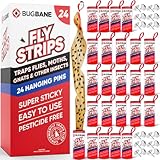
- SUPER STICKY. Our fly ribbon is made with extremely sticky glue that will trap virtually all bugs, making it a great fly paper for indoor home or fly tape outdoor.
- NON-TOXIC. ODOR AND BAIT FREE. Unlike many sticky fly traps, our fly tape indoor for home contains no bait and is safe for all. Just make sure not to touch the sticky part of the flypaper strips.
- EASY SET UP. HANGING PINS INCLUDED. Roll your fruit fly traps for indoor in your hands to warm up, then pop off the lid and gently unravel the fly trap tape. Each fly sticky trap indoor includes a pin for easy hanging.
- INDOOR OR OUTDOOR. Our indoor fly trap for home also work great as a sticky fly trap outdoor sticky thanks to the waterproof glue. Hang your fly paper roll wherever you like!
- LONG LASTING. Hang your fly paper outdoor for up to 3 months before replacing. The gnat traps for house indoor may need replacing sooner in very dusty environments.
Why do I have flies if my house is clean?
The source may be outside the obvious living areas, such as a drain film, hidden leak, compost, outdoor animal waste, or dead animal in a wall or attic. Seasonal cluster flies may also be sheltering indoors rather than breeding there.
Recommended Free Tools
How do I get rid of drain flies?
Inspect the drain and mechanically remove accessible organic film with a stiff-bristled brush. Check for leaks or other damp sites, and contact a plumbing professional if the source is inaccessible or the problem recurs.
Are flies in the house dangerous to pets?
A fly indoors is not automatically evidence of disease. Keep food and animal areas clean, remove waste, and keep pets away from pesticides and disinfectants according to product directions. Contact a veterinarian if your pet develops symptoms or may have contacted a pesticide.
How can I keep flies out without putting my pets at risk?
Remove food and waste, keep garbage covered, maintain door and window screens, and use a swatter or carefully placed sticky flypaper for a small number of adults. If you use a pesticide, follow its label and keep pets away from treated areas as directed.
The Bottom Line
Many flies indoors usually point to food or waste, wet organic buildup, or entry and sheltering. Remove the source, secure garbage, keep pet food and water from sitting out overnight, inspect drains, and maintain screens. Use physical controls as supplements, follow pesticide and disinfectant directions around pets, and call the appropriate professional if flies keep returning from an inaccessible source.
Quick Recap
Product prices and availability are accurate as of the date/time indicated and are subject to change. Any price and availability information displayed on Amazon at the time of purchase will apply.




