Do these 3 things before closing this tab:
1Fix the driver behind crashes, sound loss and screen glitches2Clear out junk files and repair common Windows errors3Scan for outdated or missing drivers - takes under a minuteA mare’s average gestation is about 340 days, but individual timing varies, so a due date is only an estimate. An equine veterinarian can confirm pregnancy with appropriately timed tests and monitor the mare; visible changes such as a larger abdomen or udder are not reliable confirmation. Near foaling, signs such as waxing and restlessness may offer clues, but they cannot predict the exact time of delivery.
Prepare a clean, safe foaling area and an observation plan in advance. Foaling normally has three stages, and stage II delivery is usually rapid: call your veterinarian immediately for abnormal presentation, distress, or stalled progress. The placenta should pass within three hours; do not pull on retained membranes.
How long is a horse pregnant?
The average horse gestation is about 340 days, according to the Merck Veterinary Manual. Individual timing varies, so a breeding date is a planning reference rather than a precise foaling date.
Record the breeding date and, when known, the ovulation date. Do not induce labor or make major decisions from the calendar alone. Ask your veterinarian to assess an unusually early or late pregnancy in the context of the mare’s health and breeding history.
#1 Best Overall

- Safe and Comfortable Handling: The pet temperature meter includes a sturdy carrying case that enhances transport safety and storage durability, featuring a comfortable grip for hassle-free usage, which is perfect for monitoring your pet's temperature whether indoors or outdoors during travel
- Veterinary-Specific Design: The Dog Temperature Meter is crafted exclusively for veterinary use, ensuring accurate reading s in clinical environments while being environmentally safe and posing no harm to people, pets, or livestock, making it ideal for professional animal care settings where safety and precision are of utmost importance
- Accurate and Hassle-Free Use: With its ability to deliver fast and dependable temperature measurements, the Pet Temperature Meter for Dogs simplifies health monitoring, especially during travel or training sessions, ensuring your pet stays comfortable and safe under all conditions
- Accurate Temperature Readings: Designed with a bright white background and bold black numbers, the temperature meter for dogs provides precise readings that help pet owners quickly identify any abnormal changes in their dog's body temperature during poor health or recovery
- Compact and Waterproof Design: The Animal Temperature Gauge features a smooth and waterproof exterior, making it easy to clean and store while ensuring hygiene during use; its compact size allows effortless portability for veterinary clinics or outdoor animal care settings
A large abdomen, developing udder, or behavioral change does not confirm pregnancy. Failure to return to estrus about two to three weeks after breeding may be a clue, but confirmation should come from a veterinarian. Owners should never attempt rectal palpation at home.
How a veterinarian confirms pregnancy
Pregnancy tests differ in how early they can be used, whether they can identify twins or assess development, and how much they depend on known breeding or ovulation dates. Ask your veterinarian which test and follow-up plan fit your mare.
Ultrasound and follow-up examinations
Transrectal ultrasound allows early detection and evaluation for twins. A common examination plan described by the Merck Veterinary Manual is:
| Approximate timing | What the examination may assess |
|---|---|
| Days 14–18 | Pregnancy and twins |
| Days 25–30 | Embryonic development and twins |
| Days 40–60 | Fetal development |
| Later in the season | Whether the mare remains pregnant |
The exact schedule depends on the mare, breeding history, and veterinary findings. An early positive examination does not guarantee that the pregnancy will continue, so follow-up may be recommended.
Quick wins for a faster PC:
Clear out junk files and repair common Windows errorsFree Scan →Fix the driver behind crashes, sound loss and screen glitchesFind Drivers →Hormone testing
Hormone tests have narrower interpretation windows than a general-purpose test. Equine chorionic gonadotropin (eCG) is informative around days 40–120, but may be falsely negative outside that interval and can remain elevated after fetal death. Estrone sulfate rises after about day 60 in plasma and after about day 150 in urine. Its use depends on known breeding and ovulation dates. Ask your veterinarian or laboratory how a result should be interpreted; a hormone result is not a date-independent guarantee of an ongoing pregnancy.
Rank #2

- [Precise and Reliable]: Open the battery cover and there is a switch inside to adjust the temperature to Celsius or Fahrenheit; Digital pet thermometer for dogs, pet thermometer dog and veterinary thermometer dog provides accurate temperature readings with minimal margin for error, allowing to closely monitor the pet's health condition and detect fever with utmost confidence
- [How to convert Celsius to Fahrenheit]: With the device off, open the battery compartment cover, switch SW02 to the ℃ or ℉ symbol, and then turn it on
- [LCD Display Screen]: With LCD display screen, pet dog thermometer for home and animal thermometer can visually display the measurement results, simple and convenient operation. Veterinary electronic thermometer, horse thermometer digital, selected high quality materials, has good durability and stability
- [Animal Friendly]: Digital thermometer veterinary is good for dogs, cats, rabbits, ponies, cattles, pigs, sheep and other animals, pet thermometer for dogs and sheep thermometer is a must have for dog, cats owners, vets, breeders, and livestock farmers
- [Easy to Use]: Unlike traditional thermometers, the livestock thermometer cattle is very safe and doesn't require temperature measurement through the mouth or rectum, making the livestock temperature more comfortable and non invasive, thermometer livestock, cat thermometer, veterinary thermometer horse
Pregnancy timeline: what to plan and when
Use this as a preparation framework, not as a substitute for your veterinarian’s reproductive plan.
- Days 14–18: Arrange an early pregnancy and twin check.
- Days 25–30: Ask about a recheck for embryonic development and twins.
- Days 40–60: Ask whether assessment of fetal development is appropriate.
- First seven or eight months: Maintain good body condition with pasture or hay and concentrate as needed for the individual mare.
- Final three months: Review the ration gradually as fetal growth accelerates.
- Several weeks before foaling: When practical, introduce the mare to the intended foaling environment and prepare an observation and veterinary-contact plan.
Signs a mare may be pregnant
A mare may fail to return to heat after breeding, but this is only a clue. Later in pregnancy, the abdomen may enlarge; neither appearance nor behavior can confirm pregnancy. If pregnancy has not been confirmed, arrange a veterinary examination. Do not try to perform a rectal examination yourself.
Signs that foaling may be near
Near-term changes vary between mares. Udder development, waxing, restlessness, abdominal discomfort, rolling, and sweating may occur before foaling, but they do not reliably predict the exact time of delivery. As the Merck Veterinary Manual notes, “Evaluation of the premonitory signs of parturition is useful but does not permit precise prediction of the time of delivery.”
- Udder development: The udder may develop several weeks before foaling and become distended in the last few days.
- Waxing: Dried colostrum may appear at the teat openings in the last 6–48 hours, but it may appear earlier or not at all.
- Stage-one behavior: Restlessness, abdominal discomfort, rolling, or sweating may accompany early labor.
Observe the mare without assuming that any one sign means birth is imminent. A camera or foaling monitor can help with observation, but it cannot guarantee detection of an emergency or replace an experienced observer and veterinary help.
Caring for a pregnant mare
Nutrition and body condition
Maintain good body condition without allowing the mare to become underconditioned or excessively heavy. During the first seven or eight months, pasture or hay and concentrate as needed may meet a mare’s needs. Increase nutrition gradually during the final three months as fetal growth accelerates. The right ration depends on the individual mare, forage, and body condition; avoid applying a universal feed amount.
Rank #3

- FAST AND ACCURATE - This thermometer gives the temperature in only 20 seconds. Our tried-and-true thermometer will give you accurate results without keeping you waiting.
- COMFORTABLE FOR YOUR PET - The thermometer can be used for pets and is designed to be comfortable with a flexible tip, making it soft and gentle to use.
- EASY TO CLEAN - The thermometer is easy to clean and waterproof. Clean with water or soapy water after each use.
- ERROR RANGE-The thermometer has an accuracy of +/-0.1C between 95℉ and 107℉, otherwise +/-0.2℉
- LO DOESN'T MEAN LOW BATTERY - When you turn on your pet thermometer, the screen might show "Lo". The "Lo" means the ambient temperature is not between 32℃/89.6℉ and 42.9℃/109.2℉. You can still go ahead and measure your pets temperature.
- Start with forage. Review the mare’s pasture or hay and body condition.
- Adjust gradually. Make ration changes progressively, particularly in late gestation.
- Seek individual advice. Ask a veterinarian or equine nutrition professional to help set the ration when the mare’s condition or forage makes feeding decisions difficult.
Exercise and turnout
Provide adequate daily exercise in a paddock or pasture. The mare’s health and any pregnancy complications may change what is suitable, so consult the veterinarian about activity. Reduce stress and keep compatible horses together where practical.
Vaccination and parasite control
Consult the veterinarian about vaccination and deworming. Recommendations depend on the mare, the vaccine or medication, and the situation; do not assume one schedule or product is appropriate for every pregnant mare.
Outdated Drivers Are Slowing You Down
One free scan finds every outdated or missing driver and matches the right update for your exact hardware.Free scan · exact hardware matchPC Slower Than It Used to Be?
A free scan shows the junk files, broken settings and background clutter dragging Windows down - then fixes them in one click.Free scan · Windows 10 & 11Preparing for foaling
Set up the foaling area
Prepare a clean, dry, well-ventilated foaling location with safe footing and no sharp edges. Introducing the mare to the intended foaling environment several weeks ahead can support exposure to local organisms and antibody transfer through colostrum. Arrange observation that allows you to check the mare without disturbing her.
Prepare the following before foaling:
- Your veterinarian’s phone number and a backup emergency contact
- A plan for observing the mare, such as direct checks or a stable camera
- A clean, safe foaling area and a low-stress route to the mare
- A written record for labor and delivery observations
Use monitors as aids, not guarantees
A stable camera or foaling monitor may help you observe the mare without entering and disturbing her. Consider whether it provides reliable coverage of the foaling area, night visibility, suitable connectivity, and a durable installation. These are practical selection criteria, not veterinary endorsements of a brand. A monitor is not a medical device and does not replace an experienced observer or a veterinarian.
The three stages of foaling
Stage 1: Preparation and early contractions
During stage I, contractions and the mare’s behavior may change as the fetus moves into position. Restlessness, sweating, or rolling may occur. Rupture of the chorioallantois and release of fluid mark the end of this stage. Observe and record what you see while avoiding unnecessary disturbance.
Rank #4
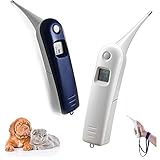
- Fast Pet Thermometer for all pets. Accurate to within +/- 0.2°F.
- Measure pets temperature in anus, NOT IN EAR or MOUTH
- LCD display & Memory function
- ℃ and °F switchable, easy to read.
- An alarm will sound if temperature is exceeded.
Stage 2: Delivery of the foal
Stage II begins with rupture of the membranes and ends when the foal is expelled. Normal delivery is rapid, usually with the foal presenting front feet and head. If there is not significant progress within 10–15 minutes, delivery exceeds 30 minutes, the presentation is abnormal, or the mare is distressed, contact the veterinarian immediately.
The Tool Desk
Outbyte PC Repair FREEClear out junk files and repair common Windows errorsFree Scan →Outbyte Driver Updater FREEFix the driver behind crashes, sound loss and screen glitchesFind Drivers →Do not pull on the foal or attempt to correct an unfamiliar presentation without veterinary instructions. Call promptly and describe what you see.
Stage 3: Passage of the placenta
The fetal membranes normally pass within three hours after delivery, according to the American Association of Equine Practitioners. Do not pull on retained membranes; call the veterinarian. Save the membranes for veterinary evaluation when feasible.
Independent reader supportYour contribution helps us test, update, and keep practical guides available for everyone.Foaling emergencies: when to call immediately
Keep the veterinarian’s number available before labor begins. Call immediately if any of the following occurs:
- There is not significant progress within 10–15 minutes during stage II.
- Delivery exceeds 30 minutes.
- The foal’s presentation appears abnormal.
- The mare is distressed.
- The placenta has not passed within three hours.
- The mare has severe or persistent pain or other signs of illness.
These situations need veterinary advice. Describe exactly what you see and follow the veterinarian’s instructions while keeping yourself and the mare safe. Do not wait for a camera or monitor to confirm an emergency.
Recommended Free Tools
Best Value
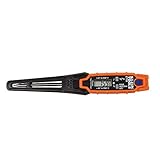
- TEMPERATURE SELECTION: User selectable Fahrenheit and Celsius measurements for convenience and versatility
- WIDE MEASUREMENT RANGE: Measurement range of -40 to 482°F (-40 to 250°C) with room temperature accuracy of +/- 27°F (+/- 15°C)
- BACKLIT DISPLAY: Backlit display allows for easy viewing in low-light environments
- ADVANCED FUNCTIONS: Max/Min, Hold, and Average functions provide additional data analysis capabilities
- NON-MEDICAL DEVICE: Not intended for use on people or animals, complying with regulations and maintaining clear distinction from medical devices
Care during the first hours after birth
Observe the mare and foal after birth and contact your veterinarian if the foal seems weak or unable to nurse, or if the mare has a problem such as retained membranes. Colostrum supplies antibodies, so ask the veterinarian promptly about any concern that the foal is not nursing or the mare has leaked colostrum. Save the placenta for veterinary evaluation when feasible.
A simple owner checklist
- Confirm pregnancy with an equine veterinarian rather than appearance alone.
- Record breeding and, when known, ovulation dates, but treat the due date as an estimate.
- Complete recommended early checks for twins and follow-up monitoring.
- Maintain suitable body condition and review the ration as fetal growth accelerates.
- Provide daily exercise and turnout appropriate for the mare.
- Follow veterinarian-guided vaccination and parasite-control plans.
- Prepare a clean, safe foaling area and an observation plan.
- Keep emergency contacts ready and know when to call during labor.
- Do not pull on retained membranes; save them for veterinary evaluation when feasible.
FAQ
How long is a horse pregnant?
The average gestation is about 340 days, but individual timing varies. Treat a due date as an estimate, not a precise prediction.
Can you tell if a mare is pregnant by her belly?
No. A larger abdomen may occur later in pregnancy, but appearance does not confirm pregnancy. Ask an equine veterinarian about an appropriately timed examination.
Can a hormone test confirm pregnancy at any time?
No. Hormone tests have timing and interpretation limits. For example, eCG is informative around days 40–120, while estrone sulfate use depends on the test type and known breeding and ovulation dates. Ask your veterinarian or laboratory to interpret the result.
Free tools Windows power users keep installed
One-click scans. No signup required.
What are signs that a mare is about to foal?
Udder development, waxing, restlessness, abdominal discomfort, rolling, or sweating may occur, but these signs do not predict the exact time of delivery.
When should a mare’s placenta pass after foaling?
The fetal membranes normally pass within three hours. Do not pull on them; contact the veterinarian if they have not passed within that time.
When should I call the veterinarian during foaling?
Call immediately for abnormal presentation or distress, if there is not significant progress within 10–15 minutes during stage II, or if delivery exceeds 30 minutes. Contact the veterinarian if the placenta has not passed within three hours.
The Bottom Line
Horse pregnancy is best managed with veterinary confirmation and monitoring. An average gestation of about 340 days is only a guide, and signs near foaling cannot predict the exact delivery time. Maintain suitable body condition, provide daily exercise, follow veterinarian-guided care, prepare a safe foaling area, and call promptly for abnormal presentation, distress, stalled delivery, or retained membranes.
Quick Recap
Product prices and availability are accurate as of the date/time indicated and are subject to change. Any price and availability information displayed on Amazon at the time of purchase will apply.




