Raising rheas means planning for a large, fast, flightless bird—not simply providing a yard and poultry feed. This guide focuses on the greater rhea (Rhea americana), the species for which the clearest care information is available; the requirements of other rhea species should not be assumed to be identical. Before acquiring one, arrange species-experienced veterinary support, verify the rules where you live, and develop a site-specific plan for space, fencing, handling, and breeding.
What kind of bird is a greater rhea?
The greater rhea is native to southeastern South America, where it inhabits grasslands and semiarid scrubland. The Smithsonian’s National Zoo and Conservation Biology Institute describes it as 3–5 feet (0.9–1.5 m) tall and 33–66 pounds (15–30 kg). Rheas are flightless, but they are large and fast; their size and movement make thoughtful enclosure design and safe handling important.
Greater rheas generally live in groups, although males become solitary for part of the breeding season. Those social and seasonal patterns matter when planning a flock, but the available sources do not establish a universal group size or stocking density for captive settings.
What do rheas eat?
In the wild, greater rheas eat a varied diet that includes broad-leafed plants, clover, seeds, roots, fruit, insects, and small vertebrates. They move as they feed. A captive diet should therefore be planned specifically for rheas with an avian or zoo veterinarian, or a nutrition professional experienced with ratites. Do not treat ordinary chicken feed as an interchangeable default.
#1 Best Overall
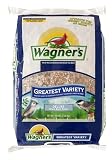
- Our best mix to attract the greatest variety of colorful songbirds
- A gourmet blend with 11 different ingredients including 40% sunflower
- Can be fed in a tube, hopper, or platform feeders
- Highest quality grains used in blending
- Made in the USA
A PubMed-indexed study of a particular captive breeding population compared processed feed formulated for rheas with processed chicken feed. Its results show why the comparison is more complicated than simply choosing the feed that produced more eggs:
| Measured outcome | Rhea-formulated feed group | What the comparison establishes |
|---|---|---|
| Laying | Egg laying began later, and fewer eggs were produced over a shorter laying period. | The result applies to the study population and conditions, not every flock. |
| Egg traits | Eggs were larger, with higher yolk and yolk-lipid percentages. | These are measured differences in the study, not a general product claim. |
| Hatching and chick weight | Hatching success and chick weight were higher. | The study does not by itself identify a suitable commercial ration. |
| First-week chick survival | No difference by parental diet was found. | The study did not find an advantage for either parental diet on this outcome. |
These findings are evidence from one captive-breeding comparison, not a complete feeding guide or a universal ration recommendation. Have a qualified professional assess the diet for the birds, life stage, and reproductive plan in question.
How should you plan housing and daily care?
The sources reviewed do not establish current universal dimensions for rhea enclosures, fencing, shelters, breeding pens, or stocking density. Avoid relying on a single generic measurement as a complete design. Since rheas naturally feed while moving and breeding males may defend chicks, a sound site plan needs to account for room to move, secure boundaries, safe access for caretakers, and separation or management of birds when behavior calls for it.
Rank #2

- Our best mix to attract the greatest variety of colorful songbirds
- A gourmet blend with 11 different ingredients including 40% sunflower
- Can be fed in a tube, hopper, or platform feeders
- Convenient velcro press-lok
- Made in the USA
The University of Idaho Extension catalog lists Raising Ratites: Ostriches, Emu, and Rheas, a 1995 resource covering topics such as fencing, breeding pens, incubation, chick management, and diet. It may help identify questions to investigate, but its age means it should not be treated as a current, complete husbandry standard. Before building or acquiring birds, consult experienced ratite keepers and a veterinarian familiar with the species, and verify applicable local requirements.
There is not enough current comparative evidence in the sources reviewed to recommend intensive pens over large breeding paddocks, or the reverse. Choose a system only after assessing the site, climate, birds’ needs, applicable rules, and the practical ability to manage and inspect the flock safely.
How do you manage breeding and protect chicks?
Greater-rhea breeding behavior makes the male central to nesting and chick care. The Smithsonian gives August through January as a breeding-season span, while noting that timing varies by region. Males court multiple females, build shallow ground nests, incubate the eggs, and care for chicks alone after they hatch.
Rank #3

- Attracts many beautiful perching and ground feeding Eastern songbirds
- Contains seeds that Eastern songbirds desire including White Millet, Black Oil Sunflower Seed, Cracked Corn, Milo, Striped Sunflower Seed, Safflower Seed
- Can be fed in a tube, hopper, or platform feeders
- Highest quality grains used in blending
- Made in the USA
Smithsonian’s species profile says a female may lay up to five eggs in a nest over seven to ten days, that a male may receive eggs from multiple females, and that the total in a nest may reach 60. It reports incubation of about six weeks. These are species-profile figures, not promises about a captive flock’s output or schedule.
A male caring for young may charge people or other animals that approach. Plan caretaker routes and access so routine checks do not require approaching a defensive bird unnecessarily. Do not assume a normally manageable male will remain safe to approach during chick-rearing.
Quick wins for a faster PC:
Clear out junk files and repair common Windows errorsFree Scan →Scan for outdated or missing drivers - takes under a minuteDriver Scan →Can food enrichment support welfare?
Zoo-based findings suggest that giving greater rheas opportunities to forage can change their behavior, but the evidence does not constitute a ready-made protocol for every farm or flock.
Rank #4

- All-Season Bird Seed Blend: Premium mix designed to attract backyard birds throughout the year, from winter residents to summer visitors
- Nutritious Sunflower & Grain Mix: Made with birds' favorite black oil sunflower seeds blended with wholesome grains and millet for lasting energy
- Attracts a Variety of Birds: Brings cardinals, chickadees, woodpeckers, buntings, juncos, towhees, sparrows, grosbeaks, and more to your backyard
- Supports Year-Round Feeding: Balanced nutrition helps fuel birds in every season, from colder months to active summer feeding
- Versatile Feeder Compatibility: Works with tube, tray, hopper, platform and smart feeders for versatile year-round backyard feeding
| Evidence | Observed findings | Important limit |
|---|---|---|
| A study summarized by the Association of Avian Veterinarians, based on a 2013 International Zoo Yearbook paper | Scatter-feeding fruit and vegetables for zoo-housed greater rheas reduced pacing and feces-eating and increased walking and foraging while the enrichment was offered. | Zoo observations do not establish the same results for farms or every management system. |
| 2019 peer-reviewed pilot at Belo Horizonte Zoo | Fruit was scattered around the enclosure for three male greater rheas; abnormal behavior and fecal glucocorticoid metabolites declined during the enrichment phase. | The pilot involved only three males. Its authors called for larger studies, including birds of both sexes. |
These studies support considering opportunities for natural foraging as part of a welfare plan. They do not specify a universal food, quantity, frequency, or enclosure layout; incorporate enrichment with professional advice appropriate to the birds’ diet and setting.
Independent reader supportYour contribution helps us test, update, and keep practical guides available for everyone.What veterinary care should you arrange?
Identify an avian or zoo veterinarian with ratite experience before you acquire birds, and agree on how to seek routine and urgent care. The sources reviewed do not establish a complete schedule for examinations, vaccination, parasite control, or emergency treatment for greater rheas.
A 2023 study analyzed 69 serum samples from captive rheas at a breeding site in northeastern Brazil. It reported sex-associated differences in calcium, cholesterol, and uric acid, and discussed diet, reproductive state, and sampling stress as possible context. This is clinical reference research—not a keeper health schedule or a diagnostic guide for an individual bird. A veterinarian must interpret tests in context.
Recommended Free Tools
Best Value

- FORMULATED BY BIRD ENTHUSIASTS, this bird food is made to attract a variety of colorful songbirds like Cardinals, Woodpeckers, Blue Jays and Finches to your backyard
- WILD BIRD FOOD MADE WITH Safflower, Peanuts, Striped Sunflower and Millet
- ATTRACT MORE SONGBIRDS by placing a wild bird feeder near trees and a water source
The Association of Zoos and Aquariums maintains a professional resource directory with veterinary and nutrition resources for animal-care professionals. It is a starting point for professional materials, not a treatment protocol for keepers.
What permits and sourcing checks matter?
Rules depend on where the birds are kept, bred, moved, or imported. For U.S. imports, USDA APHIS guidance on zoological birds applies to birds intended for breeding or public display for recreational or educational purposes at a zoological park. The guidance lists a veterinary health certificate and notes that permits may add restrictions for birds originating in or transiting regions affected by highly pathogenic avian influenza or Newcastle disease. This import guidance does not establish whether private possession or breeding is allowed in a particular place.
- Check state, local, and other applicable wildlife, animal, zoning, and transport requirements for your situation.
- If importing birds, confirm the current USDA APHIS requirements and any disease-related restrictions that apply to the birds’ origin and route.
- Seek legal, traceable captive sources and verify the paperwork and permissions relevant to the transaction and planned movement. The sources reviewed do not validate a particular seller or establish a universal captive-breeding standard.
Smithsonian identifies hunting and habitat loss as conservation pressures and advises against animal-skin products, including items labeled “faux,” in its conservation guidance. Consider conservation and provenance as part of responsible acquisition.
Quick Recap
Product prices and availability are accurate as of the date/time indicated and are subject to change. Any price and availability information displayed on Amazon at the time of purchase will apply.
The Tool Desk
Outbyte PC Repair FREERepair Windows errors before they cause bigger problemsFix Now →Outbyte Driver Updater FREEScan for outdated or missing drivers - takes under a minuteDriver Scan →



