The Tool Desk
Outbyte PC Repair FREERepair Windows errors before they cause bigger problemsFix Now →Outbyte Driver Updater FREEFix the driver behind crashes, sound loss and screen glitchesFind Drivers →Five fossil vertebrae from northern Australia show that some lamniform sharks had reached gigantic size about 115 million years ago—roughly 15 million years earlier than previously established in the fossil record. The fossils belong to the extinct family Cardabiodontidae, not to megalodon, and the study does not identify them as a direct ancestor of that later giant shark.
What the fossils show
The 2025 study examined five large vertebral centra from the Darwin Formation in northern Australia. A centrum is the main central portion of a vertebra. The specimens measure 114–126 millimetres in diameter and date to the upper Aptian, approximately 115 million years ago. The researchers assign them to Cardabiodontidae, an extinct family of large-bodied lamniform sharks. The peer-reviewed study in Communications Biology describes the fossils and its analysis.
The bones had been collected decades earlier and were revisited for the new analysis. The Associated Press reports that they were unearthed in the late 1980s and 1990s and stored in a museum. That history matters: this is a new interpretation of existing fossils, not a report of a newly excavated complete shark skeleton.
How researchers estimated the shark’s size
Shark skeletons are mostly cartilage, which fossilizes less readily than bone. Teeth are therefore common in the shark fossil record, but a tooth by itself offers limited evidence about the dimensions of the animal that carried it. Vertebrae can add a different clue: their size can be compared with vertebral and body measurements from living sharks.
#1 Best Overall
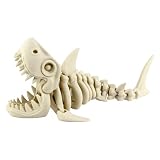
- Museum-Inspired Fossil Replica – Expertly 3D printed to capture the intricate skeletal structure and realistic proportions of prehistoric dinosaurs, creating a display-worthy piece for enthusiasts and fossil fans alike.
- Collector-Grade Display Quality – Designed with hobbyists and collectors in mind, this piece offers crisp detail and a professional finish that elevates any dinosaur or fossil collection.
- Durable & Lightweight Construction – Made from premium PLA material for a sturdy yet easy-to-handle structure, ensuring long-lasting enjoyment without the fragility of real fossils.
- Versatile Display Options – Ideal for showcasing on desks, bookshelves, display cases, or as part of themed décor in offices, libraries, or dedicated hobby rooms.
- A Unique Conversation Starter – Whether placed in a home, workspace, or collection room, this fossil replica is sure to spark curiosity and admiration from anyone who sees it.
The researchers compiled vertebral-diameter and maximum-body-length measurements from modern lamniforms, then used intraspecific and interspecific regression models to estimate the extinct shark’s size and mass. The Western Australian Museum says the modern comparison dataset included nearly 2,000 sharks. The museum’s 24 November 2025 summary reports the study and includes comments from co-author Mikael Siversson.
On that basis, the paper estimates a body length of about 6–8 metres and a mass greater than 3 tonnes. These are model-based estimates derived from five vertebrae, not measurements of a complete skeleton. The paper’s figures describe an approximate size range rather than a precise reconstruction of an individual animal.
Rank #2

- IT FROM XUQCAH MATERIAL AND FOIMOJSK PAR ENT AND Thurder LOVER
- Museum Quality Replica
- Please thoroughly read discription
What “predates megalodon” means—and what it does not
The headline refers to the timing of evidence for giant shark body size. The fossils show that lamniform sharks had attained very large size by about 115 million years ago, pushing the earliest known appearance of gigantic lamniforms back roughly 15 million years. It does not mean that the fossils are megalodon, which lived much later, or that these specimens establish a direct evolutionary line to megalodon.
The identification is at the family level: Cardabiodontidae. The cited study does not give these specimens a species name. A family assignment places them within a broader group, but it is not the same as identifying a particular species or demonstrating which later sharks descended from it.
Rank #3
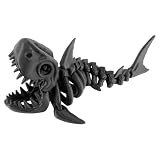
- Museum-Inspired Fossil Replica – Expertly 3D printed to capture the intricate skeletal structure and realistic proportions of prehistoric dinosaurs, creating a display-worthy piece for enthusiasts and fossil fans alike.
- Collector-Grade Display Quality – Designed with hobbyists and collectors in mind, this piece offers crisp detail and a professional finish that elevates any dinosaur or fossil collection.
- Durable & Lightweight Construction – Made from premium PLA material for a sturdy yet easy-to-handle structure, ensuring long-lasting enjoyment without the fragility of real fossils.
- Versatile Display Options – Ideal for showcasing on desks, bookshelves, display cases, or as part of themed décor in offices, libraries, or dedicated hobby rooms.
- A Unique Conversation Starter – Whether placed in a home, workspace, or collection room, this fossil replica is sure to spark curiosity and admiration from anyone who sees it.
Why vertebrae change the picture
Shark teeth can be abundant and useful for identifying fossils, but isolated teeth do not provide the same direct body-size evidence as large vertebral centra. As senior curator in paleobiology at the Swedish Museum of Natural History and study co-author Benjamin Kear put it to the Associated Press, “The importance of vertebrae is they give us hints about size.” He also said, “This pushes the time envelope back of when we’re going to find absolutely enormous cardabiodontids.”
The study therefore changes what the fossil record establishes about when giant lamniforms existed. It does not resolve every detail of the animal’s appearance, species identity, or evolutionary relationships. The Western Australian Museum’s Siversson summarized the timing significance this way: “This discovery changes the timeline for when sharks started getting really big.”
Quick Recap
Best Value

- Museum Quality Replica
- 5.5 inches
- Please thoroughly read discription
Rank #4

- Museum-Inspired Fossil Replica – Expertly 3D printed to capture the intricate skeletal structure and realistic proportions of prehistoric dinosaurs, creating a display-worthy piece for enthusiasts and fossil fans alike.
- Collector-Grade Display Quality – Designed with hobbyists and collectors in mind, this piece offers crisp detail and a professional finish that elevates any dinosaur or fossil collection.
- Durable & Lightweight Construction – Made from premium PLA material for a sturdy yet easy-to-handle structure, ensuring long-lasting enjoyment without the fragility of real fossils.
- Versatile Display Options – Ideal for showcasing on desks, bookshelves, display cases, or as part of themed décor in offices, libraries, or dedicated hobby rooms.
- A Unique Conversation Starter – Whether placed in a home, workspace, or collection room, this fossil replica is sure to spark curiosity and admiration from anyone who sees it.
Product prices and availability are accurate as of the date/time indicated and are subject to change. Any price and availability information displayed on Amazon at the time of purchase will apply.




