Do these 3 things before closing this tab:
1Repair Windows errors before they cause bigger problems2Scan for outdated or missing drivers - takes under a minute3Clear out junk files and repair common Windows errorsGeese can suppress young grass weeds in selected crops, but they are not a general-purpose weed control. They favor grasses and often leave broadleaf weeds behind; if their preferred forage runs out, they may eat crops or trample vulnerable plants. The practical approach is to match the flock to the crop and weed stage, monitor it closely, and combine grazing with other controls.
Can geese really weed a garden or farm?
Yes, in the right setting. Geese graze selectively, favoring grasses over many broadleaf plants. That makes them most useful when young grass weeds are emerging in a crop the birds are unlikely to eat at that stage. Their selectivity is also a drawback: weeds they avoid can remain or increase, so grazing works best as one part of integrated weed management rather than as a stand-alone solution.
The practice has been used in crops including cotton, orchards, vineyards, strawberries, asparagus, potatoes, nursery stock, tobacco, nut trees, beets, beans, hops, and onions. FAO describes historical use in U.S. cotton fields beginning in the 1950s; interest declined in the 1970s as effective herbicides became more available, although geese retain a niche for growers seeking to avoid herbicides. See FAO guidance on geese as weeders.
What weeds do geese eat?
NC State Extension identifies immature johnsongrass, bermudagrass, and crabgrass among the grass weeds geese consume. Birds should be introduced while target grasses are emerging and small. They tend to avoid many broadleaf weeds, including pigweed and common lambsquarters, so those plants may persist even as the grasses are grazed. Read NC State Extension’s management guidance for the crop and weed context.
#1 Best Overall

- Farm Fence
- Long-lasting And Durable - The cattle farm fence is made by high quality Hot dipped Galvanized wire,knotted by special machines.The wire fence weft adopts rolling process with high strength and high tensile force,smooth surface safe and reliable.
- Animaland Livetocks -Our cattle fence comfinement for cattle, hogs and other large animal.Our welded wire fencing is the best choice of ranchers for protecting their jumping animals like deer, horses and cow, sheep and goat.
- Scientific Design -The bottom and upper have different opening mesh sizes.The Openings of fencing mesh get smaller toward the bottom to prevent rabbits, dogs, cats, chickens, foxes and other small animals to enter your farm,field or Garden.
- Easy To Install And Maintain - Compared with cattle panel the metal livestock fence has simple structure, convenient maintenance, and it can be disassembled and moved as needed, which is convenient for the management and operation of animal husbandry.
Once the preferred weeds are depleted, geese may shift to crops. Timing is therefore not a one-time decision: check the field and flock regularly, and remove the birds or provide other feed when target forage is gone.
Which crops can geese weed safely?
Crop compatibility depends on the crop’s growth stage and the birds’ access to it. Crop lists describe possible uses, not blanket guarantees that geese will leave every planting unharmed.
Rank #2
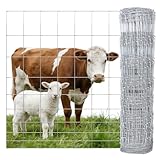
- Heavy Duty Galvanized Woven Construction: cattle panel built with 14 gauge galvanized steel wire and a 12 gauge reinforced border, this woven wire fence delivers exceptional strength and impact resistance. The hot-dip galvanized surface ensures superior rust and weather protection, making it a reliable choice for agricultural fencing and livestock fencing that withstands harsh outdoor conditions and heavy animal pressure.
- Tapered Mesh Design 8in to 3.5in: Wire mesh openings taper from 8 inches at the top down to 3.5 inches at the bottom. The wider top maintains visibility, while the tighter bottom prevents small animals from escaping—ideal for goat fence, hog wire fence panels, and field fence applications. No more chasing runaways or patching gaps.
- All-in-One Livestock & Property Fencing: One roll does it all. Whether used as cattle panel, hog panels, horse fence, or deer fence, this versatile solution adapts to farms, ranches, pastures, gardens, and yards. Perfect as a garden fence, fencing for yard, or yard fencing, it meets the needs of both livestock containment and property protection.
- Quick Setup & Portable Design: Rolls out easily and sets up fast with no special tools required. Lightweight enough for one person to handle, yet strong enough to serve as reliable agricultural fencing or portable cattle panel sections. Ideal for rotational grazing or reconfiguring property lines as needs change.
- Built to Last & Backed by Quality: Designed for years of reliable service in all weather conditions—15–20 years in normal environments, 10–15 years in extreme conditions. The combination of reinforced border wires and heavy galvanized coating means no rusting, no sagging, no constant repairs. Trusted by farmers and ranchers as a durable wire mesh solution for livestock fencing, field fence, and beyond.
- Orchards and vineyards: Geese have been used to graze grass in these settings, but protect young trees and other vulnerable plants. Orchard stocking examples vary substantially with whether the floor is fully sod-covered.
- Cotton: Sources describe use in cotton, but grazing still requires monitoring so birds do not damage the crop when grass forage runs short.
- Strawberries: Geese can graze weeds, but they will eat ripe berries. A Cooperative Extension article advises removing them once berries begin to ripen.
- Corn: Geese can eat young corn. The Cooperative Extension guidance advises waiting until after cultivation, when the crop has been “laid by,” before putting birds into the field.
- Other listed crops: FAO also names asparagus, potatoes, nursery stock, tobacco, nut trees, beets, beans, hops, and onions. Confirm locally that the crop stage and weed pressure make grazing suitable.
Crop-specific timing advice is described in this Cooperative Extension article on geese for weed control.
How many geese do you need?
There is no universal stocking rate. Published examples differ by crop, groundcover, weed pressure, and management system; do not treat any of these figures as a prescription for an individual field.
Recommended Free Tools
Rank #3

- Sturdy Structure: The wire fence is woven from high-quality 14-gauge steel wire with a hot-dip galvanized surface. It has high hardness, durability, and excellent corrosion resistance, ensuring long-term use.
- Advanced Craftsmanship: Our goat wire fencing uses the latest twisted weaving technology. The vertical and horizontal wires are firmly connected and difficult to loosen, giving you peace of mind.
- Innovative Design: The mesh size of the cattle fencing gradually decreases from top to bottom, preventing small animals from passing through the bottom and saving you on investment costs.
- Wide Applications: Farm fencing is widely used for various animals, such as cattle, horses, sheep, dogs, and deer. It is ideal for protecting livestock, poultry, gardens, and pets.
- Excellent Service: Our wire fence rolls are mainly sold in European and American markets, receiving consistent high praise. If you have any questions, please feel free to contact us. We are committed to resolving any issues within 24 hours.
| Context | Published example | How to interpret it |
|---|---|---|
| Cotton | 5–6 geese per hectare (FAO) | FAO’s crop-specific example; not a general rate. |
| Strawberries | 6–8 geese per hectare (FAO) | FAO’s crop-specific example; the Cooperative Extension article gives a different figure of 6–8 geese per acre, illustrating that guidance varies by source and context. |
| Historical range across varying crops and conditions | 2–10 geese per acre (NC State Extension) | A broad historical range, not a standard field recommendation. |
| Orchards with the full floor in sod | 50–80 geese per acre (NC State Extension) | A distinct example for a sod-floor orchard; not comparable to every orchard or crop. |
| Cotton and strawberries | 1–2 geese per acre for cotton; 6–8 per acre for strawberries (Cooperative Extension) | Separate source-specific examples; the strawberry figure uses a different unit and differs from FAO’s example. |
Before setting a flock size, consider the crop, the amount and type of forage, and whether the ground is bare, partially covered, or sod. Local agricultural or animal-management guidance can help adapt published examples to the site.
How should you manage geese in a weeding area?
- Choose the target and timing. Use geese when the grass weeds you want to suppress are emerging and still small, and check whether the crop is vulnerable at that stage.
- Keep the flock contained or supervised. FAO describes direct supervision, low traditional fencing of 70–90 cm, or electric fencing as possible ways to keep birds in an area. That height is a source-specific example, not a guaranteed containment specification for every breed or site.
- Provide shade and water. FAO advises supplying both. NC State also notes the use of movable pens and protection from predators at night.
- Monitor forage and crop condition. Watch for dwindling target weeds, crop nibbling, or trampling. Remove the geese or provide food when target weeds have been removed; hungry birds may eat whatever is available.
- Protect vulnerable plants and combine controls. Use appropriate barriers or other weed-management methods where geese may injure crops, and address weed species the flock avoids.
See FAO’s guidance on flock management and NC State Extension’s recommendations.
Rank #4

- Ultra-Strong 12-Gauge Steel Construction: The cattle fence is crafted from heavy-duty 12-gauge high-carbon steel wire, this livestock fencing delivers exceptional tensile strength and impact resistance, engineered to withstand powerful animal pressure without breaking for long-lasting farm fence durability.
- Maximum Corrosion Resistance with Galvanized Protection: Our farm fence is features a heavy zinc coating (galvanized fence) creating a superior rust-proof barrier. This corrosion-resistant fencing endures harsh weather exposure, UV rays, and daily abrasion, ensuring low-maintenance animal enclosure for years.
- Scientifically Engineered Impact-Resistant Grid: Utilizes a small-mesh grid structure specifically designed as impact-resistant fencing. Reinforced intersections distribute animal pressure evenly, prevent fence deformation, and maintain structural stability for secure cattle panels, sheep fencing, and goat fencing.
- Versatile Multi-Animal Containment Solution: Provides reliable livestock containment for diverse farm animals including cattle, sheep, goats, hogs, and poultry. Ideal as secure perimeter fencing for pasture fencing, homestead fencing, yard fencing, and field fencing applications.
- Secure & Predator-Deterrent Farm Perimeter Defense: Offers robust livestock protection with its sturdy galvanized steel construction. The reinforced farm fence acts as a predator-proof barrier
What are the risks of using geese for weed control?
Crop injury can come from eating as well as trampling, and the risk rises when birds remain after preferred forage is gone or enter a crop at a vulnerable stage. A field study by Tricia L. Wurtz (1995) in newly planted spruce seedlings found trampling caused as much as 47% first-year seedling mortality. Small wire fences around seedlings or limiting time in plots reduced mortality. This result applies to that spruce-seedling trial; it is not a forecast for other crops.
In the same study, surviving seedlings had more than 100% greater diameter growth in the first year than seedlings in plots without weed control, but there was no effect in the second year. Goose-only plots also had 25 times as much cover of unpalatable weed species after two years as plots without weed control. Geese were most effective against quackgrass in this trial. The Forest Service record reproduces Wurtz’s conclusion: “A successful integrated weed management stratey would thus require combining geese with another method of weed control, and would include measures to prevent crop trampling.” See the U.S. Forest Service record of Wurtz’s study.
Best Value

- 𝐏𝐫𝐞𝐦𝐢𝐮𝐦 𝐐𝐮𝐚𝐥𝐢𝐭𝐲 𝐂𝐨𝐧𝐬𝐭𝐫𝐮𝐜𝐭𝐢𝐨𝐧: Constructed from high-strength PE and stainless steel wire mesh, this electric fence is exceptionally durable and can be easily bent to fit desired contours and corners, allowing for long-lasting outdoor use
- 𝐄𝐧𝐡𝐚𝐧𝐜𝐞𝐝 𝐒𝐭𝐚𝐛𝐢𝐥𝐢𝐭𝐲 𝐃𝐞𝐬𝐢𝐠𝐧: Equipped with fiberglass poles and 45# steel stakes, our product guarantees maximum stability. You can trust it to securely contain animals like goats, pigs, dogs, and more, providing peace of mind on the farm
- 𝐄𝐟𝐟𝐨𝐫𝐭𝐥𝐞𝐬𝐬 𝐒𝐞𝐭𝐮𝐩: Simply unfold the electric fence, insert 14 posts and double-spikes into ground, connect the fence end to end and connect the power. Its user-friendly design makes installation quick and hassle-free, saving you time and effort
- 𝐖𝐢𝐝𝐞𝐬𝐩𝐫𝐞𝐚𝐝 𝐀𝐩𝐩𝐥𝐢𝐜𝐚𝐭𝐢𝐨𝐧: The electric fence netting is designed to keep predators and unwanted animals at bay, creating a secure space for your sheep, goats, cows, deer, pigs, large dogs, and other livestock. Before purchasing the fence, measure the size of your livestock to ensure suitability. It may not be suitable for smaller poultry such as chickens and ducks
- 𝐈𝐦𝐩𝐨𝐫𝐭𝐚𝐧𝐭 𝐑𝐞𝐦𝐢𝐧𝐝𝐞𝐫 𝐟𝐨𝐫 𝐎𝐩𝐭𝐢𝐦𝐚𝐥 𝐔𝐬𝐞: To ensure effective functionality, it's recommended to use a fence energizer with the electric fence. Consider utilizing a 0.5-joule solar or AC/DC power source for optimal performance. Stay prepared and powered up for efficient operation
Are geese a replacement for other weed controls?
No. Their strongest fit is selective grazing of young grass weeds in compatible crops. Because geese may leave broadleaf weeds and can damage crops or seedlings, pair them with other methods suited to the weeds and planting. The right mix depends on the target species, crop stage, available forage, and how much monitoring and containment the grower can provide.
Quick Recap
Product prices and availability are accurate as of the date/time indicated and are subject to change. Any price and availability information displayed on Amazon at the time of purchase will apply.




