Field-service data becomes useful when it changes a specific decision: which technician receives a job, what they need before arrival, or which recurring work-order pattern deserves investigation. Start with that decision, use only the records and measures needed to inform it, put the information in the technician’s workflow, and review what happened with the people doing the work.
What field-service data can inform
A service operation can generate work orders, schedules, location and travel timestamps, time entries, parts-usage logs, customer signatures, inspection results, customer records, and asset histories. The value is not in collecting every possible field. It is in making reliable, relevant information available when someone must prepare, assign, or complete work.


MSI Data’s June 2026 vendor guide describes records being spread across paper forms, spreadsheets, and disconnected systems. That is a vendor’s account of a common operational problem, not an independently measured estimate of how often it occurs. Salesforce and Microsoft product documentation describe ways to connect work orders with customer, asset, schedule, inventory, and service information.
Start with the decision, not the dashboard
Choose one recurring operational question and make it explicit. For example: Who is the best available person to take this repair? What information would help the assigned technician arrive prepared? Are repeat visits concentrated around a particular asset, job type, territory, or parts issue?
Free tools Windows power users keep installed
One-click scans. No signup required.
#1 Best Overall
A dashboard is useful only if it helps someone decide what to do next. For each chosen decision, identify the person responsible, the action they can take, and the data they need. This keeps reporting focused and makes it easier to notice when an attractive metric has no practical use.
Match the data to the field-service decision
Assign the right job to an available worker
Assignment guidance from Salesforce identifies several relevant factors: worker location, skill set, availability, equipment availability, and inventory on hand. These are useful inputs to consider, not proof that a particular automated assignment method will improve every operation.
Before a job is dispatched, check that the records behind those factors are current enough for the decision. A listed skill may not reflect authorization for a specialized task; a schedule may not show an urgent change; and inventory records may not match what is actually available. Where a system offers suggested assignments, give dispatchers a way to review exceptions and correct the information that led to them.
Prepare the technician before arrival
For onsite preparation, bring together the job description and task instructions with relevant customer information, asset and service history, schedule changes, and parts or equipment context. Connected-device information may also be relevant where the organization uses it and the data applies to that visit. Salesforce guidance describes consolidated job and customer context; Microsoft Dynamics 365 Field Service documentation describes work orders, asset and service history, inventory, time tracking, and analytics.
Show information in the work context where it will be used, rather than expecting staff to search across disconnected systems. Microsoft documents mobile work-order access and offline-profile configuration for frontline workers. Whether a particular setup is appropriate depends on the platform configuration, permissions, devices, connectivity, and security requirements.
Investigate recurring work-order patterns
Use repeated visits, job duration, parts use, inspection results, travel time, and service-level performance as prompts to investigate. Compare like with like where possible: job type, territory, asset type, urgency, and relevant schedule conditions can all affect what a number means.
A pattern is a reason to ask a question, not a diagnosis by itself. For example, repeated visits might prompt a review of job information, parts availability, asset condition, or training needs. Those are hypotheses for discussion with staff, not causes established by a dashboard alone.
Choose measures that answer the question
Salesforce’s analytics and KPI guidance identifies measures such as mobile workforce utilization, first-time-fix rate, travel time, work-order performance, workload, and service indicators. Microsoft documentation describes analytics involving work orders, scheduling activities, and customer interactions. Neither source establishes universal definitions or targets, so define each measure consistently before comparing teams, workers, or periods.
The Tool Desk
Outbyte Driver Updater FREEFix the driver behind crashes, sound loss and screen glitchesFind Drivers →Outbyte PC Repair FREEClear out junk files and repair common Windows errorsFree Scan →| Measure | What it can help you ask | Interpretation to define |
|---|---|---|
| First-time-fix rate | Are reported problems being resolved during the first visit? | Define what counts as a resolved problem and which visits belong in the measure. |
| Travel time | Are journeys taking more time than expected, or changing over time? | Consider geography, urgency, schedule constraints, and how travel time is recorded. |
| Technician utilization | How is available working time allocated? | Define the available-time denominator and what activities count. Do not use utilization alone as a measure of service quality. |
| Work-order volume and duration | Where is workload concentrated, and which jobs take longer? | Compare comparable work by job type, territory, asset, or other relevant operating conditions. |
| Service-level compliance | Are service commitments being met? | Specify the applicable commitment, measurement window, and exclusions. |
These measures are decision aids, not self-explanatory judgments about individual workers. A low first-time-fix rate, for instance, could reflect incomplete job details, unavailable parts, a difficult asset, or a training need. Review circumstances with the staff involved before deciding what action is warranted.
Put information into the technician’s working context
A field workflow should present the current schedule and changes alongside the instructions, customer context, and asset history relevant to the assigned work. Decide which details staff need before arrival, which they need to record onsite, and which should be available to dispatch or supervisors afterward.
For mobile access, test how the actual configured workflow behaves on the devices staff use, including what happens when connectivity is unavailable if offline work is required. Microsoft’s frontline setup documentation covers offline profiles; availability and behavior depend on configuration and the organization’s platform and security choices. Make a clear route for staff to flag missing or incorrect records so errors can be corrected rather than silently carried into future decisions.
Independent reader supportYour contribution helps us test, update, and keep practical guides available for everyone.Review results with the people doing the work
- Choose one decision. State the operational question, who acts on it, and what action is available.
- Identify the necessary records. Select the data needed for that decision, such as skills and availability for dispatch or asset history and instructions for visit preparation.
- Check data quality and access. Look for stale schedules, incomplete work orders, inconsistent definitions, disconnected records, and access or connectivity limits.
- Deliver the information in the workflow. Put relevant context where dispatchers or technicians can use it, with an appropriate path to report errors and exceptions.
- Review what happened. Compare the outcome with the original question and discuss patterns with staff before changing assignment rules, training, parts processes, or other operating practices.
This sequence is a practical synthesis of documented vendor capabilities, not an intervention shown by a controlled trial to produce a particular result. Treat the first use of a measure or workflow as a way to learn whether the information supports a better-informed decision, not as proof of a guaranteed improvement.
Quick wins for a faster PC:
Scan for outdated or missing drivers - takes under a minuteDriver Scan →Clear out junk files and repair common Windows errorsFree Scan →Fix the driver behind crashes, sound loss and screen glitchesFind Drivers →Best Value
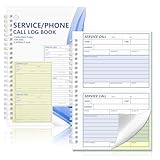
- 100 Two-Part Carbonless Sets in One Book – Each service call log book includes 100 preprinted 2-part carbonless forms Write once and produce a duplicate copy instantly without separate carbon sheets Ideal for service call logs work order records and daily business documentation
- Compact Size for Convenient Daily Use – The 5 5/8 x 8 1/2 inch layout offers a comfortable writing area while fitting neatly on desks service counters and clipboards The portable size makes this service call log book easy to carry for both office staff and field technicians ensuring quick and efficient documentation anywhere
- Includes Writing Shield for Clean Copies – Each book comes with a sturdy backing board that prevents ink bleed-through to other sets and provides a firm writing surface making it convenient for field service technicians and office front desk use
- Durable Spiral Binding for Smooth Use – Strong metal spiral binding keeps all sets secure and allows pages to flip easily and lay flat while writing Sheets tear off cleanly for customer or office copies supporting mobile and on-site communication needs
- Versatile for Service and Office Applications – Suitable for HVAC repairs plumbing electrical maintenance appliance service and more Also functions as a phone call log book or invoice receipt book for small businesses ensuring professional job tracking and customer messaging
Evaluate tools against the workflow
Salesforce and Microsoft documentation provides examples of relevant product capabilities, but it is not an independent comparison of products. When evaluating field-service software, check whether it can support the decisions and working conditions your operation actually has.
- Can it connect work orders with the customer, asset, service history, and inventory context staff need?
- Does mobile access fit the devices and connectivity conditions in the field, including any offline requirement?
- Can the available measures be defined to match your service decisions and reporting rules?
- Can roles and permissions provide appropriate field access under your security requirements?
- Will it integrate with existing systems, and can staff correct records or give feedback when information is missing or wrong?
Capabilities, packaging, licensing, and availability can change. Confirm current details with the relevant provider before selecting or configuring a product.
Quick Recap
Product prices and availability are accurate as of the date/time indicated and are subject to change. Any price and availability information displayed on Amazon at the time of purchase will apply.




