A blood glucose meter (BGM) gives a reading from a small blood sample at the time you test. A continuous glucose monitor (CGM) estimates glucose repeatedly and helps reveal trends over time. The right approach depends on a person’s diabetes-management needs, care plan, preferences, and access—not on a universal winner.
How do a blood glucose meter and a CGM differ?
| Feature | Blood glucose meter | Continuous glucose monitor |
|---|---|---|
| What it measures | Blood glucose in a small blood sample at the time of testing. | An estimate of glucose in the fluid between cells, recorded repeatedly over time. |
| How readings are obtained | A drop of blood is placed on a compatible test strip in the meter. | A sensor under the skin or an implanted sensor measures glucose; a transmitter sends readings to compatible software. |
| What you see | A point-in-time number on the meter display. | Repeated readings and, depending on the system, trends, alerts, and stored data. |
| Supplies and compatibility | Meter, compatible strips, and typically a lancing device. | System-specific sensors and compatible phone, receiver, pump, or software; components and options vary by model. |
A meter can be useful when a reading is needed at a particular moment. A CGM can make changes and patterns easier to see, but its reading is an estimate and does not replace every role of a blood glucose meter.
How does each monitoring method work?
Using a blood glucose meter
The basic process is to wash and dry your hands, insert a test strip, use a lancing device to obtain a drop of blood, apply the blood to the strip, and read the meter. Exact procedures differ, so follow the instructions for your particular meter and strips. The American Diabetes Association (ADA) describes this basic sequence in its guide to checking blood sugar.
Using a CGM
A CGM sensor measures glucose in interstitial fluid—the fluid between cells—every few minutes. A transmitter sends information wirelessly to an app, a separate receiver, or compatible insulin-pump software. Sensor placement, warm-up time, calibration requirements, and replacement timing depend on the system. The National Institute of Diabetes and Digestive and Kidney Diseases (NIDDK) explains how continuous glucose monitoring works.
Do these 3 things before closing this tab:
1Clear out junk files and repair common Windows errors2Scan for outdated or missing drivers - takes under a minute3Repair Windows errors before they cause bigger problems#1 Best Overall
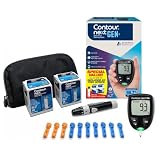
- CLINICALLY PROVEN ACCURACY: Track and manage your diabetes confidently with our reliable blood glucose monitoring system. Readings that are personalized, HI/LO target ranges, and easy-to-understand summaries of your blood sugar test results (1)
- BLUETOOTH CONNECTIVITY: Sync your glucose monitor kit and get readings automatically to a free app via Bluetooth for seamless tracking and data sharing with our blood sugar testing kit
- EASY TO USE: SmartLIGHT target range indicator (2) instantly shows if blood sugar levels are above, below, or within target range for quick, clear feedback
- SECOND-CHANCE SAMPLING (3): Apply additional blood to the same test strip within 60 seconds to help reduce strip waste, avoid unnecessary retesting, and save money over time with our blood sugar testing kit
- NO CODING REQUIRED: Get fast, accurate results without the hassle of manual coding, reducing the risk of user error and making testing simpler, quicker, and more reliable
What types of CGM systems are there?
CGMs differ in how a person views and shares readings. NIDDK describes three broad approaches:
- Real-time systems: Automatically display readings as they are collected.
- Intermittently scanned systems: Require a scan to view readings and store data.
- Professional systems: Collect readings during wear for a clinician to download and review later.
These categories describe how data is delivered or reviewed; features can vary by device. When comparing systems, check sensor location and wear schedule, warm-up time, calibration, alerts, data sharing, and which phone, receiver, or pump software is compatible.
Rank #2

- Advanced Blood Glucose Meter Kit: The Metene TD-4116 diabetes testing kit utilizes advanced technology to provide more accurate and reliable test results, helping you better control your blood sugar levels. After opening the test strip, it is valid for 6 months. Please refer to the test strip storage instructions in the user manual.
- Easy to Use: The blood glucose monitor is with code-free design, ready for testing once insert the strip correctly; the quick guide inside the package lists the steps to do a test clearly, easy to follow; any problem about operation, we are here ready to answer and provide glucose monitoring system instructional videos
- 7 Seconds And 0.7µl Blood: This blood glucose meter kit just needs 0.7 microliter blood sample and 7 seconds to get you blood glucose value; Fast, minimizes wound and less painful
- More Clearly Glucose Trend: 4 modes to record your glucose value according to different time, shows your glucose trend more clearly; 450 blood sugar values storage, continuous 14/21/28/60/90 day average, which brings more convenient Diabetes management for you and your health provider
- User-friendly for The Aged: 4 reminder alarms could be set everyday to remind the aged to do a test in time, considerate; the display is larger than most glucose monitors, showing the results more clearly, easier to read for the aged
Who might benefit from glucose monitoring?
Monitoring needs differ from person to person. ADA patient guidance notes that regular blood glucose checking may be useful for people who take insulin, are pregnant, are having trouble reaching glucose targets, experience low glucose, do not usually notice warning signs of low glucose, or have ketones associated with high glucose. Whether and how often to monitor should be discussed with a clinician.
For CGM specifically, the ADA’s announcement of its 2026 Standards of Care, released December 8, 2025, says CGM is recommended at diabetes onset and anytime thereafter for anyone who could benefit from it in diabetes management. That is guidance to inform care, not an individual device prescription: a clinician can help determine whether a system fits a person’s circumstances and care plan. ADA says its Standards are updated annually and may be updated online more often when new evidence or regulatory changes warrant it; see the Standards of Care in Diabetes page for current guidance.
Quick wins for a faster PC:
Clear out junk files and repair common Windows errorsFree Scan →Fix the driver behind crashes, sound loss and screen glitchesFind Drivers →Repair Windows errors before they cause bigger problemsFix Now →Rank #3

- 【Stable & Accurate for Testing】: The Microtech Blood Glucose Meter (BGM) has undergone rigorous clinical and laboratory tests based on strict standards to ensure it meets the highest accuracy criteria. The test strip interface with a double layer 9 electrode and the test strips using a new type of glucose dehydrogenase ensure better stability and anti-interference capabilities. It has obtained certifications such as FDA, CE, GMP, and ISO 15197:2015. It is a reliable and precise choice in blood sugar monitoring.
- 【Get a quick and gentle test in 5 seconds】: The Microtech blood sugar test kit is designed for comfort. The high precision blood sugar detection system only requires a tiny 0.5µl blood sample and can give accurate results in 5 seconds. The adjustable depth lancet device offers a nearly painless testing experience, minimizing pain and providing fast and reliable results every time.
- 【Wider Use for Your Family's Health】: Personalized Alerts + Broader Applicable Population. The Microtech blood sugar test kit has improved accuracy with the HCT range expanded to 10% - 70%. This means it is suitable for a wider range of people, including infants, pregnant women, frail people, and obese people. By setting personalized warning values, the blood sugar concentration limit can be set according to the doctor's advice. Therefore, it is the best choice for your whole family for daily health check-ups and blood sugar control.
- 【Easy to Track】: Our blood glucose test kit can store up to 500 test results, providing 7/14/30/60/90 average blood glucose test values, easily tracking daily blood sugar levels, and better managing your diabetes treatment.
- 【ALL IN ONE】: 1 x Gocheck2 Blood Glucose Monitor, 100 x Blood Test Strips, 100 x 30 gauge Lancets, 1 x control solution, 1 x Lancing device, 1 x Meter User Guide, 1 x Test Strip User Guide, Our Exclusive Lifetime Warranty and Technical Support. Tips: This product doesn't need to use or purchase a control solution for calibration.
What are the benefits and limitations of a CGM?
Potential benefits
NIDDK says CGM can help users manage glucose day to day, reduce the need for finger sticks, and help prevent low-glucose emergencies. Trend arrows and alerts can help show whether glucose is rising or falling. NIDDK notes that people who use a CGM every day or nearly every day benefit most.
Practical limits and safety checks
- It is an estimate: If a reading seems doubtful, an alert sounds, or you are changing an insulin dose, you may need to compare the CGM reading with a finger-stick meter. Follow your device instructions and care plan for decisions.
- Wear and replacement require planning: Adhesive patches can cause skin redness or irritation. NIDDK reports disposable sensor replacement intervals of 7–14 days and up to 180 days for some implantable sensors; these are source-reported ranges, not guarantees for every product.
- Systems need troubleshooting: Sensor, transmitter, app, receiver, or connectivity problems can interrupt access to readings. Check model-specific instructions and keep a backup plan with your care team.
- Cost and coverage vary: NIDDK says CGMs cost more than standard meters, though insurance may cover them. Coverage depends on the individual plan; the available guidance does not establish a universal coverage rule.
How should you compare monitoring options?
Use these questions to narrow the discussion with your care team rather than selecting a device on one feature alone.
Rank #4

- [Complete Starter Kit] The CareSens N Feliz Blood Glucose Monitoring Kit includes 1 blood glucose meter, 100 blood sugar test strips, 100 sterile lancets, 1 lancing device, 1 control solution, and a travel case for convenient blood glucose testing. The meter stores up to 1,000 test results, and the included battery supports approximately 2,000 tests under normal use.
- [Simple and Reliable Testing] The CareSens N Feliz Blood Glucose Monitoring System meets ISO 15197:2013 accuracy requirements. The CareSens N Feliz Meter is designed for convenient self-monitoring of blood glucose. It features automatic strip recognition and provides clear, easy-to-read results to support your daily testing routine.
- [100 Test Strips Included] - This kit includes a total of 100 test strips: - 50 strips are packed inside the carrying case. - The remaining 50 test strips are packaged separately inside the product box. Please check both locations before contacting customer support regarding missing test strips.
- [Small Sample & Fast Results] Only a 0.5 μL blood sample is required, and test results are displayed in approximately 5 seconds. CareSens N test strips are automatically recognized by the meter for quick and convenient testing.
- [Easy to use] Designed with simplicity in mind, the CareSens N Feliz Blood Glucose Monitoring Kit is suitable for everyday personal use. The lightweight meter and portable carrying case make testing convenient whether at home or while traveling.
- Reading format: Do you need readings at selected moments, repeated estimates and trends, or both?
- Data access: Would automatic readings, scan-to-view data, or professional review after wear suit your routine?
- Daily fit: Consider sensor placement, replacement schedule, warm-up, calibration, alerts, and whether data sharing is useful to you.
- Compatibility: Verify that strips fit the meter, and that a CGM works with the phone, receiver, pump, and replacement sensors you intend to use. Compatibility is specific to the product.
- Access and ongoing cost: Ask your insurer or Medicare about your own coverage and out-of-pocket costs. Product availability and payer eligibility can vary.
- Clinical fit: Discuss how monitoring supports your treatment goals and what actions to take when readings or alerts call for attention.
Why keep a blood glucose meter if you use a CGM?
ADA recommends that people using a CGM keep a blood glucose meter as a backup. It can be useful if the CGM stops working or if an unexpected reading needs a double-check. Keep compatible strips and follow the meter’s instructions and your care plan; an arbitrary strip or meter may not work with your device. See ADA’s consumer guidance on meters and checking blood sugar.
What should you ask your clinician?
- Would a meter, a CGM, or both support my diabetes-management needs?
- Which readings or alerts should prompt me to check with a meter or contact the care team?
- What should I do if readings are unexpected or a device stops working?
- Which device, supplies, phone, receiver, or pump are compatible with my care plan?
- How often will supplies need replacing, and what is my likely out-of-pocket cost and coverage?
Product indications, availability, compatibility, prices, and insurance eligibility are model-, location-, and plan-specific. Confirm current details with the manufacturer, your insurer, and your care team.
Crashes, No Sound, or Screen Glitches?
Random freezes, missing sound and display glitches usually trace back to one bad driver. Find and replace yours safely.Free scan · under a minuteWindows Errors? Fix Them Before They Spread
Repair common Windows errors and clear accumulated junk for a smoother, more stable PC - no reinstall needed.Free scan · no reinstallQuick Recap
Best Value

- HSA/FSA eligible. No prescription needed.
- 24/7 GLUCOSE TRACKING. See your glucose response to food, exercise, sleep, and other lifestyle factors via the Lingo app.
- OPTIMIZE YOUR NUTRITION. Discover which foods work for you and those that don't. The Lingo app shows you how specific meals and other factors impact your glucose, so you can learn from your insights and build healthier habits.
- NAVIGATE PREDIABETES WITH A NEW VIEW OF YOU. More time in healthy glucose range is linked to lower diabetes risk. Three out of four users with prediabetes say Lingo was effective in helping to achieve their health goals¹.
- HEALTHY GLUCOSE SUPPORTS HEART HEALTH. What you eat matters to your glucose and your heart. Keeping your glucose in a healthy range (70–140 mg/dL) more often can help protect your heart from heart disease²⁻⁴.
Product prices and availability are accurate as of the date/time indicated and are subject to change. Any price and availability information displayed on Amazon at the time of purchase will apply.




