Recommended Free Tools
A pet microchip is a permanent ID that can help a shelter, animal control agency, or veterinary clinic reconnect a found pet with its owner. It is not a GPS tracker: someone must scan the chip, and the owner’s contact details must be registered and current for the system to work.
What is a pet microchip, and how does it work?
A microchip is a small electronic device enclosed in a glass cylinder and placed under a pet’s skin. It has no internal power source. When a compatible scanner passes over it, the scanner activates the chip and displays its unique identification number. The number—not your address or live location—is linked to your contact details through a recovery registry. The American Veterinary Medical Association (AVMA) explains how microchips work.
A microchip is not a GPS device and cannot track your animal, as the AVMA states in its microchipping FAQ. A GPS pet collar or tracker provides location information; a microchip provides identification when scanned. They serve different purposes.
How can a microchip help reunite a lost pet with its owner?
If a found animal is brought to a shelter, animal control agency, or veterinary clinic, staff can scan it for a chip. They can use the ID number to identify the associated registry, which can then contact the owner using its record. Recovery depends on the pet being scanned, the number being registered, contact details being current, and the owner responding.
The Tool Desk
Outbyte PC Repair FREERepair Windows errors before they cause bigger problemsFix Now →Outbyte Driver Updater FREEFix the driver behind crashes, sound loss and screen glitchesFind Drivers →#1 Best Overall

- 【Support Multipe Microchip Formats】Universal microchip scanner supports EMID / ISO11784 / ISO11785 / FDX-B(15 digit microchips). Please note, the microchip reader CAN NOT read Avid chips, and the 9-digit ID can not be recognized. Only the 15-digit international standard protocol can be recognized. Please check the format of the microchip before purchasing.
- 【Easy To Operate & Fast Scan】Our pet microchip scanner is easy to operate, one button to read. Our microchip scanner adopt advanced RFID technology, responsive and fast scanning, it can better improve the efficiency of work. Please note, if no label is scanned, the device will automatically turn off after 180 seconds, or you can press and hold the button for 3 seconds to turn off the device.
- 【 Large Data Storage】Our pet microchip scanner can save 128 animal chips. It can be transferred to a computer or mobile phone via a USB cable connection. Our pet chip scanner also features a data-erase function, refer to the user manual for instructions.
- 【Rechargeable Battery】Our pet chip scanner supports USB charging, eliminating the need for frequent battery replacements, it can last for more than one year after being fully charged.
- 【Easy To Carry】Our scanners are lightweight and compact, making them easy to carry and ideal for both indoor and outdoor use. The package includes one scanner, a USB cable, and a user manual.
AAHA’s Universal Pet Microchip Lookup Tool FAQ reports that, in a study of more than 7,700 shelter animals, 52.2% of microchipped dogs were returned to their owners, compared with 21.9% of dogs without microchips. AAHA attributes these figures to the AVMA; they describe shelter-study outcomes, not a guarantee that any individual pet will be found or returned. Read AAHA’s FAQ about its Universal Pet Microchip Lookup Tool.
What information is stored on a microchip? Does it contain a tracking device?
The chip stores a unique identification number that a scanner can read. Your phone number, email address, and mailing address are kept in a registry record associated with that number; they are not encoded on the chip as GPS data. A microchip cannot show where a pet is or track its movements.
Rank #2

- [Support Multiple Protocols] - Support ISO11784(85)/FDX-B/EMID 10/15 digit microchips.Microchips in other formats cannot be read. Please confirm whether your microchip is compatible before purchasing.(Does not read AVID microchip).
- [Improved Recognition Performance] - Faster recognition speed and larger recognition range than older scanners. Upgraded the sensitivity of the scanner. It can better improve the efficiency of work.
- [Battery Performance Improvement] - Use high-capacity built-in lithium battery. With more battery capacity and faster charging speed. Greatly improved recognition range and sensitivity. Improved work efficiency.
- [Built-in Hardware Has Veen Fully Upgraded] - It uses the latest technology scanning chip compared to older scanners. Now the energy consumption is greatly reduced and the performance is greatly improved.
- [Data storage] - Storage capacity is equal to 128 sets of data.USB upload to computer.
Does a microchip replace an ID tag or rabies tag?
No. Keep a collar with a readable pet ID tag and any required rabies tag. A person who finds your pet can read the contact details on an ID tag immediately, without finding a scanner. The microchip is a lasting backup if the collar or tag comes off. A tag does not replace a microchip, and a microchip does not replace a tag. The AVMA recommends keeping identification tags on a microchipped pet.
How is a microchip implanted? Is it painful or does it require anesthesia?
A veterinarian or someone working under veterinary supervision typically implants the chip beneath the skin between the shoulder blades using a preloaded syringe and sterile needle. The needle is somewhat larger than one used for a routine injection. For routine implantation, surgery and anesthesia are generally not required, although a veterinarian may implant a chip while a pet is already anesthetized for another procedure. Ask your veterinarian what to expect for your animal and follow the clinic’s aftercare instructions. Contact the clinic if the site develops concerning swelling or drainage. See the AVMA’s explanation of implantation.
Rank #3

- ❤ Supports Multiple Protocols – Compatible with ISO 11784/11785, FDX-B microchips for seamless reading with one-button operation. Does NOT support FDX-A or AVID chips. The 9-digit ID CANNOT be recognized. Only the 15-digit international standard protocol can be recognized.
- ❤ Efficient Data Management – Built-in storage holds up to 128 tags, eliminating redundant scanning and improving efficiency. The USB transfer feature allows seamless data upload to computers or mobile devices for backup, analysis, and sharing, making it ideal for pet owners, farms, and research institutions.
- ❤ Portable & Durable Design – Lightweight and easy to carry, suitable for both indoor and outdoor use. The robust casing provides strong impact resistance, ensuring stable performance in farms, field research, and rescue operations, even in harsh conditions.
- ❤ Built-in Rechargeable Battery – Eliminates the need for frequent battery replacements, with USB charging for convenience. Includes an auto-shutdown function after 180 seconds of inactivity or manual shutdown with a 3-second press.
- ❤ Support turn on/off the pet reader prompt sound. The pet reader is equipped with a speaker, when you scan successfully, the pet reader will "di" to indicate that the scan is successful. If your pet is afraid of the sound of the card reader, please check the instructions in the package and follow the instructions to turn off the sound.
Do not try to implant a chip yourself. The AVMA recommends implantation by a veterinarian or under veterinary supervision because appropriate training and placement depth matter for reliable detection and to reduce the risk of injury or complications. The AVMA discusses placement and supervision.
Are pet microchips safe? What complications can occur?
The AVMA describes the safety record as excellent and complications as uncommon. Migration from the original placement site is the most frequently reported issue. It often does not affect a pet’s health, but a chip that has moved may be harder to locate unless the animal is scanned thoroughly. Other uncommon reports include chip failure, hair loss, infection, or swelling near the implantation site.
Rank #4

- Stores lost pets chip numbers
- Alerts the user that a pet is missing
- Rechargeable by plugging into a pc
- Reads most microchips in pets, dogs, cats
Tumors near or around chips have been reported in a very small number of dogs and cats, but the AVMA says a cause-and-effect relationship has not been established. This is not evidence of zero risk, nor does it establish that microchips cause tumors. Read the AVMA’s discussion of reported complications.
Independent reader supportYour contribution helps us test, update, and keep practical guides available for everyone.What should I do after my pet gets a microchip?
- Get the number. Ask the clinic or shelter for the microchip ID and keep it somewhere you can retrieve it. If you adopted a pet and do not know the number, ask the shelter or a veterinarian to scan the animal.
- Register or transfer the record. Contact the registry associated with the number and enter your current details. In the U.S., there is no single central microchip database; different registries maintain their own records, and a chip may be listed with one or more registries.
- Verify your contact details. Check the phone number, email address, and mailing address on file. Update them promptly after a move or any change in contact information.
- Ask for a scan at least once a year. The AVMA recommends an annual veterinary scan to confirm that the chip is detectable and readable.
- Keep visible identification on the collar. A current ID tag gives a finder a direct way to contact you without a scanner.
The AAHA Universal Pet Microchip Lookup Tool can help identify which registry is associated with a microchip number. It does not display the owner’s contact details or let owners update them; make changes through the registry that holds your record. The AVMA covers registration and maintenance in its microchipping FAQ.
PC Slower Than It Used to Be?
A free scan shows the junk files, broken settings and background clutter dragging Windows down - then fixes them in one click.Free scan · Windows 10 & 11Crashes, No Sound, or Screen Glitches?
Random freezes, missing sound and display glitches usually trace back to one bad driver. Find and replace yours safely.Free scan · under a minuteBest Value
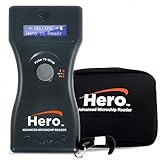
- UNIVERSAL MICROCHIP COMPATIBILITY: Reads all ISO microchips plus 9-, 10-, and 15-digit chips from any brand. Ideal for scanning horses, livestock, pets, and other animals in clinics, shelters, barns, or field settings.
- BLUETOOTH CONNECTIVITY FOR FAST, ACCURATE DATA TRANSFER: Easily sends scanned chip numbers to Bluetooth-enabled devices within a 25-foot range for quick syncing to computers, tablets, or shelter management software. Reduces manual data entry errors and speeds up check-in and intake processes—perfect for busy clinics or multi-pet facilities.
- BACKLIT LCD SCREEN WITH 15-MINUTE DISPLAY HOLD: Features a bright blue backlit LCD screen with bold white text displaying the full chip number on one line for easy reading—day or night. The 15-minute display hold gives ample time to record the scan without rushing, ideal for high-volume or field settings.
- RECHARGEABLE BATTERY WITH AUTO POWER-SAVE MODE: Includes a rechargeable 9V battery and charging unit for long-lasting performance. The auto shut-off function conserves power between uses—great for mobile vets, rescue teams, or animal control officers who need dependable scanning during long sessions.
- LIGHTWEIGHT, DURABLE DESIGN WITH PROTECTIVE CASE: This 7-inch handheld microchip scanner is compact, ergonomic, and easy to carry. Includes a protective carrying case to guard the reader during storage and transport. Built for dependable use in clinics, shelters, barns, or field settings.
How long does a pet microchip last?
A microchip is intended as permanent identification, but it still needs to be readable and connected to an up-to-date registry record to help recover a pet. The AVMA recommends having a veterinarian scan it at least annually, which can confirm that it is detectable and readable. See the AVMA’s maintenance guidance.
How much does pet microchipping cost?
AAHA’s FAQ, published May 19, 2026, gives a typical U.S. cost range of $25–$50 and says the fee often includes implantation and initial registration. Actual prices vary by location and provider; shelters and veterinary hospitals may offer discounted microchipping events. Ask what the quoted fee covers, including registration. AAHA’s FAQ provides the general cost range.
Do microchip type and frequency matter for international travel?
They can. The AVMA says pet microchips encountered in the U.S. commonly use 134.2 kHz or 125 kHz, with 128 kHz less common. It describes the 15-digit, 134.2 kHz ISO-compliant format—based on ISO 11784 and ISO 11785—as the international standard used in most countries. A scanner that does not support a chip’s frequency may not read it; universal scanners are designed to detect commonly used frequencies.
Before international travel, ask your veterinarian to confirm the chip type and check the destination’s current official entry rules. Requirements are specific to each jurisdiction and can change. The AVMA outlines chip frequencies and travel compatibility.
Quick wins for a faster PC:
Fix the driver behind crashes, sound loss and screen glitchesFind Drivers →Clear out junk files and repair common Windows errorsFree Scan →Quick Recap
Product prices and availability are accurate as of the date/time indicated and are subject to change. Any price and availability information displayed on Amazon at the time of purchase will apply.




