Recommended Free Tools
Raising orphan neonatal kittens well takes more than bottles and heating pads. According to Best Friends Animal Society’s “Kitten programs 2.0 part 2: Bringing up (a neonatal) baby,” by Liz Finch, successful programs look after the kittens’ health and also the psychological well-being of both kittens and the people fostering them. That means honest preparation for loss, experienced mentors, a fast emergency plan, attention to development and socialization, and careful, case-by-case choices about pairing kittens or using a nursing mother.
This guide draws on that single organizational article and its named interviewees. It is practice-based guidance from shelter and rescue professionals, not a clinical protocol, so attribution is kept to the speaker throughout.
Talk about death before it happens
Neonatal fostering is emotionally hard, partly because kittens can die despite excellent care. The article says programs should prepare fosters for that possibility and support them through loss. Andee Bingham, founder and executive director of Esther Neonatal Kitten Alliance, put it this way: “You have to get comfortable talking to fosters about mortality rates, which I think is the one thing that really keeps people from fostering neonates.”
Mortality figures, with their context
The two rates quoted come from specific programs with specific intakes. Neither is a general rate for all kittens, and the article gives no year for either.
#1 Best Overall
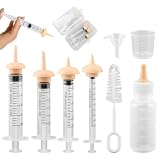
- One-Stop Scientific Feeding: Designed specifically for newborn kittens, puppies, and various small animals, this kit includes a 50ml professional feeding bottle, four precision syringes of different capacities (1ml, 3ml, 5ml, 10ml), four biomimetic nipples, as well as a funnel and measuring cup. From precise feeding immediately after birth to supplemental feeding during the transition period, this single kit meets all your care needs.
- Precise Measurement for Safe Feeding: Recognizing that newborn pets are extremely sensitive to feeding amounts, the kit includes four syringes of different sizes, each featuring clear, durable graduations. This allows you to control feeding with milliliter-level precision based on your pet’s weight and age, effectively preventing choking or digestive strain caused by overfeeding.
- Bio-Mimetic Nipples: Made from ultra-soft, food-grade silicone, these bio-mimetic nipples replicate the natural feel of a mother dog or cat’s mouth. They are bite-resistant and gentle on the mouth. Multiple nipple shapes are available to suit pets of different sizes and developmental stages, increasing the success rate of feeding.
- Easy to Clean, Comes with a Dedicated Storage Case: The included cleaning brush easily reaches the bottom of bottles and syringes, ensuring no milk residue remains. All accessories are neatly stored in a transparent storage jar/container, making it convenient for home storage and keeping your tools organized and ready to use—whether you’re traveling with your pet or on the go.
- Essential Professional Tools for Young Pets: Whether caring for orphaned puppies or kittens, administering medication to sick adult pets, or providing nutritional support for frail premature pets, this multifunctional kit offers the most professional support. The included measuring cup and funnel make the process of mixing formula more precise and spill-free, making it the ideal assistant for pet owners and animal rescuers.
| Program | Reported rate | Context given |
|---|---|---|
| Esther Neonatal Kitten Alliance | 30% | Intake is mostly just-born, critically ill or injured kittens |
| Kansas City Pet Project | Around 20% | Open-admission shelter that often receives kittens in the worst condition |
Heather Kennedy, DVM, director of feline operations at Kansas City Pet Project, said: “As an open admission shelter, we also typically take in kittens in the worst condition, and our mortality rate was around 20%.” The article also mentions small studies on purebred kitten mortality but cites none, so they are not relied on here.
Why foster homes
A core rationale for placing neonates in foster care is individual attention. The article quotes Best Friends and Kansas City Pet Project staff in support of this approach. A foster can feed every two or three hours, weigh, check temperature and watch elimination in a way a busy shelter floor cannot.
Rank #2

- SQUEEZE BOTTLE - 60ml nursing bottle for newborn kittens and puppies, 2.1 ounce capacity, small animal feeding bottle is easy to squeeze and easy to control the amount of milk.
- SMALL ANIMAL FEEDER SET - 1ml for small nipples, 3ml, 5ml, 10ml for medium and large nipples, 60ml feeding bottles can be freely combined with (small, medium, large) nipples.
- 5 REPLACEABLE NIPPLES - Different sized nipples to meet the needs of small animal at every stage, the soft rubber-tipped nipple prevents scratching the gums of newborn kittens and puppies.
- 5ML BROWN FEEDER - The brown 5ml syringe is made of light-safe material to prevent photosynthesis of medication, use a separate dedicated feeder for better use when your pet is sick.
- NEWBORN KITTENS & PUPPIES GIFT - Suitable for newborn and not yet teething small animals, kittens, puppies, hamsters, chinchillas, squirrels, rabbits, etc. you will be a very gentle owner, take care of it, love it and grow with it.
What a program needs to support fosters
A knowledgeable person in charge
Hannah Shaw, the Kitten Lady and founder of Orphan Kitten Club, said: “You need someone on your staff who understands neonates and can oversee a program because those fosters really need mentorship and support.” According to the article, trained staff can:
- provide supplies, such as bottles, formula and scales;
- collect data on each kitten;
- coordinate vaccinations and spay/neuter appointments;
- answer husbandry questions;
- arrange timely emergency care.
A triage plan
Shaw also said: “Time is of the essence with neonatal kittens, so you have to have a plan for triage and quick intervention.” Fosters should know in advance whom to call and what happens next when a kitten stops eating or gets cold.
Free tools Windows power users keep installed
One-click scans. No signup required.
Rank #3

- NURSING KIT - This kit was designed to feed Esbilac, KMR, Goat’s Milk KMR, Goat’s Milk Esbilac, PetLac, or other liquids to small animals.
- WHAT’S INCLUDED - The kit includes a 2 oz. nursing bottle with cap, 5 silicone nipples (3 regular, 1 elongated for smaller mouths, 1 balloon for larger mouths), and a bottle brush.
- PROMOTES NATURAL FEEDING - Our flexible, latex-free nipples simulate the milking action of a mother’s nipple, which develops facial muscles and stimulates the normal flow of saliva. Bottle feeding also allows the animal to refuse formula when full.
- EASY TO USE - Marked with gradations, the included bottle makes monitoring food intake easier and helps prevent over or under feeding. It’s durable enough to stand up to repeated use, and is easy to clean thoroughly with the brush.
- ABOUT US - PetAg is a trusted leader in pet wellness, with science-backed formulas in our milk replacers, health supplements, and grooming products helping pet owners to proactively enhance the lives of their pets, for more healthy years together.
Funding
The article notes that Orphan Kitten Club’s Mightycat grant program funds partner organizations, from $2,500 to $25,000, for anything from individual cases to innovative programming. The article gives no year, so check current eligibility and award levels with the organization.
Track development, not only weights
Weights, temperatures and elimination matter, but the article says monitoring should also cover behavior and developmental milestones. Kittens should meet a range of people and experiences as they grow. The article describes the socialization window as typically under seven weeks, with individual variation, so exposure should be gradual and start early. Treat that as the article’s description, not a fixed veterinary rule.
Rank #4

- Angled Bottle Design for Natural Feeding: 45 angled kitten bottles allow nursing pet babies to drink milk while lying down, which is the most natural way for pet babies to feed. The ergonomic design provides comfort during feeding sessions, and holding the kitten feeding bottle for extended periods will not cause fatigue. The kitten nipple can be used in conjunction with a syringe for accurate milk portion control, especially useful when weak kittens need syringe feeding
- Three Silicone Nipple Sizes for All Ages: Three different sizes of pacifiers ensure kitten feeders can be used from birth to weaning. The soft silicone nipple is appealing for kittens and puppies. If the nipple's milk outlet needs adjustment, scissors can be used to widen the opening for better flow
- Ventilation System to Reduce Choking: Bottle features a ventilation system similar to human baby bottles, eliminating the need for manual ventilation during feeding and reducing the probability of choking on milk. Provides a safety protection comparable to infant feeding products
- Complete Feeding Kit Included: The product includes 1 x 60ml bottle, 1 x 5ml syringe, 1 x small nipple, 1 x medium nipple, and 1 x large nipple, providing everything needed for feeding kittens at various stages of development
- Safety Precaution for Teething Pets: When pet babies develop sharp teeth, use the feeding products with caution as nipples can be easily bitten off or swallowed by accident. Monitor your pet during feeding to ensure safe usage
Pairing kittens or using a nursing mother
The question the article poses: should single kittens be put together, added to a group, or allowed to nurse on a mother cat? Shaw’s view of the upside: “No one can show you how to care for a baby better than a mom cat.” But the answer depends on the situation.
Potential benefits
- Peer socialization for a kitten raised alone.
- Feeding and care support from a nursing mother.
Risks
- Disease transmission, including panleukopenia.
- Rejection of the orphan by the mother.
- Poor fit with the individual kitten’s condition or the program’s ability to monitor and intervene.
Erin Katribe, DVM, MS, medical director for Best Friends Animal Society, was asked whether such placements are a best practice: “If you are asking if it’s a best practice or recommended, the answer is no.” Kennedy added: “You’re taking a risk no matter what you do.” The article’s advice is to weigh the risks for each case and keep detailed data on outcomes.
What’s actually slowing this PC down?
Pick the symptom - the matching free tool is one click away.
Best Value

- Soft silicone pacifier: Soft silicone pacifier, even if the newborn kitten and dog without teeth can suck and drink smoothly, and will not choke when drinking milk
- Pinhole liquid outlet: As long as the newborn kittens and puppies suck or nibble, the milk can flow out smoothly, thus achieving the purpose of feeding
- Anti-choking valve design: The bottle body is controlled by the pressure valve, which can limit the flow in the drop inlet and control the milk flow to prevent choking
- Capacity: 20 ml
Shaw described starting a 14-day quarantine process at the same time as planning an introduction. That is her practice as reported in the article, not a universal standard.
Look after the caregivers and keep reviewing
The article closes on supporting fosters through grief and on continually reviewing data and policies. Records on weights, outcomes and placements are what let a program decide whether its choices, including the risky ones above, are working.
The Bottom Line
Source: Best Friends Network, Kitten programs 2.0 part 2: Bringing up (a neonatal) baby. The retrieved page shows no publication date.
Quick Recap
Product prices and availability are accurate as of the date/time indicated and are subject to change. Any price and availability information displayed on Amazon at the time of purchase will apply.




