Get emergency veterinary care now if a stray kitten is struggling to breathe, is collapsed or hard to wake, has a seizure, is bleeding heavily, has a serious injury, may have been poisoned, or is profoundly weak. A very young kitten that is cold, limp, unable to suckle, or getting worse quickly also needs urgent help. Call a veterinarian or emergency hospital while arranging transport; this is triage guidance, not a diagnosis.
Emergency signs: get veterinary care now
Do not wait for a symptom to become more dramatic if the kitten’s breathing or responsiveness is abnormal. Seek emergency care for any of these signs:
- Labored, rapid, noisy, or open-mouth breathing, or blue- or gray-tinged gums.
- Collapse, inability to stand or walk, unconsciousness, inability to rouse, seizures, or profound weakness.
- Heavy or uncontrolled bleeding, major injury, suspected fracture, deep wound, or possible poisoning.
- Pale or white gums, weak pulses, or other signs of shock.
- Severe or continuous vomiting or diarrhea, especially with weakness, blood, dehydration, or inability to keep food down.
- A very young kitten that is cold, limp, unable to suckle, or deteriorating quickly.
Merck Veterinary Manual’s emergency guidance treats breathing problems, shock, severe trauma, and other signs of systemic distress as urgent concerns (Evaluation and Initial Treatment of Dog and Cat Emergencies; Initial Triage and Resuscitation of Small Animal Emergency Patients). Appearance alone cannot establish a diagnosis or reliably rule out a serious problem.
Breathing trouble is an emergency
Watch for rapid or effortful breaths, noisy open-mouth breathing, coughing, or a posture with the head low and body stretched forward. Open-mouth breathing and blue-tinged gums or skin can signal severe oxygen loss. Cornell University College of Veterinary Medicine’s Daniel Fletcher, DVM, assistant professor of emergency and critical care, advises: “Any time there’s a question about an animal’s ability to breathe comfortably, get it to a veterinarian right away.” (Dyspnea (Difficulty Breathing))
Recommended Free Tools
#1 Best Overall

- High Quality Design:Sturdy steel cage structure and wooden support board maintain good spatial stability and shape. Breathable mesh windows on four sides,which can ensure good air circulation and views,make pets have a comfortable and safe travel.It can also be easy for you to check on your pets.There is a front pocket to store pet toys,treats,etc.
- Dimension and Weight:Made of durable tear-resistant fabric.Four easy entrances for pets. Dimensions: 17 inch x 11 inch x 11 inch (L*W*H), suitable for pets up to 16 lbs.Please don't choose your carrier based on weight only,consider your pet's length and height when choosing a carrier.
- Airline Approved & Safty:Can be placed under the seats of most airplanes(Four non-slip feet on the bottom to prevent movement), and comfortably on the seat next to you in a car or bus.It has a adjustable shoulder strap.Can also be fastened to the car seat with a safety belt or shoulder strap to keep your pet safe.
- Easy to Clean :You can clean the stains and dirt on the surface with a soft cloth.Soft mat inside the pet carrier is removable and washable.You can take it out and wash it easily to solve all stains.
- Easy to Collapsible & Lightweight:When not in use,fold it into a flat,space saving and easy to store.Only 2.2lbs,it's easier to carry around.It can also used as a toy of pet house,allowing pets to play in a safe space to relax and rest.
Do not try to treat respiratory distress at home or force food, water, or medication into a kitten that is struggling to breathe.
Why coldness and weakness are especially concerning in young kittens
Kittens do not have effective thermoregulatory mechanisms until four weeks of age, according to the Merck Veterinary Manual’s neonatal care guidance. Cold exposure can interfere with nursing, digestion, and immune function. A chilled kitten that is limp, unable to suckle, weak, or worsening needs prompt professional assessment; feeding a cold neonate can carry aspiration risk.
Rank #2
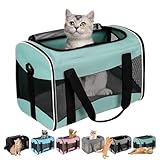
- [PRODUCT DIMENSIONS] Pet travel carrier size : 17x11x11 inches, recommended up to 15 lb pets, it is suitable for large, medium cats and small dogs. Please don't choose your airline cat carrying case based on weight, please refer to your pet's length and height when choosing a pet carrier size.
- [AIRLINE APPROVED] This cat carrier is designed with airline approved, it can fit comfortably under most flight seats, we can take our pets wherever we want. Dog travel carrier offers two attachment loop handles that can be used as a dual harness or as a luggage strap for balanced carry and secure transport.
- [EXCELLENT MATERIAL] Collapsible cat carrier is made of polyester fabric, supported by a steel ring, washable, wear-resistant and durable. The three sides and the top of this pet carrier are nylon mesh, scratch-resistant and not easy to damage, it can not only check your pet in real time, but also ensure enough air circulation.
- [SAFE AND COMFORTABLE] Dog travel bag has metal zippers on the top and side entrances, durable and not easy to deform, it allows your pets to enter and exit easily. The cat carrying case is equipped with an anti-escape safety buckle, which can effectively prevent pets from accidentally falling. It is suitable for car rides and vet rides.
- [PORTABLE AND FOLDABLE] Pet travel carrier comes with a detachable and hand washable wool pet bed, it can provide a comfortable sleeping space for your traveling pet. The cat travel case comes with an adjustable shoulder strap and handle for easy portability. When not in use, you can fold it up for storage.
Merck lists failure to suckle, decreased weight gain, persistent diarrhea, unusual vocalization, abdominal distention or pain, hypothermia, breathing difficulty, and vomiting or regurgitation among possible warning signs of neonatal sepsis. These signs do not prove a particular illness, but several together in a young kitten warrant urgent veterinary attention because deterioration can be rapid.
If the kitten looks stable, arrange prompt veterinary advice
Appetite loss, unusual quietness or low energy, vomiting, diarrhea, sneezing, or eye or nose discharge still deserve a prompt call to a veterinarian—especially if symptoms persist, worsen, or occur together. The American Animal Hospital Association recommends a first veterinary visit within the first week at home, or sooner if a kitten seems sick, is not eating, has diarrhea or sneezing, or is unusually quiet. That is general kitten guidance, not a fixed waiting period for every stray (Kitten Health Care Guide: First-Year Vet Care & Vaccines).
Rank #3

- Pet Carrier: 17.5” L x 11” W x 11” H, Recommended max load of 16 lbs cats small dogs. Please do not choose your carrier based on weight--please reference your pet's length and height in selecting a pet carrier size.
- Fits for under-seat dimensions of most airlines. Every airline has a specific set of rules and regulations, please contact with airline before flying with your cats small dogs.
- Mesh windows for ventilation, top and side entry with locking zippers for safety. Carrying handles, adjustable shoulder strap which can also be used as seatbelt, and back strap can fasten the pet carrier to your luggage.
- Pet carrier comes with a removable base insert, which creates a solid surface for your pet to stand on, along with a removable & hand washable cozy fleece pet bed, which offers a cozy sleeping space for your traveling cats small dogs.
- "Toys for pets, of textile materials". Mostly used as a Toy of Fabric Pet Home for pets playing and relaxing.
Dry gums, sunken eyes, and skin that does not promptly return after being gently pinched can be signs of dehydration, but a home check cannot reliably rule illness out. Do not apply adult-cat waiting periods to a tiny kitten without veterinary advice: age, hydration, ability to eat, energy, and the combination of symptoms all affect urgency.
What to do while arranging help
- Call first when feasible. Contact a veterinarian, emergency hospital, or local animal-services organization. Describe the kitten’s breathing, responsiveness, injuries, symptoms, and best estimate of age; mention that it is stray. A call can help staff prepare and give instructions (What to Do in a Dog or Cat Emergency).
- Contain and handle gently. Pain or fear may make a kitten bite or scratch. Merck advises wrapping a cat in a towel and placing it in a dark box with breathing holes. A secure, ventilated carrier is also practical if immediately available; do not delay urgent care to obtain one. If trauma is suspected, minimize movement of the head, neck, and spine.
- Protect it from temperature extremes. Keep the kitten calm and shield it from further cold or heat. For suspected hypothermia, Merck advises drying a wet animal and wrapping warm—not hot—water bottles around it. Do not rub suspected frostbite or use very hot water. For a neonate, ask a veterinarian how to warm it safely rather than improvising.
- Avoid unadvised treatment. Do not give human medication or force food or liquid into a weak, cold, or breathing-compromised kitten. Ask a veterinarian for case-specific instructions.
- Ask for local help if you cannot transport or keep it. Contact animal services, a shelter, or a rescue; available procedures vary by location.
Should you wait for the mother cat?
A mother cat being out of sight does not by itself mean a kitten has been abandoned. If the kitten appears stable, local animal services can advise whether and how to observe for the mother. Albuquerque Animal Welfare, for example, warns that an unseen mother does not necessarily mean abandonment, while identifying weak or lethargic found kittens as emergencies (Stray Kitten Information). That is Albuquerque guidance; contact the appropriate local service where you are. Do not leave a weak, cold, injured, or unresponsive kitten waiting.
Quick Recap
Best Value

- AIRLINE APPROVED CARRIER - With airline-approved design, you can take your pet to go to everywhere. This pet carrier provides two connecting loop handles for balanced carrying as a dual seat belt or luggage strap to secure transport
- SAFETY DESIGN - The adjustable shoulder strap help you hands-free carrying and makes it more safe and convenient pet carrier bag for your travel
- DURABLE - This cat carrier is made of durable and lightweight polyester fabric. The four-side mesh will not only give a safe and comfortable travel for your pet, but also easy for you to check on your pet
- PORTABLE & FOLDABLE - This dog carrier is easy to carry and store, which has a padded shoulder strap and handles
- BOTH SIZES AND WEIGHTS - The mediun cat carrier is designed for small and medium pets within 15" x 9" x 9"(smaller than product) and 15 lbs. Please do not choose your carrier only based on weight. Reference your pets' length and height in selecting a carrier size.If carried on board, the maximum dimensions should not exceed 18IN*11IN*11IN.
Rank #4
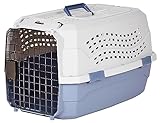
- Hard sided pet carrier with 2 doors for front and top entry; suitable for cat or medium size dog weighing 12 - 20 pounds
- Durable plastic construction with steel wire doors; screws keep the top and bottom sections securely connected
- Spring load latches ensure easy one-handed door opening and closing; top door swings open to the left or right and includes a top carry handle
- Plenty of air ventilation on the sides, top, and back of the carrier
- Note: Be sure to measure the size of the pet when choosing carrier size
Product prices and availability are accurate as of the date/time indicated and are subject to change. Any price and availability information displayed on Amazon at the time of purchase will apply.




