Free tools Windows power users keep installed
One-click scans. No signup required.
Patagonia’s “living rocks” are not ancient cells preserved unchanged. They are microbial biofilms associated with mineral structures that resemble stromatolites. Their value is as modern examples of how microbial communities can build rock-like formations—and as a place to study how microbes adapt to harsh environments.
What are Patagonia’s “living rocks”?
In southern Chilean Patagonia, the nickname refers to thick bacterial biofilms and the stromatolite-like structures formed as microbial material accumulated and became mineralized over time. A biofilm is a community of microbes embedded in a shared matrix; it is living, but the rock-like structure around or within it is geological material, not an organism.

Northeastern University associate professor of biology and biochemistry Veronica Godoy-Carter described the formations as “little mountains” made of “giant biofilms that are billions of years old.” That description conveys their scale and deep-time significance, but it should not be read as evidence that the present-day bacteria are unchanged cells from billions of years ago. The structures predate humans and may predate multicellular life; the evidence presented does not establish that they are direct, intact specimens of Earth’s first organisms.
Are stromatolites alive?
Not in the same sense as a bacterium. Stromatolites are layered, rock-like structures produced through the activity of microbial mats and mineral accumulation. A living microbial community can inhabit or help build a structure, while the mineral layers themselves are not alive.
Windows Errors? Fix Them Before They Spread
Repair common Windows errors and clear accumulated junk for a smoother, more stable PC - no reinstall needed.Free scan · no reinstallOutdated Drivers Are Slowing You Down
One free scan finds every outdated or missing driver and matches the right update for your exact hardware.Free scan · exact hardware match#1 Best Overall
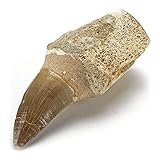
- Experience what it's Like to Own an Authentic Prehistoric Mosasaur Tooth Fossil Dated To Be 90 Million Years Old!
- Trilobites, Meaning "Three-Lobed", First Appeared In Our Oceans About 570 Million Years Ago Before Going Extinct around 240 Million Years Ago.
- These Fossils are Hand-Selected with an Average Size of 2.5 Inches; However, Please Allow for small Variations in Size, Shape, & Color.
- Our Trilobite Fossils are Insured with a Money-back Guarantee. The KALIFANO family has been serving customers in the United States since 1912. If for any reason you are not satisfied, we are happy to offer a full value refund. Order with confidence. We guarantee every item we sell. You will receive the same high quality on Amazon that we offer in our retail stores in Las Vegas at The Grand Canal Shoppes @ The Venetian and The Forum Shops @ Caesars Palace.
- Interested in Fossils and Minerals? 💎 Explore The KALIFANO Store Today!
Stromatolites matter because they link observable microbial processes today with some of the oldest biological structures in the geological record. Burns, Goh, Allen and colleagues wrote in a 2004 study in Environmental Microbiology that stromatolites have existed on Earth “for more than 3 billion years,” at varying levels of distribution and diversity. That is the geological span of stromatolites—not the age of every modern formation or the microbes living in it.
What did researchers find in Patagonia?
During a 2018 Northeastern Dialogue of Civilizations expedition, Godoy-Carter’s group collected material and sequenced the genome of a violet Janthinobacterium. The bacterium is found in soil and water, tolerates freezing conditions, and forms unusually robust biofilms.
Rank #2

- 🔬 Glimpse into Dinosaur DNA: Experience the fascination of prehistoric life with our mosquito in amber replica, inspired by iconic dinosaur movies 🦖. Perfect for science enthusiasts, fossil collectors, paleontology lovers, history buffs, natural history fans, making it a unique piece for any collection, display, or educational setting
- 🌟 Authentic VEOJEIN Detailing: Crafted with meticulous detail, our mosquito embedded in high-quality resin showcases nature's ability to preserve prehistoric moments 🦟. Ideal for educational gifts, science displays, paleontology exhibits, museum collections, history enthusiasts, and science teachers
- ✨ Premium-Quality Resin: Made from premium-quality resin, our replica mimics the allure and beauty of genuine amber 🧬. Offers a captivating visual and tactile experience for home decor, office decor, science classrooms, museum displays, collector exhibits, science lovers, and kids' rooms
- 🎁 Unique and Educational Gift: Perfect for classrooms, fossil collectors, and anyone intrigued by ancient life. Makes a thoughtful gift for birthdays 🎉, Christmas 🎄, Father’s Day, Mother’s Day, graduations 🎓, retirements, colleague farewells, anniversaries, Valentine’s Day 💝, Thanksgiving, Halloween 🎃, housewarming parties, baby showers, weddings, Easter 🐣, and more. Enhances learning and curiosity for kids and adults
- 🖼️ Compact and Convenient: Sleek, unobtrusive design fits any desk, shelf, or workspace. Our mosquito in amber replica is an excellent addition to home decor, office spaces, science labs, study areas, children’s rooms, display cabinets, blending scientific curiosity with aesthetic appeal. Lightweight and portable for easy display anywhere
Why study the bacterium’s genome?
A genome gives researchers a way to look for genes associated with traits such as cold tolerance, biofilm formation, and pigmentation. The organism’s violet pigment may help protect it from ultraviolet radiation, but that is a possible function, not a settled explanation. Northeastern’s 2025 report describes the work as early-stage; potential biotechnology applications are research possibilities, not established products or benefits.
Godoy-Carter has said, “Bacteria are the most awesome organisms on Earth. They can live without us, but we cannot live without them.” In this case, their ability to form durable communities in a cold environment makes them useful organisms to study, not proof that the Patagonia structures preserve the first life on Earth.
Rank #3

- Realistic Velociraptor Claw Replica – Experience the thrill of the Cretaceous period with this life-size replica of a velociraptor claw, perfect for dinosaur enthusiasts and collectors
- Educational Dinosaur Fossil Replica – Ideal for classrooms, museums, and home displays, this dinosaur claw replica helps bring prehistoric lessons to life for kids and adults alike
- High-Quality and Detailed Design – Crafted to capture the sharp, curved nature of the velociraptor’s deadly claw
- Great Gift for Dinosaur Lovers – Perfect for aspiring paleontologists, fossil collectors, and fans of dinosaurs; a special addition to any fossil collection
- Compact and Collectible Size – Measuring approximately 2.2 inches, this small dinosaur claw fits easily in the palm of your hand, making it a portable piece of history
How do the Patagonian formations compare with other stromatolites?
“Living rocks” is a nickname, not a single scientific category. Similar-looking structures can form in different environments and contain different microbial communities. A modern example from Shark Bay, Western Australia, illustrates why comparisons must focus on the particular site and evidence.
| Example | Environment | Structure and microbial evidence | What it can help researchers investigate |
|---|---|---|---|
| Southern Chilean Patagonia “living rocks” | Cold Patagonian setting; exact site conditions are not stated in Northeastern University’s 2025 report. | Thick bacterial biofilms associated with stromatolite-like, mineralized structures. The sampled material included a violet Janthinobacterium; the report does not establish that it is the only or dominant member of the community. | Microbial cold tolerance, biofilm formation, and pigmentation. The report describes this work as early-stage. |
| Shark Bay stromatolites | Hypersaline setting, as described in the supplied comparison information. | A 2004 study by Burns, Goh, Allen and colleagues found cyanobacteria, other bacteria, and archaea in modern stromatolites. | How complex microbial communities relate to layered structures that have ancient counterparts in the geological record. |
The table’s examples are not interchangeable. Their environments, microbial membership, and mineral chemistry may differ; the mineral chemistry of the Patagonian formations is not stated in the Northeastern report summarized here.
Rank #4
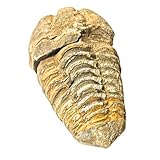
- Authentic Fossils: Discover the ancient wonders of the prehistoric era with these genuine trilobite fossils.
- Remarkable Preservation: Marveling at the intricate details and patterns preserved in these remarkable fossils.
- Educational Value: An excellent addition to any fossil collection, these trilobites offer insights into Earth's distant past.
- Unique Specimens: Each fossil is a one-of-a-kind treasure, varying in size, shape, and distinct characteristics.
- Captivating Display: Display these fascinating fossils as a conversation-starting centerpiece or decorative element.
Did scientists find the first life on Earth?
No. The Patagonian work identified and sequenced a modern violet bacterium from sampled material; it did not discover Earth’s first organism. Earth is approximately 4.5 billion years old, according to Northeastern University’s 2025 report, while stromatolites have a geological record extending back more than 3 billion years, as described by Burns and colleagues in 2004. Those figures place stromatolites in deep time, but they do not make a modern biofilm a preserved sample of the earliest life.
Godoy-Carter has characterized bacteria-made formations as “pretty much, the first living cells, organized cells, on Earth.” That is her interpretation of their significance, not a consensus claim that these particular Patagonian structures are the first cells. Stromatolites are evidence relevant to early life because ancient structures can be compared with microbial processes observable today; interpreting the earliest record requires care about what a rock can and cannot show.
The Tool Desk
Outbyte PC Repair FREEClear out junk files and repair common Windows errorsFree Scan →Outbyte Driver Updater FREEScan for outdated or missing drivers - takes under a minuteDriver Scan →Best Value
Could viruses have helped stromatolites form?
UNSW Sydney’s 2021 explainer describes a proposal that viruses may have helped microbial colonies develop stromatolite structures. It is a hypothesis under investigation, not an established explanation for how all stromatolites formed, and the cited proposal does not by itself explain the Patagonian formations.
Quick Recap
Product prices and availability are accurate as of the date/time indicated and are subject to change. Any price and availability information displayed on Amazon at the time of purchase will apply.




