PC Slower Than It Used to Be?
A free scan shows the junk files, broken settings and background clutter dragging Windows down - then fixes them in one click.Free scan · Windows 10 & 11Crashes, No Sound, or Screen Glitches?
Random freezes, missing sound and display glitches usually trace back to one bad driver. Find and replace yours safely.Free scan · under a minuteNot yet. Colossal Biosciences and the University of Melbourne’s TIGRR Lab are pursuing a staged effort to create a thylacine-like animal, but the milestones the university reported on 17 October 2024 were not a thylacine birth. The proposed animal would be genetically engineered using a living marsupial relative—not a restored member of the extinct thylacine population.
What has the project actually achieved?
The University of Melbourne reported on 17 October 2024 that its TIGRR Lab, led by Professor Andrew Pask, had been working with Colossal Biosciences since 2022. The reported results were steps toward a possible animal, not a completed resurrection.
| Reported milestone | What it means—and what it does not |
|---|---|
| A reconstructed thylacine genome estimated to be more than 99.9 per cent accurate | A high-quality genetic reference for the project; not proof that scientists can recreate every feature of the animal or make it develop normally. |
| More than 300 genetic markers edited into fat-tailed dunnart cells | Progress editing cells from a living relative; not a living thylacine or a complete thylacine genome in an animal. |
| An approach to induce ovulation in a dunnart was optimized | Progress on reproductive biology that could support later stages; not evidence that a thylacine-like embryo has been carried to birth. |
| Fertilized single-cell embryos were cultured beyond halfway through pregnancy in an artificial-uterus device | A reported embryo-culture milestone; not a reported live birth or proof that the full proposed process works. |
The university’s account did not report a live thylacine birth. The available reporting cited here also does not establish that the complete pipeline has since produced one.
When might a thylacine return?
ABC News reported the project’s ambition as seeing a Tasmanian tiger in the wild “within 10 years.” That is a project goal, not an independently validated schedule or a guaranteed release date. The report also noted that independent scientists wanted the claims supported by peer-reviewed data.
Quick wins for a faster PC:
Clear out junk files and repair common Windows errorsFree Scan →Scan for outdated or missing drivers - takes under a minuteDriver Scan →#1 Best Overall
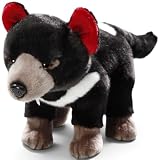
- Tasmanian Devil stuffed animal, approx. 11.81 inches (30 cm): soft plush, brown safety eyes and detailed features.
- Approximate dimensions: 11.81 x 5.51 x 8.66 inches (30 x 14 x 22 cm), measured length x width x height. Fur: Acrylic; Filling: polyester fiber.
- The body of the Tasmanian devil is black. The black of the stuffed animal is interrupted by white spots on the belly and back. Legs and muzzle are gray. Brown safety eyes complete the design.
- Hand washing is recommended. Please also follow the care instructions attached to the product.
- Part of the Carl Dick Collection, offered by Carl Dick GmbH Import und Export in Garmisch-Partenkirchen, Germany.
Even if a viable embryo were achieved, a birth would not by itself mean the animal was ready for the wild. Development, health, behavior, reproductive capacity, animal welfare, and the suitability of any release site would all need to be addressed. The reported milestones do not establish when—or whether—those steps could be completed.
What animal would be used as a surrogate?
The proposed biological platform centers on the fat-tailed dunnart (Sminthopsis crassicaudata), a small living marsupial identified as the thylacine’s closest living relative used in the work. Nature’s 8 July 2024 profile described the thylacine as a dog-sized Australian apex predator. A dunnart is a close relative, not a small version of a thylacine; using one does not make the resulting animal genetically identical to the extinct species.
Rank #2

- Tasmanian Devil Details: Features a stocky build, short legs, sharp teeth, and powerful jaws, capturing the distinctive body shape and facial features associated with this marsupial.
- Dimensions: Measures 3.5 inches long x 2 inches tall. Suitable for animal play, classroom projects, dioramas, themed scenes, and display.
- Imaginative Wildlife Play: Create screen-free animal stories, pretend encounters, exploration adventures, and small-world scenes centered on this distinctive Tasmanian species.
- Classroom And Conservation: Use the figure for wildlife lessons, marsupial discussions, animal identification, Montessori activities, school projects, and conservation-themed learning.
- Safety And Material: Safety Tested and made from BPA Free PVC, this standard Safari Ltd. animal figure is designed for kids ages 3+ in a single-figure toy format.
The project’s proposed workflow, published by Colossal, sets out these stages:
- Sequence the thylacine genome and the genomes of close living relatives.
- Use computational biology to connect genetic differences with traits.
- Establish marsupial cell lines and induced pluripotent stem cells.
- Edit selected thylacine-associated traits into a dasyurid genome.
- Transfer a cell nucleus into a dunnart egg and create an embryo.
- Implant the embryo into a surrogate and complete gestation before maturation and birth.
This is a proposed sequence of work, not a record that every stage has been completed successfully. The milestones publicly described by the University of Melbourne in October 2024 covered only parts of it.
Rank #3

- Watch the excitement in your child’s eyes when they see this soft and lovable tiger stuffed animal, sure to provide tons of fun.
- Great for hugs and cuddling, these tiger plush toys for kids are soft and cushy and cannot wait to attend your safari.
- Strong and brave these plush tigers are sure to be a hit and make great birthday or anytime gifts for girls and boys of all ages.
- Made with recycled materials, high quality fabrics and durable stitching, this irresistible tiger stuffed toy is designed to last through years of excursions and hugs.
- Who knew Tigers were cats that can measure over 10 feet long and weigh up to 670 pounds? This amazingly soft stuffed animal sounds like an interesting friend to have!
Would the result be a real thylacine?
“Bringing back” can suggest restoring the original species exactly, but that is not what this approach would do. It aims to produce a genetically engineered, thylacine-like animal by editing a living relative. It would not recover the original thylacine population unchanged.
The distinction matters because a genome is not a full set of instructions for recreating an animal. ABC News quoted independent scientist Kristofer Helgen warning that a genome “isn’t a genetic manual.” DNA sequence is essential, but development also depends on how genes function in cells and embryos, along with physiology, gestation, and other biological factors. A sequence that is estimated to be highly accurate does not, on its own, demonstrate that those systems can be reproduced.
Rank #4

- Let your child growl with excitement with this tiger stuffed animal that gives them a soft, loving hug, as they roam the jungle together
- Huggers are cute plush toys and versatile slap bracelets that you can wrap around your wrist and other objects such as backpacks, bikes and strollers, When arms are fully extended, the width is 12"
- One just isn’t enough, collect all the Hugger stuffed animals, bringing smiles wherever they go
- Huggers conform to your wrist, so one size fits all, and these unique plush toys for kids are approximately 8 inches in size
- Huggers make great gifts for kids of all ages, and even adults love to hang these plushies around their lamps and anything it can grip
Why do scientists urge caution?
Andrew Pask described DNA as the “blueprint” for building a thylacine in comments reported by ABC News. Other experts stressed that the practical demonstration matters as much as the claim. ABC quoted Parwinder Kaur welcoming the work while saying it would be valuable to release the claims alongside the data.
The peer-reviewed Nature Ecology & Evolution study using thylacine genomic data examined the species’ evolutionary position, historical demography, and convergent traits with canids. That kind of genome research helps explain why the thylacine is a plausible subject for study, especially given preserved museum specimens. It does not show that a reconstructed animal can be born, thrive, or safely fill the extinct species’ ecological role.
Best Value

- This plush is approx. 3" x 4" x 4.5" in size
- High-quality, durable materials to ensure timeless tiger plush cuddles
- Fabric made entirely from recycled plastic bottles.
- Environmentally-friendly embroidered eyes, eliminating plastic use.
- This tiger plush contains no beans and is safe for all ages!
- Genetic engineering: The proposed animal would have an edited genome based on a living marsupial, not an untouched copy of the extinct species.
- Normal development: The reported embryo-culture result does not establish a healthy birth or normal development through adulthood.
- Animal welfare: Gestation, health, and the effects of the process on embryos, surrogates, and offspring would need careful evaluation.
- Independent evidence: Peer-reviewed data and reproducible results would help establish what the reported milestones demonstrate.
- Release planning: A wild release would raise separate questions about habitat, ecological effects, and long-term monitoring.
Could the work help living endangered marsupials?
That may be the project’s most immediate conservation value. Pask told the University of Melbourne that advances in marsupial assisted reproduction could improve breeding capacity for critically endangered captive species, including Tasmanian devils affected by devil facial tumor disease.
Reproductive techniques that work for living endangered animals could have practical value even if a thylacine-like animal is never born or released. That benefit is distinct from de-extinction: improving a breeding program for a threatened species does not depend on recreating an extinct one.
Quick Recap
Product prices and availability are accurate as of the date/time indicated and are subject to change. Any price and availability information displayed on Amazon at the time of purchase will apply.




