The Tool Desk
Outbyte Driver Updater FREEFix the driver behind crashes, sound loss and screen glitchesFind Drivers →Outbyte PC Repair FREERepair Windows errors before they cause bigger problemsFix Now →Young orangutans need dependable, responsive care and safe opportunities to interact with other orangutans. In sanctuaries, that means balancing caregiver contact with peer or family contact, introducing social partners gradually when health allows, and adapting care to each youngster’s behavior and history—not following one timetable or simply placing infants together.
What do baby orangutans need to socialize?
They need security first, along with opportunities for age-appropriate contact and learning. For a very young infant, close physical contact and responsive caregiving support early mental and physical needs. As the youngster develops, opportunities to explore, move, play, forage, and learn from other orangutans and the environment become increasingly important.
The IUCN SSC Conservation Planning Specialist Group’s 2002 orangutan conservation and reintroduction workshop report describes physical, mental, and social health as intertwined. It emphasizes close contact and movement in the earliest years, with social and forest skills gaining importance as an infant develops. The report also cautions that broad guidance may not fit every individual.
Do young orangutans need to be raised with other orangutans?
Early exposure to other orangutans is recommended when medically safe. The Association of Zoos and Aquariums’ Orangutan Species Survival Plan (AZA Orangutan SSP) says in its 2017 Orangutan Care Manual that hand-reared neonates need early socialization with conspecifics. It advises balancing caregiver contact with peer contact and avoiding forced independence, which can create insecurity that interferes with development and exploration.
#1 Best Overall

- Look no further for your next best friend, because this captivating and cute stuffed animal Orangutan is what your life has been missing.
- The approximate size of this plush toy is measured at 12 inches and made of high quality materials.
- A day swinging around the forest canopy isn’t complete without a few messes, but this stuffed toy is easily surface washable.
- This stuffed animal is the perfect unique gift for kids, birthday present for teens, or thoughtful gift for adults.
- Let this plush toy playmate latch on to you with their opposable thumbs and strong arms for your next adventure.
Health risks can make immediate contact inappropriate, and the right social partners depend on the individual. Where possible, a plan may involve the youngster’s mother or other familiar orangutans, surrogate caregivers, or compatible peers. The manual recommends planning how an infant can be socialized with its mother and other conspecifics where applicable; it does not prescribe the same arrangement for every case.
How do sanctuaries introduce young orangutans?
Introductions should be planned and paced according to the animals’ responses. The AZA manual recommends establishing positive interactions before physical introductions, anticipating possible scenarios, and continually evaluating progress. Animals need time to adjust, and observed behavior should guide the next step.
Rank #2
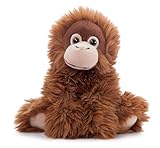
- Bring adventures of the rainforest to your next play day with this cute stuffed animal orangutan.
- Kids love the fluffy body and shaggy brown fur of this realistic stuffed animal orangutan with long arms and a wide grin.
- In a sitting stance ready to jump in action, this orangutan plush toy is the perfect birthday gift for kids.
- Crafted with durable stitching, this orangutan toddler toy models the persistent nature of its ape species during playtime.
- Combining play with Earth-sustaining practices, The Petting Zoo is committed to providing little ones with cute and cuddly plush toys that are made from recycled water bottles.
- Consider health and readiness. Determine whether contact is medically appropriate; a health risk may require delaying exposure.
- Plan the social steps. Identify suitable partners and how contact can progress, including a mother or familiar group when relevant.
- Build positive interactions before physical contact. Follow the care plan for gradual introduction rather than forcing proximity.
- Observe and reassess. Use behavior and adjustment to decide whether to continue, pause, or revise the plan.
These are professional husbandry recommendations, not a universal introduction protocol. Timing and progression depend on health, compatibility, individual history, and response.
How do care needs change as orangutans mature?
Care shifts from intensive early security toward greater independence, exploration, and social and environmental learning. That shift is gradual: youngsters still need support as they develop movement and survival skills, and caregivers must account for individual variation.
Do these 3 things before closing this tab:
1Fix the driver behind crashes, sound loss and screen glitches2Clear out junk files and repair common Windows errors3Scan for outdated or missing drivers - takes under a minuteRank #3

- You will be swinging from the rafters when you see this realistic Orangutan stuffed animal
- 8 inches is the perfect size to bring your animal plush with you wherever you go
- Cuddlekins are surface washable, so you can have peace of mind that your plush toy will not get stained
- This stuffed animal is a blast makes the perfect toddler toy to keep your young one happy
- Wild Republic specializes in educational toys for kids and lifelike stuffed animals
The Borneo Orangutan Survival Foundation’s undated Tuanan Orangutan Research Station page describes observations of wild mother–young relationships. It reports that youngsters aged three to seven explore independently while their mothers watch from a safe distance, and that mothers usually leave offspring fully on their own around seven to eight years. The page says BOS uses these observations to inform rehabilitation and minimum reintroduction age. These are the foundation’s reported observations, not a timetable for sanctuary-raised orangutans.
What kinds of play, enrichment, and exploration help?
Safe opportunities to climb, move, explore, and engage in species-typical behavior support development. The AZA manual discusses enrichment and climbing structures for motor development, and lists facility examples such as swings, substrate, orangutan-area structures, browse when age-appropriate, and objects that encourage exploration. It warns that ropes can pose strangulation hazards and recommends consulting the Orangutan SSP about safe use or alternatives such as fire hose. Equipment choices and installation require professional, species-specific safety review; these examples are not a consumer shopping list.
Rank #4

- Great value: huggers are an award-winning plush toy that parents can trust for their kids, and because there are so many, they are fun to collect
- Size and age: This fun-loving stuffed toy is approximately 8- inches, Made of high-quality materials, and is a perfect gift for any age
- Cleaning: easy to clean and surface washable, which is what every parent wants in their kids stuffed animals
- History: Wild Republic has been developing plush animals and educational toys for kids of all ages since 1979
Forest exploration can add different learning opportunities as a youngster becomes ready. Orangutan Foundation International’s description of its Orangutan Care Center and Quarantine outlines daily enrichment, age-appropriate groups after quarantine, surrogate caregivers, and supervised outings to a learning forest where infants can explore, forage, and play. This describes one organization’s program, not a procedure followed identically by every sanctuary.
Independent reader supportYour contribution helps us test, update, and keep practical guides available for everyone.How can a sanctuary judge whether social development is going well?
No single group arrangement or behavior proves that an orangutan’s welfare is good. The Orangutan SSP’s current Husbandry guidance says welfare should be assessed at the individual-animal level and understood as a continuum. It identifies physical health, psychological well-being, social groupings, environmental conditions, choice, control, cognitive engagement, and individual history as relevant considerations.
Quick wins for a faster PC:
Repair Windows errors before they cause bigger problemsFix Now →Fix the driver behind crashes, sound loss and screen glitchesFind Drivers →Best Value

- SPECIFIC SIZE DESCRIPTION: Our orangutan toys are made of high-quality fabrics, its size is 21in, and the exterior is made of super soft crystal cotton, which makes the hand feel delicate and comfortable.
- HIGH QUALITY FABICS: Our orangutan stuffed animal toys are made of high-quality fabrics, and the exterior is made of super soft crystal cotton, which makes the hand feel delicate and comfortable. The inside is filled with high-quality PP cotton, which makes the orangutan look fluffy and soft.
- REALISTIC APPEARANCE: Our orangutan plush toy is orange all over, the adorable face and squeezeable body of our orangutan plush are made from premium cloth and filler. its the brown fur is smooth and soft, the overall shape design is realistic, and the face design is unique, very realistic. The smart eyes make it more vivid and lifelike.
- SUITABLE FOR SIMUTATION ANIMALS LOVERS: Our simulation orangutan can not only be used as a gift for children, to help them understand the world of animals and enrich their childhood, but also can be used as home decoration in the living room and bedroom for you add a different kind of fun to your life.
- RELIABLE QUALITY: When you get hand-made cute orangutan simulation toys, it entrusts our brand's sincere love for handmade toys, which is why we only use super soft fabrics and super fluffy filling items. When you receive the goods and have any questions, ple ase feel free to contact us, we will provide you with quality after-sales service.
In practice, assessment should consider health and observed behavior together with how the youngster adapts to caregivers, other orangutans, and its environment. If adjustment is not going well, the care team should revisit the plan rather than assume that a particular group placement guarantees healthy development.
Quick Recap
Product prices and availability are accurate as of the date/time indicated and are subject to change. Any price and availability information displayed on Amazon at the time of purchase will apply.




