Recommended Free Tools
Biological filtration is the process by which beneficial microbes convert dissolved ammonia from fish waste and decaying material first into nitrite, then into nitrate. These microbes grow on wet surfaces—especially biological filter media—but a newly installed filter is not immediately active: its microbial population must establish and keep pace with the tank’s waste load.
How biological filtration works
Fish excrete ammonia, and decomposing food and other organic material add more nitrogenous waste to the water. During nitrification, two groups of microbes process it in sequence:
- Ammonia oxidation: Ammonia-oxidizing bacteria, including Nitrosomonas and Nitrosospira, convert ammonia into nitrite.
- Nitrite oxidation: Nitrite-oxidizing microbes, including Nitrospira and Nitrobacter, convert nitrite into nitrate.
Nitrate is less toxic than ammonia and nitrite, but that does not mean it is harmless at any concentration. Nitrification changes the form of nitrogen waste; it does not make all waste disappear.
Where the beneficial microbes live
The microbes responsible for biological filtration attach to wetted surfaces rather than living only in the filter housing. Filter media is an important place for them to colonize, and media with ample surface area provides room for a larger population. They can also grow on other surfaces contacted by tank water. The University of Florida IFAS Extension describes a biofilter as a place for bacteria to colonize and flourish in Ammonia in Aquatic Systems. Oklahoma State University Extension likewise notes that nitrification can occur on system surfaces and that biofilter media and aeration matter in its 2017 guide, Principles of Small-Scale Aquaponics.
#1 Best Overall

- Efficient Purification: Designed for both freshwater and saltwater aquariums; Helps capture floating particles and impurities; Promotes clearer and cleaner water; Improves overall water quality over time; Works continuously to maintain a balanced aquatic environment
- Porous Filtration Structure: Features a hollow and porous design that allows smooth and even water flow; Offers an expanded filtration area to reduce clogging; Physically traps debris from the water column; Supports a more stable filtration process; Enhances circulation in your tank
- Multiple Applications: Ideal for use in freshwater and saltwater tanks; Compatible with ponds, fish tanks, and filter cartridges; Versatile for different filtration systems; Can be placed in various container types; Suitable for both home and professional aquarium setups
- Simple To Use: Rinse the ceramic rings with clean water before use; Place into a filter container or directly into the filter chamber; Replace part of the media every six months to one year for best results; No tools required for setup; Easy to handle and store
- Model Compatibility: Works with filter systems including 106, 206, 306, 406, FX5, FX6, 105, 205, 305, 405, 104, 204, 304, and 404; Designed to fit standard filtration chambers; Can be used alongside other filter media types; Helps upgrade your current filter performance; Offers flexible placement options
Water flowing over colonized media brings ammonia and nitrite to the microbes. Because nitrification is aerobic, oxygen availability matters; a filter is not a stand-alone box that can work independently of water conditions.
Why a new filter needs time to work
Installing filter media does not instantly create an established biofilter. The microbial population has to grow until it can process the ammonia and nitrite produced by the system. This establishment process is commonly called cycling.
Rank #2
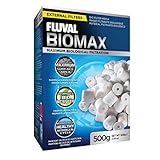
- Filter Compatibility: Compatible with Fluval Filter Series 106, 206, 306, 406, FX5, FX6, 105, 205, 305, 405, 104, 204, 304, and 404.
- Water Clarification: BioMax is a premium-grade biological filter media that provides superior filtration and helps reduce and control ammonia and nitrate levels for a healthy nitrogen level in the water.
- Ideal Environment: BioMax helps create crystal clear water, making ideal conditions for fish and plants in your tank. The complex porous design ensures optimal contact time as water passes through.
- Versatile: This filter media is suitable for freshwater and saltwater aquariums. Replace monthly for best results. Please note, replenish only half the filter media at one time to allow proper seeding.
- Additional Features: Will not affect water characteristics.
UF/IFAS says new recirculating aquaculture systems typically take three to eight weeks or longer to become cycled. That is contextual guidance for those systems, not a promised timetable for every home aquarium. Timing varies with fish load, food and feeding rate, pH, dissolved oxygen, alkalinity, and temperature, as described in Fish Health Management Considerations in Recirculating Aquaculture Systems—Part 3.
How cycling is approached
Cycling methods differ in whether fish are present and where the ammonia comes from. UF/IFAS describes gradually increasing fish numbers, adding media or water from a healthy established system, using low levels of additive-free liquid ammonia before fish are introduced, and using active commercial bacterial cultures from reputable sources. These are options, not guarantees of an immediate or risk-free cycle.
Quick wins for a faster PC:
Fix the driver behind crashes, sound loss and screen glitchesFind Drivers →Repair Windows errors before they cause bigger problemsFix Now →Rank #3
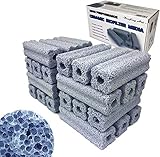
- Each box: 24 pcs / half gallon / 1.75lbs
- Remove ammonia & nitrite, vast surface area / porous internal structure results in superior efficiency
- For freshwater, pond and saltwater fish tank use
- 100% aquarium safe non-metallic ceramic, will not leach aluminum or any heavy metal
- Fishless cycling: An ammonia source is used to establish the biofilter before fish are added.
- Fish-in cycling: Fish produce the ammonia while the biofilter develops, so careful stocking and close monitoring are important.
API describes both approaches and recommends water testing as part of monitoring the nitrogen cycle in its fish-tank cycling guidance. No single approach can be called universally best from the available comparative evidence; the choice depends on the system, the species, access to healthy seeded media, and the ability to monitor water conditions.
Independent reader supportYour contribution helps us test, update, and keep practical guides available for everyone.What to monitor while the biofilter establishes
Test ammonia and nitrite while cycling; their levels show whether nitrogen waste is being processed. UF/IFAS also advises monitoring pH, temperature, and alkalinity daily during cycling, and checking dissolved oxygen several times a day in heavily stocked or fed systems. An aquarium water test kit that measures ammonia and nitrite is a measurement aid—not a filter or a substitute for an established microbial population.
Rank #4
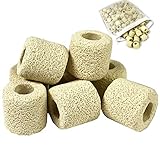
- 180 Rings / 1lb
- Rated for 20-40 gal / total 5400 ft surface area, porous internal structure
- Free media mesh bag with plastic zipper rust free
- Remove ammonia & nitrite, provide excellent biological aquarium filtration
- 100% aquarium safe non-metallic ceramic
Oxygen and buffering are part of the process, too. Nitrification consumes oxygen and produces carbon dioxide and hydrogen ions, which can lower pH if the water does not have enough alkalinity to buffer the change. A biofilter’s performance therefore depends partly on aeration and water chemistry.
Quick Recap
Best Value

- Filtration Enhancement: Natural quartz balls help improve water clarity by supporting mechanical filtration; optimizing filtration efficiency
- Stable Composition: Made from inert quartz material that maintains consistent water parameters; does not alter pH levels; compatible with freshwater and saltwater setups
- Open-Flow Design: Features a porous surface that boosts water circulation;improves oxygen exchange; enhances system stability over time
- Debris Capture Function: Filters fish debris; minimizes cloudy water; contributes to odor control; supports long-term water clarity without altering water chemistry
- Loose Media Format: Includes approximately 15 oz of quartz media; ideal for flexible use in canister filters; sump systems; top filters; hang-on-back filters; other aquarium filtration applications
What biological filtration does not do
- It does not instantly work just because a filter or new media has been installed.
- It does not remove nitrate from the system; nitrate is the product of nitrification.
- It does not make water changes unnecessary. A suitable nitrate target and maintenance schedule depend on the aquarium’s inhabitants and husbandry needs.
Product prices and availability are accurate as of the date/time indicated and are subject to change. Any price and availability information displayed on Amazon at the time of purchase will apply.
The Tool Desk
Outbyte PC Repair FREERepair Windows errors before they cause bigger problemsFix Now →Outbyte Driver Updater FREEFix the driver behind crashes, sound loss and screen glitchesFind Drivers →



