PC Slower Than It Used to Be?
A free scan shows the junk files, broken settings and background clutter dragging Windows down - then fixes them in one click.Free scan · Windows 10 & 11Outdated Drivers Are Slowing You Down
One free scan finds every outdated or missing driver and matches the right update for your exact hardware.Free scan · exact hardware matchIf your cat has swollen, sore, or ulcerated paw pads, the first thing to know is that pododermatitis is a general description of paw inflammation, not one disease. “Pillow foot” is the common name for one uncommon form, feline plasma cell pododermatitis (PCP). Many other conditions can make a cat’s paws look similar, so the cause has to be identified by a veterinarian before treatment is chosen.
What pododermatitis means
Pododermatitis describes inflammation of the paw skin, the spaces between the toes, and/or the skin around the nail folds. It can affect one paw or several, and it can occur alone or alongside other skin or whole-body signs. Because the word only describes what is seen, it is the starting point for a diagnosis rather than the diagnosis itself. A veterinary dermatologist will usually work through a list of possible causes, including:
- Plasma cell pododermatitis (PCP), also called pillow foot
- Eosinophilic granuloma complex
- Pemphigus foliaceus, an immune-mediated skin disease
- Mosquito-bite hypersensitivity
- Bacterial or other infection
- A foreign body, such as a splinter or grass seed, lodged in the paw
- Neoplasia, including metastatic adenocarcinoma that spreads to the digits (sometimes called “lung-digit syndrome”)
Treatment differs widely between these causes, which is why a paw that looks like pillow foot should never be treated on appearance alone. The Royal Canin Academy’s veterinary overview of feline pododermatitis sets out this differential list in detail.
What pillow foot (PCP) is
PCP is uncommon. It involves infiltration of the footpad tissue by plasma cells, a type of immune cell. The Canadian Veterinary Journal’s 2022 review by board-certified veterinary dermatologist Gabrielle Brosseau notes that the condition has been reported in the veterinary literature since the 1980s, and that its exact cause is still unknown. The leading explanation is an immune-system dysfunction, based on tissue findings, elevated gamma globulins in the blood (hypergammaglobulinemia), and improvement with immune-modulating drugs. Some reports describe cats that also have feline immunodeficiency virus (FIV). Those reports show the two occurring together; they do not show that FIV causes PCP.
What’s actually slowing this PC down?
Pick the symptom - the matching free tool is one click away.
#1 Best Overall

- Dog multivitamins chewable for skin & coat : Dog multivitamin is rich in Omega-3 fatty acids and vitamin E,which can relieve skin allergies,dryness,itching and other problems.Multivitamin for dogs nourishes skin follicles.Long-term consumption of dog vitamins multivitamin can make dog hair stronger and smoother,and reduce coat loss.The COQ10 in dog multivitamin chewable can resist oxidation and delay cell aging.Dogs with skin injuries can eat dog vitamins and supplements to promote wound healing
- Dog multivitamin relieves joint inflammation: Dog vitamins for hip and joint can supplement high-quality MSM, glucosamine, and chondroitin sulfate to promote cartilage development and repair. Long-term consumption of dog multivitamins chewable can enhance the elasticity and toughness of joint cartilage, improve joint flexibility, and move more freely. Dog multivitamin chews can reduce joint friction and relieve joint pain. Dog vitamins and supplements can prevent and improve dog joint problems
- Dog multivitamin chews are good for the gut: Vet-endorsed formula dog vitamins and supplements made from natural ingredients.Dog vitamins multivitamin chewables contain a rich blend of probiotics to support intestinal and digestive health.Dog vitamins for small dogs can regulate the balance of intestinal flora,help calcium absorption,and promote bone development.Dog multivitamins chewables improve energy metabolism,converting food into energy, making dogs more energetic in their daily activities
- Dog multivitamin chews protect overall health:Senior dog vitamins and supplements help improve blood circulation and prevent cardiovascular disease.Dog multivitamins chewable support normal liver function,promote liver detoxification,and improve negative mood.For dog with heart problems and older dog,taking dog vitamins and supplements in moderation is an auxiliary health care measure.Dog vitamins multivitamin helps enhance white blood cell activity,improve immunity,prevent infection and disease
- Dog multivitamins chewable promote brain development: The DHA in krill oil in multivitamin for dogs is an important component of the brain and retina. Dog vitamins and supplements can improve dog cognitive ability. When training puppies to learn basic commands, puppies who are properly supplemented with dog vitamins multivitamin will behave more intelligently and improve memory.Dog supplements & vitamins can prevent and relieve eye problems such as dry eyes and tear stains, and keep eyes healthy
The full review is available from PubMed Central.
Signs owners may notice
Typical PCP lesions are soft, spongy swellings, most often on the central pads of the front (metacarpal) or back (metatarsal) feet. The surface may look red, lose pigment, develop fine scale, or show silvery lines. Over time some lesions break open, bleed, become painful, or make the cat limp. Secondary bacterial infection can develop in ulcerated areas.
Several paws are often involved, but a single-pad lesion can also occur. Some cats show general signs such as reduced appetite, lethargy, fever, enlarged lymph nodes, drooling, or lesions away from the feet. These signs are not specific to PCP, so they are a reason for a full veterinary examination rather than a diagnosis on their own.
Rank #2
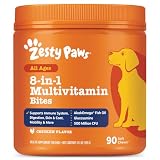
- 8-in-1 Formula - Zesty Paws Multifunctional Bites are functional supplement chews with premium ingredients that support physical performance, antioxidants, hip & joint, heart, immune, skin, liver, & gut health for dogs of all ages, breeds, and sizes.
- Skin Health & Antioxidants – For animals with sensitive skin, this formula contains Cod Liver Fish Oil and Vitamin E to help maintain normal moisture and CoQ10 to help reduce oxidative stress.
- Hip, Joint & Performance Support - Each dog chew features OptiMSM, a premium form of MSM for muscular support, which works synergistically with the Glucosamine HCl and Chondroitin Sulfate in these chews for hip and joint support plus Cod Liver Oil and B-Complex Vitamins support normal physical performance.
- Gut Health & Probiotics - These chews also contain a six-strain Gut Health Blend (500 million cfu per chew) and a Digestive Health Blend to promote gut flora while supporting normal bowel function for dogs.
- Heart, Liver & Immune Health - Multifunctional Bites feature powerful antioxidants, premium CoQ10, Cod Liver Oil and Vitamins A, C, & E to promote healthy cardiovascular function, support liver health and enhance immune response.
How a veterinarian confirms the cause
A typical workup follows this sequence:
- Full physical and skin examination. The vet checks every paw, the nail folds, the lymph nodes, and the rest of the coat and body, because pododermatitis is often one part of a larger picture.
- Cytology from a swollen pad. A fine-needle aspirate is examined under the microscope. Plasma cells on cytology support PCP, but cytology alone is not always conclusive.
- Biopsy and histopathology when needed. A tissue sample examined by a pathologist is the definitive test when cytology is unclear, when a lesion is unusual, or when a tumour is a concern.
- Infection and general health screening. The 2022 review suggests testing diagnosed cats for FIV and considering feline leukaemia virus (FeLV) testing, along with bloodwork, a biochemistry panel, and urinalysis. These are workup considerations chosen by the veterinarian, not a standard panel every owner must buy.
A solitary, ulcerated, or atypical lesion should prompt the vet to look for other causes, such as a foreign body or a growth, before PCP is accepted as the diagnosis.
Treatment options
Treatment is always prescribed and monitored by a veterinarian. The main options described in veterinary sources are below. Doses and durations are not given here because they depend on the cat, its weight, its other conditions, and the drugs’ risks.
Recommended Free Tools
Rank #3

- COMPLETE 26-IN-1 DAILY WELLNESS FORMULA: Our advanced multivitamin for dogs is formulated to help support 26 vital nutritional areas as part of a daily routine. With essential vitamins A, C, D3, and E, these gummies help support the immune system and contribute to overall heart and brain health for dogs of all sizes.
- ADVANCED HIP AND JOINT MOBILITY SUPPORT: Formulated with Glucosamine HCl, Chondroitin, and MSM to help support cartilage health, joint flexibility, and everyday mobility — making them a great daily supplement for large breed dogs and active senior dogs.
- SKIN & COAT SUPPORT: Packed with Norwegian Salmon Oil and Biotin, our dog multivitamin helps nourish skin from within and supports a soft, glossy coat. Omega 3 fatty acids contribute to healthy skin and coat as part of a complete daily nutritional routine.
- PROBIOTICS & DIGESTIVE SUPPORT: Features a Six-Probiotic Blend (500 Million CFU) and Digestive Enzymes to help support gut health, smooth digestion, and nutrient absorption. Cranberry Powder is included as part of this comprehensive daily wellness formula.
- UNBEATABLE VALUE 250 COUNT JAR: Our 250-count jar provides lasting daily support in a delicious chicken flavor. Made in the USA in a GMP-certified facility, our soft chews are grain-free and suitable for puppies, adult, and senior dogs alike.
| Option | When sources describe using it | Key points for owners |
|---|---|---|
| Oral doxycycline | Common first immune-modulating choice for PCP | Can irritate the esophagus; must be given with food and/or water as the vet directs. Clinical resolution may take up to roughly 12 weeks. |
| Other immune-modulating medicines | Used in some cases where the first option is not enough | Selection and monitoring are specialist decisions based on the individual cat. |
| Systemic glucocorticoids (steroids) | Used when response is inadequate or disease is severe | Given under veterinary direction with monitoring; not a home treatment. |
| Cyclosporine | Another systemic option for inadequate response or severe disease | Requires veterinary selection and monitoring. |
| Surgical excision of affected pads | Reported for selected cases | Considered for selected, refractory cases; a surgical decision made by the vet. |
The source base for these options is mostly case series and clinical reviews, so none of them should be treated as the universally best choice. The best option depends on whether the diagnosis is confirmed, how severe and ulcerated the lesions are, how quickly the cat improves, and whether the cat can safely take the medication.
What a small case series found
A 2003 case series by Pereira and Faustino in Veterinary Dermatology described eight cats with PCP, all of which showed swelling that progressed to ulceration. Remission was reported in four cats treated with glucocorticoids and in two cats that had total surgical excision. Because the group was small and uncontrolled, the results show that these options can work, not how often they will work for a given cat. The abstract is on PubMed.
Rank #4

- Joint Health Supplement for Dogs: Cosequin is the #1 vet recommended retail joint health supplement brand, supporting joint health in dogs for over 25 years
- Contains Glucosamine for Dogs: Cosequin contains glucosamine hydrochloride (FCHG49) and sodium chondroitin sulfate (TRH122), plus methylsulfonylmethane (MSM). This unique combination of ingredients supports healthy joints
- For Any Breed or Size: Whether you have a young or senior dog, a small or large breed, Cosequin helps support their joint health
- Tasty Chews for Daily Use: Cosequin comes in a tasty chewable tablet, making daily administration easy and convenient
- Exceptional Quality: Cosequin is backed by science, undergoing thorough quality inspections to ensure your dog receives a safe, high-quality product. It is manufactured in the United States with globally sourced ingredients
Expected course and relapse
PCP can be slow to resolve and does not always resolve in one course of treatment. Some cats remit fully, some relapse after treatment stops, and some need longer-term therapy. Owners should expect to return for rechecks and should not stop or change a medicine without talking to the vet.
Independent reader supportYour contribution helps us test, update, and keep practical guides available for everyone.Kidney and liver complications
Rare complications have been reported in cats with PCP. The 2022 review describes immune-mediated glomerulonephritis (inflammation of the kidney’s filtering units) and renal amyloidosis, and it describes the overall prognosis as generally good apart from these rare renal or hepatic complications.
Free tools Windows power users keep installed
One-click scans. No signup required.
Best Value

- Itch & Allergy Relief with Omega-3 for Dogs - with 500mg of Omega (EPA+DHA) per serving, our chewable supplement helps with hot spots, dry itchy skin, ease itching, irritated skin, stops shedding.
- Skin & Coat + Hip & Joint Supplement Combined - Omega 3 is a vital element to keep your pet active, support healthy hip and joints, brain, heart, immune health. Can be served with regular pet food.
- Bark&Spark Commitment - we are keen to give best to our furry customers and we take NO compromise when it comes to product quality. Our omega 3 bites are made in the USA, with human grade ingredients.
- Up to 3 Month Supply - with 180 salmon oil treats per jar you keep your pet healthy while not spending a fortune on overpriced supplements. Best value.
- Is Your Dog a Picky Eater? We stick to simple formulas rich in natural flavors, that could tempt a fussy eater. No hassle with pills, powder, tablets or capsules.
A 2026 case series in the Journal of Feline Medicine and Surgery reviewed 25 cats that had both PCP and glomerular disease. That series shows why a vet may check kidney function in a cat with PCP. It was built from cats already diagnosed with both conditions, so it cannot say how often kidney disease occurs among all cats with PCP, and it cannot prove that PCP causes it. The full article is available through PubMed Central.
When to contact a veterinarian
- Any paw pad that is swollen, soft, discoloured, or scaly for more than a few days
- A pad that has broken open, bleeds, or drains
- Limping, reluctance to walk, or licking at one paw
- A swelling on only one pad, or a lesion that does not match typical PCP
- Appetite loss, lethargy, fever, swollen lymph nodes, or drooling alongside paw changes
Do not use leftover medicines, human ointments, or home remedies on a paw without veterinary advice. Keeping the paw clean and preventing the cat from licking the wound are sensible while you wait for the appointment, but neither cures PCP.
Pododermatitis is a description that leads to a diagnosis, and that diagnosis is best made by the veterinary team that will manage the treatment.
Quick Recap
Product prices and availability are accurate as of the date/time indicated and are subject to change. Any price and availability information displayed on Amazon at the time of purchase will apply.




