The Tool Desk
Outbyte PC Repair FREERepair Windows errors before they cause bigger problemsFix Now →Outbyte Driver Updater FREEFix the driver behind crashes, sound loss and screen glitchesFind Drivers →Dwarfism in cats usually means disproportionate short-limb development, most often the Munchkin type, in which all four legs are short. A small cat is not automatically a dwarf cat, and no one can confirm the condition from a breed name or a photograph. A veterinarian has to examine the individual animal. Welfare bodies describe possible problems with mobility, joints and the spine, while the International Cat Association states that Munchkins are not prone to arthritis or mobility difficulty. That disagreement is still open, so owners should weigh both positions and rely on a vet’s assessment of their own cat.
What “dwarfism” means in cats
In feline writing, “dwarfism” is a broad descriptive term rather than one complete clinical diagnosis. In practice it refers to disproportionate limb shortening. The UK Animal Welfare Committee, in its opinion Opinion on the welfare implications of current and emergent feline breeding practices, describes the Munchkin phenotype as a genetic mutation in which the limb bones fail to grow normally, so all four legs are short. Welfare guidance from Cats Protection, in its page Dwarfism in cats, uses the same descriptive frame. Limb shortening in standard Munchkins is described as chondrodysplasia.


Two things fall outside this meaning:
- Small size alone. A petite cat with normal limb proportions is not described as having dwarfism.
- Human diagnostic labels. Skeletal dwarfism terms used in human medicine do not transfer precisely to cats, so the feline descriptions above are the ones to use.
The genetics
The UK Animal Welfare Committee reports breeding evidence consistent with dominant inheritance for the Munchkin trait. The same report states that embryos carrying two copies of the gene are not viable. This is the report’s account of the breeding data it considered. It is not a universal risk calculation for every short-legged cat or every genetic cause of short limbs.
A 2020 study in Genome Research, titled A new domestic cat genome assembly based on long sequence reads empowers feline genomic medicine and identifies a novel gene for dwarfism, reports a novel gene associated with dwarfism in domestic cats. That supports a genetic basis for at least one feline dwarfism phenotype. It does not provide a genetic test or diagnosis for all short-legged cats.
#1 Best Overall
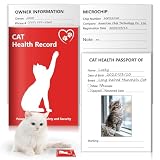
- 1.You’ll Get:When you choose our cat vaccines records tracker, you'll receive one notebook.This 12-page Kitty health journal has 8 dedicated pages for tracking your pup’s health, vet visits, and key details, with 4 blank pages at the end for jotting down extra notes, pet cat-related info, or anything else you want to record.
- 2.Ideal Size for Record Keeping:Each cat vaccine record book measures 5x3.5 inches folded; 5x7 inches unfolded, allowing for easy portability and storage.These handy health records notebook for cats with double sided printing, featuring enough space for all your pets important information,plus, it has dedicated spots for sticking on vaccine stickers and adding cute kitten photos.They offer a stylish and organized approach to pet health documentation, a must have addition to your pet supplies.
- 3.Premium Quality: The cat health record tracker’s cover features 300gsm coated paper with vibrant full-color printing and a protective laminate finish. Inside, 80gsm high-quality offset paper pages are durable and ink-resistant, ensuring no bleeding from pens or markers—so your records stay neat and easy to read.
- 4.Essential for cat owners: This kitten health record book is designed for vet clinics & owners. Track key health info (vaccines, exams, treatments) easily. When you’re away, pet sitters/family can quickly check medical history for seamless care. Kitten record book with photo, vital signs & ID sections, it helps in emergencies—even if your kitten gets lost.
- 5.Effortlessly Track Vaccinations and More:The cat canine health record booklets pages include:owner and cat information,medical history and hospitalizations,vaccination record and sticker,cat service providers,fecal examinations and de-worming,heartworm screening, prevention and treatment etc.This record keeping tool will ensure every important detail is accounted for and make this task easy, organized, and straightforward.Add this essential tool to your pet supplies for a happier, healthier pet.
How to tell whether a cat has it
Appearance is a starting point, not a diagnosis. Cats Protection lists these as possible characteristics:
- disproportionately short legs
- a larger-looking head
- a short neck
- enlarged joints
- an underbite
- a curved spine
- a stockier body
- less free movement
No single feature confirms the condition. A vet can assess limb proportions, joint size, spinal shape and the way the cat moves, and can judge whether any of these are a concern at its age.
Rank #2

- COMPLETE HEALTH RECORDS FOR CATS & SMALL PETS: Comprehensive veterinary record booklets designed to track vaccinations, exams, deworming, and treatments. Perfect for maintaining organized, up-to-date medical histories for cats, kittens, and small animals."
- 25 INDIVIDUAL BOOKLETS PER PACK: Includes 25 separate records—ideal for multi-pet households, shelters, rescues, breeders, or veterinary clinics that manage multiple animals. Each booklet provides structured documentation for easy organization."
- CLEAR, CUSTOMIZABLE FORMAT FOR EASY RECORDING: Each page features clearly labeled sections for vaccines, dates, treatment details, and veterinarian notes. The user-friendly layout allows for quick, legible recordkeeping at home, during exams, or on the go."
- PORTABLE AND CONVENIENT DESIGN: Compact and lightweight, these cat health record booklets fit easily into folders, travel bags, or adoption packets. Keep vital health information accessible during vet appointments, travel, or transfers."
- IDEAL FOR PET OWNERS, BREEDERS & PROFESSIONALS: Perfect for breeders, shelters, veterinarians, and pet owners who want a professional way to document a cat’s medical care. Simplifies communication between caregivers, adopters, and clinics."
Possible health effects
The welfare sources describe risks and reported concerns. They do not state that every cat with short limbs will be affected, and they do not give a comparative rate.
Mobility, jumping and grooming
Cats Protection says short limbs can make jumping, climbing and grooming harder. The UK Animal Welfare Committee discusses possible mobility and grooming limitations in the same way. A cat that can no longer reach its usual perch or cannot groom parts of its body may show this through changed habits rather than obvious limping.
Recommended Free Tools
Joints, arthritis and pain
The Animal Welfare Committee discusses abnormal joints, pain, osteoarthritis and intervertebral disc disease as concerns linked to the trait. Cats Protection notes that cats may hide pain, so reduced activity or a change in temperament can be the only visible sign.
Spine and chest
Welfare sources list possible spinal and chest concerns. Cats Protection’s list of characteristics includes a curved spine, but the published sources do not quantify how often spinal or chest problems occur.
Rank #4

- Impressive Quantity and Appropriate Size: the package includes 25 cat health records, offering a generous quantity for pet owners with multiple cats or veterinary practices; The unfolded size measures 7.87 x 10.63 inches/ 20 x 27 cm, and the folded size is 7.87 x 3.54 inches/ 20 x 9 cm, making it ideally suited for easy storage and convenient access of your pet's vital health information
- Distinctive Color and Reliable Material: presented in aesthetically pleasing shades of blue and white, these cat shot record booklets ensure that your pet's health data stands out; Crafted from durable 120 g offset paper, these records offer long lasting quality, ensuring the preservation of critical information for an extended period
- Ideal for Multiple Users and Various Occasions: from individual pet owners to professional veterinarians, these cat vaccine record books cater to a wide range of users; Their practicality makes them equally suited for various occasions, ranging from regular vet appointments to emergency visits
- Meaningful Gift for Pet Lovers: a thoughtful gift for any cat owner, these kitten health records not only indicate care for the pet but also understanding of the owner's responsibility; Gift these records to promote responsible pet ownership and foster better pet health
- Tri Fold Design for Enhanced Convenience: with a practical tri fold design, these animal health records provide an organized structure, making it easy for users to track the health history and vaccination records of their pets
Where the evidence disagrees
The International Cat Association’s breed page states that Munchkins are not prone to arthritis and do not have more difficulty walking or moving with age. It also says the gene shortens the long leg bones and that other bones, including the spine, are not affected in the way they are in some dwarf dog breeds. The UK Animal Welfare Committee raises the concerns described above. These are the claims of the two sources, not an agreed finding, and the sources cited here do not settle which account better fits any given cat.
Independent reader supportYour contribution helps us test, update, and keep practical guides available for everyone.Caring for a cat with short legs
For a cat already in your home, the approach is the same as for any cat with reduced mobility. Work through these steps with your vet:
Best Value
- Book a veterinary examination. Ask the vet to check joints, spine, body condition and pain. Cats Protection advises regular veterinary examinations.
- Watch for changes. Reluctance to jump or climb, stiffness, altered posture, matted or unkempt fur in areas the cat cannot reach, or a shift in how often it uses a favourite spot are all reasons to call the vet.
- Keep a healthy weight. Cats Protection advises maintaining a healthy body weight.
- Treat pain as a veterinary matter. Discuss any pain relief with your vet. Do not give medicines, supplements or an exercise plan without veterinary direction.
- Consider an access aid. If jumping is difficult, a stable, low-rise step or ramp may help a cat reach a resting place. The sources cited here do not compare designs or establish product safety, and they do not show that ramps prevent disease. Ask your vet before relying on one if mobility is impaired.
Breeding, neutering and registry positions
Cats Protection advises neutering to avoid passing on the mutation. Beyond that, the organisations differ on whether the trait should be bred or recognised at all, and those differences are different kinds of claims. Some concern recognition, some concern the health picture, and some concern breeding ethics.
| Organisation and document | What it addresses | Stated position |
|---|---|---|
| UK Animal Welfare Committee, Opinion on the welfare implications of current and emergent feline breeding practices | Welfare impacts and inheritance | Describes the Munchkin phenotype as a genetic mutation with short limbs; reports possible joint, pain and mobility concerns; reports breeding evidence consistent with dominant inheritance and non-viability of two-copy embryos. |
| American Association of Feline Practitioners, 2024 AAFP responsible breeding in feline medicine position statement | Breeding ethics | “The AAFP does not support breeding based solely on appearance when health concerns and feline welfare are not prioritized.” |
| Fédération Internationale Féline, Health & Welfare Rules | Registry rules | Will not recognise new breeds based on phenotypic abnormalities or congenital traits that cause health problems or impede normal life; the rules list achondroplasia/pseudo-achondroplasia and Munchkin as an example. |
| The International Cat Association, Munchkin | Recognition and breed health | Recognises the Munchkin; states that Munchkins are not prone to arthritis and do not have more difficulty walking or moving with age. |
Recognition and registry rules vary by organisation and by country, so check the rules that apply where you live before making any statement about a cat’s eligibility.
Quick Recap
What the evidence does and does not establish
- The published sources do not give a population prevalence, incidence, comparative disease rate or life-expectancy figure for dwarf or Munchkin cats.
- The 2020 genome study concerns a novel gene associated with dwarfism. It does not cover every form of short-leggedness.
- The welfare and breed-body positions above are opinions and rules from named organisations. They are not an independent consensus.
- No controlled assessment of mobility aids for cats was among the sources, so product claims cannot be supported from them.
Product prices and availability are accurate as of the date/time indicated and are subject to change. Any price and availability information displayed on Amazon at the time of purchase will apply.




