Stomatitis in cats is inflammation of the mucous membranes lining the mouth. The severe, persistent form is feline chronic gingivostomatitis (FCGS), a painful inflammatory disease that starts in the gums and extends into the surrounding oral lining. Its exact cause is not known. The FelineVMA 2025 guideline describes surgery as the most effective management approach while the cause remains uncertain, and many cats still need ongoing medical care afterward.
This guide explains how FCGS differs from other causes of red or bleeding gums, which signs warrant a call to your veterinarian, how the diagnosis is made, and what the treatment and outcome figures do and do not show.
What stomatitis and FCGS mean
“Stomatitis” is the general term for inflammation of the mucous membranes of the mouth. FCGS is a more severe, persistent form in which gingival (gum) inflammation extends into the oral mucosa and can involve the caudal, or back, part of the mouth. Affected tissue may show redness (erythema), ulceration, and proliferative lesions. Some cats with FCGS also have periodontal disease or tooth resorption; others have no concurrent dental disease.
A red gumline has many possible causes, so FCGS should not be assumed from appearance. A veterinarian needs to evaluate the mouth to tell it apart from:
#1 Best Overall
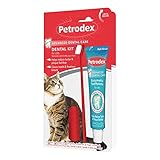
- Complete oral care system: enzymatic toothpaste plus toothbrush cleans teeth and fights bad breath in one kit
- Reduces plaque & tartar buildup: patented enzyme formula works without rinsing required
- Malt-flavored formula cats tolerate well: makes at-home brushing easier to stick with
- Everything needed to start a dental routine: ideal for new puppies, kittens, or first-time brushers
- Formulated specifically for pets: non-foaming, no-rinse enzymatic formula that's safe if swallowed
- Periodontal disease
- Tooth resorption
- Trauma to the mouth
- Viral disease
- Oral masses
No single prevalence figure is settled, because estimates vary substantially by population and source. The FelineVMA 2025 guideline summarizes a study of feral cats in Korea that reported 26.6%. That figure describes feral cats and should not be generalized to pet cats.
What causes stomatitis in cats?
No single cause has been proven. The FelineVMA 2025 guideline describes FCGS as a likely multifactorial process. It involves antigenic challenges from food, grooming, and viral, bacterial, or fungal microorganisms, together with local and systemic immune factors. A 2020 clinical review by Arzi and colleagues, An Update on Feline Chronic Gingivostomatitis, characterizes the disease as likely a manifestation of an aberrant immune response to chronic antigenic stimulation.
The immune response is the common thread
Jennifer Rawlinson, DVM, chief of the dentistry and oral surgery section at Cornell University College of Veterinary Medicine, describes the mechanism this way:
“The immune system becomes overly reactive to plaque and causes severe inflammation in the gingiva, initially around an affected tooth and then quickly progressing to the tissue in the surrounding area.”
Quick wins for a faster PC:
Scan for outdated or missing drivers - takes under a minuteDriver Scan →Repair Windows errors before they cause bigger problemsFix Now →Special offer. See more information about Outbyte and uninstall instructions. Please review EULA and Privacy policy.Rank #2
 TropiClean Fresh Breath Cat Toothbrush and Toothpaste Kit, Easy Dental Care
- Delious Chicken flavored Cat Toothpaste: Formulated specifically with your cat's preferences in mind
The quote explains the pattern of inflammation. It does not establish plaque as the sole trigger.
Viruses and other associations
FCGS is seen alongside viral and other conditions, but Cornell notes that a direct causal relationship has not been established. Feline immunodeficiency virus (FIV) and feline leukemia virus (FeLV) are part of current evaluation because they carry prognostic significance. Testing for them does not establish either virus as the cause in a given cat. The same caution applies to calicivirus, bacteria, dental plaque, and diet: none has been shown to be the single cause.
Signs to recognize
Cats are good at hiding discomfort, so early signs are easy to miss. Possible signs include:
- Apparent oral pain
- Swollen, ulcerated, or bleeding gums
- Reluctance to eat, or inability to eat despite interest in food
- Weight loss
- Excessive salivation (drooling)
- Blood in saliva
- Bad breath
- Pawing at the mouth or face
Teeth may look relatively normal or be heavily coated with tartar, so the appearance of the teeth does not indicate how severe the disease is. Cornell’s dental-care guidance also lists recessed gums and tooth loss among possible signs of dental disease.
Rank #3

- FIGHTS DENTAL DISEASE IN CATS: Around 40% of cats develop dental disease, causing daily pain they often hide; this complete dental kit reduces plaque and tartar that cause gum disease and bad cat breath when used regularly.
- COMPLETE CAT DENTAL KIT CONTENTS: Kit includes one 2.5 oz tuna flavor enzymatic cat toothpaste, one dual-headed toothbrush with two different brush head sizes for cats of all sizes, and one finger brush for added brushing flexibility.
- BAKING SODA FORMULA DEODORIZES BREATH: This enzymatic cat toothpaste is formulated with Arm & Hammer baking soda, which dissolves into hard-to-reach areas to deodorize cat breath and clean gently without harsh abrasives.
- TARTAR CONTROL ENZYMATIC TOOTHPASTE: The enzymatic formula actively helps control tartar buildup and freshens breath; fluoride-free and non-toxic, this toothpaste is safe for cats and formulated without dyes or harsh additives.
- TWO TOOTHBRUSH STYLES FOR CATS: The dual-headed cat toothbrush fits different mouth sizes, while the included finger brush slips over your fingertip for closer gum contact, making it easier to reach all areas of your cat's mouth.
When to contact your veterinarian
Arrange a veterinary exam promptly if your cat shows any of the following:
- Eating less than usual, or refusing hard food
- Obvious oral pain or repeated pawing at the mouth
- Drooling, especially with blood in the saliva
- Weight loss
Published guidance does not define a safe window for watching these signs at home, so an exam should not be postponed on the assumption that they will pass.
How veterinarians diagnose FCGS
Diagnosis is generally based on the clinical picture: the cat’s history, general health, and oral examination. Because other painful oral conditions can look similar, a photograph or symptom list cannot confirm the diagnosis. Decisions about which blood tests to run and whether to anesthetize your cat belong to your veterinarian. A full workup typically follows this sequence:
- History and general health assessment. The veterinarian asks about eating, drooling, and weight changes and checks overall health.
- Blood testing and FIV and FeLV testing. Blood tests are selected by the veterinarian. FIV and FeLV testing is recommended in current evaluation because of its prognostic significance.
- Examination under general anesthesia. Cornell’s dentistry service describes dental probing, charting, and full-mouth x-rays as the route to a definitive dental diagnosis and treatment plan.
- Biopsy, when needed. See the section below.
When a biopsy is needed
A biopsy may be needed when a lesion looks atypical or when another diagnosis must be excluded. Cornell notes that biopsy can be needed for a conclusive diagnosis in some cases. It is not required for every cat with FCGS.
Recommended Free Tools
Rank #4

- Gentle Dental Care Cats Accept: Designed for cats sensitive to strong smells or flavors, this no-added-flavor cat toothpaste supports daily plaque control without overwhelming taste or scent—ideal for picky, scent-sensitive, or first-time brushers
- Enzyme-Based Gentle Cleaning: This enzymatic toothpaste for cats helps break down plaque buildup and support fresher breath while remaining safe to swallow. A soothing, non-foaming formula that cleans effectively without irritation
- Complete Brushing Kit for Cats: A convenient cat toothbrush and toothpaste set including a standard toothbrush and finger brush. Designed to support different brushing preferences and help cats adjust more easily to daily dental routines
- Two Brush Options for Sensitive Cats: The included cat toothbrush features soft bristles for comfortable brushing, while the finger brush offers a more controlled, hands-on option—ideal for cats sensitive to brushing or new to dental care
- Everyday Dental Care Made Simple: Supports consistent cat dental care by helping maintain cleaner teeth and fresher breath over time. A stress-reduced solution for cat teeth cleaning as part of a simple daily routine
Surgical treatment: what the 2025 guideline describes
The FelineVMA 2025 guideline states that surgical intervention is the most effective management approach while the etiology of FCGS remains uncertain, and it prefers early intervention. Two extraction approaches are described. Both require removal of any retained tooth roots and alveoloplasty, which is reshaping of the bone around the tooth socket. The guideline stresses that appropriate pain relief before, during, and after surgery is essential; the choice of pain-control medication belongs to the veterinarian.
Partial caudal-mouth extraction
This approach removes the premolars and molars toward the back of the mouth. The guideline says it can be considered when the incisors and canines are not inflamed, provided the caregiver can keep regular follow-up appointments.
Full-mouth extraction
This approach removes all of the teeth. The guideline states that the choice between the two approaches depends in part on inflammation around the incisors and canines. Its summary does not set out further criteria for full-mouth extraction, so ask your veterinarian why it is or is not recommended for your cat.
Comparing the two approaches
| Factor | Partial caudal-mouth extraction | Full-mouth extraction |
|---|---|---|
| Teeth removed | Premolars and molars | All teeth |
| Retained roots removed and alveoloplasty performed | Required | Required |
| Inflammation around incisors and canines | Can be considered only when these teeth are not inflamed | Not stated in the 2025 guideline summary |
| Caregiver follow-up | Regular follow-up appointments are a stated condition | Not stated in the 2025 guideline summary |
The guideline does not say one approach is right for every cat. Some cases may require referral to a board-certified veterinary dentist, and the surgical assessment and referral options should guide the decision.
Outdated Drivers Are Slowing You Down
One free scan finds every outdated or missing driver and matches the right update for your exact hardware.Free scan · exact hardware matchPC Slower Than It Used to Be?
A free scan shows the junk files, broken settings and background clutter dragging Windows down - then fixes them in one click.Free scan · Windows 10 & 11Best Value

- Ultra-Mini Brush Head for Precision Cleaning: The 0.31-inch soft bristle head targets tiny teeth and hard-to-reach areas, making it perfect for kittens and small-mouthed cats, ensuring gentle yet thorough cleaning
- Finger-Fit Ergonomic Design: This finger toothbrush for cats fits securely on your finger, giving pet parents full control for accurate brushing—ideal for skittish pets or new users starting a cat tooth brushing routine
- Coconut Oil Enzymatic Toothpaste Formula: Powered by coconut oil and natural enzymes, the cat toothpaste helps fight plaque and tartar buildup, while supporting cat tooth care and freshening breath safely
- Irresistible Coconut Chicken Flavor: A delicious enzymatic cat toothpaste flavor cats crave—finger brush for cats becomes a bonding activity, making dental care part of your daily pet routine
- Complete Cat Dental Kit for Daily Hygiene: Includes a soft toothbrush, a finger toothbrush, and a 2.5 oz tube of enzyme toothpaste for cats, giving your feline a full dental care kit in one simple package
Ongoing care after extraction
Many cats need continuing medical management after extraction. The guideline does not recommend chronic steroid use or indiscriminate antimicrobial use, because these do not resolve the disease or address the related pain. Medication decisions, including which drugs to use and for how long, belong to your veterinarian.
Outcomes: what the figures show
The two sets of figures below come from different evidence summaries and should not be combined.
| Source | Substantial improvement | Complete resolution | Minimal or no improvement |
|---|---|---|---|
| FelineVMA 2025 guideline, reporting a 95-case study of cats after extraction | 39% | 28% | Not stated |
| Arzi and colleagues’ 2020 clinical review, summarizing earlier studies | Approximately 70% to 80% (improvement or resolution combined) | Included in the combined figure | Approximately 20% to 30% |
The 95-case figures describe cats in that study after extraction. The 2020 review figures are estimates across several earlier studies, not an individual prognosis. The 39% and 28% figures do not mean the remaining cats had no benefit. The guideline notes that many patients still require medical management and recommends tracking response, for example with a disease activity score.
Questions to ask your veterinarian
- Is the inflammation confined to the back of the mouth, or does it extend around the incisors and canines?
- How many teeth and how much oral tissue are affected?
- Are retained roots present, and will alveoloplasty be needed?
- Would a referral to a board-certified veterinary dentist help in my cat’s case?
- What pain-relief plan will be used before, during, and after surgery?
- Can our household keep the regular follow-up visits, and what would continued medical management involve?
- What feeding and recovery plan fits my cat, given that published outcome data do not guarantee a timeline for returning to normal eating?
What not to do at home
- Do not brush your cat’s teeth while it has gingivostomatitis. Cornell advises against brushing because the mouth is painful.
- Do not rely on dental chews, toothpaste, or other consumer dental products as treatment. The guideline does not recommend chews as treatment.
- Do not change your cat’s food or add feeding aids without veterinary direction. Feeding support needs to be tailored to the individual cat.
- Do not start medications from household supplies. Drug selection belongs to your veterinarian.
Professional dental instruments and prescription medicines are veterinary tools, not consumer treatments.
Do these 3 things before closing this tab:
1Scan for outdated or missing drivers - takes under a minute2Clear out junk files and repair common Windows errors3Fix the driver behind crashes, sound loss and screen glitchesQuick Recap
Product prices and availability are accurate as of the date/time indicated and are subject to change. Any price and availability information displayed on Amazon at the time of purchase will apply.




