The Tool Desk
Outbyte Driver Updater FREEFix the driver behind crashes, sound loss and screen glitchesFind Drivers →Outbyte PC Repair FREERepair Windows errors before they cause bigger problemsFix Now →Most familiar sayings about dogs contain a grain of truth, but they are simplified rules that break down once you add context such as age, breed, body language, or an individual dog’s health. Below, each common myth is checked against guidance from veterinary and kennel-club sources and the U.S. Food and Drug Administration (FDA), with the limits of that evidence stated plainly.
“One dog year equals seven human years”
This is the most widely repeated dog myth, and the veterinary guidance treats it as a shorthand rather than a calculation. VCA describes the seven-to-one rule as an oversimplification, because dogs mature rapidly in their first years and age comparisons vary with breed, size, and health. A 1-year-old puppy and a 7-year-old dog are not separated by six human years of development in any meaningful sense.


The American Kennel Club (AKC) notes that the seven-year rule has circulated since the 1950s and offers a rough alternative: about 15 human years for the first dog year, 9 for the second, and roughly 5 for each year after that. Treat this as a rough guideline, not a universal formula. Applied literally, it gives a 5-year-old dog about 39 human years (15 + 9 + 5 + 5 + 5), which illustrates how much the early years count in this model.
For a practical sense of a dog’s life stage, your veterinarian’s assessment of body condition, dental health, and activity level will tell you more than any multiplication. The AKC’s explainer is at https://www.akc.org/expert-advice/health/how-to-calculate-dog-years-to-human-years/.
Recommended Free Tools
#1 Best Overall
“Dogs only see in black and white”
This is false. VCA and the AKC both state that dogs can see color, though the range differs from ours. According to the AKC’s guidance, blue and yellow are easier for dogs to distinguish, while red can be hard to pick out against grass.
That has a practical implication for games. A blue or yellow fetch toy, such as a yellow ball for dogs, stands out better on a green lawn than a red one would. Color is only one factor in visibility, though. Brightness, contrast with the background, and the dog’s attention all matter, and no particular toy has been shown to be superior. The AKC article is at https://www.akc.org/expert-advice/health/can-dogs-see-color/.
“A wagging tail means a friendly dog”
A tail wag is communication, but it does not reliably signal happiness or an invitation to approach. The AKC cautions that a wag does not always mean a dog is happy or approachable, and VCA notes that a wag does not necessarily mean the dog wants interaction or wants it to continue.
Read the whole body: the position of the ears, the set of the mouth, whether the body is loose or stiff, where the weight sits, and whether the dog moves toward you or turns away. A stiff, high tail that wags slowly can signal tension, not welcome. Before greeting an unfamiliar dog, ask the owner and watch for these cues rather than relying on the wag alone. VCA’s explainer is at https://vcahospitals.com/lakewood/know-your-pet/interpreting-tail-wags-in-dogs, and the AKC’s discussion of why dogs wag is at https://www.akc.org/expert-advice/advice/why-do-dogs-wag-their-tails/.
“A dry nose means a dog is sick”
A dry nose on its own is not a dependable sign of illness. Dogs can have dry noses for ordinary reasons, such as warm air, sleep, or time spent in the sun, and sick dogs can have wet noses. Nose moisture is one observation among many.
The AKC advises contacting a veterinarian when dryness appears alongside lethargy, vomiting, diarrhea, or changes in appetite or activity. Those combinations matter far more than the nose. If your dog seems unwell, describe the full pattern and when it started rather than focusing on the nose alone. The AKC’s article is at https://www.akc.org/expert-advice/health/why-is-my-dogs-nose-dry/.
Rank #3
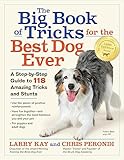
- Book: the big book of tricks for the best dog ever: a step-by-step guide to 118 amazing tricks and stunts
- Language: english
- Binding: paperback
“You have to be the alpha”
VCA reports that dog behavior is complex and that veterinary behaviorists caution against relying too heavily on dominance theory, which can lead to problems. The “alpha” idea is an oversimplified frame, not a complete plan for living with a dog.
If you are dealing with a behavior problem such as aggression, fear, or reactivity, the most useful step is a consultation with your veterinarian, who can rule out medical causes, and, where needed, a qualified behavior professional who uses evidence-based methods. Be cautious with any approach built around dominance or intimidation.
What’s actually slowing this PC down?
Pick the symptom - the matching free tool is one click away.
“Dogs eat grass because they are sick or deficient”
VCA describes the belief that grass or dirt eating signals illness or a dietary deficiency as a common misconception that is rarely true. In most cases, grass eating is not a sign that something is wrong.
The qualifier matters. Sources do not rule out individual medical explanations, so a dog that eats grass suddenly or frequently, especially alongside vomiting, diarrhea, weight loss, or changes in appetite, should be examined by a veterinarian rather than dismissed as normal behavior.
“A dog’s mouth is cleaner than a human’s”
This claim is not supported. The AKC’s puppy facts explainer states that dog and human mouths carry around the same number of bacteria. That page does not cite a study for the comparison, so present it as the AKC’s statement rather than a measured count. The same explainer cautions against letting a dog lick wounds.
Keep that advice firm. A dog’s saliva does not sterilize a cut, and licking can irritate broken skin and delay healing. Clean minor wounds with mild soap and water or as your veterinarian directs, and keep the dog from licking the area.
Quick wins for a faster PC:
Repair Windows errors before they cause bigger problemsFix Now →Fix the driver behind crashes, sound loss and screen glitchesFind Drivers →“Grain-free food causes heart disease”
This is the myth where the evidence requires the most care, because the FDA’s investigation is ongoing and its public statements are deliberately limited. The agency says it does not know the specific connection behind reports of non-hereditary dilated cardiomyopathy (DCM) in dogs. It has not shown that grain-free food causes DCM, and it has not concluded that every such diet is safe for every dog.
The FDA’s own questions-and-answers page states that most reported diets listed pulses (peas, lentils, and other legumes) high in the ingredient list, but reports involved both grain-free and grain-containing diets. The agency says pulse ingredients are not inherently dangerous. It also cautions that adverse-event numbers alone do not establish causation. The FDA advises owners to consult a veterinarian before changing a dog’s diet in response to this concern, and a veterinarian may consult a board-certified veterinary nutritionist. The agency’s page is at https://www.fda.gov/animal-veterinary/animal-health-literacy/questions-answers-fdas-work-potential-causes-non-hereditary-dcm-dogs.
What the FDA’s reported figures show
The FDA’s updates include percentages that are often quoted without their context. The table below states what each figure measures.
| Figure | What it measures | Source and date |
|---|---|---|
| 38% (n=77) of dogs had a history of confirmed or suspected allergies or sensitivities | Dogs in the FDA’s Vet-LIRN update; this describes that group, not all dogs or all DCM cases | FDA Vet-LIRN update, 2019 |
| More than 90% of products in the case data were labeled grain-free; 93% contained peas and/or lentils | Proportions of reported products in FDA case reports; not proof that these ingredients caused disease or describe population-level risk | FDA third status report, 2019 |
| About 90% of foods in 196 single-primary-diet DCM reports were labeled grain-free; about 10% contained grains | Reported cases in the FDA’s February 2019 update; not causal risk estimates | FDA February 2019 update |
Because these figures date from 2019, check the FDA’s current investigation pages before drawing conclusions about the investigation’s present status.
What to do if you are concerned about your dog’s food
- Do not switch foods only because of a label. Ask your veterinarian whether the current diet suits your dog’s age, health, and breed.
- If your veterinarian recommends a change, make it gradually and keep notes on appetite, stool, energy, and breathing.
- Report any unusual symptoms such as coughing, reduced stamina, fainting, or breathing difficulty to your veterinarian promptly, since DCM can develop without obvious early signs.
The myth that grain-free food is the cause is a simplification. The sound advice is to make diet decisions with your veterinarian based on your individual dog.
Why these myths persist
Each myth turns a useful observation into a universal rule. Dogs do age faster early on, tail wags do carry information, and diet is a legitimate topic for owners to watch. The problem is that the simple rule removes the variables that determine the answer. Asking “compared to what, and in which dog?” usually produces a more accurate answer than any memorable saying.
Quick Recap
“
Product prices and availability are accurate as of the date/time indicated and are subject to change. Any price and availability information displayed on Amazon at the time of purchase will apply.




