Feral Freedom is a shelter-linked form of trap-neuter-return (TNR) developed in Jacksonville, Florida. Community cats that enter the shelter system are assessed, sterilized and vaccinated, then returned to the place they were trapped when they are suitable to live outdoors. The program’s implementation manual, Save Lives with Feral Freedom: A Guide to the Feral Freedom Program, is hosted by Best Friends Animal Society. It was written by Rick DuCharme, founder and director of First Coast No More Homeless Pets (FCNMHP), with assistance from Best Friends. The guide is dated 2013 in later literature, and its cost, staffing and intake figures describe Jacksonville’s historical program period rather than current conditions.
The model works only when several organizations share the workload. A city that wants to start a similar program needs agreed roles for shelter intake, transport, veterinary surgery, field return and public communication, along with a funding source that outlasts startup money.
What the model covers, and what it does not
Feral Freedom is aimed at a specific group of animals: community cats, meaning free-roaming feral, stray or lost cats that live outdoors and do not belong to an individual, who end up in the shelter. It is not a replacement for every community TNR service.
- It targets shelter-entering cats. The Jacksonville program focused on community cats arriving at the shelter, with the aim of reducing shelter deaths among them.
- It does not cover all colony management. Residents who already manage colonies outside the shelter system are served by other TNR resources. The guide tells local planners to survey those existing services before launching.
- It depends on partners outside the shelter. Veterinary surgery capacity, transport, funding and local policy all have to line up. The guide treats coordination as the central premise.
Which cats qualify
Jacksonville’s eligibility rules were broadened over time. The program accepted community cats that arrived in traps, and it also accepted cats brought in carriers, boxes, or even by hand, provided they had been living outdoors and appeared to be doing well. The guide notes that cats could be either friendly or feral.
Do these 3 things before closing this tab:
1Fix the driver behind crashes, sound loss and screen glitches2Repair Windows errors before they cause bigger problems3Scan for outdated or missing drivers - takes under a minute#1 Best Overall

- High Quality Materials:SZHLUX Live Animal Cage Trap use low carbon steel wire and medium frequency welding. In this way, the product surface is flat, the welding is firm, and it is not easy to solder off.Weather and rust resistant.
- Convenient Design: Our cat trap is foldable and can be easily loaded into the trunk of the car.It only takes 4 simple steps to set up,from nearly flat to assembled in seconds--no tools needed.
- Humane Live Animal Trap: Our raccoon trap use oblong support frame to secure the cage shape and use fixing clips to fix rear door,smoothed internal edges protect and prevent trapped animal being injured.All you need is some bait to catch and then release them back to the wild.
- User-friendly Design: The top cover guard board of the cage prevents people injured by the trapped animal's mistake.The connecting rod of the pedal mechanism is set inside the cage to prevent animals from touching the mechanism by mistake.A new tool has been designed to extend the safe distance when releasing the animal.
- Dimensions: Product Size: 32inch*10inch*12inch; Package Size: 38.2inch*11.8inch*3.15inch.Excellent choice when attempting to capture smaller animals such as stray cats, raccoons, squirrel, skunk, mole, groundhog, armadillo, rabbit and small dogs.
Cats the Jacksonville guide excludes
- Family surrenders
- Indoor cats
- Declawed cats
- Cats too unhealthy to return to the outdoors
- Kittens too young to fend for themselves
These are criteria from one city’s guide, not a universal standard. Veterinary and disposition decisions should be set with the professionals and agencies responsible for them locally. The guide states the principle directly: “Each community needs to determine which cats will be accepted into Feral Freedom and who will decide if incoming cats qualify for the program.” (Source: Save Lives with Feral Freedom, Best Friends Animal Society.)
How a cat moves through the program
- Record the trapping location at intake. The guide stresses that where each cat was trapped must be captured, because that location is where the cat is returned. Also note how the cat arrived (trap, carrier, box or by hand) and whether it appears to have been living outdoors and doing well.
- Screen against the local criteria. Apply the community’s eligibility rules and record who made the qualification decision.
- Segregate qualifying cats from other shelter cats as soon as possible. The guide’s stated reasons include reducing disease-transmission risk.
- Transfer promptly. Selected cats move quickly out of the shelter so they avoid unnecessary shelter stays.
- Sterilize, vaccinate and care for the cat. Surgery and recovery are handled by the veterinary partner, with the capacity constraints described below.
- Return the cat to its territory when it is suitable. Return is to the trapping location, not to a new site chosen by the shelter.
What a city needs in place before launch
Clear roles across five functions
Local adaptation requires a named owner for each of five functions: shelter intake, transportation, veterinary services, field return and community communication. In Jacksonville, Jacksonville Animal Care & Protective Services and FCNMHP divided this work between them. A city that cannot name an owner for each function should not begin intake.
Rank #2

- HUMANE CAPTURE: This large live animal trap safely captures raccoons, cats, possums, and other small animals with a 1-door design that allows full entry before closing, reducing escape chances for effective pest control
- HEAVY-DUTY CONSTRUCTION: Built with galvanized wire mesh and solid steel door, this raccoon trap resists rust and corrosion while providing long-lasting durability for outdoor use in all weather conditions
- SAFETY FIRST: Features smooth internal edges to prevent animal injuries and protective handle guards for safe handling, making this humane animal trap ideal for both novice and experienced users in wildlife management
- PROFESSIONAL DESIGN: Engineered with a refined trip mechanism specifically calibrated for heavier animals like bobcats and coyotes, this live trap minimizes false triggers while ensuring reliable capture performance
- VERSATILE SOLUTION: Perfect as a feral cat trap, skunk trap, or armadillo trap, this large animal cage trap handles a wide range of pest control situations effectively for comprehensive wildlife management
Staffing and surgery capacity
The guide identifies transport, staffing, surgery slots and rapid movement out of the shelter as the main operational requirements. Capacity planning should start from the local number of cats that would qualify and the number of surgery slots a partner can commit each day. Jacksonville’s historical figures, listed below, show the scale the work reached in that city. They are not a staffing formula.
Funding that outlasts the startup phase
The guide states: “Dedicated long-term funding is vital to ensure sustainability for a Feral Freedom program.” (Source: Save Lives with Feral Freedom, Best Friends Animal Society.) Startup costs and per-cat costs are separate budget lines, and both need to be covered by sources the city can rely on year after year.
Rank #3
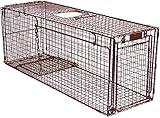
- Works for cats, skunks, rabbits, and other small animals
Local law
The guide recounts a conflict between Jacksonville’s earlier animal rules and TNR, followed by later legal recognition and funding for the program. Those events are specific to Jacksonville. Each community needs to check its own current ordinances before committing to a return policy, because a rule that is permissive in one city may restrict return in another.
Trap access
Best Friends describes humane traps as equipment used in TNVR work. The guide includes a sample trap-loan agreement as an appendix. Before buying traps, ask local shelters, rescues and TNR groups whether a trap-loan program exists. The sources do not establish a current loan service in any particular city, and they do not recommend a specific trap model.
Rank #4

- Wide Application: As urban and wilderness ecosystems intertwine, animals may disturb your life. Our cat trap is a versatile solution for various animals, including cats, raccoons, rabbits, groundhogs, armadillos, and opossums. It effectively addresses issues such as farmland invasion, release, and harassment.
- Humanized Designs: We prioritize humane care with our raccoon trap. The L-shaped lever ensures the trap won't harm animals when triggered. The dense mesh prevents escapes and protects against external attacks or stolen food. Smooth wire edges prevent animals from panicking or biting the wire, ensuring their safety.
- Sturdy and Durable: Our animal trap is built to last. It is constructed with sturdy, thickened wires that withstand animal bites and impacts without deformation or cracking. The galvanized coating provides excellent corrosion resistance, ensuring stability and durability in all weather conditions.
- Simple and User-friendly: Our live trap is designed for your convenience. It comes pre-assembled, saving you from tedious setup steps. Just unfold the cage, secure the rear door, and connect the trap mechanism to start using it quickly. This saves time and effort, allowing you to engage in capture work promptly.
- Portable and Easy to Store: Our efficient groundhog trap is portable and easy to store. It features a convenient handle for easy mobility, with an extended design that prevents accidental injuries from animals. The collapsible design allows for easy storage, freeing up space when not in use.
Jacksonville’s historical figures, with context
Every figure below comes from the 2013 guide and describes Jacksonville’s program period as the guide reports it. None is a current statistic, and none should be used as a budget template for another city without local cost and capacity data.
| Figure | Value as reported | Context from the guide |
|---|---|---|
| Cats entering Jacksonville’s city shelter | 13,365 in 2007 | Baseline intake before the program reached its operating scale |
| Cats deemed feral and euthanized for that reason | Around 3,300 in 2007 | Shows the shelter-death problem the program targeted |
| Cats handled per year during the first two years | Approximately 4,500 annually | Reported for the first two program years |
| Program staffing | About 60 staff hours per week | Jacksonville program staffing |
| Surgery capacity | 20–50 cats per day | Capacity need described for the Jacksonville program |
| FCNMHP’s portion per cat | About $50 | Historical cost covering transport, surgery and care, and return transport |
| Startup costs | Approximately $42,700 | Reported startup cost |
| Summary outcome figures | 4,500 cats saved in each of the first two years at $49.23 per life saved; annual budget $221,450 | The guide’s own summary figures, presented with the context it gives for them |
Hillsborough County figures are a different study
A 2019 study in Frontiers in Veterinary Science reported on Hillsborough County, Florida, a different county with its own shelter system. It is useful as context for multi-program approaches, but it should not be read as evidence about Jacksonville or Feral Freedom specifically.
Best Value

- Safe & Humane Trapping – Designed with animal welfare in mind, this live trap safely captures animals without injury, making it ideal for humane relocation.
- Durable Galvanized Steel Build – Constructed from high-strength, rust-resistant steel for long-lasting performance in any weather condition.
- Reliable Trigger Mechanism – Features a highly sensitive trip plate and spring-loaded door to ensure fast and secure captures, every time.
- Spacious & Versatile Size – Accommodates a range of medium-sized animals including raccoons, groundhogs, armadillos, and stray cats.
- Simple Assembly– Folding to save space and easy assembly with no tools required—perfect for homeowners, farmers, or pest control professionals.
- The study reports that cats made up 35–54% of Hillsborough County public-shelter intake from 2006 to 2017.
- It reports a 51% decrease in cat intake since 2007 and an 81.8% live-release rate in 2017.
- These outcomes came from multiple nonlethal programs running together. The study does not isolate the effect of Feral Freedom or of TNR alone.
Comparing local program options
The guide does not claim that one model is universally best. When a city compares a shelter-linked program with other community-cat services, it should compare them on the same axes.
| Axis | Question to answer locally |
|---|---|
| Population served | Are the cats shelter-entering, or do they live in colonies outside the shelter system? |
| Eligibility and disposition | Who qualifies for return, adoption or rescue, and who is excluded for veterinary reasons? |
| Operational throughput | How many intake days, transport runs, surgery slots and return trips can the partners sustain? |
| Partnership and authority | Which municipal, nonprofit, shelter and veterinary team owns each step? |
| Funding and sustainability | Which startup and ongoing sources are committed, and through what local mechanism? |
| Legal fit and community response | Do current ordinances permit return, and how are public complaints handled? |
| Measurement | How many cats are processed and returned, at what cost, with what shelter outcomes and capacity limits? |
Sequence for a city starting a program
- Understand the workflow. Read the full guide and map each step against local intake practice.
- Assess the community. Estimate how many community cats enter the shelter each year and how many would qualify.
- Inventory existing groups and resources. Identify current TNR providers, surgery partners, transporters and trap-loan options.
- Agree on roles and intake policy. Name owners for each function and the person who decides eligibility.
- Plan funding and local legal changes. Secure long-term commitments and check the current ordinance before intake begins.
- Implement. Start with a limited intake pilot sized to confirmed surgery and transport capacity.
- Measure outcomes. Track cats processed and returned, costs, shelter outcomes and capacity constraints.
The Bottom Line
Feral Freedom is a workable template for a city that already has a shelter, a surgery partner and a committed nonprofit, but it is not a plug-and-play program. Its strength is that it moves community cats out of the shelter quickly and returns suitable cats to their territory. Its requirements are equally specific: named roles, capacity sized to real surgery and transport limits, recurring funding and a current legal check. Treat the Jacksonville figures as a picture of scale, not a budget.
Quick Recap
Product prices and availability are accurate as of the date/time indicated and are subject to change. Any price and availability information displayed on Amazon at the time of purchase will apply.




