What’s actually slowing this PC down?
Pick the symptom - the matching free tool is one click away.
Feline cognitive dysfunction syndrome (CDS, also called feline cognitive dysfunction or FCD) is an age-associated condition in which an older cat shows lasting changes in awareness, learning, sleep, social behavior, and house habits. Its exact cause is not known, and no single test confirms it. A veterinarian should first rule out other illnesses, pain, and sensory loss that produce the same signs, because many of them are treatable.
What CDS is and what it is not
CDS is a neurodegenerative condition linked to aging. The 2021 AAFP Feline Senior Care Guidelines describe it as a diagnosis of exclusion, meaning it is settled on only after medical and environmental causes of the behavior have been looked at and set aside. The guidelines state that “CDS ultimately is a diagnosis of exclusion of medical and environmental causes for the behaviors.” (2021 AAFP Feline Senior Care Guidelines)
The condition is sometimes compared with human dementia, but feline CDS should not be treated as identical to Alzheimer’s disease. The pattern of brain changes and the evidence for treatment are less well mapped in cats than in people.
Signs to watch for
The 2021 review by Sordo and Gunn-Moore, published in Veterinary Record (first published 12 January 2021), uses the mnemonic VISHDAAL to group the commonly described changes. AAFP guidance highlights the same core concerns: vocalization, altered social interaction or activity, house-soiling, and disorientation. (Sordo and Gunn-Moore, 2021; AAFP, 2021)
#1 Best Overall

- Purina indoor cat food made with real chicken as the number 1 ingredient to support strong muscles, including a healthy heart
- High fiber cat food made with high-quality nutrients and glucosamine helps support the health of cats age 7+
- A natural fiber blend in Purina indoor dry cat food helps minimize hairballs
- Adult cat food includes four antioxidant sources to help support a strong immune system in a crunchy kibble with calcium for strong teeth and healthy gums
- Hairball control cat food features a great taste and deliciously crunchy bites with no artificial flavors or preservatives
| Mnemonic letter | Domain | What it can look like at home |
|---|---|---|
| V | Vocalization | New or louder yowling, especially at night or when the household is quiet |
| I | Interaction | Less or different contact with people, or more clinginess |
| S | Sleep-wake changes | Daytime sleeping with nighttime wakefulness |
| H | House-soiling | Urinating or defecating outside the litter box |
| D | Disorientation | Getting stuck in corners, staring at walls, or seeming lost in familiar rooms |
| A | Activity changes | Reduced activity, or restless pacing and wandering |
| A | Anxiety | Increased fear, startle responses, or stress when routines shift |
| L | Learning and memory | Trouble with previously known routines, litter box locations, or familiar commands |
These are signs of change from that individual cat’s normal behavior, not a checklist that confirms the syndrome. A cat that shows one of them may have a painful joint, a thyroid problem, or a vision problem rather than CDS.
Why is my old cat meowing at night?
Night vocalization is common in senior-cat descriptions and is one of the most frequently reported signs of cognitive change. It is not specific to CDS, though. Hyperthyroidism, high blood pressure, pain, hearing or vision loss, and anxiety can all produce it. Note when the calling happens, how long it lasts, and what else changes around it, then share that record with your veterinarian. Do not assume that night meowing alone means dementia.
Keeping useful records
Owners often describe the changes in general terms, which makes them hard to assess. Keep short notes, photos, or video of the cat’s normal daily routine and of the changes you see. AAFP guidance specifically encourages owners and veterinarians to record and review pictures and videos of daily routines over time, which helps show what has actually shifted from the cat’s baseline.
Rank #2

- Purina indoor cat food made with real chicken as the number 1 ingredient to support strong muscles, including a healthy heart
- High fiber cat food made with high-quality nutrients and glucosamine helps support the health of cats age 7+
- A natural fiber blend in Purina indoor dry cat food helps minimize hairballs
- Adult cat food includes four antioxidant sources to help support a strong immune system in a crunchy kibble with calcium for strong teeth and healthy gums
- Hairball control cat food features a great taste and deliciously crunchy bites with no artificial flavors or preservatives
Conditions that can mimic CDS
Several common conditions in older cats cause signs that overlap with CDS, and some can coexist with it. Older cats may have more than one problem at once, which complicates both diagnosis and treatment.
The Tool Desk
Outbyte Driver Updater FREEFix the driver behind crashes, sound loss and screen glitchesFind Drivers →Outbyte PC Repair FREEClear out junk files and repair common Windows errorsFree Scan →| Condition | Signs that can overlap with CDS | Why it matters |
|---|---|---|
| Hyperthyroidism | Restlessness, night vocalization, changes in activity and appetite | Treatable; cited in the AAFP and AAHA guidance as a differential |
| Hypertension (high blood pressure) | Disorientation, altered vision, behavior change | Blood pressure measurement is a standard senior check; it can affect the brain and eyes |
| Chronic kidney disease | Lethargy, increased drinking and urinating, altered activity | Blood and urine testing is used to assess it |
| Pain or osteoarthritis | Reduced jumping, avoiding the litter box, irritability, house-soiling | Pain is often under-recognized in cats and can drive the same behaviors as CDS |
| Sensory impairment (hearing or vision loss) | Startling, reduced interaction, getting lost in familiar spaces | Environmental changes can help, and the loss itself should be confirmed |
| Anxiety | Restlessness, hiding, vocalization, house-soiling | May coexist with CDS and respond to environmental and medical management |
| Brain disease (including tumors) | Circling, seizures, changes in consciousness, progressive neurologic signs | Structural disease must be ruled out; AAHA notes MRI may be recommended for this purpose |
Causes and what is known
The cause of feline CDS remains unknown. Proposed contributors include oxidative damage, vascular change, and reduced blood flow in the brain. The 2021 review also describes beta-amyloid and hyperphosphorylated tau deposits in affected cats. Each of these is a hypothesis about how the brain changes with age, not a proven cause, and no one mechanism has been shown to produce the syndrome on its own.
Two practical consequences follow. First, the presence of a brain change on examination or imaging does not prove CDS on its own; it has to be interpreted alongside the cat’s signs. Second, because the mechanisms are unresolved, current treatment focuses on supporting the cat and managing what can be identified, not on reversing a known cause.
Rank #3

- 100 percent complete and balanced nutrition for adult cats 7 and older. Includes antioxidants to support immune system health
- Contains taurine, an essential amino acid for cats. High levels of vitamin E support a healthy coat
- High protein cat food recipe supports strong muscles. Our Fancy Feast Senior 7+ recipes are crafted in U.S. facilities
- From the number 1 gourmet cat food brand in the U.S.. The delectable flavors and appealing textures you expect from Fancy Feast
- Convenient pull-tab cans for easy feeding. Tailored nutrition to help meet senior cats’ special needs
How a veterinarian works up suspected CDS
The work-up follows the diagnosis-of-exclusion logic. The steps below reflect the sequence described in AAFP and AAHA guidance; the exact tests depend on the cat and the findings.
- Take a detailed history. Bring the notes and video described above, and list when each change began and whether it is getting worse.
- Perform a physical and neurologic examination. This checks for pain, sensory deficits, and signs of neurologic disease.
- Measure blood pressure. Hypertension is a relevant concurrent condition in senior cats.
- Run blood and urine tests. These screen for hyperthyroidism, kidney disease, and other systemic illness.
- Consider further diagnostics if needed. AAHA guidance says MRI may be recommended to rule out structural brain disease when the findings warrant it.
- Review the results together. CDS is considered only when other explanations have been looked at and do not account for the changes.
The AAHA guidance on managing cognitive dysfunction and behavioral anxiety, published 13 December 2022 as part of its senior-care guidelines, reflects this approach. (AAHA, 2022)
Treatment and home support
Management aims to support welfare and quality of life, treat any concurrent disease that can be treated, and make daily routines and essential resources easier for the cat to use. The AAFP describes it as individualized and usually multimodal, combining several approaches rather than relying on one. (AAFP, 2021)
Rank #4

- Veterinarians Recommend IAMS: Feed your favorite feline IAMS Proactive Health dry cat food to support their whole-body health
- Discover the Proactive 5 Difference: The Proactive 5 health benefits for IAMS Proactive Health are scientifically designed to support five key areas of your cat’s health, keeping them full of life, for more of life
- #1 Ingredient is Real Chicken. This nutrient-rich senior cat food is made with real chicken, contains high-quality protein sources, and supports a healthy body
- Maintains Healthy Digestion: A specialized fiber blend and prebiotics help nourish the intestinal cells and improve the absorption of nutrients
- Healthy Immune System: IAMS Proactive Health Senior dry cat food contains an elevated level of vitamin E, which helps restore immune response to that of a healthy adult cat
Environmental changes
Change gradually. Older cats with cognitive signs can be stressed by sudden disruption, so move furniture, bowls, and litter boxes in small steps where possible. Keep litter boxes easy to reach, clean, and in predictable places, since litter-box management is specifically identified as a way to improve quality of life. A low-entry box may help a cat with arthritis or limited mobility, but the cited guidance does not establish that any particular box treats CDS. Also keep food, water, and resting spots reachable without stairs or long walks.
Nutrition and supplements
Veterinary guidance and the 2021 review discuss diets or supplements containing antioxidants, essential fatty acids, B vitamins, or medium-chain triglycerides as possible supportive measures. The review names some products in its overview, but the evidence does not establish that any named supplement improves CDS, and no dose is recommended in the sources. Discuss any diet change or supplement with your veterinarian before starting, particularly if the cat has chronic disease or takes medication.
Pheromones
Synthetic feline pheromone products are discussed as possible environmental adjuncts, mainly for anxiety. Their benefit for CDS is not established by the cited sources, so treat them as an optional addition to the plan, not a treatment.
Best Value
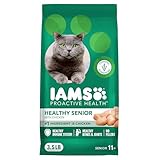
- Veterinarians Recommend IAMS: Feed your favorite feline IAMS Proactive Health dry cat food to support their whole-body health
- Discover the Proactive 5 Difference: The Proactive 5 health benefits for IAMS Proactive Health are scientifically designed to support five key areas of your cat’s health, keeping them full of life, for more of life
- #1 Ingredient is Real Chicken. This nutrient-rich senior cat food is made with real chicken, contains high-quality protein sources, and supports a healthy body
- Maintains Healthy Digestion: A specialized fiber blend and prebiotics help nourish the intestinal cells and improve the absorption of nutrients
- Healthy Immune System: IAMS Proactive Health Senior dry cat food contains an elevated level of vitamin E, which helps restore immune response to that of a healthy adult cat
Medication
If supportive management does not help enough, the AAFP guideline discusses selegiline as a possible veterinary option. The earlier AAFP senior-care guideline (a 2009 publication, sometimes indexed with a 2010 date) stated that no drugs were licensed for feline CDS at that time, and that feline treatments were extrapolated from research in humans and dogs. Licensing and availability differ by country and change over time, so check your local status. Do not give any cognitive medication, or copy a dose from another source, without direct instruction from your veterinarian.
Treating the conditions that mimic CDS
Treating a concurrent problem is often the most effective step available. An overactive thyroid, high blood pressure, or pain can improve the behavior changes, which is why the work-up above comes first. A cat whose signs improve after treating another condition may not have had CDS at all, or may have had both conditions at once.
Independent reader supportYour contribution helps us test, update, and keep practical guides available for everyone.What the published figures show
The following figures are useful for context, but each is specific to its source and should not be read as a general prevalence estimate.
| Figure | Source and date | What it does and does not show |
|---|---|---|
| Over 25% of cats aged 11 years or older | AAFP Feline Senior Care Guidelines, 2021 | The guideline reports that this proportion had certain aging-related behavioral changes without a recognized medical cause. It is not a definitive CDS prevalence estimate. |
| 615 completed responses from 4,342 invited owners (14.2% response rate) | Feline CDS risk-factor survey, Journal of Veterinary Internal Medicine, 2022 | Owner questionnaire results from a minority of those invited; they describe that sample, not the wider cat population. |
| 80 FCD-positive cats and 114 FCD-negative controls | Same 2022 survey | Groups were classified using that study’s criteria and analyzed sample. |
| 32 of 80 FCD-positive cats (40.0%) had inappropriate vocalization | Same 2022 survey | A proportion within that study’s FCD-positive group, not all cats with CDS and not all senior cats. |
The survey is available through PubMed Central.
Limits of the current evidence
Feline CDS is better described than it is treated. The 2021 review is a literature review, not a controlled trial demonstrating that any one intervention works, and the survey depends on owner questionnaires from a limited group of respondents. The licensing statement quoted above is historical and does not describe approval in every country today.
For most cats, the practical plan is the same: rule out treatable illness first, support the environment and the cat’s routine, consider nutrition and pheromone adjuncts only after discussing them with a veterinarian, and decide on any medication case by case. A diagnosis of CDS is reached by exclusion, and it should be revisited if the cat’s signs change.
Quick Recap
Product prices and availability are accurate as of the date/time indicated and are subject to change. Any price and availability information displayed on Amazon at the time of purchase will apply.




