Yes, cats can learn cues and tricks, and reward-based training is the approach veterinary and humane-society guidance supports. The five steps below turn that approach into a routine you can start this week. They are a practical framework assembled from VCA Animal Hospitals behavior guidance and ASPCA training advice. They are not a formal protocol issued by a veterinary body, so adjust them to your cat as you go.
The five steps
Step 1: Choose one behavior and a reward your cat values
Start with a single small action your cat can already almost do. Good first behaviors include:
- Looking toward you when you say its name
- Touching a target, such as a pen or the end of a wooden spoon
- Sitting or stepping onto a mat
- Walking toward an open carrier
Then identify what this particular cat finds rewarding. A tiny piece of food works for many cats, but others respond more strongly to play, petting, or brushing. Watch which one makes your cat lean in, purr, or come back for more. Train in a quiet room, keep each session short, and stop while your cat is still engaged.
Step 2: Set up a marker if you want one
A marker is a signal that tells the cat, at the exact moment it does the right thing, that a reward is coming. You have two common options:
The Tool Desk
Outbyte Driver Updater FREEScan for outdated or missing drivers - takes under a minuteDriver Scan →Outbyte PC Repair FREERepair Windows errors before they cause bigger problemsFix Now →#1 Best Overall

- New communication tool about you and your puppy.
- Pet Dog Training Clickers for Puppy, Cat, Potty, Bird, Horse, Pet, Trainer Training Tools, Behavior Aids
- Just press to mark desired behavior, then reward for faster learning.
- The spring wrist length : 16cm/6.3inches and can strength to 25cm/9.84inches.
- Package include : Black + Blue,each color 1 pcs.
- A handheld clicker, which produces a consistent sound
- A short verbal word you use every time, such as “yes”
Before you rely on the marker, pair it with rewards. Click (or say the word), then immediately give a treat or other reward. Repeat this until the sound alone makes your cat look for the reward. Some cats are startled by a sharp click, so if yours flinches, switch to a soft verbal marker or a quieter clicker.
Step 3: Mark and reward a small success
You can capture a behavior your cat offers on its own, such as sniffing a box, or shape it by rewarding small steps toward the goal. Timing does most of the work here. Mark the instant the desired action happens, then deliver the reward promptly so your cat connects the two.
For target training, reward first for simply looking at or approaching the target. Once your cat reliably moves toward it, require a touch before the marker. Increase the requirement one small step at a time.
Rank #2

- Cat Training Clicker Kit - Includes a finger ring clicker and a retractable target stick with yellow ball, giving you two tools for guiding and interacting with your cat during training or play.
- Finger Ring Clicker for Clear Feedback - The included finger clicker produces a crisp, easy-to-press sound, helping guide your cat during training or interactive play without startling them.
- Eye-Catching Yellow Target Ball - The bright yellow ball at the tip of the target stick catches your cat’s attention and supports guided movement for interactive sessions.
- Retractable Stick for Convenient Use - The stainless steel target stick extends and retracts smoothly, allowing adjustable length for comfort, while keeping the target clicker compact and easy to store or carry.
- Versatile Training Accessory - Suitable for kittens and adult cats, this dual clicker kit can be used for a variety of interactive play or guided training sessions, and can also be used with other small pets.
Step 4: Add the cue once the behavior is reliable
A cue is the word or signal that tells the cat which behavior is wanted. Add it only after your cat performs the action consistently without it. Then say the cue just before the action, mark the response, and reward it.
Free tools Windows power users keep installed
One-click scans. No signup required.
Do not repeat the cue rapidly. Say it once, then wait so your cat has time to respond. If your cat keeps missing, the task is probably too hard. Make the step smaller, go back to the last behavior that worked, and try again.
Step 5: Practice briefly, then build reliability
While a behavior is new, reward every correct response. Once your cat performs it reliably, begin to vary the reward. Mix in occasional play, affection, or a treat instead of rewarding every repetition. This keeps the behavior strong without relying on food.
Rank #3

- INSIDE THE PACKAGE: Created by a professional animal behaviorist, this complete cat clicker training kit includes everything you need to get started: an all-in-one integrated clicker tool with a 22 inch extendable target stick and a 43-page illustrated training manual with 15 guided lessons to help you confidently train your cat from day one.
- TARGET STICK WITH UPDATED DESIGN: The CAT SCHOOL all-in-one clicker features a new and improved design with a quieter clicker sound and a stronger, more durable construction—perfect for sound-sensitive cats and everyday training use. This versatile tool works as both a target stick and a detachable clicker, giving you flexible training options. Extend the target stick up to 22 inches to easily guide your cat between positions. The large, bright yellow ball tip is easy for cats to see, track, and touch—boosting confidence, accuracy, and calm focus during training.
- QUIET, DETACHABLE CAT-FRIENDLY CLICKER: Designed with your cat’s sensitive ears in mind, this quiet clicker delivers a sound your cat can comfortably learn from. Use it attached to the target stick or slide it off for handheld use. The clicker fits comfortably in your hand and includes a secure finger loop to wear on your finger once removed from the base.
- IMPROVES CAT BEHAVIOR: Clicker training is a positive, rewarding way to teach skills and encourage good behavior. Regular training sessions help increase activity, reduce boredom and stress, and may curb unwanted behaviors like scratching or biting—while strengthening the bond between you and your cat.
- OUR COMMITMENT TO YOUR SUCCESS: Your cat’s training success matters to us. Gain access to supportive video tutorials created by an animal behaviorist and trusted by thousands of successful students. Our proven system helps make training fun, enriching, and rewarding—for both you and your cat.
Keep sessions short, usually a few minutes, and end on a success before your cat loses interest. Several short sessions a day usually work better than one long one.
Clicker or no clicker?
A clicker is a timing aid, not a requirement. The table compares the three most practical setups.
| Marker | How it works | Watch for |
|---|---|---|
| Handheld clicker | A consistent click marks the exact moment of the behavior | Can startle sensitive cats; must be paired with rewards first |
| Short verbal word | A word such as “yes” marks the behavior with no equipment | Your voice can vary, so use the same word every time; harder to time precisely if you talk a lot during training |
| No marker | Reward is delivered right after the behavior | Delivery must be very quick; a delay weakens the link between action and reward |
Choosing rewards
The best reward is the one your cat works for. The main options differ in how easy they are to deliver instantly and how well they suit your cat:
Rank #4
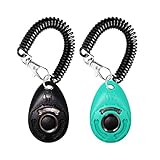
- EASY TO USE - Simple push button with distinct clicking sound.
- Comes with an elastic wrist band so you can leave it on your wrist or clip it to the leash or your pants.
- Not only train the dog but also the cat, bird, chicken, sheep a new behaviors like sit, fetch, roll over, lie down.
- For effective pet training ALWAYS reward with a treat after clicking.
- Can be used to train the dog basic obedience, small trick, and correct the bad behavior; Scientific method of training your pet safely and easily.
| Reward | Works well when | Considerations |
|---|---|---|
| Small food treats | Your cat is food-motivated and you can deliver a piece in a second | Keep pieces tiny; count them toward daily calories. Check with your veterinarian if your cat is on a therapeutic or restricted diet. |
| Play | Your cat chases, pounces, or bats toys with enthusiasm | Use a wand toy you can stop and start on cue. Play can be used as a reward and as part of the session itself. |
| Petting or brushing | Your cat seeks touch and stays relaxed when handled | Stop before your cat shows signs of overstimulation, such as a twitching tail or skin rippling |
Play matters beyond being a reward. ASPCA feline behavior counselor Blair de Jong has said, in a September 19, 2016 ASPCA article titled “Clicker Training Has Cats Jumping Through Hoops,” that cats “still very much need outlets to climb, pounce, ambush, and run, just as their ancestors have always done.” Training sessions can meet some of that need, but they do not replace daily play.
Independent reader supportYour contribution helps us test, update, and keep practical guides available for everyone.Worked examples
Redirecting scratching
Provide an appropriate scratching post or pad, and place it near the furniture your cat already scratches. When your cat uses the post, mark the moment and reward it. Reward the choice itself, not just the cat’s presence near the post. Over time, the post becomes the preferred option.
Teaching carrier entry with a target
Use a hand, a lid, or a simple stick as the target. Reward your cat for looking at it, then approaching it, then touching it. Once touching is reliable, move the target so that it sits inside or just in front of the carrier. Reward each step as the cat moves toward the carrier. Many cats learn to enter more calmly this way than when pushed in.
Recommended Free Tools
Best Value
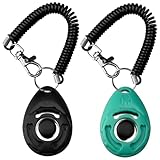
- Instant Attention & Clear Sound: This dog clicker for training produces a sharp, consistent sound that’s perfect for clicker training dogs, puppies, cats, and even birds or horses. Works great as a dog clicker to stop barking and reinforce positive behaviors quickly.
- Lightweight, Durable & Easy to Carry: Made from sturdy, lightweight materials, this pet training clicker is built to last. Comes with a convenient wrist strap so your dog training tools are always within reach during walks, obedience classes, or home sessions.
- Simple One-Button Operation: Whether you’re a new dog trainer or a pro, the large button makes this puppy training clicker and cat training clicker easy to use—just press to mark desired behavior, then reward for faster learning.
- Versatile for Multiple Pets & Purposes: More than just a dog training clicker—this tool is perfect as a cat clicker trainer, training clicker for puppies, or even a clicker cat trainer. Works for potty training, obedience, tricks, and behavior correction.
- Positive Reinforcement Training Made Easy: Trusted by professionals, this dog training & behavior aids device supports humane, reward-based training. Ideal as puppy training tools, dog training aids, or dog training clickers to create a strong bond with your pet.
Litter-box problems need a different approach
Do not treat litter-box avoidance as a simple obedience issue. The ASPCA warns that putting a cat in the box to force a positive association may backfire. Sudden or persistent litter-box problems can have medical or environmental causes that training will not fix. Arrange a veterinary evaluation first, then ask a qualified behavior professional for advice if the problem continues.
Avoid punishment and force
Humane training relies on lures and rewards. VCA notes that punishment can create fear and defensive behavior, which makes future training harder. When your cat does something you want to stop, redirect it to an acceptable alternative, such as the scratching post, and reward that choice.
When to call a professional
If your cat is in severe distress, or if its behavior could injure itself, another animal, or a person, stop home training and contact a qualified behavior professional. The ASPCA recommends this step for serious problems rather than trying to work through them alone.
Quick Recap
Product prices and availability are accurate as of the date/time indicated and are subject to change. Any price and availability information displayed on Amazon at the time of purchase will apply.
Do these 3 things before closing this tab:
1Repair Windows errors before they cause bigger problems2Scan for outdated or missing drivers - takes under a minute3Clear out junk files and repair common Windows errors



