Do these 3 things before closing this tab:
1Clear out junk files and repair common Windows errors2Fix the driver behind crashes, sound loss and screen glitches3Repair Windows errors before they cause bigger problemsWinterizing a reptile means protecting the temperature inside its enclosure, not the temperature of the room. A cold room can lower the basking spot and the cool end without any obvious sign, so the work starts with measuring. Add controlled supplemental heat only where your readings call for it, match the lighting to your species, and treat brumation as a veterinary decision rather than something the calendar decides.
Start with your species, because the targets differ
Reptiles depend on outside heat, but the temperatures that suit one species can be wrong for another. The two UC Davis School of Veterinary Medicine care pages cited here give very different examples, which is why the first step is confirming exactly what you keep.
| Setting | Bearded dragon (UC Davis bearded dragon care) | Desert tortoise (UC Davis desert tortoise care) |
|---|---|---|
| Daytime enclosure temperature | 80–85°F | 70–90°F |
| Basking spot | 88–95°F | About 95°F |
| Nighttime temperature | 70–75°F | Drops to 70–75°F |
| Daylight in the lighting schedule | About 14 hours light, 10 hours dark | 12–14 hours in warmer months, 10 hours in winter |
| UVB replacement | Every 3–6 months | Interval set in the guidance; follow it and the bulb maker’s labeling |
These numbers apply only to the species named in each guide. They are not general reptile settings, and a value such as a basking spot of 95°F should never be applied to a species that the guidance does not cover.
Measure the enclosure, not the room
A room thermostat tells you very little about the animal’s actual environment. Use at least two thermometers, as UC Davis recommends, and check them in this order:
Quick wins for a faster PC:
Repair Windows errors before they cause bigger problemsFix Now →Fix the driver behind crashes, sound loss and screen glitchesFind Drivers →Clear out junk files and repair common Windows errorsFree Scan →#1 Best Overall

- Enhances UVB & Light Reflection: The reptile light fixture focuses the light emitted by the bulb, ensuring even distribution across the entire illumination area. The polished interior surface greatly enhances light reflection, minimizing losses of both light and UVB. This reflective effect optimizes the efficiency of the light source, promoting the health and growth of reptiles
- Max 160W: Each socket can accommodate 160W reptile heat lamps, suitable for ceramic heat bulbs, UVB bulbs, solar bulbs, and other reptile lighting
- Independent Switches: The power cord of the bearded dragon light fixture is equipped with two independent switches, allowing you to control the heat lamp and UVB lamp as needed, providing a comfortable temperature and lighting environment for reptiles
- High-Temperature Label: When the surface temperature of the reptile heat lamp exceeds 113°F, the triangular warning label on the lamp will turn red. This label can also be used to verify if the ceramic heat lamp is functioning properly
- Quick Heat Dissipation: The reptile heat lamp features multiple ventilation holes on the top for effective heat dissipation, preventing bulb damage from overheating and reducing the frequency of bulb replacements, thereby saving replacement costs
- Place one thermometer at the basking spot, where the animal’s warmest reading will come from.
- Place a second thermometer at the cool end, at the height where the animal normally rests.
- Record both readings in the morning, afternoon, and night for several days. Repeat the log after any change in outdoor or room temperature, since those shifts are what alter the enclosure.
- Compare each reading with the range for your species, not with a range from a different reptile.
Digital thermometers make this practical. A thermostat controls heat, but it does not determine the right temperature for the animal on its own.
Add supplemental heat only where the readings require it
If the basking or cool-zone readings drop below your species’ range, add heat. UC Davis describes an under-tank heater or a ceramic heat emitter as options for bearded dragons when room temperature falls below 70°F at night. That is a bearded dragon example, not a universal winter threshold.
Rank #2

- The Light Dome with heat resistant ceramic socket can accommodate either reptile heat lamp or reptile basking bulb and ceramic heat emitter (Max. 150W).
- The Reptile Dome has an extra deep aluminum reflector dome that increases light, UVA output.
- The light can be easily turned on and off by the On/Off switch, mounted on the extra long power cord (180 cm/6 ft).
- This Reptile Light Fixture fits kinds of bulbs incl.; Daylight Basking Spot, Daytime/Night Time Heat Bulb, Natural Light, Reptile ceramic heat emitter.
- UL Listed Ceramic Socket with E26 Interface. ReptiKing Reptile Dome is warranted to be free for replacement if any damage or deformation. No hesitate to contact us if you need any support.
- Control every under-tank heater. UC Davis recommends a thermostat or rheostat for under-tank heating in both the bearded dragon and desert tortoise guidance. Confirm that the controller is rated for the heater you are using before you install it.
- Keep the gradient intact. The animal should be able to move between warmer and cooler areas. Heat that fills the whole enclosure removes that choice.
- Manage burn risk. UC Davis warns that heating elements can cause burns and can be dangerous if misused. Arrange heat sources so the animal cannot touch hot surfaces, and follow the setup guidance for your species.
- Install a smoke alarm. UC Davis recommends one because of the heating-element hazard.
The cited guidance covers monitoring and controlled heat. It does not give heater wattage, so choose equipment based on the thermostat and the readings you are logging.
Keep lighting species-specific
Do not switch every enclosure to one winter photoperiod. The bearded dragon and desert tortoise schedules in the table above differ, and UC Davis treats indoor UVB timing and bulb replacement as species-specific. Write down the date each UVB bulb went in, set the timer to your species’ schedule, and replace the bulb on the interval in the guidance and the manufacturer’s labeling.
Recommended Free Tools
Rank #3

- 【Newly Upgraded Bell-Mouth Design】 :This newly upgraded heating lamp with a TFNN bell-mouth design provides a wider range of UVA/B ultraviolet rays compared to the design of ordinary models. It can simultaneously heat and illuminate multiple reptiles. The light is adjustable, making it suitable for different seasons and various reptiles, and it is extremely convenient to use.
- 【Upgrade Timer】:The reptile heat lamp offers three timing cycle modes (3H/6H/12H), enabling all-night cyclic timing with automatic on/off functions. Additionally, it has three adjustable heating brightness levels. You can use the "+/-" buttons to adjust the temperature to find the most suitable setting for your pet, which is more conducive to heating and supplementing calcium for your pet. It provides more direct sunlight and higher UVA/B turtle basking light, simulating natural sunlight and promoting the pet's appetite and calcium absorption.
- 【360°Rotatable Swan Neck 】 : This heating lamp is made with a 15.8-inch swan neck. The independently rotating head is constructed from stainless steel tubing, capable of rotating 360 degrees. It allows for flexible control of the light's distance and angle without deformation, ensuring a wider coverage of the light. It can simultaneously provide heating and supplementary lighting for multiple tanks and pets, and can be applied to small habitats of various sizes such as pet boxes, turtle tanks, glass ball boxes, enclosures, aquariums.
- 【Upgraded Quality Material】 :The reptile heat lamp clip, lamp tube and lampshade are made of high-quality metal, featuring heat resistance. The clip has a stronger gripping force. It can be firmly and easily installed in any position and fixed effectively. It has two built-in electroplated bulbs, with power ratings of 50W and 75W respectively. The silver-plating process is adopted to ensure anti-oxidation and explosion-proof performance, and the vacuum glass tube extends the lifespan of each bulb. These bulbs simulate the solar spectrum and increase the temperature to achieve the best health condition for pets.
- 【Wide Use】 : This TFNN bell-mouth heating lamp is suitable for most amphibians, reptiles, and plants, including turtles, bearded dragons, lizards, geckos, frogs, toads, snakes, chickens, birds, and even fish and plants.
Brumation: a veterinary decision, not a seasonal default
Brumation is a colder-season dormancy. In its November 18, 2021 article on turtle brumation, Texas A&M University’s College of Veterinary Medicine & Biomedical Sciences describes it in some turtles and tortoises and notes that some indoor pets may never experience it, because their environments do not change in the same way. Cold weather outside is therefore not, by itself, a reason to start.
Who should make the decision
The Texas A&M article says brumation should be started only by an experienced caretaker or veterinarian. Ashley Navarrette, a clinical assistant professor at the college, puts it directly: “Please consult with your exotic veterinarian prior to this process.” The article notes that some exotic veterinarians offer brumation services.
Rank #4
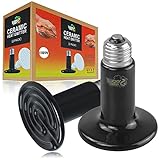
- 🦎No Light Emitted - The heat lamp bulb only generates heat during use, and does not emit light. It provides sufficient heat for your pets so that they can feel the warmth you made for it in a cold environment. Especially when it is used at night, it will not affect the pet's sleep.
- 🦎Heating UP Fast - After turning on the reptile ceramic heat bulb for 10 seconds, you can clearly feel the rapid rise in temperature, and it only takes 4 minutes for the reptile heat lamp to reach the rated temperature.
- 🦎Sturdy - LUCKY HERP reptile heat emitter is made of thick special ceramic material, and the heat light bulb shell is stronger and more durable than ordinary heating lamps. Our reptile light bulbs last up to 10,000 hours. Use in standard E26 lamp base, 120 volts and easy to install.
- 🦎Safety Instructions - You must use good quality ceramic lamp holders. When using the reptile basking bulb, keep a distance of more than 30cm from reptiles. Do not turn on the chicken heat lamp immediately after turning it off, and do not turn the bulb on and off frequently.
Animals the article says should not brumate
- Sick or injured turtles and tortoises.
- Animals under four years old.
These are the article’s turtle and tortoise recommendations. It does not extend them to other reptiles.
The figures in the Texas A&M article
The article describes a body-weight loss of 6–7% during brumation, which it characterizes as generally accepted at about 1% per month, and brumation periods of 10 to 14 weeks. These figures come from that article about turtles and tortoises. They are not a guaranteed safe range or a target for other species. The article also describes routine soaking, weigh-ins, and close environmental monitoring, and it flags temperature extremes and predators as risks for outdoor brumation.
Best Value
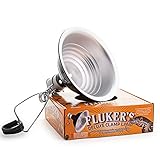
- Optimal Heating for Reptiles: Fluker's Repta-Clamp Lamp is a UL/CUL approved 8.5 inch heating clamp designed to create the perfect basking environment for your reptiles.
- High Power Capacity: The clamp light fixture is rated for up to 150-watt incandescent bulbs or ceramic heat emitters, allowing for optimal heat performance for your pet. Ideal for larger enclosures.
- Safety and Ease of Use: Integrated with a lamp clamp and an on/off switch for easy operation. Provides safe performance, and the light clamp ensures secure placement on your pet's cage or terrarium.
- Heavy Duty Design: Features heavy gauge painted aluminum which ensures durability and efficient performance in any terrarium or enclosure
- Durable and Reliable: Constructed with a ceramic socket to maximize heat and ensure safe use. The light with clamp design ensures the clamp lights stay in place.
Read appetite and activity changes carefully
A slower appetite in winter does not automatically mean the animal should be cooled or deprived of heat. The University of Illinois College of Veterinary Medicine, in its December 15, 2022 post on ambassador animals, describes a captive box turtle and skink that do not brumate but whose metabolism often slows in winter, reducing appetite. The wildlife medical team there monitors weight, behavior, and food intake and adjusts diets to seasonal needs. That is one institutional example, not a rule that every captive reptile should eat less.
Keep a simple weekly record of weight, behavior, and food intake. If the animal’s weight, activity, or eating changes in a way that concerns you, contact a reptile veterinarian rather than adjusting heat or food on your own.
Winter preparation checklist
- Two thermometers in place, one at the basking spot and one at the cool end
- Readings logged at several times of day and compared with your species’ range
- Every under-tank heater on a thermostat or rheostat that suits it
- Heat sources arranged so the animal can move away from them
- Smoke alarm installed in the room
- UVB schedule and bulb replacement date confirmed for your species
- Weight and food intake recorded on a regular schedule
What the cited guidance does not cover
The UC Davis care pages do not include a power-outage plan, and they do not set a universal temperature, wattage, or humidity target. The Texas A&M and University of Illinois articles date from 2021 and 2022, so check current veterinary guidance before you rely on any figure. For outages, emergency heating, or any species not named above, ask an exotic veterinarian for species-specific instructions.
Source for turtle and tortoise brumation: Texas A&M University College of Veterinary Medicine & Biomedical Sciences, “Turtle Brumation: The Benefits & Dangers Of The Hibernation Cycle”. Source for winter appetite changes: University of Illinois College of Veterinary Medicine, “Winter and Ambassador Animals”.
Quick Recap
Product prices and availability are accurate as of the date/time indicated and are subject to change. Any price and availability information displayed on Amazon at the time of purchase will apply.




