Do these 3 things before closing this tab:
1Repair Windows errors before they cause bigger problems2Scan for outdated or missing drivers - takes under a minute3Clear out junk files and repair common Windows errorsTitle protection is a legal rule that limits who may use a professional title. For credentialed veterinary technicians, the case for it is straightforward: where “veterinary technician” carries no legal meaning, a client, employer or colleague cannot tell a state-credentialed technician from a person with no credential at all. In my view, protecting the established titles is the next step the profession needs. That is a policy position about recognition and public clarity. It is not proof that title protection by itself raises pay, improves patient outcomes or guarantees enforcement.
What title protection actually does
A state practice act can restrict a title to people who hold a state credential. It governs the word on a badge, a job posting or a website. It does not, by itself, decide which tasks a technician may perform. That is a separate question, covered later in this article.



The National Association of Veterinary Technicians in America (NAVTA) describes three levels of protection in its March 2022 report. The levels differ in one decisive way: whether the general title “veterinary technician” is reserved.
| Level | What the law reserves | Can an uncredentialed person call themselves a “veterinary technician”? |
|---|---|---|
| No title protection | Nothing. The practice act does not restrict technician-related titles. | Yes |
| Limited protection | A specific credential title, such as Certified Veterinary Technician (CVT), Licensed Veterinary Technician (LVT) or Registered Veterinary Technician (RVT) | Yes, because the general title is left unrestricted. Using the credential title is not allowed. |
| General protection | The general title “veterinary technician,” reserved to credentialed people in that state | No |
So the honest answer to “Can anyone call themselves a vet tech?” is: it depends on the state, and in many places the answer has been yes. The taxonomy is NAVTA’s, and it describes the category each state fell into in 2022, not a legal rule that applies everywhere.
Free tools Windows power users keep installed
One-click scans. No signup required.
#1 Best Overall
Why the title itself is the problem
NAVTA President Ashli Selke, CVT, put the core issue plainly in the association’s February 17, 2022 report announcement: the profession “has long been challenged by a lack of cohesion and standards in the United States,” and as a result the title “Veterinary Technician” is “used inconsistently and, oftentimes, incorrectly,” and “suffers from a lack of clarity and understanding, both within the veterinary world and among consumers.”
In practice, the same words can describe a licensed technician, a kennel worker, a front-desk employee who has done some clinic training, and a job applicant who has never held a credential. A client reading a clinic’s website has no reliable way to know which one is meant. Title protection does not solve every problem with that website, but it gives the word a legal boundary that employers and the public can point to.
The national numbers, and how old they are
The figures most often cited in this debate come from NAVTA’s 2022 work. They are useful as a baseline and misleading as a current map. Readers should keep the dates attached to each one.
- 31 states and jurisdictions with no title protection for “Veterinary Technician” and 10 with limited protection. This is from NAVTA’s February 17, 2022 announcement, which describes the position at that time.
- 19 jurisdictions regulating technicians without title protection, 10 with limited protection, 11 with general protection, and 12 not regulating technicians at all. This is the category snapshot in NAVTA’s March 2022 report. It is a snapshot of that date and should not be read as the present legal landscape.
- 60.9% average accuracy in respondents’ answers about whether their state restricted relevant technician titles, according to NAVTA’s 2022 survey. NAVTA reads this as roughly 40% of respondents being misinformed. This describes the people who answered the survey. It is not an estimate for every veterinary technician in the country.
- 93% of veterinary technicians favored title protection in NAVTA’s 2024 study, as reported by AAHA in its October 2025 opinion piece. The figure comes from NAVTA’s own study, and the survey methodology is not independently confirmed here.
As of October 2026, the most-cited counts are more than four years old. Treat them as evidence of a trend that prompted advocacy, not as a current tally of state laws.
Windows Errors? Fix Them Before They Spread
Repair common Windows errors and clear accumulated junk for a smoother, more stable PC - no reinstall needed.Free scan · no reinstallCrashes, No Sound, or Screen Glitches?
Random freezes, missing sound and display glitches usually trace back to one bad driver. Find and replace yours safely.Free scan · under a minuteWhat has changed since 2022
NAVTA’s “Veterinary Nurse/Technician Job Title Use Resources” lists state developments current as of March 25, 2025. The list names Colorado, Hawaii, Minnesota, Montana, New Hampshire, North Carolina and South Carolina. The sources reviewed for this article do not supply a complete national count after that date, and they do not establish how each named state’s rule compares with the 2022 categories in every detail. Readers should confirm the current text of any state law before relying on it.
The credential abbreviations and the “veterinary nurse” question
NAVTA’s March 2022 report lists the U.S. credential abbreviations recognized in its survey: CVT, LVT, LVMT and RVT. Terminology differs from state to state, and the same abbreviation can carry different legal weight depending on where a person practices.
Rank #3
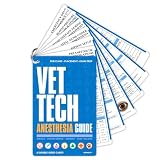
- 12 PAGES OF ANESTHESIA REFERENCE - 6 double-sided cards covering preanesthetic drugs, induction agents, airway setup, machine checklist, patient risk, vitals under anesthesia, monitoring, fluid therapy, arrhythmia management, anesthetic emergencies, and recovery.
- WATERPROOF PVC SCRUB POCKET SIZE - Each card is 3.5 x 5.5 inches. Wipe clean between procedures. Essential vet tech supplies and vet tech accessories for any surgery suite. Vet tech essentials and vet tech must haves for anesthesia rotations and exam prep.
- YOUR ANESTHESIA SAFETY NET - Flip to drug doses, monitoring parameters, or emergency protocols without leaving your patient. Built for vet tech students learning anesthesia, new graduates running their first solo cases, and experienced veterinary technicians training staff.
- EASY TO READ, ORGANIZED BY STAGE - Pre-op, induction, maintenance, monitoring, complications, and recovery each on their own card. Practical vet med accessories and veterinary technician supplies for surgical teams. Clear tables for quick reference during procedures.
- PERFECT VETERINARIAN GIFT - A practical gift for vet tech graduation or vet tech week. Great vet tech study materials for veterinary assistant training and vet med students. Veterinary technician supplies for clinic teams. Works alongside veterinary books and vet supplies.
The “veterinary nurse” label adds a further layer. AAHA’s October 2025 opinion says the profession has moved toward strengthening established titles such as RVT, CVT, LVT and LVMT. NAVTA urges employers to reserve “Veterinary Nurse” for people who hold valid state veterinary-technician credentials. “Nurse” does not have a single, uniform legal status across states, so anyone using the term should check the state rule rather than assume one.
The case for protecting the title
The rationale in AAHA’s opinion, written by Stephen Niño Cital, RVT, SRA, RLAT, CVPP, VTS-LAM (Res. Anesthesia), links title protection to four goals:
The Tool Desk
Outbyte PC Repair FREEClear out junk files and repair common Windows errorsFree Scan →Outbyte Driver Updater FREEFix the driver behind crashes, sound loss and screen glitchesFind Drivers →- consumer confidence, so clients know what a credentialed person has been trained and tested to do;
- validation of education and credentials, so the time and examination effort behind a credential is reflected in the title;
- prevention of title misuse, so the word cannot be attached to unqualified work without consequence under the law;
- clearer professional boundaries, so colleagues and employers can tell roles apart.
AAHA’s standards draw the line in specific terms. Quoted in the opinion, they state: “Only credentialed team members who have either graduated from an AVMA accredited program and passed national and/or state and provincial board exams are distinguished by the title ‘technician.’ This would also include team members who have been awarded their credential as part of a state and/or provincial grandfather clause.”
That wording matters because it does two things at once. It reserves the title for a defined credential pathway, and it recognizes people who earned their credential through a grandfather provision that a state authorized. Good title policy should keep both parts.
Independent reader supportYour contribution helps us test, update, and keep practical guides available for everyone.What title protection does not prove
Advocates sometimes argue as if a protected title will automatically produce higher wages, better care, lower turnover or better enforcement. The sources behind this article do not establish any of those outcomes. The strongest claim they support is narrower: the title can be made to mean something specific in law, and that meaning can be used by clients and employers to make a distinction.
Enforcement is also a separate question. NAVTA’s policies support enforcement authority for title violations. Whether a given state can penalize misuse, and how, depends on that state’s law. The sources reviewed do not establish which states currently have that authority.
Quick wins for a faster PC:
Clear out junk files and repair common Windows errorsFree Scan →Fix the driver behind crashes, sound loss and screen glitchesFind Drivers →Repair Windows errors before they cause bigger problemsFix Now →Best Value

- Used Book in Good Condition
Finally, title protection should not be used to devalue veterinary assistants or other support roles. Those workers do essential work, and the purpose of a protected title is to describe credentials and legal status accurately, not to rank people. The argument is about labels that match the qualification, not about the worth of the person holding a different job.
Title, scope of practice and enforcement are different questions
Reform debates often merge three decisions. Keeping them apart makes state comparisons clearer. NAVTA’s positions are its own policy preferences and do not show that any state has adopted them.
| Policy question | What to check in a state’s law | NAVTA’s stated position |
|---|---|---|
| Which title is protected? | Whether the general title “Veterinary Technician” or “Technician” is reserved, and whether abbreviations such as CVT, LVT, LVMT or RVT are covered | General protection of “Veterinary Technician” or “Technician,” plus protection for applicable credential abbreviations |
| Does protection cover the general title or only a credential label? | Whether a person can call themselves a “veterinary technician” without a credential | General protection, so the general title is reserved to credentialed people |
| What qualification is required? | The accredited program, board examination or grandfather provision that confers the title | Credentialing standards are addressed in NAVTA’s Policies page; specifics are not summarized here |
| Is scope of practice defined separately? | Whether the practice act defines which tasks credentialed technicians may perform | A scope of practice restricted to credentialed veterinary technicians and veterinary nurses |
| Can a violation be enforced or penalized? | Which body enforces the rule and what penalties, if any, the law provides | Enforcement authority for title violations |
How to check your state
- Find your state’s veterinary practice act and the rules of the state licensing board. Use the official state government or board website, because requirements vary and can change.
- Read the exact title language. Ask whether “veterinary technician” is restricted, or only a credential abbreviation such as CVT, LVT or RVT.
- Identify the qualification route the law names: an accredited program, a board examination, or a grandfather provision.
- To verify a specific person’s credential, contact the state licensing board rather than relying on a business website or a job title.
- Where misuse of a title is suspected, report it to the licensing board. Whether the board can penalize the misuse depends on that state’s law.
- Use NAVTA’s job-title resource as a starting point for recent state developments, remembering that its state list is current only through March 25, 2025.
Protecting the established titles will not settle every question about pay, staffing or care. It can, however, give the public and the profession a clear answer to a simple question: who is the credentialed technician in this clinic? That answer is worth writing into law, state by state.
Quick Recap
Product prices and availability are accurate as of the date/time indicated and are subject to change. Any price and availability information displayed on Amazon at the time of purchase will apply.




