Free tools Windows power users keep installed
One-click scans. No signup required.
Yes, the NEOM Brine Pools in the Gulf of Aqaba can incapacitate animals that enter, but researchers did not establish a universal outcome or time to death for every species. Discovered during a 2020 expedition aboard the research vessel OceanXplorer and reported in a 2022 study, the pools contain dense, hypersaline, oxygen-free brine about 1,770 meters below the sea surface. Researchers observed shrimp retrieving organisms disabled by the brine, while the pool’s sediments preserve a record of past environmental events.
The discovery is dramatic, but the science is more interesting than the headline. The NEOM pools are the first reported brine-pool complex in the Gulf of Aqaba—not the first brine pools ever found beneath the sea. Similar features have been studied in the Red Sea, Gulf of Mexico, and Mediterranean.

What researchers discovered beneath the Gulf of Aqaba
Scientists aboard the research vessel OceanXplorer located the complex during a 2020 expedition. The findings were reported by Purkis and colleagues in a peer-reviewed paper published on June 27, 2022, in Communications Earth & Environment.
The pools lie at a depth of approximately 1,770 meters in the Aragonese Deep, a tectonically active pull-apart basin in the Gulf of Aqaba. The study authors report that they are unusually close to land for a deep-sea feature—about 2 kilometers from the Saudi Arabian coastline.
Quick wins for a faster PC:
Fix the driver behind crashes, sound loss and screen glitchesFind Drivers →Clear out junk files and repair common Windows errorsFree Scan →#1 Best Overall
| Feature | Reported measurement or description |
|---|---|
| Main pool | About 10,000 square meters in area |
| Additional pools | Three minor pools, each smaller than 10 square meters |
| Depth below the sea surface | About 1,770 meters |
| Distance from shore | About 2 kilometers from the Saudi Arabian coast |
Measurements are reported by Purkis and colleagues in their 2022 study.
On sonar and remotely operated vehicle footage, the main pool can look like a lake sitting on the seafloor. That appearance is caused by a sharp boundary between ordinary seawater and much denser brine.
What is a seafloor brine pool?
A brine pool is a depression on the ocean floor filled with water that contains far more dissolved salt than normal seawater. Because the concentrated brine is denser, it sinks and collects in a low area instead of immediately blending into the seawater above it.
The process is somewhat like pouring a dense liquid into a shallow basin: the heavier fluid settles below the lighter fluid, producing a visible interface. Waves and currents still affect the surrounding ocean, but the brine can remain as a distinct layer.
Do these 3 things before closing this tab:
1Scan for outdated or missing drivers - takes under a minute2Repair Windows errors before they cause bigger problems3Fix the driver behind crashes, sound loss and screen glitchesPurkis and colleagues found chemical and isotope patterns that favor a geological explanation: ancient, buried Miocene evaporite deposits, particularly halite or rock salt, were dissolved underground and released as brine. Coastal evaporation followed by seepage was considered another possible explanation, but the study’s results were more consistent with a subsurface evaporite source. That is the favored interpretation, not proof that no other process contributed.
Why can the brine stun or kill animals?
The study describes two hostile conditions in the pool: extreme salinity and no oxygen. The authors report that the brine is hypersaline and anoxic, meaning oxygen-free. The surrounding water above the interface had very different measured conditions: the study’s CTD profile reported 21.33 °C, 40 PSU salinity, and 180 μmol/L dissolved oxygen.
Rank #2

- Sticks Well on Multiple Surfaces – Premium vinyl marine biology stickers designed to stick securely to water bottles, laptops, journals, phone cases, luggage, skateboards, and even car windows. Durable adhesive grips smooth and slightly textured surfaces with ease.
- Sticker Sheets – This marine biology sticker pack contains several sheets with colorful stickers. The sheet format is convenient for use and storage. Stickers can be reused several times by placing them back on the sheet.
- Long-Lasting & Waterproof – Made from outdoor-rated vinyl, these marine life stickers are waterproof, scratch-resistant, and UV-resistant to keep colors bright and crisp through rain, sunlight, and everyday use.
- No Residue Left Behind & Easy to Remove – These marine biology decals peel off easily without leaving sticky residue or damaging surfaces. Although they hold securely, each sticker can be gently lifted and repositioned during application for smooth, accurate placement. Great for decorating notebooks, planners, scrapbooks, and other personal items.
- Great Gift Idea – Surprise any ocean or sea life enthusiast with these marine stickers. Perfect marine biology gifts for biologists, marine science lovers, and anyone fascinated by the underwater world. Great for birthdays, holidays, graduations, or as fun marine biology decor for ocean- and sea-themed celebrations.
Animals adapted to ordinary seawater can be incapacitated at the brine interface. Researchers observed shrimp moving away from the rim and retrieving small organisms disabled by the brine. The study reports these field observations; it did not experimentally measure the response or time to death for every species.
The safest scientific description is that the brine can stun, immobilize, or kill animals that enter it. It is too broad to claim that every animal dies instantly. The researchers observed eels, a bigeye houndshark (Iago omanensis), and flatfish near the pool; they interpreted the animals’ behavior as consistent with feeding around the brine surface, while noting that some fish identifications were tentative.
It is not a “boiling” pool
The NEOM pools are dangerous primarily because of their chemistry, not because they are boiling. The documented hazards are hypersalinity and oxygen depletion. Calling them boiling pools or suggesting that animals are cooked by extreme temperatures gives the wrong impression.
The popular Gulf of Mexico feature nicknamed the “Hot Tub of Despair” is another example of a lethal brine pool, but the nickname should not be confused with evidence that every brine pool is thermally hot. For the NEOM pools, the study identifies dense, hypersaline, oxygen-free brine as the relevant hazard.
A border between danger and life
Although the pool interior is hostile to most large animals, it is not accurate to call the entire feature lifeless.
Researchers observed the bivalve Apachecorbula muriatica in a roughly 20-centimeter zone above the brine-seawater interface. They also observed Plesionika shrimp on raised areas around the pool rim. Under red-light illumination, shrimp were seen moving more than 30 meters from the rim and retrieving small organisms disabled by the brine. These are observations reported by Purkis and colleagues, not evidence that all animals can live in the brine.
The Tool Desk
Outbyte Driver Updater FREEFix the driver behind crashes, sound loss and screen glitchesFind Drivers →Outbyte PC Repair FREEClear out junk files and repair common Windows errorsFree Scan →Rank #3

- HIGH QUALITY - You can be sure that only high-quality vinyl is used for Marine Biology stickers. Our stickers are made of durable vinyl material, ensuring long-lasting adhesion and vibrant colors.
- STICKER SHEETS - Marine Biology sticker pack contains several sheets. Sticker sheets are less likely to get damaged or bent compared to loose, cut-out stickers.
- WATERPROOF – Marine Biology stickers are designed to be waterproof, so they are perfect for use on water bottles and outdoor items.
- PERFECT GIFT - Surprise your friends and family with these fun and expressive Marine Biology stickers, perfect for any occasion. Stickers are a great gift for anyone who loves personalizing their belongings.
- DECOR - Perfect for decorating laptops, phones, skateboards, luggage, bikes and more. Use them as Marine Biology stickers Party Supplies and Marine Biology stickers party decorations. Let your creativity run wild with our diverse sticker designs.
- Inside the pool: hypersalinity and anoxia exclude most large animals.
- At the interface and rim: researchers observed bivalves and shrimp, as well as organisms disabled by the brine.
- Above and around the pool: animals were observed in the surrounding seawater, with some feeding behavior interpreted cautiously by the study authors.
This makes the feature less like a sterile hole and more like a sharply divided habitat: a hostile interior surrounded by an active margin.
Why scientists care about the sediment inside
The frightening part of the discovery attracted attention, but its geological value may be even more important. The main pool preserves at least 1,200 years of stratigraphy, according to Purkis and colleagues. Its sediments may record environmental and tectonic events in the Gulf of Aqaba.
Because the pool is close to shore, sediments carried by flash floods can reach it. The study reports sediment evidence associated with flash floods, local seismic activity, and tsunami deposits. The anoxic setting reduces disturbance from burrowing animals, helping preserve layers that might otherwise be mixed. The study presents the pool as a potential archive; interpreting the origin of an individual layer can still be difficult.
The Gulf of Aqaba is tectonically active and lies among major faults. The research discusses recurring seismic activity in the region, including the magnitude 7.3 Nuweiba earthquake in 1995. However, a particular sediment layer may reflect an earthquake, a flash flood, a slope failure, or another event; the study does not establish a definitive explanation for every deposit.
Are these the first underwater death pools?
No. The 2022 paper announced the first reported brine-pool complex in the Gulf of Aqaba and highlighted its unusual proximity to shore and scientific value. It did not mark the first discovery of underwater brine pools.
Brine pools had already been documented in the Red Sea proper, the Gulf of Mexico, and the Mediterranean. NOAA describes Gulf of Mexico brine pools as dense accumulations of concentrated saltwater that sink along the seafloor and collect in depressions.
Rank #4
- Used Book in Good Condition
The chronology is:
- Before 2020: scientists had already studied brine pools in several ocean regions.
- 2020: the OceanXplorer cruise discovered the NEOM Brine Pools in the Gulf of Aqaba.
- June 27, 2022: the peer-reviewed discovery paper was published.
- 2017: BBC Earth’s Blue Planet II featured a brine-pool sequence, including footage described as an eel experiencing toxic shock after entering a brine pool.
The BBC program’s footage concerns the broader phenomenon of brine pools; it should not be presented as footage of the newly discovered NEOM pools unless a source specifically verifies that connection.
What this means for pets and beachgoers
For most readers—and especially pet owners—the NEOM pools are a lesson in ocean science, not an everyday hazard. They are located about 1,770 meters below the surface, far beyond the depth accessible to a swimming person or a dog at the beach.
A dog, cat, or human swimming in ordinary coastal water is not going to encounter one of these deep-seafloor pools. The practical ocean-safety advice remains the familiar kind: supervise pets near water, use a life jacket where appropriate, prevent animals from drinking seawater, and follow local warnings about currents, toxic algae, jellyfish, and other nearshore hazards.
The important broader lesson is that “water” does not describe one uniform environment. Temperature, pressure, salt concentration, oxygen, and dissolved chemicals can change dramatically with depth and location. An animal adapted to ordinary seawater may be unable to survive in a chemically extreme layer.
Independent reader supportYour contribution helps us test, update, and keep practical guides available for everyone.Watch and learn more
For visual context, BBC Earth’s Blue Planet II includes deep-ocean material and an official brine-pool clip. It is useful for seeing how a brine interface can resemble an underwater lake, but availability may vary by country and streaming service, and the program should not be assumed to show the NEOM discovery itself.
Teachers, students, and curious readers can also look for NOAA ocean exploration education materials, including classroom resources, fact sheets, and multimedia about deep-sea environments and brine pools. These materials provide broader context rather than a substitute for the NEOM research paper.
What’s actually slowing this PC down?
Pick the symptom - the matching free tool is one click away.
Best Value
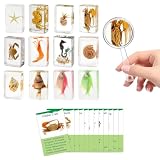
- 【12 Unique Marine Specimens】Embark on a voyage of discovery with this complete collection! This set features 12 authentic marine organisms—such as starfish, seahorses, fish, crabs, and shells—each perfectly preserved in crystal‑clear resin. Includes a magnifying glass and informative identification cards for an engaging hands‑on exploration
- 【Reliable & Crystal‑Clear Resin Material】These marine specimens are permanently encased in high‑quality, durable resin. This material is safe, sturdy, scratch‑resistant, and designed not to yellow or fade over time, ensuring the fine details of each sea creature remain vividly preserved for years to come
- 【Spark Curiosity & Discovery】Ocean enthusiasts can observe intricate anatomical details up close with the magnifier, learn fascinating species facts from the cards, and gain a richer appreciation of marine life, biology, and the diversity of ocean ecosystems—all through personal exploration
- 【Stunning Marine Biology Decor & Conversation Starter】Elevate any space with the beauty of the deep blue! Each resin block (1.7" x 1.1" x 0.6") is a unique piece of marine‑themed decor. Display them on desks, shelves, or in offices as elegant paperweights or as a captivating curiosities collection that sparks conversations about the wonders of the ocean
- 【The Ultimate Gift for Ocean Enthusiasts】Presented in a beautiful gift box, this set is the perfect present for any occasion. It’s an unforgettable gift for ocean lovers, collectors of taxidermy animals, nature enthusiasts, or anyone fascinated by the beauty and mystery of marine life
The accurate takeaway
The Gulf of Aqaba feature is a genuine hazard for animals that enter it: its dense brine is hypersaline and oxygen-free. Researchers observed organisms disabled by the brine and shrimp retrieving some of them, but the study did not establish a universal outcome or a measured time to death for every species.
The pool does not kill literally everything, is not known to be boiling, and is not completely lifeless. Animals were observed around its margins, and its sediment sequence preserves at least 1,200 years of stratigraphy that may record floods, seismic activity, and tsunami deposits. The most accurate description is a hypersaline, oxygen-starved seafloor basin with a hostile interior, active margins, and a valuable sediment record.
FAQ
Where is the newly discovered brine pool?
The NEOM Brine Pools are in the Gulf of Aqaba, a northern extension of the Red Sea, at a depth of about 1,770 meters. The study authors report that the complex is about 2 kilometers from the Saudi Arabian coastline.
What happens if an animal enters a brine pool?
At the NEOM pools, researchers observed small organisms disabled by the anoxic, hypersaline brine, and shrimp retrieving some of them. The study did not measure a universal response or time to death for every species.
Are underwater brine pools hot or boiling?
Not necessarily. For the NEOM pools, the documented hazard is dense, hypersaline, oxygen-free brine, not boiling water.
What animals live around the NEOM Brine Pools?
The study reports Plesionika shrimp on raised areas around the rim and the bivalve Apachecorbula muriatica near the brine-seawater interface. Researchers also observed eels, a bigeye houndshark, and flatfish nearby, with their feeding behavior interpreted cautiously.
Are these the first brine pools ever discovered?
No. Brine pools were already known in places including the Red Sea, Gulf of Mexico, and Mediterranean. The NEOM pools were the first reported brine-pool complex in the Gulf of Aqaba.
What can the pool tell scientists about past floods or earthquakes?
The main pool preserves at least 1,200 years of stratigraphy, according to the 2022 study. Its sediments include evidence associated with flash floods, local seismic activity, and tsunami deposits, although the origin of every individual layer is not definitive.
Recommended Free Tools
The Bottom Line
Bottom line: The NEOM Brine Pools are deep, hypersaline, and oxygen-free, and researchers observed organisms disabled by the brine. The study does not show that every animal dies instantly; the pools are not known to be boiling, and animals live around their margins. Their sediment record preserves at least 1,200 years of stratigraphy and may help scientists study past environmental events in the Gulf of Aqaba.
Quick Recap
Product prices and availability are accurate as of the date/time indicated and are subject to change. Any price and availability information displayed on Amazon at the time of purchase will apply.




