
Some links on this page are affiliate links: if you buy through them we may earn a commission, at no extra cost to you.
Elephants show behaviour that looks remarkably like comforting a distressed companion. In observations of Asian elephants, a bystander approached an upset animal, touched its face or mouth and produced rumbles or chirps. These consolation-like responses are among the strongest evidence that elephants are highly socially sensitive. Elephants also approach, touch and revisit the bodies and bones of dead elephants. Those observations suggest complex responses to distress and death, but they do not yet prove that elephants experience grief or empathy exactly as humans do.
Do elephants comfort each other when one is distressed?
Yes. A 2014 study of Asian elephants provided the first empirical evidence that elephants respond to a distressed group member with what researchers describe as consolation-like behaviour. A nearby elephant might move toward the distressed individual, make physical contact—often around the mouth or face—and use rumbles, chirps or other calls.
As an Amazon Associate I earn from qualifying purchases.
The study’s authors also used the more descriptive term “third-party affiliation”. Touching and vocalising show what the elephants did, but not necessarily why they did it. The behaviour is consistent with empathic concern and social sensitivity, while the animals’ private emotional experience remains impossible to observe directly.
Lead author Joshua Plotnik told Emory University in 2014: “For centuries, people have observed that elephants seem to be highly intelligent and empathic animals, but as scientists we need to actually test it.” Co-author Frans de Waal said the study showed elephants “get distressed when they see others in distress, reaching out to calm them down.” Those comments capture both the significance of the observations and the caution needed when interpreting them.
Popular on Amazon

- Measures approximately 9" long x 8.5" wide, when sitting down
Why is elephant consolation considered rare?
“Rare” refers to the number of species for which consolation has been systematically documented, not to the idea that elephants are the only animals that ever help a companion. Before the elephant study, empirical evidence of consolation had been reported mainly in great apes, canines and some corvids. Comparable-looking acts may occur in other species, but they have not all been tested with the same behavioural questions.
The finding is important because the response is directed at a third party’s distress. An elephant that approaches, touches and vocalises after another elephant becomes upset is doing more than simply reacting to its own fear or avoiding a disturbance. Even so, researchers must separate an observable pattern from a claim about a human-like feeling.
Do these 3 things before closing this tab:
1Repair Windows errors before they cause bigger problems2Scan for outdated or missing drivers - takes under a minute3Clear out junk files and repair common Windows errorsWhat do elephants do around a dead elephant?
Field observations reveal a different, related set of behaviours. A 2020 review by Goldenberg and Wittemyer synthesised reports of elephants approaching carcasses, touching and investigating them, returning later, standing nearby and showing increased social interaction. Observers have recorded these responses at several stages of decomposition, from fresh bodies to scattered or sun-bleached bones.
Also popular on Amazon
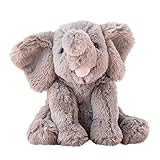
- A CUTE IMAGE: This fuzzy stuffed elephant is well-designed. It is made of ultra soft plush which has a awesome touch feeling, it won’t hurt kids and add more enjoyment. There are some plastic particles filled in the elephant’s body and arm to sit steadily. It is designed for children of all ages, we are committed to create a magic world for kids.
- EXCELLENT COMPANION FOR KIDS: Our elephant toy is designed to last and to be a constant companion for your little one. Elephant stuffed animals are cuddly and cute toys that play a critical role in the development of a child. They help to improve your kid's physical activity as well as hand-eye coordination. This adorable toy is a good item for kids to stimulate their kids to explore the unknown things and enjoy the wonderful world.
- A PERFECT GIFT FOR KIDS: If you are looking for a adorable, funny and hugging elephant stuffed animal for your baby, our cute elephant toy is a great choice. It helps to stimulate imagination and will also be something that your baby takes to bed. Giving the great stuffed animals for your kid can help to build memories, it will be a meaning toy for them. Providing your child with a toy like this is a bonding experience between you and your child.
- A PROPER SIZE TO CARRY: This elephant stuffed animal measures about 9 inches in height which is the perfect size for kids to cuddle with. When they take this plush toy outside, it is very suitable for children to take along in the car and bag, or play it with their friends. And its proper size makes it to be a nice room decoration on the night tables or sofa.
- CONSIDERATIONS: To extend its life time, we advise you can wash it by hand and don’t rub. Put it under the blazing sun and ventilate it for quite a long time. If you have any problems with the product, please contact us though Amazon message in time. We will reply as soon as possible and provide you a satisfying solution. We promise you will be happy with your purchase, and your kids will love it!
Some elephants also show self-directed actions and temporal-gland streaming around carcasses. The review includes observations from Samburu National Reserve in northern Kenya and compares findings across African elephant taxa. Elephants displayed broad interest in dead elephants, even when the living animals had not been known to have a strong relationship.
Repeated investigation could help an elephant gather information about what happened and update its understanding of the social environment. It may also include emotional responses, but the observations alone cannot establish a human-equivalent experience of grief. The review emphasises apparent emotionality and individual differences as questions for further study.
How are consolation and carcass responses different?
Both behaviours involve close attention to another elephant, yet they answer different scientific questions. Consolation observations concern a living animal in visible distress; carcass studies concern a body or remains after death. Keeping those contexts separate prevents a vivid observation from becoming an overconfident claim about an elephant’s inner life.
Quick wins for a faster PC:
Scan for outdated or missing drivers - takes under a minuteDriver Scan →Clear out junk files and repair common Windows errorsFree Scan →Also popular on Amazon

- Machine Washable
- Coordinates with the Twinkle Toes Collection
- Babys best friend
| Feature | Living-distress consolation | Responses to carcasses |
|---|---|---|
| Recipient’s condition | A living elephant showing distress | A dead elephant or its remains, from fresh carcass to bones |
| Observed actions | Approaching, touching the face or mouth, rumbles, chirps and other contact | Approaching, touching, investigation, revisiting, standing nearby, social and self-directed behaviour, and temporal-gland streaming |
| Main evidence type | Structured behavioural observations of Asian elephants | Field observations and a comparative review, including African elephant populations |
| What emotion can be inferred | Strong evidence of social sensitivity; consolation or empathic concern is plausible but motivation is not proven | Complex attention and possible emotional responses; human-like grief is not established |
Does this prove elephants feel empathy or grief?
It shows that elephants respond to distress and death in socially complex, sometimes repeated ways. That is compatible with empathy, consolation and grief, but behaviour does not provide a direct readout of subjective experience. Scientists therefore describe the actions precisely rather than assigning a single human emotion to every elephant or every encounter.
Several factors limit broad conclusions. The consolation evidence concerns Asian elephants observed in a living-social context, whereas much of the death-related evidence comes from field observations of African elephants and their remains. Different populations, settings and methods may reveal different behaviours. No verified sample size, percentage or effect size is available in the accessible summaries, so there is no defensible headline statistic to attach to the finding.
What should elephant owners and wildlife visitors take from the evidence?
The safest conclusion is also the most useful: elephants are attentive to one another’s condition. A distressed elephant may receive contact and vocal reassurance from a companion, and a dead elephant may attract prolonged investigation. These responses support treating elephants as cognitively and socially complex animals, not as creatures whose behaviour can be reduced to simple reflexes.
Also popular on Amazon

- 12INCH PLUSH ELEPHANT:Adorable stuffed elephant is 12 inches tall,Perfect size for toddlers or children to hug in bed time.Its specially rippled fur is super soft and easy to touch.long fur make it easier to hold during play, and make its big hugs feel even sweeter.
- FOR ALL AGRES:The stuffed elephant is made of high-quality material and premium PP cotton stuffing. Plastic pellets eyes are locked that safe for children to play with.All of the plush toys are rigorously safety tested.
- EASY TO CLEAN:Grey surface of the elephant stuffed animal resistant to dirt,durable,machine washable in cold water on gentle cycle, air dry.
- GREAT GIFTS:Elephant plush must be perfect gifts for Valentines Day ,birthdays, baby showers, baptisms, Easter basket stuffers, Christmas gifts and more!
- BEST COMPANION:The microwavable plush soft toy provide soothing warmth and comfort.Suitable for stress relief, bedtime buddy, daytime friend, Travel companion.
- Do not interrupt an elephant that is approaching a distressed or dead companion; close human presence can alter a sensitive social situation.
- Interpret a single touch or call in context. Researchers look for a pattern of actions and the surrounding circumstances, not one dramatic gesture.
- Use “consolation-like” or “consistent with empathy” when describing the evidence, unless a source has established a stronger conclusion.
What does the evidence say about an elephant’s emotional world?
Elephants appear capable of recognising when another elephant is in trouble and responding with contact, calls and sustained attention. Their reactions to carcasses add another window into how they gather social information after a death. Together, the findings point to rich social cognition while leaving the exact feelings behind the behaviour an open scientific question.
Free tools Windows power users keep installed
One-click scans. No signup required.
Frequently Asked Questions
Which elephant species showed consolation behaviour in the study?
The 2014 consolation finding concerned Asian elephants. It should not automatically be treated as a tested result for every elephant population or species.
Are elephants the only animals that comfort distressed companions?
No. Earlier empirical studies had documented consolation in great apes, canines and some corvids. “Rare” describes the limited number of species with comparable scientific evidence, not exclusive ownership of the behaviour.
Also popular on Amazon

- Your little one will love the whimsical look of this gray elephant plush toy with a curved trunk and floppy ears begging for play.
- The majestic wild and free nature of the safari exudes from these realistic stuffed animal elephant plushies that makes the perfect gift for toddlers.
- Small stuffed animals for kids make great toddler boy toys and gifts for girls with a flair for safari animals and soft animal plush toys.
- Kids toys just got better with high-quality cute elephant stuffed animals with durable stitching and a ready-for-fun stance.
- Combining play with Earth-sustaining practices, The Petting Zoo is committed to providing little ones with cute and cuddly plush toys that are made from recycled water bottles.
Do elephants mourn their dead for a fixed length of time?
There is no established timetable. Field reports describe approaches, returns and investigation at different stages of decay, but they do not show that every elephant follows the same sequence or duration.
Can researchers tell whether an elephant is grieving?
They can record posture, movement, touch, vocalisations and repeated visits, then compare those patterns across contexts. Those measures reveal behaviour, not a direct statement of what the elephant subjectively feels.
Recommended Free Tools





Leave a Reply