Ruby Reynolds was 11 when she found part of an enormous fossil jaw on a Somerset beach in 2020. Scientists later named the animal Ichthyotitan severnensis and estimated that it may have reached about 25 metres (82 feet) long. That figure is a reconstruction from jaw fossils, not a measurement of a complete skeleton, so its exact size—and whether it was definitively the largest marine reptile ever—is uncertain.
What did Ruby Reynolds discover?
In 2020, Ruby Reynolds was fossil hunting with her father, Justin, at Blue Anchor in Somerset, southwest England. She found a better-preserved fragment of a giant lower jaw. The family contacted ichthyosaur researcher Dean Lomax, and further collecting recovered associated pieces. Ruby, Justin and an earlier finder, Paul de la Salle, later became co-authors of the study describing the animal.
The main Blue Anchor fossil is a surangular, a bone from the rear part of the lower jaw. It was found in pieces; the 2024 study estimates that the complete bone would have exceeded two metres long. Its shape and anatomy match a less complete giant jaw fragment that de la Salle found at Lilstock in 2016. Together, the fossils were identified as a new species, Ichthyotitan severnensis. The peer-reviewed description appeared in PLOS ONE in 2024.
Ruby described the discovery as “so cool” and said she was proud to have played a part in a scientific discovery, according to the University of Bristol.
Recommended Free Tools
#1 Best Overall

- Replica Chirostenotes dinosaur claw – approx. 4.5 inches (11.43cm)
- Species: Chirostenotes pergracilis, Late Cretaceous (~76.5 million years ago), Alberta, Canada
- Realistic texture and anatomical accuracy – great for collectors, educators, and fossil enthusiasts
- Useful in paleontology education, museum displays, or as a unique prehistoric gift
- Display-ready fossil replica (stand not included)
Was it really 82 feet long?
About 82 feet is a rounded conversion of an estimated length of roughly 25 metres. The study’s estimate is for the Blue Anchor animal’s body, inferred from jaw material and comparisons—not a tape-measure reading from a complete skeleton. ABC News Australia reported the estimate as a range of 22–26 metres, while the popular 82-foot figure is used by Georgia Public Broadcasting.
Those numbers describe a scientific estimate, not a confirmed maximum. As study lead Dean Lomax told Georgia Public Broadcasting, “without a full skeleton, he can’t be sure of the size.” The animal’s proportions may not have matched those of other ichthyosaurs used for comparison.
How can a jawbone reveal the length of an animal?
The fossil directly establishes the dimensions and anatomy of the preserved jaw pieces. Researchers can estimate the missing length of the jaw from the pieces’ shape and how they fit together, then compare the jaw with better-known ichthyosaurs to infer a possible body size. Each step adds uncertainty: a reconstructed whole jaw is not the same as a preserved one, and a body-length estimate based on that jaw is less direct still.
Rank #2

- Detailed Pterodactylus kochi skeleton replica
- Crafted with care to capture the unique structure of this Cretaceous pterosaur
- Makes an eye-catching piece for paleontology enthusiasts and fossil collector
- Appropriate for home décor, offices, or educational spaces
The study also examined thin sections of the Blue Anchor bone to compare its internal structure with other giant ichthyosaur material. The Natural History Museum reported that the bone structure indicates the individual was still growing, adding another reason not to treat the estimate as a final adult size. Its curator of fossil reptiles, Marc Jones, said the find “hints that they were possibly even larger than we thought.”
Does “largest marine reptile” mean a settled world record?
No. The paper’s careful conclusion is that Ichthyotitan “probably represents the largest marine reptile formally described.” “Probably” matters: the known material is incomplete, and a size estimate from jaw fossils cannot establish an indisputable record among every marine reptile that ever lived. The animal is considered a probable shastasaurid, but the researchers say the remains are too incomplete for a definitive family placement.
The specimens come from the uppermost Triassic Westbury Mudstone Formation, from the Rhaetian stage, and are about 202 million years old. The published description identifies the fossils and makes a qualified size estimate; it does not document a complete animal.
Rank #3
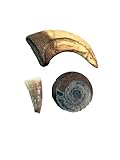
- Three-Item Fossil Set – Includes one Velociraptor claw replica, one Mosasaur tooth (B-grade), and one genuine small ammonite fossil
- Educational and Collectible – A great hands-on way to explore prehistoric life and paleontology
- Genuine Fossils Included – Both the Mosasaur tooth and ammonite are real fossil specimens
- Realistic Replica Claw – Velociraptor claw cast features high quality texture and curvature
- Ready for Display or Teaching – Great for collectors, educators, or science-themed gifts
Was Ichthyotitan a dinosaur?
No. Ichthyosaurs were marine reptiles, not dinosaurs. They lived in the sea during the age of dinosaurs, while dinosaurs lived on land. The discovery is remarkable because it adds evidence about the size and diversity of giant marine reptiles—not because it is a dinosaur fossil.
What changed in the paper’s later correction?
PLOS ONE published a correction on January 16, 2025, correcting a bivalve identification in the caption for Figure 4, panel B. The notice does not report a change to the paper’s body-length estimate or taxonomic conclusion; see the correction notice.
The Tool Desk
Outbyte PC Repair FREEClear out junk files and repair common Windows errorsFree Scan →Outbyte Driver Updater FREEFix the driver behind crashes, sound loss and screen glitchesFind Drivers →Quick Recap
Product prices and availability are accurate as of the date/time indicated and are subject to change. Any price and availability information displayed on Amazon at the time of purchase will apply.




