The Tool Desk
Outbyte PC Repair FREEClear out junk files and repair common Windows errorsFree Scan →Outbyte Driver Updater FREEScan for outdated or missing drivers - takes under a minuteDriver Scan →Anesthesia has real risks, but no population statistic can predict what will happen to an individual dog or cat. The most useful way to understand your pet’s risk is to ask how their health, history and procedure shape the plan—and who will monitor them through recovery. Before you consent, share all relevant medical information, get clear instructions and make sure you know whom to call afterward.
Is anesthesia safe for my dog or cat?
Anesthesia is not risk-free, but it is routinely used in veterinary care. The American Animal Hospital Association’s (AAHA) 2020 Anesthesia and Monitoring Guidelines estimated anesthesia-related death risk in healthy patients at 0.05% in dogs (1 in 1,849; 95% confidence interval 0.04–0.07%) and 0.11% in cats (1 in 895; 95% confidence interval 0.09–0.14%). These are estimates from studies summarized in the 2020 guidance, not newly measured 2026 rates, a personal forecast, or a guarantee of safety. The estimates apply to healthy animals; they should not be applied directly to a pet with significant health problems. AAHA’s discussion of anesthesia-related death.
Risk reduction is a process that begins before the procedure and continues at home. AAHA describes anesthesia as a continuum of care, not just the time a patient is unconscious. Its guideline summary says care “begins at home with the owner and does not end until the patient returns home to the owner for follow-up care.” Read the 2020 AAHA guideline summary.
8 questions to ask about anesthesia risks in dogs and cats
1. What is my pet’s individual risk, and what factors are driving it?
Ask the veterinarian to explain how your pet’s current health and the planned procedure affect the assessment. Factors may include medical history, previous anesthetic problems, age, size, breed-related anatomy or disease, temperament and the nature of the procedure. The healthy-patient estimates above provide context; they cannot calculate your pet’s personal odds. AAHA’s risk overview and preanesthetic evaluation guidance.
What’s actually slowing this PC down?
Pick the symptom - the matching free tool is one click away.
#1 Best Overall

- MONITORING DEVICE: Pet breathing apnea alarm designed for veterinary use during anesthesia and medical procedures
- EASY OPERATION: Simple to set up and operate with clear visual indicators for immediate breathing status monitoring
- VERSATILE USE: Compatible with pets of various sizes and weights, making it suitable for different animal patients
- Maintenance and Care: Easy to clean and maintain. Can be cleaned before and after use.
- PROFESSIONAL TOOL: Essential monitoring equipment for veterinary clinics and animal hospitals to ensure patient safety
Some anatomy and health conditions can change planning without making a complication inevitable. AAHA notes greater airway-obstruction concern in brachycephalic (short-nosed) dogs and cats. Cats and very small or toy-breed dogs may be more prone to heat loss and can be more difficult to intubate or monitor. Breed-related cardiac conditions or drug-response differences may also matter. Ask how any factor applies to your animal rather than relying on a blanket ranking of breeds. AAHA’s preanesthetic planning guidance.
2. What does my pet’s ASA patient-status category mean for the plan?
Ask whether the team assigns an ASA (American Society of Anesthesiologists) physical-status category and what it means for your pet. AAHA describes a scale from 1, a normal healthy patient, through 5, a moribund patient not expected to survive without the operation. Higher ASA status is associated with higher odds of anesthesia-related death, but the category is not an exact probability for an individual animal. It helps the team assess risk and consider planning or stabilization. AAHA’s preanesthetic evaluation guidance.
Rank #2
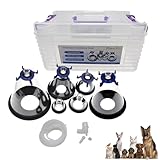
- 【Stable Fit for Reliable Anesthetic Delivery】Six graduated mask sizes help achieve a consistent seal for pets from small mammals to medium-sized dogs, reducing gas loss and supporting efficient induction.
- 【Ready for Standard Veterinary Systems】Universal connector attaches to most anesthesia machines without adapters, allowing rapid transitions between procedures such as exams, imaging, dental cleanings and soft-tissue work.
- 【Designed for Animal Comfort】Light, clear dome and flexible silicone perimeter limit pressure and reduce patient resistance, promoting smoother inductions even with anxious animals.
- 【Durable Build for Repeated Use】Tough medical-grade construction withstands routine handling, while the detachable design simplifies deep cleaning, disinfection and long-term maintenance.
- 【Supports Busy Clinical Environments】A practical solution for surgery centers, teaching facilities, multi-room clinics and high-volume hospitals managing diverse species every day.
3. What examination or tests do you recommend, and what might change the plan?
A preanesthetic examination and review of your pet’s records help the veterinarian identify concerns. Depending on the individual animal and findings, tests may include a complete blood count (CBC), chemistry panel, urinalysis, blood pressure measurement, electrocardiogram (ECG) or imaging. There is no one-size-fits-all test list: ask which tests are appropriate and whether an abnormal result could lead to treatment, a change in the anesthetic plan or a delay. AAHA’s recommendations for evaluation.
AAHA does not set a universal minimum interval for laboratory testing. Its guidance says a reasonable interval for a clinically healthy patient with normal results may be three to six months; if health or test results are abnormal, repeat testing immediately before anesthesia may be needed. The veterinarian should decide what timing is suitable for your pet.
Recommended Free Tools
Rank #3
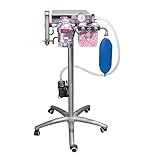
- Suitable for animals weighing up to 100kg: This versatile equipment is perfect for a variety of pets and other animals such as cats, dogs, monkeys, and pigs, ensuring safe and secure accommodation during procedures.
- High-quality Tec 3 ISO Vaporizer: Manufactured in the UK, this advanced vaporizer promises reliable performance for anesthesia delivery, offering veterinary professionals a trusted tool for effective animal care.
- Quick oxygen flush system: Designed to facilitate prompt intervention during surgeries, the quick oxygen flush feature provides critical support to animals, enhancing safety and ensuring a smooth recovery process.
- Clear inhalation and exhalation valves: The easy-to-view valves allow for accurate monitoring of an animal's respiratory function, ensuring that vets can keep a close eye on each patient's breathing for optimal safety.
- Scavenging and adjustable pressure limiting valve: This essential feature allows for efficient waste gas management and customizable pressure settings, delivering both performance and safety tailored to diverse veterinary needs.
4. How should we handle medicines, supplements, food and anxiety before the procedure?
Give the clinic a complete list of prescribed and over-the-counter medicines and supplements, and describe any previous drug reactions or anesthetic problems. Do not stop or give medication on your own. Ask for the clinic’s specific instructions about which medicines to give and when, as well as when your pet should stop eating or drinking. Fasting instructions can vary with the patient and plan.
Tell the team if your pet is fearful, highly stressed or difficult to handle, and mention any pain or behavior concerns. Anxiety and temperament can affect examination and drug planning. AAHA’s preanesthetic planning guidance.
Rank #4

- MediNOW Anesthesia Mask can provide high concentration oxygen to dogs/cats/animals in emergency to maintain normal breathing. Ensure your pet's comfort and well-being with a reliable oxygen that delivers consistent and effective results.
- 【Professional Choice】Mask comes in (6) different sizes and can be used to provide high concentration oxygen to animals in emergency to maintain normal breathing.
- 【Versatile Design】Mask are suitable for various animals including cats, dogs, rabbits, and rodents, making it a versatile choice for veterinary clinics and animal hospitals.
- 【Efficient Oxygen Delivery】Mask features a clear dome shape that allows for efficient oxygen delivery and monitoring during anesthesia procedures.
- 【Durable Construction】Constructed from high-quality materials, this anesthesia mask is designed for long-lasting use and easy cleaning. Mask can be autoclaved repeatedly at 134°C for over 40 times.
5. Who will monitor my pet, and which vital signs will you track?
Ask who is responsible for monitoring during anesthesia and what the team tracks. AAHA’s guidance covers respiratory and cardiovascular function, cardiac rhythm and temperature. Ask how the clinic assesses breathing and oxygenation, heart rate and blood pressure, and whether a staff member is specifically assigned to anesthesia monitoring. The guideline also describes IV access, support and documentation as parts of care. No single device or promise makes anesthesia risk-free; the relevant discussion is how the team monitors your pet and responds to changes. AAHA’s anesthesia-monitoring guidance.
6. What complications are possible, and how will the team respond?
Complications can include low blood pressure (hypotension), poor oxygenation (hypoxemia), abnormal heart rhythms (arrhythmias), unusually fast heart rate (tachycardia), high blood pressure (hypertension), inadequate ventilation (hypoventilation), low body temperature (hypothermia) and regurgitation. AAHA identifies cardiovascular and respiratory complications as generally the most acutely life-threatening categories. Ask what the clinic monitors for and how the team would respond if a problem arose; this list describes possible complications, not a prediction that your pet will experience one. AAHA’s overview of anesthetic complications.
Free tools Windows power users keep installed
One-click scans. No signup required.
Best Value

- Pet Breathing Circuits combine with Endotracheal Tube or Anesthesia Mask Breathing Filter and Respiratory Machine, providing a simple, convenient and efficient passage for gas delivery
- They are equipped with standard connectors (15mm, 22mm), ensuring compatibility with various devices
- Made of EVA material, the hoses are expandable, which is easy for transportation and use
- Usually 1.8m in length, the circuits can have their length customized according to specific requirements
- Available with different types of Wye connectors and elbows for functions such as temperature & pressure measuring or gas monitoring, and the supply material is PVC, with port 22/15mm, gas supply port 15mm OD, 2 - liter latex breathing bag (different sizes or latex - free options available), and exhale/scavenge port 22/19mm tubing
7. What should I expect during recovery, and how long will my pet be monitored?
Ask how the team will monitor your pet as they wake up, support breathing and circulation, manage pain and temperature, and decide when discharge is appropriate. Monitoring and support should continue through recovery; anesthesia care does not stop when the procedure ends. In the studies behind its healthy-patient estimates, AAHA says deaths occurred most frequently in the first three postoperative hours. That finding underscores why recovery care matters, but it does not predict an individual pet’s outcome. AAHA’s discussion of anesthesia-related death and monitoring guidance.
8. What is normal at home, and when should I call?
Before you leave, get written discharge instructions and a phone number for questions or urgent concerns. AAHA’s example guidance says mild sedation and reduced appetite may last 12–24 hours, and a slight cough from the breathing tube may last one to two days. It advises calling if appetite or activity has not returned to normal within 24 hours, if a cough is moist, progressive or productive, or if behavior or alertness changes are concerning. Follow your own clinic’s instructions, especially if the procedure itself adds restrictions or expected symptoms. AAHA’s guidance on returning home.
Independent reader supportYour contribution helps us test, update, and keep practical guides available for everyone.How to compare anesthesia care plans
If you are weighing a recommendation or comparing clinics, ask about the whole care plan rather than a single device or reassurance. These questions can help you understand the approach, but they do not by themselves establish a clinic’s quality or predict your pet’s outcome.
Quick Recap
- Does the plan include an individualized examination and review of medical history?
- Are indicated tests and any needed stabilization addressed before the procedure?
- Who is responsible for monitoring, and which physiologic measures are tracked?
- Does monitoring and support continue through recovery?
- Will the clinic explain consent and provide understandable written discharge instructions with clear reasons to call?
Product prices and availability are accurate as of the date/time indicated and are subject to change. Any price and availability information displayed on Amazon at the time of purchase will apply.




