
Some links on this page are affiliate links: if you buy through them we may earn a commission, at no extra cost to you.
Not yet, at least not in the way most people mean. No study reviewed here has tested an animal-shaped quadruped robot against wild bears. Related technologies are more promising: motion-triggered alarm lights reduced bear access to attractants on Montana farms, drones moved grizzlies during documented hazing operations, and a captive-coyote experiment found that adaptive movement improved a light-based deterrent. Those findings support cautious, layered use of proven prevention and hazing methods—not the assumption that a consumer robot dog will keep bears off a property.
What counts as a “robotic animal,” and what has actually been tested?
The phrase can describe two very different tools. An animal-shaped quadruped robot is a mobile machine designed to look or move like a dog or another animal. An automated or mobile deterrent may instead be a sensor-triggered lamp, a drone, or a vehicle carrying a scare device. The evidence is much stronger for the second category.
As an Amazon Associate I earn from qualifying purchases.
Do these 3 things before closing this tab:
1Fix the driver behind crashes, sound loss and screen glitches2Repair Windows errors before they cause bigger problems3Scan for outdated or missing drivers - takes under a minuteThere is no direct peer-reviewed field validation showing that a quadruped robot reliably repels wild grizzly, black, or polar bears. The closest evidence comes from four narrower lines of work:
- A motion-activated solar alarm lamp was studied at 21 Montana farms with grizzly-bear attractants.
- Drones were assessed across 163 grizzly hazing events in north-central Montana.
- A remote-controlled vehicle carrying a commercial light deterrent was tested on captive coyotes.
- A computer-vision system that triggered a solar-powered spray device was reported in a 2026 Tibetan brown-bear conflict study.
These studies answer different questions. A field study can show whether bears change behavior under particular conditions; a captive experiment can reveal whether movement improves an aversive signal; and an engineering report can show detection speed and activation accuracy. None of those measurements, by itself, proves that an animal-shaped robot will produce durable avoidance in wild bears.
Popular on Amazon

- Humane Lawn & Garden Protection - Help protect lawns, gardens, flower beds, and landscaping from unwanted animal visitors with a motion-activated sprinkler that responds with a burst of water.
- Heat & Motion Animal Detection - Using passive infrared sensing technology, the Yard Enforcer detects the movement of heat-producing animals and activates a burst of water when activity is detected. Detection performance may vary based on animal size, environmental conditions, and sensor placement.
- Day, Night & Always-On Operation - Choose from Day, Night, or Always-On modes to help tailor protection for the times when animal activity is most common in your yard.
- Adjustable Detection Range & Spray Duration - Customize coverage with an adjustable sensor range of up to 40 ft. and spray durations from approximately 3 to 10 seconds to fit your outdoor space.
- 30-Minute Manual Watering Function - In addition to animal deterrence, activate a convenient 30-minute manual watering cycle for quick watering tasks around lawns, gardens, and planting areas.
Do robotic dogs scare bears away?
There is no direct bear evidence yet. A 2023 captive-coyote experiment suggests that movement can make a deterrent more effective, but coyotes in an enclosure are not a substitute for free-ranging bears with different size, motivation, experience, and escape options.
What the coyote experiment found
Researchers mounted a commercial Foxlight deterrent on a remote-controlled vehicle and compared three treatments: light alone, predetermined movement, and adaptive movement. Predetermined movement approximately doubled efficacy compared with the light-only treatment. Adaptive movement increased the time coyotes left bait available by an exponential amount.
The useful design lesson is that an unpredictable, responsive signal may be harder to ignore than a stationary light. The result does not establish how a grizzly would react to a quadruped robot, whether the machine could operate safely on rough terrain, or whether repeated exposure would lead to habituation. It also does not show that a robot can protect a property when food, garbage, livestock, or crops remain accessible.
Are motion-activated lights effective against bears?
A motion-activated solar alarm lamp has field evidence against grizzlies, but its performance was conditional rather than universal. In Wesley M. Sarmento’s 2024 Montana study, the devices reduced the odds that bears would access an attractant by 46%.
Results from the 21-farm study
- Each additional device was associated with a further 44% reduction in the odds of attractant access.
- Bears stopped returning at 11 of the 21 sites.
- Activated devices increased vigilance and movement.
- The study found no evidence of habituation during its observation period.
- Performance was weaker when larger groups of bears were present.
- Results were strongest in August and with fungicide-treated wheat, two conditions specific to the study.
Sarmento summarized the main result as: “When scare devices were activated, there was a 46% reduction in the odds bears would access an attractant.” That is an odds reduction under the study’s farm, season, attractant, and deployment conditions—not a 46% guarantee that any bear will leave a home garden or livestock enclosure.
A lamp is also a stationary device. It cannot follow a bear around a fence line, respond intelligently to changing routes, or replace the physical removal of food rewards. Its strongest role is as one layer around a site where attractants have already been secured.
Recommended Free Tools
Is a drone better than a dog for hazing a grizzly?
For the specific Montana hazing operations studied, drones provided a major access advantage over vehicle pursuit, while dogs performed worse than vehicles. That comparison does not mean a drone is automatically better in every landscape or safer for every bear encounter.
Also popular on Amazon
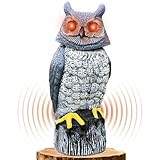
- Gradient colored eyes - Ugold new generation of owl adopts gradient LED light on its eyes. The owl eyes can emit light in gradient color (from red to green), and decorate your home and garden.
- Lifelike Appearance - Patented appearance desgin. Measures 16.9" x 6.8", 100% hand painted. The exquisite owl will be a great guard and decoration for your lawn, patio and garden.
- Multi-Functional - Activated by a built-in sensor, our owl features a rotating head, a pair of glowing colored eyes and hooting sounds. The lifelike owl will make your garden and home full of vitality.
- Solar Powered & Waterproof - The solar panel fixed to the owl head will provide energy for the owl. The owl adopts new waterproof design. The switches are covered by waterproof caps.
- Silent Mode - Same as other members in Ugold owl family, The product can be switched to the silent mode in case you get tired of hooting sounds.
What the six-year Montana analysis reported
The study covered 163 hazing events in north-central Montana. Drones were associated with a 91% success rate for moving bears away. The odds that personnel could pursue a bear were 127% higher with a drone than with vehicle pursuit, largely because vehicles were blocked by terrain and access constraints. Relative to vehicle pursuit, dogs had an 86% reduction in the odds of a successful hazing event.
Drones can be controlled from a secure location and can reach slopes, brush, or other areas a vehicle cannot. However, operation requires an FAA-certified pilot, and recreational or poorly timed flights can disturb bears without producing useful conditioning. Sarmento wrote that “Drones outperformed other hazing techniques where the odds of a pursuit of a bear being possible increased 127% relative to vehicular chasing due to accessibility issues.”
Immediate movement is not the same as lasting avoidance
A drone study records what happened during a hazing event. It does not prove that every bear will avoid the area months later. The analysis suggests that repeated, consistent hazing may contribute to longer-term avoidance, but it also warns that unnecessary disturbance could habituate bears and reduce future effectiveness. Drones therefore belong in trained, authorized wildlife-response programs rather than casual recreational use.
Can an automated spray system detect and deter bears?
A 2026 report on Tibetan brown-bear conflict described an integrated system using a YOLOv5-MobileNet detector, an edge-AI board, and a solar-powered spray device. Its reported numbers are promising for engineering performance, but they are not equivalent to a large independent bear-efficacy trial.
Reported system metrics
- The image dataset contained 1,243 wildlife images, including 795 bear images and 100 infrared captures.
- Validation reported 91.4% mean average precision and 93.6% recall.
- In 100 controlled activation tests, deployment occurred within 0.2 seconds with 97.2% accuracy.
- During a 30-day field trial, the system recorded three successful deterrence events and no false activations.
Those figures describe recognition, response time, and a small pilot. They do not establish how many bears were exposed overall, whether bears avoided the site later, how the system performs in rain, snow, vegetation, or multiple-bear encounters, or whether spray remains effective after repeated exposure. Treat the report as evidence that an automated device can be built—not as proof that it will protect a property on its own.
How do robotic and automated devices compare with established deterrents?
Physical exclusion and properly used non-lethal deterrents have a broader evidence base than animal-shaped robots. A 2020 meta-analysis by Igor Khorozyan and Matthias Waltert covered 77 cases from 48 publications and found wide variation by device and situation.
| Technology or intervention | Evidence and setting | Reported result | Important limitation |
|---|---|---|---|
| Electric fencing | Meta-analysis of bear-conflict cases | 79.2–100% reduction in damage, with a 95% confidence interval | Effect depends on design, maintenance, and whether attractants remain inside the protected area |
| Deterrents as a broad category | 77 cases from 48 publications | 13.7–79.5% effectiveness | The range shows that device type and context matter; it is not a guarantee for any product |
| Motion-activated solar alarm lamp | 21 Montana farms with grizzlies | 46% lower odds of attractant access; 44% additional reduction per added device; no return at 11 sites | Weaker with larger groups; results were strongest in specific seasonal and crop conditions |
| Drone hazing | 163 grizzly hazing events in north-central Montana | 91% event success; 127% greater pursuit odds than vehicles | Requires trained operation and can cause harmful disturbance if used improperly |
| Bear spray | USGS-supported polar-bear incident study | Stopped undesirable behavior in 18 of 19 incidents | Polar-bear results do not prove performance against grizzlies or black bears; users need training and immediate access |
| Operational hazing with all-terrain vehicles | Northern Alaska patrol analysis involving polar bears | 96% of deterrent incidents ended with the bear moving away; all-terrain vehicles were 4–5 times more effective than cracker shells or beanbags | Species, personnel, terrain, and operational context differ from private-property use |
Khorozyan and Waltert recommended using deterrents during peak damage periods and emphasized that more studies are needed in under-represented regions and species. The broad lesson is practical: a well-maintained barrier can outperform a novel gadget when the goal is preventing access to a food reward.
Windows Errors? Fix Them Before They Spread
Repair common Windows errors and clear accumulated junk for a smoother, more stable PC - no reinstall needed.Free scan · no reinstallOutdated Drivers Are Slowing You Down
One free scan finds every outdated or missing driver and matches the right update for your exact hardware.Free scan · exact hardware matchAlso popular on Amazon
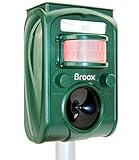
- Do you have problem with unwanted animals in your area, garden, farm? Are they destroying your garden or eating the fruits? Do they bring many viruses to you? Let's start to use Broox deer Repellent to solve your problems! This effective device helps you to get rid of unwelcome animal visitors. It contains a motion detector system which detects movements and emits powerful ultrasonic sound and flashing LED light.
- Repel animals in a humane way: Broox squirrel repellent outdoor, repels animals by emitting ultrasonic sound, alarm and LED flashing light. When the motion detector, detects a motion, it will trigger the ultrasonic speaker to emit a high frequency noise which makes animals uncomfortable, therefore, keeps them away from the protected area.
- Solar Powered and Waterproof: With a solar panel on the top of the device, it can be charged by solar energy, that benefits in energy saving and environmental protection. It also can be charged with included USB cord. This outdoor repellent uses high-grade material with the weatherproof and UV-protected construction, which can protect itself against water splashed from all directions and withstand normal rain, snow, or the harsh sun. it is perfect for garden, yard, farm.
- Human Design: ultrasonic animal repellent, Deer repellent is only to drive the animal without any chemicals. it is only issued 13.5kHz-45.5kHz ultrasound to drive them away. Please note that this repellent is effective only for animals that are capable of hearing ultrasonic frequencies. It will not work for animals such as snakes because they cannot detect ultrasonic sound.
- Easy to Install, Versatile, and Wide Sensor Coverage: take the cat repellent outdoor, choose your desired mode, and place it where needed, insert it into the ground, mount it on a wall, With 5 frequency modes, it effectively repels a wide range of animal intruders, including cats, squirrels, deer. The repeller features a 110° infrared sensor angle with a detection range of 20–25 feet, depending on the size of the animal, ensuring broad coverage and reliable performance in protecting your area.
What determines whether a device works?
Species, motivation, and group size
A bear investigating an unfamiliar light is not equivalent to a bear defending access to a high-value food source. The Montana lamp study found weaker results with larger groups, while the polar-bear findings came from a different species and operational setting. Never transfer a percentage from one species or landscape to another without qualification.
Attractants and conditioning
Lights, robots, drones, and sprays can interrupt an approach, but they do not remove the reason a bear is visiting. Garbage, pet food, bird seed, unsecured livestock feed, and crop attractants can teach a bear that returning is worthwhile. If the reward remains, the animal may tolerate or work around the deterrent.
Terrain and coverage
The drone analysis specifically identified terrain and access as reasons vehicles could not pursue bears. A stationary robot or lamp has the opposite limitation: it covers only its detection zone. Property size, vegetation, fencing geometry, and the number of approach routes determine whether one device can meaningfully change access.
Habituation and consistency
The Montana lamp study found no habituation during its study period, but that is not proof of permanent novelty. The drone work cautioned that unnecessary disturbance can reduce future effectiveness. A deterrent should produce a consistent, meaningful consequence while avoiding random harassment of animals that are not threatening people, livestock, or property.
Quick wins for a faster PC:
Clear out junk files and repair common Windows errorsFree Scan →Fix the driver behind crashes, sound loss and screen glitchesFind Drivers →Operator skill and legal limits
Drones require an FAA-certified pilot, and wildlife agencies may impose additional restrictions on hazing, aircraft use, protected species, or public land. A device that cannot be operated legally, safely, and at the right moment is not a dependable deterrent. Contact the relevant wildlife authority before any active hazing program.
What is the most reliable non-lethal way to keep bears away?
The best-supported approach is layered prevention: remove rewards, block access, then use a trained and proportionate deterrent when necessary. A robot should be considered an optional supplement, not the foundation.
- Remove or secure attractants. Store garbage, animal feed, and other odorous materials in bear-resistant containers or secured buildings. Bring pet food and bird seed indoors, and address crop or livestock attractants before deploying a gadget.
- Install and maintain physical barriers. Electric fencing has the strongest damage-reduction range in the cited meta-analysis. Check energizer function, grounding, vegetation contact, gates, and gaps regularly.
- Choose a device for the actual problem. A sensor-triggered lamp may help at a fixed approach. A drone requires trained personnel and room to operate. A computer-vision sprayer needs reliable power, a clear detection field, safe spray placement, and a plan for false negatives.
- Set a response protocol. Decide who receives alerts, when a device activates, when people stay indoors, and when wildlife officers are called. Do not approach a bear to test whether a robot works.
- Record outcomes. Log date, species, group size, attractant, weather or visibility, device response, and whether the bear returned. A local record is more useful than assuming a percentage from another study applies unchanged.
- Escalate responsibly. If a bear repeatedly approaches people, enters buildings, or defeats barriers, stop experimenting and contact wildlife professionals. Active hazing should be performed only where authorized and by people trained for that species and setting.
What should a property owner expect from a robotic deterrent?
Expect a conditional interruption, not a force field. A mobile or animal-shaped robot may create motion and novelty, but no reviewed study establishes its coverage, battery endurance, maintenance burden, purchase price, or long-term bear response. Those practical specifications must be verified for the particular system and site.
Also popular on Amazon

- Volume Adjustment:The upgraded dog barking alarm is equipped with a high-power speaker featuring three adjustable volume levels, reaching up to 130 decibels. It includes pre-set barking dog and loud impact sounds as warnings, and also supports up to 20 seconds of custom voice recordings to create personalized alerts.
- Animal Protection for Your Property:This motion-activated alarm combines six bright red LED lights with dynamic barking and impact sounds, effectively discouraging wildlife from entering your property. It helps keep away animals like deer, rabbits, raccoons, groundhogs, skunks, and even larger wildlife like bears or wild boars. Perfect for safeguarding your garden, orchard, backyard, pond, or farm.
- Versatile Operating Modes:The outdoor motion alarm features three flexible modes to fit your needs: 1. 24-hour mode for round-the-clock monitoring. 2. Night mode, activating only in the dark. 3. Night cycle mode, playing pre-set sounds every 5 minutes without motion detection.
- Reliable Power for Continuous Operation:Equipped with a 3.7V 1200mAh rechargeable lithium battery, the barking alarm offers more than 12 hours of continuous use on a full charge. The high-efficiency Japanese-imported solar panel fully recharges the device in just 10 hours, ensuring uninterrupted performance day and night.
- Complete Package for Easy Setup:Your package includes everything you need for quick and simple installation: One solar-powered motion sensor alarm One infrared remote control One USB charging cable Mounting accessories (2 screws and 2 expansion plugs) One user manual Enjoy peace of mind with a 24-month warranty and our responsive customer service team, ready to assist you anytime.
Engineering accuracy also needs careful interpretation. A detector that identifies bears correctly in a labeled image set can still miss an animal behind vegetation or trigger too late for a close approach. Conversely, a fast spray response in controlled tests does not show that bears will avoid the property after the first encounter.
For most homes, farms, and camps, the defensible order of investment is attractant control, secure storage, fencing where feasible, and a response plan. Automated lights, cameras, drones, or robots can fill gaps after those measures are in place, provided local law and wildlife guidance allow their use.
What does the evidence say in one sentence?
Robotic animals have an unproven role against wild bears; automated lights and drones show context-specific promise, while fencing and trained, species-appropriate deterrence currently have the stronger practical evidence.
Frequently Asked Questions
Will one robot protect an entire yard or farm from bears?
No study establishes a reliable protection radius for an animal-shaped robot. Coverage depends on approach routes, vegetation, terrain, sensor range, power, and whether bears can reach an attractant from another direction.
Can bears become used to motion-activated lights?
Habituation was not observed during the Montana lamp study, but that finding was limited to its study period and conditions. Repeated, predictable stimulation can lose value, so lights should support attractant removal and barriers rather than operate alone.
The Tool Desk
Outbyte Driver Updater FREEFix the driver behind crashes, sound loss and screen glitchesFind Drivers →Outbyte PC Repair FREEClear out junk files and repair common Windows errorsFree Scan →Is it legal to fly a drone over a bear?
Drone hazing requires an FAA-certified pilot, and wildlife or land-management rules may add restrictions. Check with the relevant aviation and wildlife authorities before operating near a bear; recreational flights can disturb animals and may reduce future deterrent effectiveness.
Should I use a dog to chase a bear away?
The Montana hazing analysis found dogs had an 86% reduction in the odds of a successful event relative to vehicle pursuit. Uncontrolled dogs can also escalate an encounter, so people should keep pets away and follow local wildlife-agency instructions instead of attempting a chase.





Leave a Reply