
Free tools Windows power users keep installed
One-click scans. No signup required.
Some links on this page are affiliate links: if you buy through them we may earn a commission, at no extra cost to you.
Bear spray is the strongest choice for a close, charging or attacking bear. The National Park Service (NPS) calls it the recommended self-defense tool, and the Interagency Grizzly Bear Committee (IGBC) says it has shown more success than other deterrent methods when carried accessibly and used correctly. An air horn is better suited to a bear that is still at a distance and approaching a person, camp or settlement. A motion-activated audio or visual alarm is primarily a fixed-perimeter device for a yard, shed or unattended camp area. These tools are not interchangeable, and none is guaranteed. No controlled, current head-to-head study comparing all three methods establishes one universal winner; the practical ranking is scenario-based and evidence-weighted.
Which deterrent fits your bear encounter?
The right tool depends on distance, whether a person is present, and how quickly the bear is closing the gap. Use this as a decision guide rather than treating any device as a complete bear-safety plan.
As an Amazon Associate I earn from qualifying purchases.
| Situation | Most suitable layer | Why | Important limitation |
|---|---|---|---|
| A bear is charging or attacking at close range | EPA-registered bear spray carried on your body | It creates an airborne cloud between you and the bear and has the strongest incident record in the cited guidance. | Wind, rain, snow, cold, poor access and incorrect use can reduce its protection. |
| A bear sees people at a distance and keeps approaching | Air horn or another noisemaker, with bear spray immediately available | Noise can make a bear aware of people and may stop an approach before it becomes a close encounter. | A bear accustomed to noise may not react immediately or may return later. |
| A yard, shed, camp or other fixed perimeter is unattended | Motion-activated audio or visual alarm, after attractants are removed | It can deliver a non-contact warning without a person standing nearby. | The reviewed guidance provides no controlled effectiveness rate, and an alarm does not remove food or other rewards. |
| People, traffic or buildings are close to the bear | Do not attempt improvised hazing unless a safe position and escape route exist | Noise can create hazards for bystanders or push a bear toward a road or other people. | Florida Fish and Wildlife Conservation Commission (FWC) guidance says not to haze a highly agitated or wounded bear, a bear near traffic, a bear in a tree, or a bear with dependent cubs. |
Why is bear spray the leading close-range option?
Bear spray has the best documented defensive record among the three tools in the cited official sources. It is not a force field and is not guaranteed to stop every bear, but it is designed for the moment when a bear is close enough that a remote alarm or warning sound may no longer matter.
What the incident figures show
The Government of Alberta reports that 98% of users in a cited Alaska study were uninjured after using bear spray; the remaining 2% sustained minor injuries. The Alberta page does not state the study year. The IGBC’s 2017 guideline summarizes 72 Alaska incidents involving 175 people in which bear spray stopped undesirable behavior in more than 90% of cases. Three people were harmed and none was seriously injured; the study year is not stated on the IGBC page.
Popular on Amazon

- EPA REGISTERED TO PROTECT AGAINST 9 SPECIES: Approved by the EPA to deter Bears, Mountain Lions, Coyotes, Feral Dogs, Moose, Bison, Wild Boars, Possums & Raccoons. Maximum-strength formula with 2.0% Major Capsaicinoids and HPLC lab-tested performance
- PROTECTION FROM A SAFE DISTANCE: Powerful spray deploys a dense 6ft-wide fog with an effective range up to 40 feet (12 m), with 6-7 seconds of total spray time, giving you more time and space to react to a bear attack or deter a charging mountain lion
- FAST, RELIABLE ACCESS IN BEAR COUNTRY: Quiet quick‑draw elastic belt holster for a secure & accessible carry while hiking or camping, the glow‑in‑the‑dark safety clip helps locate the spray at night, the bell helps to warn bears that you’re in the area
- EVERY BATCH VERIFIED FOR PERFORMANCE: Manufactured in the USA and HPLC lab tested to verify strength and consistency in every batch. Features a glow-in-the-dark safety wedge for fast identification in low-light conditions
- FIELD-TESTED & ENVIRONMENTALLY RESPONSIBLE: Federal EPA and Health Canada approved. Features eco-friendly 1234ze propellant and proven bear deterrent performance, delivering trusted protection without long-term environmental impact
Those figures are incident summaries, not a laboratory comparison with air horns or alarms. They also do not mean that every spray deployment succeeds, that every user applies it correctly, or that the results transfer unchanged to every bear species, weather condition or location.
What product should you carry?
NPS and IGBC specify an EPA-registered product labeled for deterring bear attacks. Personal-defense pepper sprays can use a different formulation or a narrow stream, so they should not be assumed to provide the same cloud or range. Check the canister label and follow the park or land manager’s rules for the area where you will carry it.
An EPA label dated February 6, 2025, for Frontiersman Bear Attack Deterrent lists 2.0% capsaicin and related capsaicinoids. That label lists 7.9- and 9.2-ounce canisters, an effective range of 25–40 feet at 32°F and 68°F, and approximately six to eight seconds of total spray depending on canister size and temperature. Those numbers belong to that label and should not be generalized to every bear-spray product.
How should you carry and practice with it?
- Keep the canister in a belt or chest holster, not buried in a backpack. NPS and IGBC both emphasize immediate access.
- Practice the deployment motion with an inert or training canister before entering bear habitat. Practice lets you learn the holster and safety arrangement without depleting the defensive canister.
- Use the spray only when a bear is charging or attacking, as directed by NPS guidance. When deployment is necessary, spray a cloud between you and the bear rather than spraying an object, tent or person.
- Account for conditions. The EPA label gives its range at specified temperatures, while NPS warns that wind, rain, snow and cold can reduce distance.
- When the bear retreats, leave the area. IGBC says bear spray is an airborne deterrent only and should not be applied to equipment, tents or people.
When does an air horn make sense?
An air horn is a distance-management tool, not an equivalent substitute for a carried close-range defense. Alberta describes portable air horns as producing a piercing sound greater than 120 decibels and lists noisemakers among the two most effective bear deterrent categories alongside bear spray.
Use it before the encounter becomes close
Alberta recommends a noisemaker when a bear is at a distance, knows people are present, and continues approaching, or when it is heading toward a camp or settlement. The purpose is to communicate human presence and interrupt the approach while there is still room for the bear to leave.
Also popular on Amazon

- EPA REGISTERED TO PROTECT AGAINST 9 SPECIES: Approved by the EPA to deter Bears, Mountain Lions, Coyotes, Feral Dogs, Moose, Bison, Wild Boars, Possums & Raccoons. Maximum-strength formula with 2.0% Major Capsaicinoids and HPLC lab-tested performance
- PROTECTION FROM A SAFE DISTANCE: Powerful spray deploys a dense 6ft-wide fog with an effective range up to 40 feet (12 m), with 6-7 seconds of total spray time, giving you more time and space to react to a bear attack or deter a charging mountain lion
- FAST, RELIABLE ACCESS IN BEAR COUNTRY: Quiet quick‑draw elastic belt holster for a secure & accessible carry while hiking or camping, the glow‑in‑the‑dark safety clip helps locate the spray at night, the bell helps to warn bears that you’re in the area
- EVERY BATCH VERIFIED FOR PERFORMANCE: Manufactured in the USA and HPLC lab tested to verify strength and consistency in every batch. Features a glow-in-the-dark safety wedge for fast identification in low-light conditions
- FIELD-TESTED & ENVIRONMENTALLY RESPONSIBLE: Federal EPA and Health Canada approved. Features eco-friendly 1234ze propellant and proven bear deterrent performance, delivering trusted protection without long-term environmental impact
There is no official distance at which every air horn will work. Terrain, wind, the bear’s prior exposure to noise and the position of people all change the outcome. Keep bear spray available because an air horn may fail as the distance closes.
Do these 3 things before closing this tab:
1Scan for outdated or missing drivers - takes under a minute2Clear out junk files and repair common Windows errors3Fix the driver behind crashes, sound loss and screen glitchesWhy can noise fail?
Alberta warns that a bear previously exposed to noise deterrents may not be deterred immediately and may return after the sound stops. Noise can therefore change an immediate approach without changing the bear’s interest in food or a campsite.
How can you use an air horn without creating a new hazard?
- Move to a safe position before sounding it. Ensure people are clear and that the bear has an obvious route away from you.
- Use the horn only when the bear knows people are present. Startling a bear that has not identified people can produce an unpredictable movement.
- Keep the defensive plan active. Have accessible bear spray and be prepared to use it if the bear continues closing the distance.
- Do not sound the horn from a position that blocks the bear’s escape or directs it toward roads, crowds or other hazards.
FWC lists yelling, air horns and whistles as non-contact hazing methods that are often enough for bears not yet used to people. Its guidance still requires a safe position and a clear route away from roads and bystanders.
What can a motion-activated alarm do around a property?
A motion-activated audio or visual alarm is most useful as a fixed, unattended perimeter layer. FWC identifies these devices, along with water sprinklers, as ways to deter bears without anyone present. That makes them relevant to a yard, shed, camp boundary or other location where a person cannot watch continuously.
Start with attractant control
An alarm cannot remove a food reward. FWC says to secure trash, pet food and bird feeders before relying on non-contact hazing. If food remains accessible, an alarm may interrupt an approach without changing the reason the bear is visiting.
Also popular on Amazon

- EPA REGISTERED TO PROTECT AGAINST 9 SPECIES: Approved by the EPA to deter Bears, Mountain Lions, Coyotes, Feral Dogs, Moose, Bison, Wild Boars, Possums & Raccoons. Maximum-strength formula with 2.0% Major Capsaicinoids and HPLC lab-tested performance
- PROTECTION FROM A SAFE DISTANCE: Powerful spray deploys a dense 6ft-wide fog with an effective range up to 40 feet (12 m), with 6-7 seconds of total spray time, giving you more time and space to react to a bear attack or deter a charging mountain lion
- FAST, RELIABLE ACCESS IN BEAR COUNTRY: Quiet quick‑draw elastic belt holster for a secure & accessible carry while hiking or camping, the glow‑in‑the‑dark safety clip helps locate the spray at night, the bell helps to warn bears that you’re in the area
- EVERY BATCH VERIFIED FOR PERFORMANCE: Manufactured in the USA and HPLC lab tested to verify strength and consistency in every batch. Features a glow-in-the-dark safety wedge for fast identification in low-light conditions
- FIELD-TESTED & ENVIRONMENTALLY RESPONSIBLE: Federal EPA and Health Canada approved. Features eco-friendly 1234ze propellant and proven bear deterrent performance, delivering trusted protection without long-term environmental impact
What the evidence does—and does not—show
The reviewed official material supplies no controlled success rate for motion-activated alarms and no direct comparison with bear spray. Treat an alarm as a convenience and perimeter layer, not as a personal attack-defense guarantee. A person entering the area still needs a separate plan for a close encounter.
When should you not trigger an alarm or attempt hazing?
FWC advises against hazing when a bear is highly agitated, wounded, near traffic, in a tree or with dependent cubs. Those conditions can make movement more dangerous and can remove the safe escape route that non-contact deterrence requires.
Which tool should hikers, campers and property owners choose?
Match the equipment to the setting, then add layers only when each layer has a distinct job.
| User or setting | Primary choice | Secondary layer | Preparation |
|---|---|---|---|
| Hiker or field worker in bear habitat | EPA-registered bear spray in a belt or chest holster | Optional noisemaker for a distant approach | Practice with an inert canister; check expiration, storage conditions and local rules. |
| Occupied campsite with a bear at a distance | Air horn or other noisemaker from a safe position | Bear spray kept immediately accessible | Remove food and other attractants; keep an escape route open. |
| Home, cabin, shed or yard | Attractant control first | Motion-activated audio or visual alarm | Secure trash, pet food and bird feeders; do not haze when FWC’s unsafe conditions apply. |
| Unattended perimeter | Motion-activated alarm as a non-contact layer | None of the devices replaces a human response plan | Inspect the device according to its instructions and do not treat activation as proof that a bear has left. |
What are the main failure modes?
Planning around failure is more useful than assuming a deterrent will work every time.
Quick wins for a faster PC:
Fix the driver behind crashes, sound loss and screen glitchesFind Drivers →Repair Windows errors before they cause bigger problemsFix Now →| Tool | Common limitation identified in the guidance | Practical response |
|---|---|---|
| Bear spray | Wind, rain, snow and cold can reduce range; a buried canister cannot be reached quickly. | Carry it on the body, practice deployment and account for weather and temperature on the label. |
| Air horn | A bear accustomed to noise may not react immediately and may return. | Use it early, preserve a clear escape route and keep bear spray available. |
| Motion alarm | No controlled effectiveness rate is established in the cited sources; it does not remove attractants. | Use it only as a perimeter layer after securing food, trash and pet supplies. |
| Any hazing method | People, roads, crowds, trees, cubs or an agitated or wounded bear can make the situation unsafe. | Do not attempt hazing unless the bear has a clear route away and people are in a safe position. |
How should you buy, store and maintain a deterrent?
Product compliance and access matter as much as the nominal power of a device.
Also popular on Amazon
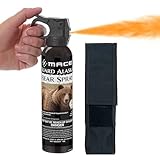
- LONG RANGE PROTECTION: This Mace bear deterrent spray provides protection from a safe distance with a powerful fogger pattern, giving you more time to react to a charging bear with up to 9 seconds of total spray time.
- MAX STRENGTH FORMULA: Made with 20% OC bear safe formula for maximum heat and potency, helping deter attacks and giving you time to retreat to safety.
- ALWAYS BE PREPARED: Essential for hiking, camping, and hunting. Its potent formula and long range spray coverage offers reliable protection so you can always be prepared for bear encounters.
- EASY TO USE: Designed with a finger loop handle for easy carrying and quick deployment in critical moments. To use, pull off the orange safety wedge and press down on the actuator.
- INCLUDES HOLSTER: Durable, heavy-duty nylon spray holster keeps your bear deterrent canister secure and within reach. Hook-and-loop closure allows for quick and easy access.
- Verify the label: choose bear spray registered with the EPA and labeled for deterring bear attacks. Do not substitute a personal-defense spray simply because its container looks similar.
- Check the date: follow the expiration date and storage instructions printed on the canister. The cited EPA label gives performance figures at specific temperatures, so avoid assuming the same range in extreme conditions.
- Choose a holster: a belt or chest holster keeps the canister reachable while walking, working or carrying a pack.
- Keep a training canister: NPS, IGBC and the EPA label all emphasize practice with an inert or training canister.
- Follow local rules: parks and land managers may set requirements for carrying, using or storing deterrents.
- For alarms, protect the perimeter: install and maintain the device according to its instructions, but do not let an alarm replace attractant control or a carried response plan.
Is there a single winner in a head-to-head comparison?
Not in the scientific sense. The reviewed sources contain official recommendations and incident figures, but no controlled, current study comparing bear spray, air horns and motion-activated alarms under the same conditions. Bear spray ranks first for a close attack because it has the strongest documented defensive record and is specifically recommended by NPS. Air horns rank as an early, non-contact option for a distant approach, while motion alarms are best understood as unattended perimeter equipment.
That ranking changes if the scenario changes. A motion alarm can operate while no one is present; bear spray cannot. An air horn can warn a bear before a person needs to deploy spray; an alarm may not be useful once someone is already being charged. The safest setup is therefore layered: remove attractants, use a perimeter alarm where appropriate, carry compliant bear spray on the body in bear country, and use a noisemaker only when distance and escape routes make it safe.
Independent reader supportYour contribution helps us test, update, and keep practical guides available for everyone.What should you remember before entering bear country?
- Carry EPA-registered bear spray where your hand can reach it, not inside a pack.
- Practice with an inert or training canister.
- Reserve spray for a charging or attacking bear and spray a cloud between you and the bear.
- Use an air horn for a bear at a distance that sees people and keeps approaching, with spray ready if noise fails.
- Secure trash, pet food, bird feeders and other attractants before relying on any alarm or hazing method.
- Use motion-activated alarms as fixed-perimeter accessories, not as guarantees against an attack.
- Keep people clear, preserve an obvious escape route for the bear and avoid hazing when the situation is highly agitated, wounded, near traffic, in a tree or involves dependent cubs.
Frequently asked questions
How should I choose between a 7.9-ounce and a 9.2-ounce bear-spray canister?
The February 6, 2025 EPA label cited for Frontiersman lists both sizes and approximately six to eight seconds of total spray, depending on size and temperature. Choose the size that fits a secure belt or chest holster while leaving the trigger and safety easy to access; the larger canister is not automatically better if it slows access.
The Tool Desk
Outbyte PC Repair FREEClear out junk files and repair common Windows errorsFree Scan →Outbyte Driver Updater FREEScan for outdated or missing drivers - takes under a minuteDriver Scan →How often should bear spray be replaced?
The cited guidance does not establish one replacement interval for every product. Use the expiration date and storage directions printed on your canister, and replace it sooner if the container is damaged or has been stored outside the label’s conditions.
Is there a fixed distance at which an air horn will scare a bear away?
No. Alberta describes the appropriate situation as a bear at a distance that sees people and continues approaching, rather than specifying a universal number of feet. Sound, terrain, wind and the bear’s previous exposure to noise all affect the result, so do not wait for a fixed distance before preparing your close-range option.
Also popular on Amazon

- LONG RANGE PROTECTION: This Mace bear deterrent spray provides protection from a safe distance with a powerful fogger pattern, giving you more time to react to a charging bear with up to 9 seconds of total spray time.
- MAX STRENGTH FORMULA: Made with 20% OC bear safe formula for maximum heat and potency, helping deter attacks and giving you time to retreat to safety.
- ALWAYS BE PREPARED: Essential for hiking, camping, and hunting. Its potent formula and long range spray coverage offers reliable protection so you can always be prepared for bear encounters.
- EASY TO USE: Designed with a finger loop handle for easy carrying and quick deployment in critical moments. To use, pull off the orange safety wedge and press down on the actuator.
- INCLUDES HOLSTER: Durable, heavy-duty nylon spray holster keeps your bear deterrent canister secure and within reach. Hook-and-loop closure allows for quick and easy access.
Can one motion-activated alarm protect an entire property?
The cited FWC guidance does not provide a coverage distance or success rate for these alarms. Treat coverage as device- and placement-dependent, secure attractants throughout the property, and use the alarm as one perimeter layer rather than evidence that every approach will be detected or stopped.
Frequently Asked Questions
How should I choose between a 7.9-ounce and a 9.2-ounce bear-spray canister?
The February 6, 2025 EPA label cited for Frontiersman lists both sizes and approximately six to eight seconds of total spray, depending on size and temperature. Choose the size that fits a secure belt or chest holster while leaving the trigger and safety easy to access; the larger canister is not automatically better if it slows access.
What’s actually slowing this PC down?
Pick the symptom - the matching free tool is one click away.
How often should bear spray be replaced?
The cited guidance does not establish one replacement interval for every product. Use the expiration date and storage directions printed on your canister, and replace it sooner if the container is damaged or has been stored outside the label’s conditions.
Is there a fixed distance at which an air horn will scare a bear away?
No. Alberta describes the appropriate situation as a bear at a distance that sees people and continues approaching, rather than specifying a universal number of feet. Sound, terrain, wind and the bear’s previous exposure to noise all affect the result, so do not wait for a fixed distance before preparing your close-range option.
Can one motion-activated alarm protect an entire property?
The cited FWC guidance does not provide a coverage distance or success rate for these alarms. Treat coverage as device- and placement-dependent, secure attractants throughout the property, and use the alarm as one perimeter layer rather than evidence that every approach will be detected or stopped.





Leave a Reply