
The Tool Desk
Outbyte Driver Updater FREEFix the driver behind crashes, sound loss and screen glitchesFind Drivers →Outbyte PC Repair FREERepair Windows errors before they cause bigger problemsFix Now →Some links on this page are affiliate links: if you buy through them we may earn a commission, at no extra cost to you.
Neither beef nor chicken is automatically healthier for every dog. Choose the recipe that is complete and balanced for your dog’s species and life stage, supplies an appropriate number of calories, fits any medical or allergy plan, and produces good appetite, stools, skin and body condition. Beef and chicken are protein-source options—not a universal quality ranking. If you suspect an allergy or intolerance, have your veterinarian direct an elimination diet rather than switching proteins casually.
What matters more than whether the food contains beef or chicken?
The label’s nutritional-adequacy statement, the dog’s individual needs and the manufacturer’s quality controls matter more than the meat named on the front of the package. A food can contain beef or chicken and still be unsuitable if it is not complete and balanced for the right life stage, is too calorie-dense for the portion being fed, or aggravates a medical condition.
As an Amazon Associate I earn from qualifying purchases.
Free tools Windows power users keep installed
One-click scans. No signup required.
- Life stage and health: Puppies, pregnant or nursing dogs, adults and seniors can have different nutrient needs. Activity, sterilization status, body condition, disease and medications also affect feeding decisions.
- Calories and portions: Even a nutritionally complete diet can cause weight gain when portions exceed the dog’s needs. Use the calorie statement and feeding directions as a starting point, then adjust to body condition.
- Tolerance: Appetite, stool quality, vomiting, itching, ear problems and stable weight are practical evidence that a particular recipe suits the individual dog.
- Quality assurance: Veterinary nutrition guidance emphasizes formulation expertise, nutrient analysis, ingredient validation and finished-product testing where disclosed—not just an appealing ingredient list.
How do I verify that a beef or chicken recipe is complete and balanced?
Find the nutritional-adequacy statement, usually on the back or side of the package. AAFCO describes this as one of the most important parts of a pet-food label. The statement must identify dogs and the life stage for which the food is intended.
| Label language | What it indicates | What to check next |
|---|---|---|
| “Formulated to meet the nutritional levels established by the AAFCO Dog Food Nutrient Profiles” | The recipe is formulated to meet the applicable nutrient profile. | Confirm that the profile is for your dog’s life stage. |
| “Animal feeding tests using AAFCO procedures substantiate…” | The food was evaluated in a standardized AAFCO feeding protocol. | Read whether the substantiated stage is growth, reproduction or adult maintenance. |
Growth and reproduction profiles are not the same as adult-maintenance profiles. Do not assume that a food labeled for adult maintenance is appropriate for a puppy, a pregnant dog or a nursing dog. “Complete and balanced” means the product is intended to supply required nutrients in the correct ratios for the stated species and stage; it does not mean every dog should eat the same amount.
Popular on Amazon

- Contains 1 - 31 Lb Bag of Kibbles 'n Bits Original Savory Beef & Chicken Flavor Dry Dog Food
- 100% Complete and Balanced Nutrition for Adult Dogs
- 23 Essential Vitamins and Minerals
- Antioxidant Rich and Made in the USA
- Savory Beef and Chicken Flavors
Is beef or chicken easier to digest or less likely to cause allergies?
There is no established universal winner. Chicken is common in commercial diets and beef is another conventional animal protein, but neither name proves superior digestibility, bioavailability or lower allergy risk. Veterinary nutrition guidance notes that pets require nutrients, not ingredients, and that ingredient lists alone cannot establish overall nutritional quality.
Dogs can react to animal proteins, grains or other components. Tufts veterinary guidance reports that grain allergies are no more common than allergies to animal proteins such as chicken, beef and dairy; apparent prevalence is influenced by how frequently ingredients are used. If a dog reacts, the useful question is which specific component is responsible—not whether beef is intrinsically healthier than chicken.
Over-the-counter foods can also contain trace ingredients from shared manufacturing equipment. A veterinarian-guided therapeutic elimination diet, followed by controlled challenge when appropriate, is more reliable for diagnosing a food allergy than rotating supermarket proteins. Seek veterinary care for persistent itching, recurrent ear or skin disease, vomiting, diarrhea, weight loss or any severe reaction.
Also popular on Amazon

- Formulated for Puppies Made with Real Chicken & Beef No Added Wheat, Corn, or Soy No added artificial flavors Made in the USA with the finest ingredients from around the world An Amazon brand
Does the first ingredient prove that one dog food is better?
No. Ingredients are listed by weight, and high-moisture ingredients can appear near the top because their water adds weight. The first ingredient can help you identify a candidate protein, but it cannot by itself establish digestibility, nutrient balance, bioavailability or manufacturing quality.
Use the ingredient list to screen for a suspected trigger or to confirm that a deliberately selected protein is present. Then rely on the adequacy statement, calorie information, feeding directions and disclosed quality-control practices to judge the complete recipe.
What do “beef,” “chicken,” “dinner” and “with” mean on the package?
AAFCO naming rules apply different minimum-percentage requirements to names such as “beef dog food,” “chicken dinner” and “with chicken.” A named ingredient in a “dinner” or “entrée” must meet the applicable percentage rule, while “with” indicates a lower specified inclusion. These naming rules describe ingredient percentages; they do not establish nutritional adequacy. Always read the separate complete-and-balanced statement.
What’s actually slowing this PC down?
Pick the symptom - the matching free tool is one click away.
Also popular on Amazon

- Protein-Packed Nutrition: IAMS Proactive Health High Protein With Chicken & Beef Dry Dog Food is crafted with 80% of protein from animal sources, approximated and derived from unprocessed state of ingredients, to support strong muscles and overall vitality
- Dog Food to Support Healthy Joints: This dog food supports healthy joints with natural sources of glucosamine and chondroitin
- Healthy Energy: IAMS High Protein Dog Food includes wholesome grains that provide essential nutrients and carbohydrates for healthy energy
- Complete and Balanced For Adult Dogs: IAMS Dry Dog Food High Protein is 100% complete and balanced for adult dogs
- Real Wholesome Ingredients: This high-protein dog food is made with no fillers or artificial flavors; ingredients are natural as defined by the Association of American Feed Control Officials (AAFCO)
How should I compare two complete recipes?
Put the packages side by side and work through the same checks rather than choosing by the meat name.
| Comparison axis | Questions to ask | Why it matters |
|---|---|---|
| Nutritional adequacy | What exact AAFCO statement and life stage are listed? | Confirms intended nutrient supply for that stage. |
| Formulation evidence | Does it say “formulated to meet” or cite AAFCO feeding tests? | These are different forms of adequacy support. |
| Dog-specific fit | Does the dog’s age, activity, body condition, disease or medication change the need? | Requirements and portions vary between individuals. |
| Calories | What is the kcal/kg or kcal per can, pouch or cup, and how much is fed? | Controls weight and helps compare foods fairly. |
| Ingredients | Does it contain a suspected trigger or a protein selected for a veterinary plan? | Useful for screening, but not a stand-alone quality score. |
| Quality controls | Does the manufacturer disclose nutrition expertise, analysis, validation and finished-product testing? | These practices support consistency and adequacy. |
| Observed response | How are appetite, stools, vomiting, itching and body condition? | The individual dog’s response is the practical test of fit. |
How do I switch my dog from chicken to beef food safely?
For a healthy mature dog, change over about a week. Slower transitions may be sensible for dogs with a sensitive stomach or a history of diet-related problems.
- Days 1–2: Mix a small amount of the beef recipe into the usual chicken food.
- Days 3–4: Increase the beef portion while reducing the chicken portion.
- Days 5–6: Feed mostly the new recipe if stools and appetite remain normal.
- Day 7: Move to the new food if the dog is tolerating it.
Monitor appetite, stool consistency, vomiting, itching and body condition throughout the change. If signs are severe, persistent or linked to a known disease, stop improvising and contact the veterinarian. An abrupt switch can cause gastrointestinal upset and can make it harder to identify the cause of a reaction.
Also popular on Amazon
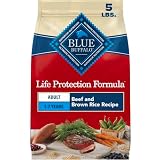
- REAL BEEF FIRST: Blue Buffalo dry dog food starts with real beef as the first ingredient to help support lean muscle maintenance in adult dogs
- COMPLETE NUTRITION: This BLUE dog food provides balanced daily nutrition for adult dogs with beef for protein, wholesome carbohydrates for energy, and other natural ingredients
- EXPERT-LED NUTRITION: Designed to help your pet thrive from the inside out, Blue Buffalo dog food formulas are developed by a dedicated team of veterinarians and animal nutritionists
- SUPPORTS IMMUNE SYSTEM HEALTH: BLUE Life Protection Formula dry dog food features exclusive LifeSource Bits, a precise blend of antioxidants, vitamins, and minerals that are formed at a lower temperature to ensure optimal potency
- WHOLESOME GRAINS: A delicious dry dog food made with brown rice, barley, and oatmeal to support gentle, regular digestion and steady energy for active dogs
What do current product labels show?
These examples illustrate how to read labels, not universal recommendations. Formulas, package sizes and availability can change.
Outdated Drivers Are Slowing You Down
One free scan finds every outdated or missing driver and matches the right update for your exact hardware.Free scan · exact hardware matchPC Slower Than It Used to Be?
A free scan shows the junk files, broken settings and background clutter dragging Windows down - then fixes them in one click.Free scan · Windows 10 & 11- Purina Pro Plan Complete Essentials Adult Beef & Rice Entrée Classic: The manufacturer guide states that it is formulated to meet AAFCO Dog Food Nutrient Profiles for adult-maintenance dogs.
- Purina Pro Plan Complete Essentials Chicken & Rice Entrée: The same guide gives an adult-maintenance AAFCO adequacy statement.
- Purina Moist & Meaty High Protein With Real Chicken & Beef: Its official label states adult-maintenance AAFCO formulation and lists 2,837 kcal/kg and 482 kcal per pouch (Nestlé Purina PetCare Company, 2023).
- Instinct Original Grain-Free Recipe with Real Beef: The manufacturer states complete and balanced nutrition for all life stages except growth of large-size dogs (70 lb or more as an adult), demonstrating why exceptions in the adequacy statement matter.
So, which should you choose?
Choose beef when a complete-and-balanced beef recipe fits the dog’s life stage, calorie needs and veterinary guidance; choose chicken under the same conditions. If both meet those tests, select the one the dog eats willingly, maintains a healthy body condition on and tolerates without digestive or skin problems. For suspected allergy, use a veterinarian-supervised elimination diet instead of treating a protein swap as a diagnosis.
Independent reader supportYour contribution helps us test, update, and keep practical guides available for everyone.Frequently Asked Questions
Can I feed a beef-and-chicken recipe every day?
Yes, if the package carries a complete-and-balanced statement for your dog’s life stage and the portions maintain a healthy body condition. A mixed-protein name does not replace checking calories, adequacy and the individual dog’s tolerance.
Also popular on Amazon
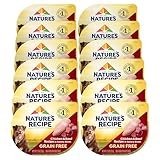
- GRAIN FREE WET DOG FOOD: Includes twelve (12) 2.75 oz. cups of Nature's Recipe Grain Free Chicken & Beef Recipe, offering convenient, nourishing meals for adult dogs in a savory broth
- REAL CHICKEN & BEEF RECIPE: Made with real chicken as the #1 ingredient, this wet dog food delivers quality protein and irresistible flavor, supporting healthy muscles and energy
- SUITABLE FOR ADULT DOGS: Perfect for adult dogs of all breeds, this grain free canned dog food is ideal as a complete meal or a tasty dog food topper to enhance daily nutrition
- QUALITY INGREDIENTS: Natural dog food with added vitamins, minerals and nutrients — no poultry by-product meal or artificial colors, preservatives or flavors, and no added corn, wheat or soy ingredients
- THOUGHTFULLY MADE: At Nature's Recipe, we believe that every ingredient counts. That’s why we’ve been crafting dog food recipes with high quality ingredients for over 40 years
Should I avoid chicken if my dog has itchy skin?
Not automatically. Itchy skin has many causes, and chicken is only one possible dietary trigger; your veterinarian can decide whether a structured elimination diet is warranted.
How long should I test a new protein before judging it?
For ordinary transition tolerance, monitor from the first meals through the gradual change. Allergy diagnosis requires a veterinary-designed elimination period and controlled evaluation, not an informal few-day trial.
Can an adult-maintenance food be given to a puppy?
Do not assume so. Puppies need a growth-appropriate nutrient profile, and the adequacy statement must specifically cover that stage (or all life stages under its stated conditions).





Leave a Reply