PC Slower Than It Used to Be?
A free scan shows the junk files, broken settings and background clutter dragging Windows down - then fixes them in one click.Free scan · Windows 10 & 11Crashes, No Sound, or Screen Glitches?
Random freezes, missing sound and display glitches usually trace back to one bad driver. Find and replace yours safely.Free scan · under a minuteShort answer: A Bengal can be an affectionate, intelligent domestic companion, but it is rarely a low-maintenance cat. Bengals are athletic, curious and often highly motivated to climb, chase, investigate and interact, so a suitable home provides daily play, safe vertical territory and mental enrichment. If you want a quiet cat content with little stimulation or long periods alone, a Bengal may be a poor match.
Bengals have ancestry in crosses between domestic cats and the Asian leopard cat, but established later-generation Bengals are domestic cats—not wild animals to keep as pets. Individual behavior varies: an affectionate Bengal may follow you around rather than sit on your lap, and not every Bengal is vocal, interested in water or comfortable walking outdoors.
What is a Bengal cat?
The Bengal was developed from crosses involving the Asian leopard cat (Prionailurus bengalensis) and domestic cats. Early-generation hybrids should not be casually conflated with later-generation domestic Bengals. The Governing Council of the Cat Fancy (GCCF) says that by the fourth generation a cat can be considered domestic rather than hybrid. Registration policies differ between organizations; the Cat Fanciers’ Association (CFA) accepted Bengals for registration in 2016 and says its policy requires five generations of pure domestic ancestry.
A seller’s description of a cat’s generation may matter legally. Rules for hybrid-derived cats vary by jurisdiction, so check current local animal-control, wildlife and exotic-animal regulations before acquiring one—especially if it is described as an early-generation animal.
Do these 3 things before closing this tab:
1Fix the driver behind crashes, sound loss and screen glitches2Repair Windows errors before they cause bigger problems3Scan for outdated or missing drivers - takes under a minute#1 Best Overall

- 【Designed Specifically for Cats】This elevated cat bowl set features a 5.7-inch wide stand and 1.2-inch shallow stainless steel bowls, thoughtfully designed to suit the needs of indoor cats. The shallow, whisker-friendly shape helps reduce whisker fatigue, allowing your cat to eat more comfortably and calmly. Perfect for both kittens and adult cats, this set ensures a relaxed and enjoyable mealtime experience at every life stage.
- 【Stable and Non-Slip Design】Our raised cat food bowls feature a non-slip base to prevent tipping and sliding during mealtime. The sturdy structure keeps the bowls in place, helping even energetic cats enjoy a calm, mess-free feeding experience.
- 【Splash-Proof and Whisker-Friendly】Designed with a shallow, wide opening and splash-guard edge, these bowls prevent food or water spills while keeping your cat’s whiskers stress-free. No more messes around the feeding area, keep the room or carpet clean and hygienic!
- 【Stylish and Easy to Clean】Made from durable stainless steel and paired with a modern stand, this cat bowl set looks great in any home. Both bowls are dishwasher safe and easily removable, making daily cleanup quick and convenient for cat owners.
- 【Support You Can Trust】We’re committed to providing a smooth and enjoyable shopping experience. If you encounter any issues with our product, simply reach out to our friendly customer service team—we’re here to help and will respond promptly. Buy with confidence, we've got you covered! Patent application in progress.
Bengal history
The breed’s history includes foundational crossings in the 1960s as well as later development work. CFA identifies Jean Mill’s 1963 cross between a domestic male and an Asian leopard cat, while The International Cat Association (TICA) traces modern Bengal development to breeding work in the early 1980s. Those milestones describe different parts of the breed’s development, rather than a single start date.
Breeders sought to preserve the leopard-like markings while developing a cat suited to companion life. That history helps explain both the Bengal’s appearance and the importance of selecting for temperament and health.
Appearance and size
Bengals are typically medium to large, muscular and athletic. Breed-guide weight ranges vary, and an individual cat’s healthy weight depends on age, sex, frame and body condition. Ask a veterinarian to assess body condition rather than treating a breed range as a target.
- Head: Relatively small in proportion to the body, with a broad modified wedge, prominent whisker pads, a wide nose and a strong chin.
- Eyes and ears: Eyes are usually rounded or nearly rounded; ears are medium to small with rounded tips.
- Body: Muscular and athletic, with substantial boning and a thick tail.
- Coat: Short and close-lying, dense, soft and often described as pelt-like.
- Patterns: Spotted, including rosettes, or marbled.
Recognized color and pattern terminology varies by registry. Bengal standards commonly include brown, silver, seal lynx point, seal sepia, seal mink and charcoal forms. Some Bengals have “glitter,” an iridescent sheen; it is a coat characteristic, not a health or temperament indicator.
Bengal personality and temperament
Breed sources commonly describe Bengals as curious, confident, athletic, intelligent, playful and social. Many enjoy climbing, exploring and interactive play, and may stay close to their people. They can be affectionate without being continuously cuddly; following you, greeting you or settling nearby may be signs of a strong bond.
There is no single Bengal personality. Some are busy and highly social; others are quieter or more selective about physical contact. A 2021 owner-perception study found that 34.1% of 249 respondents described their Bengal as frequently very active and playful (Journal of Veterinary Behavior study, 2021). This is a report from that study’s sample, not a breed-wide estimate.
Are Bengals vocal?
Some Bengals communicate with meows, chirps and trills; others are comparatively quiet. Vocal behavior is an individual tendency, not a guarantee. A sudden increase in vocalizing, especially alongside changes in appetite, litter-box use, mobility or behavior, warrants a veterinary discussion.
Do Bengals like water?
Some owners notice an interest in running water, sinks or supervised water play, but it is not universal. Never leave a cat around unsafe water or force bathing or water exposure.
Rank #2
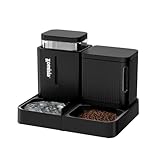
- Pet Food and Water Dispenser Set: Automatic food feeder*1, water dispenser*1. Food feeder and waterer set suitable for small and medium dogs or cats. The cat feeder supply water and food automatically by gravity. No electricity is required. When placing the filtering plate of the water feeder, pay attention to the outlet hole facing inward, if the filtering plate floats up, you can use the water feeder without filtering plate.
- Large Capacity: Large capacity of 0.8 gallons, can last about 7 days for small pets and 3 days for big pets, perfect for busy pet owners. You can rest assured to go to work, party, or vacation, and don't worry that pets will be hungry.
- Adjustable Multi-Angle Combinations: Designed with versatility in mind, the cat self feeder can be broken down into two separate parts and placed separately, or combined into one piece to achieve multiple angle changes with the 180-degree rotating assembly to meet your pet's unique feeding preferences and space.
- Material safety: This automatic cat feeder is made of natural non-toxic and environment-friendly materials, which will not have any impact on the health of pets. You can use it with confidence without worrying about its impact on your pet's health.
- Easy to clean: Waterer and food feeder are easy to clean. It can only be hand-washed in cold water and is not dishwasher-safe. You only need to separate the tank and base, clean them with water, and then assemble them to finish cleaning. It is recommended to clean the filtering plate before use or regularly, ensuring that your pet's feeding and watering setup remains hygienic and safe.
Can Bengals live with children, cats or dogs?
An individual Bengal may live successfully with respectful children, cat-friendly dogs or other cats when introductions are gradual and there are enough separate resources and escape routes. Consider each animal’s temperament. A Bengal’s prey drive can make some small or timid animals a poor match, and no breed label guarantees compatibility.
Energy, intelligence and enrichment
A Bengal’s activity level and intelligence can matter more to daily care than its grooming needs. Bengals often enjoy climbing, chasing, exploring and learning. Many can be taught fetch, leash skills, tricks or target behaviors with reward-based training. If their environment does not offer suitable outlets, they may invent activities such as opening cabinets, climbing unsafe furniture or pestering other pets.
Set up vertical territory
Vertical space lets an indoor cat climb, observe and retreat. Consider a mix of:
- a stable cat tree with broad platforms;
- secure shelves or approved climbing routes;
- high resting places away from hazards;
- window perches with safe screens; and
- multiple scratching surfaces, including tall posts for a full stretch.
Choose a large cat tree for Bengals for stability and function. Look for a wide base, platforms that do not wobble, secure anchoring where appropriate and durable surfaces. Inspect it regularly for loose parts or damage.
Recommended Free Tools
Build a daily routine
A practical routine uses interactive play, foraging and rest throughout the day:
- Morning: Offer a measured meal in a puzzle feeder or interactive food toy, followed by a brief chase game.
- During the day: Provide safe climbing and observation areas, resting places and a rotation of suitable solo toys.
- Evening: Use wand play that imitates stalk-chase-catch behavior, letting the cat catch the toy. If appropriate, follow with part of its measured meal.
- Regularly: Try clicker, target or trick training with small rewards taken from the daily food allowance.
Rotate toys to keep them interesting, remove damaged toys and supervise toys with strings, feathers or detachable parts. Interactive cat toys and wand toys can support play but do not replace supervision or a safe environment.
Food puzzles can provide foraging enrichment. Start with an easy puzzle and increase difficulty gradually; use a cat puzzle feeder for part of the measured daily food, not as extra calories. If the cat becomes frustrated or stops eating, simplify the puzzle and reassess.
Is a cat wheel necessary?
No. A cat wheel is an optional activity for a cat that accepts it, not a requirement for every Bengal. Consider space and stability, introduce it gradually and supervise use. Interactive play, climbing, training and food enrichment still matter.
Rank #3

- 【Safe Material】 The feeders and water feeders are made of food grade materials, using PP+PET, which are pet friendly, safe and harmless, and do not contain BPA
- 【 Large Capacity 】 Both the feeder and water dispenser have a capacity of 3.3L, which is large enough for small pets to use for 6 days and large pets for 2 days. You only need to regularly add food and water instead of constantly feeding your pets, which can save you energy and time
- 【 Easy to Use 】 Both the feeder and water dispenser are powered by gravity. No need for electricity. Installation and use are very simple, without the need for complex setup and assembly. Simply assemble the product and regularly add food and water to use it
- 【Easy to clean】The installation and disassembly of the feeder and water dispenser are very simple, and the cleaning process is very simple. Just disassemble the product, clean it with clean water, and then assemble it back to complete the cleaning
- 【No Mess】The water feeder adopts a siphon design, which can keep the water level line in the bowl at the appropriate height. When the water in the bowl decreases, the water in the bucket will automatically fill the bowl by gravity and will not overflow to the ground. You only need to regularly add water to the bucket, which is simple and convenient
Grooming and shedding
Bengals generally have modest grooming needs because their coat is short and close-lying. A light weekly brush or comb can remove loose hair and help condition the coat. They do shed and are not hypoallergenic; people with allergies should spend time with the individual cat before committing.
Most healthy cats do not need routine baths. Bathing is usually for a medical or unusual grooming reason and should follow veterinary guidance. For ordinary coat care, a soft-bristled cat brush is a suitable starting point. Introduce brushing gradually and stop if the cat is distressed.
Routine care also includes nail checks, dental care, veterinary visits, vaccination decisions, parasite prevention and monitoring the skin, ears, eyes and coat. Persistent itching, bald patches, greasy fur or a sudden change in grooming deserves veterinary attention.
Feeding and weight management
Bengals do not require a special diet solely because of their breed. Choose a nutritionally complete commercial cat food appropriate to the cat’s life stage and health; PetMD advises choosing food that meets AAFCO nutritional recommendations. Calorie needs depend on age, activity, body condition and individual health, so ask a veterinarian about portions.
Measured feeding makes it easier to adjust portions than unrestricted access to food. Treats should make up no more than 10% of daily calories, and puzzle-feeder portions should come from the daily ration. Food puzzles are enrichment, not a nutritional requirement. Do not start a raw diet, supplement or unusually high-calorie plan solely because the cat is a Bengal; discuss those choices with a veterinary professional.
Bengal health considerations
Bengals need preventive care like other cats, including regular examinations, vaccination decisions, parasite assessment and dental evaluation. A breed-associated risk is not a diagnosis for an individual cat, and routine veterinary care remains important.
Health concerns and screening
| Concern | What to ask or discuss |
|---|---|
| Hypertrophic cardiomyopathy (HCM) | Ask for dated cardiac screening reports for both parents, including what evaluation was done and who performed it. GCCF says no commercial DNA test is available for Bengal HCM and recommends echocardiographic screening of breeding cats; a DNA result is not a substitute for an echocardiogram. |
| Progressive retinal atrophy (PRA) | Ask for genetic test records and clarify which PRA form the test covers. PRA can lead to vision loss. |
| Pyruvate kinase deficiency (PK deficiency) | Ask for documented genetic test results for breeding cats. This inherited enzyme deficiency is associated with red-cell breakdown and anemia. |
| Patellar luxation and hip dysplasia | Ask about family history and discuss gait or mobility concerns with a veterinarian. |
| Gastrointestinal or other reported concerns | Discuss persistent digestive signs or other concerns with a veterinarian. Reports vary by source and do not mean every Bengal will develop these problems. |
When reviewing records, ask what was tested, when, by whom and what the result means. Genetic tests address particular variants or risks; they do not provide a complete health examination or guarantee that a cat will never become ill.
Signs that should not be ignored
Arrange veterinary care for difficulty breathing, collapse, weakness, fainting, sudden vision changes, persistent vomiting or diarrhea, marked weight change, reduced appetite, unusual lethargy or changes in urination. Some diseases can be present without obvious early signs, which is one reason routine examinations matter.
The Tool Desk
Outbyte Driver Updater FREEScan for outdated or missing drivers - takes under a minuteDriver Scan →Outbyte PC Repair FREEClear out junk files and repair common Windows errorsFree Scan →Rank #4

- Selected Sturdy Valuable Stainless Steel: Premium-quality and BPA-Free material ensures cat bowl will not be deformed whether your cat or puppy bites or plays. Application of superb polishing technology keeps stainless steel cat bowls is produced clean with a longer product life cycle. Stainless steel cat bowls for food and water.
- Non-slip and Removable Rubber Base: The specially modulated rubber ring makes the cat dishes have strong friction, ensuring that cat food bowls for indoor cats will not tip over and keep stable when your kitten or puppy is eating. The rubber ring can be easily removed from the pet food bowl before cleaning. This cat food and water bowl set effectively reduce the noise and slipping during eating, also achieve effect of protecting home wooden floor from scratching.
- Various Color Choices: Preparing such a cute and personalized cat dog bowl set is the first important step in establishing good eating habits for your lovely pets. Colorful cat food bowls for indoor cats suit for different home decorations and also increase your pet's appetite.
- Cost-Effective Cat Feeding Bowls: Set of 2 bowls, which can both satisfy the requirements of food and water at the same time. Each bowl holds 7 oz of dry kibble, wet snakcs food, treats, or water. The wide and shallow bowl is suitable for the daily dietary needs of cats and small dogs. No more worries about whisker fatigue when kitty eating.
- Friendly Suggestions: Easy to wash and keep cat feeder and cat water bowls clean. Simple and fast hand wash removes stains easily before and after pet eating.
How to choose a responsible Bengal breeder
A dramatic coat or low price is not evidence of responsible breeding. Ask for records and observe how the seller handles questions about health, temperament and lifetime support.
- Ask whether the kitten is registered with a recognized cat association; request relevant registration or pedigree documentation.
- Request dated HCM echocardiogram reports for both parents, and documented PRA and PK-deficiency test results.
- Ask about health conditions in the parents, grandparents and siblings.
- Visit in person or use a live video call to see the kittens’ environment, cleanliness, socialization and interactions with people.
- Ask what veterinary examinations, vaccinations, parasite care and written records will accompany the kitten.
- Where local law permits, ask what generation the kitten is and how it is registered.
- Read the contract, return policy and rehoming-support terms before paying a deposit.
- Assess the individual kitten’s confidence and sociability rather than assuming all Bengals behave alike.
Be cautious if a seller refuses health records, will not show the living conditions, pressures you to pay quickly or offers verbal assurances instead of documentation.
Independent reader supportYour contribution helps us test, update, and keep practical guides available for everyone.Is a Bengal cat right for your household?
| A Bengal may fit if you… | Think carefully if you… |
|---|---|
| Enjoy regular interactive play and training. | Want a cat content with little stimulation or interaction. |
| Can provide safe vertical territory and enrichment, even in an apartment. | Cannot create safe climbing and retreat spaces or protect household hazards. |
| Are comfortable with an inquisitive, energetic cat that may investigate household objects. | Need a guaranteed lap cat or reliably quiet cat. |
| Can plan gradual introductions to children and other pets. | Expect a new cat to immediately tolerate dogs, cats or rough handling. |
| Can provide routine veterinary care and review health documentation. | Are choosing primarily for coat appearance without investigating health and temperament. |
| Can check local rules and plan for long-term care. | Have not considered generation-related rules, ongoing care or household costs. |
An indoor-only home or apartment can suit a Bengal if it offers daily interaction, safe vertical territory, varied play and opportunities to investigate and forage. Consider the cat’s schedule, your housing, escape prevention, other animals and children’s behavior. The 2021 owner-perception study reported no conflict with familiar animals for 84% of 215 cats, but this owner-reported sample cannot guarantee compatibility in a particular home.
Free roaming creates risks from traffic, predators, disease and loss. If controlled outdoor enrichment appeals to a particular cat, leash training can be introduced gradually with rewards; it may take time, and some cats will not tolerate it. A cat harness and leash is optional. Choose secure equipment, begin indoors, supervise closely and never force a frightened cat outdoors.
Quick wins for a faster PC:
Clear out junk files and repair common Windows errorsFree Scan →Scan for outdated or missing drivers - takes under a minuteDriver Scan →Repair Windows errors before they cause bigger problemsFix Now →Common misconceptions
“Bengals are wild cats.”
They have ancestry connected to the Asian leopard cat and a wild-looking appearance, but established later-generation Bengals are domestic cats bred for companion life.
“Every Bengal is a lap cat.”
Many are affectionate and people-oriented, but affection may mean proximity, play or attention rather than prolonged lap sitting.
“Every Bengal loves water and talks constantly.”
Water interest and vocal communication are tendencies in some individuals, not guarantees.
“A short coat means no allergies.”
Bengals shed and produce cat allergens. They should not be marketed as hypoallergenic.
Free tools Windows power users keep installed
One-click scans. No signup required.
Best Value

- double cute cat bowls:The elevated cat bowls allow your cat to sit in a relaxed position and eat without any strain or stretching. And it could easily be set up with food in one and water in the other, which looks neat and there’s no cat food all over the floor.
- Elevated Design for Better Digestion: The raised design of these elevated tilted cat bowls promotes a more comfortable and natural feeding position, reducing neck strain and aiding in better digestion. Your furry friend will love the convenient height and improved mealtime experience.
- Large capacity:The size of the bowl is 5"*5"*2.76".The ceramic elevated pet bowls hold plenty and take up minimal space.
- Perfect for Cats of All Ages: Whether you have a playful kitten or a senior cat, our elevated tilted cat bowls are suitable for all ages and sizes.
- Easy to Clean: With a smooth surface and removable ceramics bowls, these cat raised food bowls are incredibly easy to clean.Simply rinse off or place in the dishwasher for convenient and hassle-free maintenance.
“A DNA panel proves the cat is healthy.”
Genetic tests address particular variants or risks. They do not replace examination, cardiac assessment where indicated, preventive care or good breeding records.
FAQ
Are Bengal cats good house cats?
They can be excellent indoor companions when the home provides daily interaction, climbing space, scratching outlets, mental enrichment and social contact. They may be a poor fit for a household seeking a quiet, largely self-sufficient cat.
Can a Bengal cat live in an apartment?
Yes, if the apartment can be made safe and provides daily play, vertical space, places to retreat and opportunities to forage and investigate. A house is not automatically a better fit if it lacks enrichment.
Do Bengal cats need a special diet?
No breed-specific diet is required just because a cat is a Bengal. Choose complete food appropriate to its life stage and health, and ask a veterinarian about portions and any special needs.
What’s actually slowing this PC down?
Pick the symptom - the matching free tool is one click away.
Are Bengal cats aggressive?
Breed tendencies do not make every Bengal aggressive. Individual temperament, socialization, handling and environment matter. Use gradual introductions, respectful handling and reward-based training.
What health tests should a Bengal breeder provide?
Ask for dated HCM echocardiogram reports for both parents and documented PRA and PK-deficiency genetic test results. Ask about relevant family history, too. These records do not replace a veterinary examination.
Can Bengal cats be trained to walk on a leash?
Some can learn through gradual, reward-based training, but leash walking is optional and individual. Use a secure cat harness, begin indoors, supervise closely and never force outdoor exposure.
The bottom line
Bottom line: Choose a Bengal for the whole package, not just the coat. The right owner is prepared to provide daily activity, vertical territory, mental challenges, social interaction, routine veterinary care and documented health screening. If your ideal cat is calm and satisfied with little daily involvement, another breed or an adult cat with a known temperament may be a better match.
Quick Recap
Product prices and availability are accurate as of the date/time indicated and are subject to change. Any price and availability information displayed on Amazon at the time of purchase will apply.




