
Some links on this page are affiliate links: if you buy through them we may earn a commission, at no extra cost to you.
The best carrier for a nervous or difficult-to-handle cat is usually a sturdy, hard-sided carrier with both a top and a front opening. A removable top is especially valuable because you can lower a reluctant cat into the base and, at the clinic, allow examination without dragging the cat out. Choose a size that lets the cat stand, turn, sit and lie naturally, with ventilation on at least two sides and enough visual shielding to prevent sensory overload.
No commercial carrier is proven best for every cat, and the named products below do not have an independently established, current crash-test ranking. The right choice combines access, stability, fit, cleanability and a gradual training plan.
As an Amazon Associate I earn from qualifying purchases.
What features matter most for a nervous cat carrier?
Fearful cats are easier to transport when the carrier reduces wrestling, sudden movement and unfamiliar visual stimulation. Design matters, but preparation and handling matter just as much.
Top and front openings reduce forced pulling
A front door lets a confident cat walk in voluntarily. A top door lets you lower a reluctant cat straight down instead of pushing the cat through a narrow opening. The most versatile design has both.
Popular on Amazon

- SECURE AND COZY DEN: The Petmate Two-Door portable dog crate provides easy access with top or front-loading doors, offering a safe and comfortable space for your pet's natural denning instincts
- AIRLINE-APPROVED: This small dog carrier airline approved meets most airline cargo specs. Ventilation holes provide fresh air and 360-degree visibility for your pet
- IDEAL FOR SMALL PETS: Designed as a puppy carrier for small dogs 0-15 lbs, the 24-inch crate offers room for pets to stand, turn, and lie comfortably; with space for a cushion to enhance comfort
- EASY ASSEMBLY AND MAINTENANCE: The plastic dog crate shell is simple to clean; a stay-dry moat directs fluids away from pets
- CONVENIENT: Featuring steel doors with easy-squeeze latches and a foldable handle, this USA-made pet carrier for dogs & cats provides a less stressful travel experience
A removable top is better still. During an examination, the veterinary team can take off the upper shell and examine the cat while it remains in the familiar lower half. AAFP/ISFM and Cats Protection guidance emphasize avoiding the need to pull or dump a cat from the carrier.
Hard sides provide stability and protection
Rigid plastic or fiberglass resists collapse, protects against some impacts and can be disinfected after an accident. Soft, basket and cardboard carriers can work when they have good airflow and are handled carefully, but they offer less impact protection and may fold around a frightened cat.
Recommended Free Tools
Look for secure latches, a base that does not flex under the cat’s weight and a design that can be lifted without the shell separating. A carrier that opens easily for you should not open accidentally in a waiting room or vehicle.
Correct size is a welfare and safety issue
Your cat should be able to stand without crouching, turn around, sit and lie on its side. Do not select an oversized carrier simply to provide more room: during braking or a turn, a cat can slide or be thrown against the walls. A slightly snug, well-padded fit is safer than a cavernous interior, provided the cat can change position naturally.
Measure the cat from nose to the base of the tail and from the floor to the top of the head or ears when standing. Compare those measurements with the carrier’s interior, not its outside dimensions. Weight limits are manufacturer ceilings, not substitutes for checking posture and movement.
Ventilation and visual shielding work together
Openings on at least two sides allow fresh air to circulate and help prevent heat and humidity buildup. Keep every vent clear of bedding, towels and the vehicle seat. Two relatively solid sides can reduce exposure to passing people, dogs and unfamiliar rooms.
Some cats settle when the carrier is covered with a breathable towel or blanket; others become hotter or more distressed. Cover only part of the carrier at first, preserve all ventilation openings and remove the cover if your cat pants, becomes agitated or the interior warms.
Also popular on Amazon
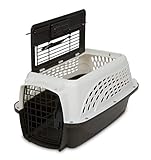
- SECURE AND COZY DEN: The Petmate Two-Door portable dog crate provides easy access with a front-loading door, offering a safe and comfortable space for your pet's natural denning instincts.
- AIRLINE-APPROVED: This small dog carrier airline approved meets most airline cargo specs. Ventilation holes provide fresh air and 360-degree visibility for your pet
- IDEAL FOR SMALL PETS: Designed as a puppy carrier for small dogs 0-15 lbs, the 19-inch crate offers room for pets to stand, turn, and lie comfortably; with space for a cushion to enhance comfort
- EASY ASSEMBLY AND MAINTENANCE: The plastic dog crate shell is simple to clean; a stay-dry moat directs fluids away from pets
- CONVENIENT: Featuring steel doors with easy-squeeze latches and a foldable handle, this USA-made pet carrier for dogs & cats provides a less stressful travel experience.
Leak resistance and easy cleaning prevent secondary stress
A leak-resistant lower pan contains urine, vomit and spilled water. Add an absorbent pad or familiar bedding, and carry a spare in the car. A carrier that separates without tools is easier to wash and allows the top to be removed for a veterinary examination.
Which carrier designs are suitable for difficult-to-handle cats?
Official product specifications support several practical options. They differ in opening size, construction and published limits; none should be treated as universally suitable without checking the individual cat’s measurements.
| Model | Access and construction | Published size or weight details | Where it fits and what to verify |
|---|---|---|---|
| Petmate 2 Door Top Load Cat Kennel | Heavy-duty plastic and steel construction, top and front access, ventilation | 19-inch version: interior 16.75 × 11 × 9.25 inches, published limit up to 10 lb. 24-inch version: interior 21 × 14.5 × 13.5 inches, published limit up to 15 lb. (Petmate current 2026 listing) | Strong all-purpose format for cats that need top loading and front-entry training. Confirm the cat can stand, turn and lie naturally; the limits are manufacturer ceilings. |
| Petmate E-Z Load Top Load Cat Kennel | Durable plastic; Petmate describes a veterinarian-recommended top-load design and a top door twice the size of the front-entry door | Dimensions and a weight limit were not stated on the cited Petmate 2026 listing | Useful when a large top opening is the priority. Confirm interior fit, latch security and whether the particular unit’s top is removable before buying. |
| Richell USA Double Door Pet Carrier | Clear top door, removable front door, four latches and a seat-belt attachment | Small limit up to 11 lb; medium limit up to 17.6 lb (Richell USA current 2026 listing) | Offers two loading routes and a removable front door. Verify the cat’s posture, the latch fit and the carrier’s current crash-safety status before relying on the seat-belt attachment. |
When is the two-door hard carrier the best match?
Choose the two-door format when your cat may enter from the front on a good day but needs to be lowered from above on a bad one. It also gives the clinic options: the cat can remain in the bottom, or the front door can be removed for a less confrontational exam.
Quick wins for a faster PC:
Clear out junk files and repair common Windows errorsFree Scan →Fix the driver behind crashes, sound loss and screen glitchesFind Drivers →Repair Windows errors before they cause bigger problemsFix Now →When does a large top opening help most?
A top door that is substantially larger than the front door can make a big difference for a cat that braces its legs against the doorway. It is most useful for urgent loading, but check whether the top comes off entirely; a hinged door alone does not provide the same examination access as a removable shell.
What should I check beyond the manufacturer’s specification?
Inspect the assembled carrier for gaps, sharp edges, loose pins and latches that require excessive force. Put the empty carrier on a level surface and press gently on the sides and door. If it twists, rocks or separates, choose another design. A seat-belt loop or attachment point is not proof that the carrier has passed a current independent crash test.
How do I choose the correct carrier size?
Fit the interior to the cat, then add only enough bedding to create traction and comfort. Use this sequence rather than choosing by weight alone:
- Measure nose-to-tail-base length and standing height.
- Compare those measurements with the carrier’s internal length and height.
- Place a folded pad inside and confirm that the cat can stand, turn around, sit and lie on its side without the roof or door pressing on the body.
- Check that the door opening is wide enough for the cat’s shoulders, not just the head.
- For a long journey, allow room for a small absorbent pad, but do not create a slippery, oversized compartment.
For kittens, buy for near-term growth only if the divider or interior can prevent excessive sliding. Recheck fit after weight gain, surgery or a change in mobility.
Do these 3 things before closing this tab:
1Fix the driver behind crashes, sound loss and screen glitches2Repair Windows errors before they cause bigger problems3Scan for outdated or missing drivers - takes under a minuteAlso popular on Amazon

- SECURE AND COZY DEN: The Petmate One-Door portable dog crate provides easy access with a front-loading door, offering a safe and comfortable space for your pet's natural denning instincts.
- AIRLINE-APPROVED: This small dog carrier airline approved meets most airline cargo specs. Ventilation holes provide fresh air and 360-degree visibility for your pet
- IDEAL FOR SMALL PETS: Designed as a puppy carrier for small dogs 0-15 lbs, the 24-inch crate offers room for pets to stand, turn, and lie comfortably; with space for a cushion to enhance comfort.
- EASY ASSEMBLY AND MAINTENANCE: The plastic dog crate shell is simple to clean; a stay-dry moat directs fluids away from pets
- CONVENIENT: Featuring steel doors with easy-squeeze latches and a foldable handle, this USA-made pet carrier for dogs & cats provides a less stressful travel experience.
How can I train a nervous cat to enter voluntarily?
Training is more reliable than trying to force a cat into a carrier for the first time on appointment day. AAFP/ISFM states that the goal is for the cat to enter voluntarily.
Build a carrier that feels ordinary
- Put the carrier in a familiar, quiet room with the door and top open or removed.
- Add bedding that smells like home. Place a favorite treat, toy or a small amount of catnip near the entrance.
- Reward any investigation, including looking inside or putting one paw over the threshold. Do not shut the door at the first success.
- Scatter treats progressively farther inside. Let the cat leave whenever it wants.
- When the cat rests inside, briefly touch the door, then reward. Increase the time before closing it by a few seconds at a time.
- Practice lifting the carrier a few inches, setting it down smoothly and rewarding calm behavior.
- Progress to short trips around the home, then a brief drive and return. End each session before panic starts.
Use several short sessions instead of one long session. If the cat stops eating, hides for an extended period or reacts more intensely, return to the previous easy step.
What if the appointment is tomorrow?
Do not chase the cat around the home. Close doors and windows, choose a small room with few hiding places and bring the open carrier there. Remove the top if the design permits, place the cat calmly into the lower half and replace and secure the shell. Never tip the carrier or dump the cat out.
How do I get an aggressive or resisting cat into the carrier?
Safety comes first for the cat and the people handling it. Ask the veterinary clinic in advance whether medication or a different arrival procedure is appropriate for a cat that bites, scratches or panics.
What’s actually slowing this PC down?
Pick the symptom - the matching free tool is one click away.
- Prepare the room, carrier, towel, spare pad and treats before bringing in the cat.
- Keep the carrier stable on the floor or another low surface. Remove the top when possible.
- Use calm, slow movements and avoid cornering the cat in a large room.
- Support the cat’s chest and hindquarters rather than pulling a limb or scruffing.
- Lower the cat into the bottom hindquarters-first when the opening allows. Keep fingers away from the mouth and do not force the head through a narrow door.
- Replace the top, engage every latch and check the door before lifting.
If the cat becomes dangerously distressed, stop and call the veterinary team. A prescribed pre-visit anxiolytic may be safer than escalating a physical struggle; never give a human sedative or an unapproved product.
Should I cover my cat’s carrier in the car?
Often, yes—but only if your cat becomes calmer with reduced visual exposure. Use a breathable towel or blanket, leave ventilation openings uncovered and monitor for panting, overheating or increased agitation. A partial cover can block the view of traffic, people and dogs while preserving airflow.
Some cats prefer to see out. Test the cover during a quiet practice trip rather than making the first attempt on the way to an urgent appointment. Familiar bedding inside the carrier can provide security without restricting air.
Also popular on Amazon

- SECURE AND COZY DEN: Made from sturdy, durable materials, It will help keep your kitty safe during transport, Top load design is veterinarian recommended, Convenient carry handle on top, Suitable for cats and toy-breed dogs weighing up to 10lb
- AIRLINE-APPROVED: This small cat/dog carrier is airline approved meets most airline cargo specs. Ventilation holes provide fresh air and 360-degree visibility for your pet
- IDEAL FOR SMALL PETS (Cats, Toy Breed Dogs and Puppies): Designed as a cat kennel for pets 0-10 lbs, the 19-inch crate offers room for pets to stand, turn, and lie comfortably; with space for a cushion to enhance comfort, also great for small dogs, puppies, rabbits, or other small animals.
- EASY ASSEMBLY AND MAINTENANCE: The plastic cat kennel or crate shell is simple to clean; a stay-dry moat directs fluids away from pets
- CONVENIENT: Featuring a top door with an easy-squeeze latch and a foldable handle, this USA-made pet carrier for dogs & cats provides a less stressful travel experience
How should I secure the carrier for car travel?
Place most carriers on the vehicle floor behind the front seats, where they are less likely to slide or fall. Keep the carrier level, avoid stacking objects on it and drive smoothly with gradual braking and turns.
Use a seat belt only when the specific carrier has current, credible crash-test evidence for that method. A belt attachment advertised by a manufacturer does not by itself establish crash protection. Follow the carrier maker’s current instructions and ask the veterinary team if you are uncertain.
What calming aids are reasonable?
Synthetic feline pheromone sprays are mentioned by AAFP/ISFM and the American Animal Hospital Association as possible preparation aids. Use them only according to the label and veterinary advice, and apply them before the cat enters so the liquid or alcohol carrier has time to dissipate. Effects vary, and a spray cannot replace gradual carrier training.
Low-risk supports include familiar bedding, a quiet route, a stable carrier and smooth driving. Do not put essential oils, human medicines or heavily scented products inside the carrier unless a veterinarian specifically directs you to do so.
What should I ask the veterinary team before the trip?
Tell the clinic whether the cat has vomited, urinated, panicked, bitten or shown pain during previous transport. Ask whether a pre-visit anti-nausea, analgesic or anxiolytic medication is appropriate. These medicines require veterinary selection and timing; do not improvise a dose.
Crashes, No Sound, or Screen Glitches?
Random freezes, missing sound and display glitches usually trace back to one bad driver. Find and replace yours safely.Free scan · under a minutePC Slower Than It Used to Be?
A free scan shows the junk files, broken settings and background clutter dragging Windows down - then fixes them in one click.Free scan · Windows 10 & 11Ask whether you can wait in the car, enter through a quieter door or have the cat examined in the carrier’s bottom half. Giving the clinic this information ahead of time can prevent a rushed extraction in a crowded waiting room.
Independent reader supportYour contribution helps us test, update, and keep practical guides available for everyone.What common carrier mistakes make fear worse?
- Choosing by weight only: A cat may meet a weight limit yet be unable to stand or turn. Check internal dimensions and the door opening.
- Using a carrier that is too large: Excess space lets the cat slide during braking. Add traction and bedding, or select a better-fitting size.
- Waiting until appointment day: Leaving training until an emergency forces a struggle. Keep the carrier open and rewarding at home.
- Pulling through a front door: Dragging increases resistance and injury risk. Remove the top or lower the cat in from above.
- Carrying by the handle alone: Veterinary guidance quoted by AAHA says, “Don’t carry it by the handle.” Support the base with both hands and keep it level.
- Blocking ventilation with a cover: Preserve airflow on at least two sides and remove the cover if the cat overheats or panics.
- Assuming a belt loop equals crash protection: Confirm current independent evidence for that carrier and attachment method.
- Dumping the cat out at the clinic: Remove the top and let the team work around the cat whenever possible.
Which setup should I choose for my cat?
For a cat that hides and refuses the front door
Choose a hard carrier with a large top opening, ideally a removable top, and practice lowering the cat into the base. Keep two sides relatively solid and use a partial breathable cover if that reduces visual stimulation.
Also popular on Amazon
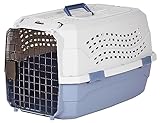
- Hard sided pet carrier with 2 doors for front and top entry; suitable for cat or medium size dog weighing 12 - 20 pounds
- Durable plastic construction with steel wire doors; screws keep the top and bottom sections securely connected
- Spring load latches ensure easy one-handed door opening and closing; top door swings open to the left or right and includes a top carry handle
- Plenty of air ventilation on the sides, top, and back of the carrier
- Note: Be sure to measure the size of the pet when choosing carrier size
For a cat that enters but fights the door closing
Use the front opening for voluntary entry and train brief door closures with treats. A two-door model gives you a top route if the cat changes its mind.
For a cat that vomits or has accidents
Select a leak-resistant base that separates for washing. Use an absorbent pad with a familiar layer on top and carry a spare. Ask the veterinarian about anti-nausea medication before a longer journey.
Free tools Windows power users keep installed
One-click scans. No signup required.
For a cat that bites or scratches during loading
Prioritize a removable-top hard carrier and a prearranged clinic plan. A veterinary-prescribed pre-visit medication may be safer than repeated physical attempts. Never rely on a soft carrier that can collapse around a struggling cat.
The most dependable combination is a correctly sized rigid carrier, top and front access, secure latches, clear ventilation, restrained visual exposure and training that makes entry routine. Product specifications can change, so confirm current dimensions, weight limits and safety information before purchase.
Frequently Asked Questions
Can I leave a cat carrier out all the time?
Yes. Leaving it open in a quiet room turns it into ordinary furniture instead of a signal that a frightening trip is coming. Remove the door if needed, wash bedding regularly and keep treats or toys available so the cat can choose to enter.
What bedding should go inside a carrier for a fearful cat?
Use a thin, non-slip layer that smells familiar, such as a washable towel or the cat’s usual blanket, with an absorbent pad underneath if accidents are likely. Avoid loose items that can cover vents or bunch under the cat during travel.
Can two cats share one carrier during an emergency?
Usually no. Even bonded cats may panic in a confined moving space, and one cat can injure the other or block ventilation. Use separate carriers unless a veterinarian has specifically directed another arrangement for a very short, controlled move.
How long can a cat stay in a carrier during travel?
The safe duration depends on temperature, ventilation, the cat’s health and access to toileting, not a universal time limit. For extended journeys, plan regular checks, carry spare bedding and water, and ask your veterinarian for a route-specific plan.





Leave a Reply