
Some links on this page are affiliate links: if you buy through them we may earn a commission, at no extra cost to you.
The best dog food for weight management is the one that delivers your veterinarian’s calorie target while preserving muscle, meeting nutrient requirements, and fitting your dog’s appetite and medical needs. There is no universally best brand. Dry, wet, over-the-counter weight-management, and prescription diets can all work when you compare metabolizable energy, protein, fiber, moisture, and the amount actually fed.
Start with a veterinary assessment of body condition, muscle condition, current food and treats, activity, and possible medical causes of weight gain. Then feed a measured daily amount, count every extra, and adjust from your dog’s recorded weight and body-condition response rather than relying on a package chart alone.
As an Amazon Associate I earn from qualifying purchases.
What is the best dog food for weight loss?
The best choice is a complete-and-balanced food that lets your dog lose fat without losing excessive lean tissue. Your veterinarian should select or approve the diet after assessing body-condition score, muscle condition, current intake, treats, activity, medications, and diseases that can affect weight. A food marketed for weight control is not automatically appropriate for every dog, and a familiar maintenance food may become nutritionally inadequate if its calories are cut too severely.
Why there is no single winning brand
Weight loss depends on the calories your individual dog consumes and how that dog responds, not on a marketing category. Two foods can have very different calorie densities even when their ingredient lists look similar. A dog that refuses one diet, has kidney or gastrointestinal disease, or needs a large calorie reduction may require a different formulation from an otherwise healthy overweight dog.
Popular on Amazon
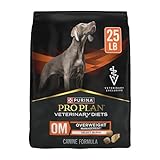
- Great-tasting high-fiber dog food that's low in fat and calories
- Purina Pro Plan weight management dog food featuring a high protein-to-calorie ratio promotes loss of body fat while helping maintain lean body mass
- Purina Pro Plan weight management dog food containing natural fiber to help contribute to satiety
- Healthy weight dog food, including isoflavones, helps reduce the risk of weight regain and fat accumulation
- Available by prescription in dry dog kibble and wet canned dog food to meet your dog's preference and help with weight loss or weight maintenance
What to compare on every label
- Metabolizable energy (ME): Look for kcal/kg and, for dry food, kcal/cup or another stated serving. For wet food, use kcal per can, tray, pouch, or 100 g.
- Nutritional adequacy: Confirm a complete-and-balanced statement for your dog’s life stage.
- Protein and fiber: Higher protein can help spare lean mass during restriction, while added fiber can increase satiety and lower calorie density.
- Fat and moisture: Weight-management formulas commonly reduce fat; wet foods contain more water, which increases meal volume but does not by itself prove a lower calorie intake.
- Portion practicality: Choose a food you can weigh accurately, store safely, and feed consistently, including when using treats, medication or puzzle toys.
How many calories should my dog eat to lose weight?
There is no safe universal calorie number. A veterinarian estimates a starting target from body weight, body condition, ideal-weight goals, activity, age, reproductive status, health and prior diet, then changes it according to measured progress.
Veterinary reference points
The MSD Veterinary Manual lists 1.4 × resting energy requirement (RER) as a starting maintenance-energy factor for obesity-prone adult dogs. It explicitly notes that the result must be individualized and adjusted to the dog’s response. A commonly used RER equation is 70 × body weight in kilograms0.75; your veterinarian may use a different method or an ideal rather than current weight.
For illustration only, a 20-kg dog has an RER of roughly 662 kcal/day using that equation, so 1.4 × RER is about 927 kcal/day. That is a starting calculation, not a prescription: the dog’s body condition, medical status and subsequent weigh-ins determine whether it is appropriate.
AAHA’s 2021 executive summary reported a mean intake of 63 ± 10.2 kcal/kg0.75 during a 12-week canine weight-loss period. This is a population observation, not a fixed formula for an individual. It illustrates why two dogs of the same scale weight can require different intakes and why a target must be reassessed.
Use ideal weight and response, not the bag chart alone
Package feeding charts are general maintenance recommendations. They may be based on an average healthy dog, use a different activity assumption, or refer to a cup size that does not match your scoop. Ask your veterinarian whether the calculation should use current weight, estimated ideal weight, or a staged goal, and record the actual grams and calories fed each day.
Is wet or dry food better for an overweight dog?
Neither format is automatically better. Dry food is usually simpler to weigh and store, while wet food can provide more volume and water for the same feeding routine. The deciding factor is the total metabolizable energy and nutrient supply at the portion your dog actually eats.
Windows Errors? Fix Them Before They Spread
Repair common Windows errors and clear accumulated junk for a smoother, more stable PC - no reinstall needed.Free scan · no reinstallOutdated Drivers Are Slowing You Down
One free scan finds every outdated or missing driver and matches the right update for your exact hardware.Free scan · exact hardware match| Option | Potential advantages | What to verify | Typical pitfalls |
|---|---|---|---|
| Dry food | Easy to portion by gram, store, transport and place in puzzle feeders or timed feeders. | kcal/kg, kcal/cup, complete-and-balanced statement, protein and fiber, and the grams in the daily allowance. | Assuming one cup always has the same calories; free-feeding; measuring with a variable scoop; choosing a cheaper food without checking calorie density. |
| Wet food | High moisture can increase meal volume and may improve acceptance for some dogs. | kcal per can or 100 g, container size, adequacy statement and the amount fed when mixed with dry food. | Assuming “wet” means low calorie; overlooking calories in partial cans, toppers or mixed meals; leaving opened food out unsafely. |
| Prescription or therapeutic diet | Designed to provide concentrated nutrients during calorie restriction and may combine weight control with management of another disease. | Veterinary indication, current label, calorie density, protein/fiber profile, life-stage suitability and a transition plan. | Starting it without veterinary guidance; treating a therapeutic formula as interchangeable with an over-the-counter food; failing to monitor response. |
Why moisture changes volume but not the calorie calculation
Water adds weight and bulk without adding energy. Compare foods by their stated kcal per gram, kilogram, can or measured serving, then calculate the daily total. A large-looking bowl of wet food can contain fewer calories than a small bowl of kibble—or the reverse—depending on the formula.
Also popular on Amazon

- Great tasting weight loss dog food that’s low in fat and calories
- Purina Pro Plan dog food with a high protein-to-calorie ratio to promote loss of body fat while helping maintain lean body mass
- Wet dog food containing natural fiber to help contribute to satiety, plus antioxidants for immune support
- High fiber dog food available in dry, including Select Blend, and wet to meet your dog's preference and help with weight loss success
- This healthy weight dog food can be fed for weight loss or weight maintenance
When does a dog need prescription weight-loss food?
A therapeutic diet is most useful when your veterinarian expects substantial calorie restriction, wants extra nutrient concentration, or must manage another condition at the same time. Standard maintenance diets are not formulated to be drastically reduced; cutting their portions too far can lower protein, vitamins, minerals and essential fatty acids below appropriate levels.
What therapeutic formulas are designed to do
Veterinary weight-loss diets generally provide lower energy density, relatively higher protein and fiber, lower fat, and greater vitamin and mineral concentration than ordinary maintenance foods. This design can help a dog eat a satisfying amount while receiving adequate nutrients at fewer calories. AAHA also notes the value of high protein for lean-mass preservation and added fiber for satiety.
When another disease changes the decision
Diabetes, orthopedic pain, endocrine disease, urinary problems, kidney disease, gastrointestinal disorders and medication effects can alter both the calorie target and the acceptable nutrient profile. A dog with one of these issues should not be switched to a generic “light” food simply because it has fewer calories. The veterinarian may prioritize the concurrent disease, use a therapeutic combination, or investigate why weight is changing before restricting food.
Example of a documented therapeutic product
Purina Pro Plan Veterinary Diets OM Obesity Management is listed in the manufacturer’s 2024 veterinary product guide in dry and canned forms. The cited guide lists the dry product at 2,922 kcal/kg and the cited canned presentation at 663 kcal/kg, along with weight-loss feeding tables. Those figures apply to the listed presentations and guide; formulas, package sizes and labels can change, so verify the current package and use the product only with veterinary selection.
How do I choose an over-the-counter weight-management food?
Use the label and your dog’s response rather than the front-of-bag claim. An over-the-counter weight-management diet can suit a mildly overweight, otherwise healthy dog when its nutrient profile and calorie density support the veterinarian’s plan.
Check adequacy and life stage first
The food should state that it is complete and balanced for the relevant life stage. Puppies, pregnant or nursing dogs, seniors with disease, and dogs with unusual nutrient requirements may need a different formulation even when they are overweight.
Compare energy density on an equal basis
Record kcal/kg and convert the amount you feed to grams. If two dry foods are compared by cup, the cup volumes may conceal a major calorie difference. For wet foods, compare kcal per 100 g or per container and account for the exact fraction of a can served.
Quick wins for a faster PC:
Repair Windows errors before they cause bigger problemsFix Now →Scan for outdated or missing drivers - takes under a minuteDriver Scan →Clear out junk files and repair common Windows errorsFree Scan →Also popular on Amazon

- Purina Pro Plan weight management dog food with a high protein-to-calorie ratio promotes loss of body fat while helping maintain lean body mass
- Great-tasting dog kibble that’s low in fat and calories and contains natural fiber to help contribute to satiety, plus antioxidants
- Healthy weight dog food featuring isoflavones to help reduce the risk of weight regain and fat accumulation
- Purina Pro Plan Veterinary Diets recipe that promotes a urinary environment unfavorable to the development of both sterile struvite* and calcium oxalate crystals
- Dog kibble that may be fed for weight loss or weight maintenance
Look for a practical nutrient profile
Higher-quality weight-management plans commonly emphasize adequate protein, useful fiber and controlled fat, but no single guaranteed percentage applies to every dog. Ask the veterinarian whether the formula provides enough protein for your dog’s muscle condition and whether its fiber level suits stool quality and appetite.
Consider acceptance and household compliance
The most technically appropriate food fails if the dog will not eat it or if family members continue adding uncounted extras. Select a texture your dog accepts, a package size that stays fresh, and a feeding method every caregiver can reproduce.
How do I calculate and measure the daily portion?
Calculate the calorie allowance first, convert it to the food’s stated energy density, and weigh the result. A gram scale is more reliable than a cup, especially when changing foods or combining formats.
- Write the daily calorie target. Use the number supplied by your veterinarian, including any staged adjustment.
- Find the ME declaration. For example, a label may state kcal/kg. Divide that number by 1,000 to obtain kcal/g.
- Convert calories to grams. Divide the daily food calories by kcal/g. If a dry food provides 3.5 kcal/g and the allowance is 700 kcal, the calculated portion is 200 g; this is an arithmetic example, not a recommendation for a particular dog.
- Divide into scheduled meals. Use the frequency your veterinarian recommends. Weigh each meal or pre-weigh the full day’s ration into a labeled container.
- Reserve calories for extras. Set aside the day’s treat allowance before feeding meals so treats do not silently increase intake.
- Record what was actually consumed. Note leftovers, spilled food, chews, toppers and medication carriers, not only what was placed in the bowl.
Mixing dry and wet food
Calculate each component separately. Multiply grams of each food by its kcal/g, then add the results; do not replace a portion of kibble with an equal cup, scoop or can fraction unless the calories match. When using the documented canned example above, 663 kcal/kg equals 0.663 kcal/g, so the calorie contribution is determined by grams served, not by the container’s visual size.
Free tools Windows power users keep installed
One-click scans. No signup required.
How should I handle treats, chews, toppers and table food?
Count every edible extra in the daily total: training treats, dental chews, rawhides or other long-lasting chews, toppers, table scraps, pill pockets and food used to administer medication. Merck Veterinary Manual advises keeping treats generally under 10% of total calories to reduce the risk of nutrient imbalance.
Use part of the measured meal as training rewards when possible. If a special treat is necessary, ask the veterinarian how to account for its calories and whether its ingredients conflict with a therapeutic diet. “Healthy,” small or natural does not mean calorie-free.
How do I transition a dog to a weight-management diet?
Change foods gradually according to the veterinarian’s transition plan and the product directions. Offer the new food mixed with increasing proportions of the old food over several days, slowing the change if appetite, stool or vomiting worsens. A dog with a medical condition, a history of food intolerance or a prescribed therapeutic diet may need a more cautious schedule.
Also popular on Amazon
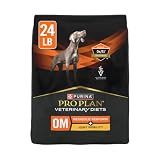
- Weight management dry dog food featuring high levels of omega-3 fatty acids to help support joint health
- Each delicious serving of this dog kibble contains glucosamine to help support cartilage health
- Purina Pro Plan weight management dog food including high protein to help support lean muscle mass
- Dog dry food containing antioxidants, including a high level of vitamin E, to support a healthy immune system
- This high protein dog food is developed in partnership with our expert nutritionists
Keep the daily calorie total controlled during the transition. Adding the new food on top of the old portion defeats the purpose, and a dog that refuses food, vomits repeatedly or develops persistent diarrhea needs veterinary advice rather than repeated brand changes.
Recommended Free Tools
How can exercise and the home environment improve weight loss?
Merck Veterinary Manual states that the most successful weight-loss programs combine caloric restriction and exercise. Activity should match the dog’s joints, heart, age and conditioning; an obese dog with painful hips needs a veterinarian-approved progression, not an abrupt running program.
Control access to food
Feed at defined times instead of leaving food available all day. Store food securely, separate pets during meals, and ask every household member to follow the same written allowance. Food-dispensing toys and automated feeders can control access, timing and amount, but they do not calculate calories or replace supervision.
Use movement and enrichment strategically
Short, consistent walks, scent games and veterinarian-approved play can add activity without overloading joints. Puzzle feeders can slow eating and provide enrichment while dispensing part of the pre-weighed ration; do not fill them with additional food.
How often should I monitor weight and body condition?
Track body weight and body-condition score regularly, and schedule rechecks at the interval your veterinarian sets. Weight alone can miss muscle loss, so the plan should include both body-condition and muscle-condition assessment. Bring the food log, treat list, portion weights and activity notes to each review.
If the scale does not move
First verify the scale, portion weights and every extra consumed. Check whether another person is feeding the dog, whether the dog scavenges outdoors, and whether activity has fallen. If intake is genuinely controlled and weight still does not change, the veterinarian may reassess the calorie target, body condition, medications or an underlying disease.
If appetite or condition changes unexpectedly
Persistent hunger, lethargy, vomiting, diarrhea, weakness, loss of muscle or rapid body changes warrant veterinary contact. Do not respond by making a large calorie cut or adding supplements on your own; the diet may need a different nutrient profile or the dog may need medical investigation.
Also popular on Amazon
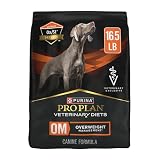
- Purina Pro Plan weight management dog food with a high protein-to-calorie ratio promotes loss of body fat while helping maintain lean body mass
- Great-tasting dog kibble that’s low in fat and calories and contains natural fiber to help contribute to satiety, plus antioxidants
- Healthy weight dog food featuring isoflavones to help reduce the risk of weight regain and fat accumulation
- Purina Pro Plan Veterinary Diets recipe that promotes a urinary environment unfavorable to the development of both sterile struvite* and calcium oxalate crystals
- Dog kibble that may be fed for weight loss or weight maintenance
What are the most common weight-management mistakes?
- Following the package chart literally: Treat it as a starting estimate, then adjust from measured response.
- Measuring by eye: Cups and scoops vary; weigh food in grams.
- Assuming wet is always lighter: Compare kcal per gram or container.
- Cutting a maintenance diet dramatically: Severe restriction can underdeliver essential nutrients; ask whether a therapeutic diet is safer.
- Ignoring extras: Treats, chews, toppers, scraps and medication calories all count.
- Changing foods repeatedly: Frequent switches make it difficult to identify the effective calorie level and can upset digestion.
- Using exercise to offset unlimited food: Activity supports the plan but cannot reliably cancel uncontrolled calories.
- Skipping follow-up: A target that worked initially may need adjustment as weight, muscle and activity change.
Can dry, wet and prescription foods be used together?
They can be combined when the veterinarian approves the plan and the total calories and nutrient goals remain correct. Calculate each food separately, keep the therapeutic diet’s intended proportion, and recheck the label whenever a formula or package changes. Mixing a prescription food with unapproved toppers or treats can dilute its therapeutic purpose, especially when another disease is being managed.
For a dog that is losing weight safely, maintaining muscle, eating willingly and meeting its medical requirements, the format is a matter of logistics and preference. The measurable daily calorie total and regular reassessment are what make the plan work.
Do these 3 things before closing this tab:
1Repair Windows errors before they cause bigger problems2Fix the driver behind crashes, sound loss and screen glitches3Clear out junk files and repair common Windows errorsFrequently Asked Questions
Can my dog lose weight on its regular adult food?
Sometimes, a veterinarian can use a modestly reduced portion of a complete maintenance diet for a mildly overweight, otherwise healthy dog. Larger restrictions may not supply enough protein, vitamins or minerals, so ask for a nutrient and calorie review before reducing the bowl substantially.
How do I compare calories when one food lists kcal per cup and another lists kcal per can?
Convert both foods to calories per gram when possible: divide kcal/kg by 1,000, then multiply by the grams served. If a label gives only a container value, weigh the portion or calculate the fraction of the container actually fed and include it in the daily total.
What should I do if my dog refuses a prescribed weight-loss food?
Contact the prescribing veterinarian rather than replacing it with a random low-calorie product. The clinic may recommend a different texture or therapeutic formula, a slower transition, or evaluation for nausea, pain or another problem affecting appetite.
Why is my dog still gaining weight even though meals are measured?
Audit treats, chews, table food, pill carriers, scavenging and other household feeders, then confirm the food’s current calorie declaration and the scale’s accuracy. If the log is complete, arrange a veterinary reassessment for activity changes, medication effects or medical contributors.
What’s actually slowing this PC down?
Pick the symptom - the matching free tool is one click away.
Can an automatic feeder replace a weight-loss plan?
No. It can dispense pre-measured portions on a consistent schedule and reduce food stealing, but a person still has to calculate calories, load the correct amount, count treats and monitor weight and body condition.





Leave a Reply