
Do these 3 things before closing this tab:
1Scan for outdated or missing drivers - takes under a minute2Repair Windows errors before they cause bigger problems3Fix the driver behind crashes, sound loss and screen glitchesSome links on this page are affiliate links: if you buy through them we may earn a commission, at no extra cost to you.
Captive-bred crickets and roaches are the most dependable staple feeders for tarantulas. Offer prey no longer than the tarantula’s body or abdomen, rotate in mealworms, superworms, silkworms, hornworms or locusts for variety, and use dubia or discoid roaches when a large spider needs more size than a cricket can provide. Keep a shallow dish of clean water available, and remove live prey quickly if it is ignored or if the tarantula is approaching a molt. Never collect insects outdoors: wild bugs may carry parasites or pesticide and herbicide residues.
Feeding frequency is not universal. Spiderlings and juveniles commonly start at about three meals per week, while subadults and adults often start at one meal every 7–14 days; many healthy adults accept food about weekly. Treat those figures as starting ranges, then adjust for species, life stage, body condition, prey size, appetite and molt status.
As an Amazon Associate I earn from qualifying purchases.
Quick wins for a faster PC:
Scan for outdated or missing drivers - takes under a minuteDriver Scan →Repair Windows errors before they cause bigger problemsFix Now →What are the best feeder insects for tarantulas?
For most keepers, gut-loaded crickets or captive-bred roaches provide the easiest routine diet. Crickets are widely available and simple to portion. Dubia and discoid roaches are especially useful for large tarantulas because they can supply larger prey and can be maintained as colonies. Other insects are useful as rotation foods, for a different prey size or for additional moisture, but no feeder should be allowed to roam in the enclosure unattended.
| Feeder | Best use | Availability and colony practicality | Enclosure behavior | Published nutrient context |
|---|---|---|---|---|
| Crickets | General staple for slings through adults | Commonly sold captive-bred; easy to offer | Can hide and can bite if left behind | Merck’s 2025 reptile table: 55.3% protein, 30.2% fat and a 0.31 calcium-to-phosphorus ratio, dry matter |
| Dubia roaches | Large juveniles and adults; colony feeding | Easy to raise and breed according to Northwest Zoo | May burrow into substrate | Not stated in the cited table |
| Discoid roaches | Large prey when you want less burrowing | Captive-bred supply varies by region | Northwest Zoo says they disappear into substrate less quickly than dubia | Not stated in the cited table |
| Mealworms | Occasional variety feeder; smaller prey | Easy live food to buy and keep | Burrow readily | Merck’s 2025 reptile table: 52.8% protein, 35% fat and a 0.11 calcium-to-phosphorus ratio, dry matter |
| Superworms (king worms) | Occasional larger larva for suitable spiders | Usually available from feeder suppliers | Can burrow; use controlled placement | Merck’s 2025 reptile table: 17.4% protein, 17.9% fat and a 0.43 calcium-to-phosphorus ratio, dry matter |
| Silkworms, hornworms and locusts | Rotation, variety and different moisture or body size | Availability depends on local captive-bred supply | Apply the same sizing and removal rules | Not stated in the cited table |
| Waxworms | Occasional high-fat treat | Usually sold as a supplemental feeder | Remove promptly if ignored | Merck’s 2025 reptile table: 15.5% protein, 22.2% fat and a 0.13 calcium-to-phosphorus ratio, dry matter |
The protein, fat and mineral figures are comparative data from a reptile nutrition table, not a controlled tarantula-feeding trial. They vary with insect species, life stage and diet, so they should not be read as a complete tarantula dietary requirement.
Popular on Amazon

- FEEDER CRICKETS FOR PETS: Premium 3/4 inch banded crickets provide active prey for reptiles, amphibians, birds, bats, and other insect-eating pets; ideal feeder insects for leopard geckos, bearded dragons, tree frogs, pacman frogs, and sugar gliders.
- HIGH PROTEIN ANIMAL NUTRITION: Rich protein food cricket source with natural hydration levels and highly digestible nutrition; supports healthy growth, energy, and feeding response when paired with proper vitamin and gut loading practices.
- LONG STORAGE & HARDY SURVIVAL: Banded crickets last longer than many common feeder cricket species; hardy insects tolerate a wide range of care conditions; excellent colony survival and keeper-friendly maintenance for bulk stock management.
- ACTIVE PREY WITH SOFT EXOSKELETON: Natural hunting enrichment encourages instinctive feeding behaviors; softer shell and exoskeleton improve digestibility; active movement helps attract attention from reptiles, frogs, birds, and other insectivorous animals.
- PACKED FOR TRANSIT & EASY CARE: Securely packed with protective egg crate support during transit; simple container setup with food and hydration essentials helps maintain crickets for weeks; lower odor and quieter than many feeder bugs.
Are crickets a good staple for tarantulas?
Yes. The University of Illinois describes gut-loaded crickets as one of the easiest foods to offer, and PetSmart lists them as a primary feeder that must be gut-loaded. Their main advantages are broad availability, easy sizing and the ability to offer one or two at a time.
The risk is behavioral rather than nutritional: a hungry cricket can bite a tarantula, particularly when the spider is vulnerable around premolt or molt. University of Illinois veterinarian Dr. Keller warns that leaving prey in place “may lead to injuries from the hungry prey insects biting the tarantula.” Use a smaller cricket for a sling or juvenile, place it where the spider can find it, and remove it promptly if there is no response.
Are dubia or discoid roaches better than crickets?
For a large tarantula, a roach may be the more practical staple because it can provide a larger meal than the biggest cricket. Northwest Zoo calls crickets and roaches excellent tarantula foods and notes that large specimens may require Blaptica dubia when cricket size is limiting.
When dubia roaches make sense
Dubia roaches are easy to raise and breed, so a keeper can maintain a continuing supply rather than buying every meal. They may burrow, however. Offer one in front of the spider or use long, rubber-tipped forceps to position it where you can retrieve it.
When discoid roaches are easier to manage
Some keepers choose Blaberus discoid roaches because Northwest Zoo says they do not disappear into substrate as quickly as dubia. That behavior can simplify monitoring in a deep or heavily decorated enclosure. Availability is regional, so buy only captive-bred insects from a source that can ship live feeders safely to your location.
Also popular on Amazon

- 110 live banded crickets per order
- Small size range: approximately 1/4 to 3/8 inch
- Live feeder crickets for insect-eating reptiles, including leopard geckos and bearded dragons; select a size appropriate for your pet
- Natural variation in size and activity is expected with live insects
- Keep in a ventilated enclosure with appropriate food and moisture after arrival
Can tarantulas eat mealworms and superworms?
Yes, provided the larva is appropriately sized and controlled. The University of Illinois includes mealworms and king worms among easy live foods; PetSmart describes mealworms as an occasional variety feeder, and Tree of Life lists mealworms and superworms as occasional options.
What’s actually slowing this PC down?
Pick the symptom - the matching free tool is one click away.
Both larvae can burrow. Place them where the tarantula can locate them, use feeding tongs if necessary, and do not leave a buried worm in an unattended enclosure. Smaller larvae suit spiderlings and juveniles; larger worms are only appropriate when their size remains within the tarantula’s prey limit.
Merck’s 2025 reptile table lists mealworms at 52.8% protein, 35% fat and a 0.11 calcium-to-phosphorus ratio. Superworms are listed at 17.4% protein, 17.9% fat and 0.43. Those values help explain why these are useful rotation items rather than a reason to feed one larval type exclusively.
Are silkworms, hornworms and locusts useful?
They are legitimate captive-bred rotation feeders. The University of Illinois lists silkworms and hornworms, while Tree of Life lists locusts. Offering different prey can help when a tarantula refuses a familiar insect and lets you match prey size and texture more closely to the spider’s stage.
These feeders do not remove the need for basic controls: buy captive-raised insects, choose prey no longer than the tarantula’s body or abdomen, supervise the encounter and remove anything left behind. Published nutrient figures for these feeders were not established in the cited material, so do not assign them a precise calcium or protein advantage over other insects.
The Tool Desk
Outbyte Driver Updater FREEFix the driver behind crashes, sound loss and screen glitchesFind Drivers →Outbyte PC Repair FREERepair Windows errors before they cause bigger problemsFix Now →Also popular on Amazon

- FEEDER CRICKETS FOR PETS: Premium 3/4 inch banded crickets provide active prey for reptiles, amphibians, birds, bats, and other insect-eating pets; ideal feeder insects for leopard geckos, bearded dragons, tree frogs, pacman frogs, and sugar gliders.
- HIGH PROTEIN ANIMAL NUTRITION: Rich protein food cricket source with natural hydration levels and highly digestible nutrition; supports healthy growth, energy, and feeding response when paired with proper vitamin and gut loading practices.
- LONG STORAGE & HARDY SURVIVAL: Banded crickets last longer than many common feeder cricket species; hardy insects tolerate a wide range of care conditions; excellent colony survival and keeper-friendly maintenance for bulk stock management.
- ACTIVE PREY WITH SOFT EXOSKELETON: Natural hunting enrichment encourages instinctive feeding behaviors; softer shell and exoskeleton improve digestibility; active movement helps attract attention from reptiles, frogs, birds, and other insectivorous animals.
- PACKED FOR TRANSIT & EASY CARE: Securely packed with protective egg crate support during transit; simple container setup with food and hydration essentials helps maintain crickets for weeks; lower odor and quieter than many feeder bugs.
Are waxworms safe for tarantulas?
Waxworms can be offered occasionally as a high-fat insect, not as the sole or routine feeder. Lafeber describes waxworms as occasional high-fat insects for insectivorous reptiles, and Merck’s 2025 table lists 15.5% protein, 22.2% fat and a 0.13 calcium-to-phosphorus ratio on a dry-matter basis. No tarantula-specific maximum was established, so keep portions modest and return to a balanced staple.
How big should a feeder insect be?
Use the tarantula’s body or abdomen length as the upper limit: the insect should be no longer than that measurement. Spiderlings and juveniles require smaller prey or smaller life stages; adults can take larger items. When in doubt, choose the smaller insect and offer another meal later rather than leaving an oversized, defensive feeder in the enclosure.
- Match the prey to the spider’s current size, not the adult size you expect it to reach.
- Offer one or two appropriately sized insects and observe the response.
- Use long feeding tongs or rubber-tipped forceps when a feeder may burrow or when you want precise placement.
- Do not use a large feeder to compensate for an infrequent schedule; size and safety come first.
How often should I feed a tarantula?
There is no single calendar for every species. Tree of Life gives a general starting schedule of three feedings per week for spiderlings and juveniles and every 7–14 days for subadults and adults. PetSmart says many healthy adults eat about weekly. Adjust those ranges for the species, life stage, body condition, prey size, appetite and molt status.
| Life stage | Starting range reported by cited care guides | How to adjust |
|---|---|---|
| Spiderling | About three feedings weekly | Use very small prey; reduce or pause when premolt signs appear |
| Juvenile | About three feedings weekly | Increase prey size gradually as the spider grows |
| Subadult | Every 7–14 days | Choose the interval that maintains healthy body condition without leaving prey behind |
| Adult | Every 7–14 days; many healthy adults accept food about weekly | Species, temperature, body condition and appetite determine the useful end of the range |
A refusal is not a reason to leave food in the enclosure. Remove the insect, reassess whether the tarantula is entering premolt, and offer a suitably sized feeder at the next reasonable opportunity.
Should feeder insects be gut-loaded?
Yes. Gut-loading means feeding the insect a nutrient-rich diet before offering it to the tarantula. PetSmart states that feeder insects “must be gut-loaded,” and the practice changes what the prey contains when it is eaten.
Also popular on Amazon
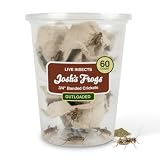
- FEEDER CRICKETS FOR PETS: Premium 3/4 inch banded crickets provide active prey for reptiles, amphibians, birds, bats, and other insect-eating pets; ideal feeder insects for leopard geckos, bearded dragons, tree frogs, pacman frogs, and sugar gliders.
- HIGH PROTEIN ANIMAL NUTRITION: Rich protein food cricket source with natural hydration levels and highly digestible nutrition; supports healthy growth, energy, and feeding response when paired with proper vitamin and gut loading practices.
- LONG STORAGE & HARDY SURVIVAL: Banded crickets last longer than many common feeder cricket species; hardy insects tolerate a wide range of care conditions; excellent colony survival and keeper-friendly maintenance for bulk stock management.
- ACTIVE PREY WITH SOFT EXOSKELETON: Natural hunting enrichment encourages instinctive feeding behaviors; softer shell and exoskeleton improve digestibility; active movement helps attract attention from reptiles, frogs, birds, and other insectivorous animals.
- PACKED FOR TRANSIT & EASY CARE: Securely packed with protective egg crate support during transit; simple container setup with food and hydration essentials helps maintain crickets for weeks; lower odor and quieter than many feeder bugs.
Veterinary guidance differs on the preparation window. Merck Veterinary Manual, updated October 2025, says most feeder-prey calcium-to-phosphorus ratios are inadequate and recommends a mineral supplement containing at least 8–10% calcium in the insects’ feed 72 hours before they are fed to a reptile. Lafeber’s veterinary handout gives a 24–48-hour calcium-rich gut-loading window and names Mazuri Hi-Ca Cricket Diet and T-Rex Calcium Plus Food for Crickets. These are preparation examples, not a tarantula-specific prescription.
What gut-loading does—and does not do
- It improves the insect’s nutrient profile before the tarantula eats it.
- It does not make every feeder nutritionally identical.
- It does not justify indiscriminate dusting or replace species-specific veterinary advice.
- Follow the label directions for any commercial gut-load and keep feeder insects supplied with appropriate food and moisture while they are being held.
How should I offer and remove feeder insects?
- Source safely. Buy captive-bred feeders from a trusted supplier. Never use insects collected from a yard, garden or roadside because parasites, pesticides and herbicides can be carried into the enclosure.
- Measure the prey. Select an insect no longer than the tarantula’s body or abdomen. Use smaller life stages for slings and juveniles.
- Place one or two insects. Offer them near the tarantula, using long tongs or rubber-tipped forceps when controlled placement is useful.
- Watch the response. If the spider does not take the prey, do not chase it around the enclosure or add more insects immediately.
- Remove leftovers. The University of Illinois gives about 10 minutes for its example feeding, while PetSmart advises removal within 24 hours. Use the shorter interval whenever premolt or molt is suspected, and never leave a live feeder with a vulnerable spider.
- Pause during molt. Do not feed or disturb a tarantula while it is molting. Wait until the fangs have hardened before resuming food, using species- and age-appropriate veterinary guidance.
How do water and enclosure hygiene affect feeding?
Keep a stable, shallow dish of clean water in the enclosure. Northwest Zoo recommends a shallow dish and warns against sponges or cricket gel because they can foul and harbor bacteria and pests; PetSmart likewise recommends a shallow dish with daily cleaning and refilling and cautions against deep sides.
Tarantulas may rarely be seen drinking, but constant access to clean water is still useful and can support enclosure humidity. A shallow design reduces the chance of a spider becoming trapped, while daily maintenance prevents the dish from becoming another source of contamination.
What are the most common feeder-related problems?
The insect disappears into the substrate
Burrowing is common with mealworms, superworms and some roaches. Use a visible placement area, offer the feeder with forceps, or choose discoid roaches when their slower disappearance is more manageable for your enclosure.
The tarantula is approaching a molt
Stop adding prey when premolt is suspected. Any live insect left with a molting or freshly molted tarantula can cause injury, so remove it using the shortest practical time window.
Also popular on Amazon

- FEEDER CRICKETS FOR PETS: Premium 3/4 inch banded crickets provide active prey for reptiles, amphibians, birds, bats, and other insect-eating pets; ideal feeder insects for leopard geckos, bearded dragons, tree frogs, pacman frogs, and sugar gliders.
- HIGH PROTEIN ANIMAL NUTRITION: Rich protein food cricket source with natural hydration levels and highly digestible nutrition; supports healthy growth, energy, and feeding response when paired with proper vitamin and gut loading practices.
- LONG STORAGE & HARDY SURVIVAL: Banded crickets last longer than many common feeder cricket species; hardy insects tolerate a wide range of care conditions; excellent colony survival and keeper-friendly maintenance for bulk stock management.
- ACTIVE PREY WITH SOFT EXOSKELETON: Natural hunting enrichment encourages instinctive feeding behaviors; softer shell and exoskeleton improve digestibility; active movement helps attract attention from reptiles, frogs, birds, and other insectivorous animals.
- PACKED FOR TRANSIT & EASY CARE: Securely packed with protective egg crate support during transit; simple container setup with food and hydration essentials helps maintain crickets for weeks; lower odor and quieter than many feeder bugs.
The tarantula refuses a meal
Appetite changes with species, life stage, body condition and molt status. Remove the feeder, keep water available, and try again later with an appropriately sized insect rather than allowing an ignored feeder to remain.
The keeper wants to feed only one insect
Crickets or roaches can anchor the diet, but rotating mealworms, superworms, silkworms, hornworms or locusts provides practical variety. Waxworms should remain occasional because they are relatively high in fat in Merck’s comparative table.
Free tools Windows power users keep installed
One-click scans. No signup required.
What is the safest overall feeding plan?
Build the routine around captive-bred, gut-loaded crickets or roaches; use dubia or discoid roaches when a large tarantula needs larger prey; rotate other insects according to availability and size; and keep every feeding supervised. The decisive safeguards are prey no longer than the spider’s body or abdomen, a shallow clean water dish, prompt removal of uneaten insects and a complete pause during molt.
Frequently Asked Questions
Why does my tarantula sometimes ignore food it accepted before?
Appetite can change with species, life stage, body condition and the approach of a molt. A single refusal is best handled by removing the feeder and waiting for a later opportunity instead of leaving live prey in the enclosure.
Is a 2:1 calcium-to-phosphorus ratio a tarantula requirement?
Merck’s 1:1 minimum and 2:1 preferred ratios are guidance for feeder insects in reptile nutrition, not a controlled tarantula dietary trial. Use gut-loading as a preparation step and obtain species-specific supplementation advice rather than treating the table as a prescription.
Can I use a sponge or gel instead of a water dish for feeder insects or the tarantula?
The cited care guides discourage sponges and cricket gel because they can foul and harbor bacteria and pests. A shallow, stable dish that is cleaned and refilled daily is the safer enclosure-water approach.
What should I do if a roach or worm vanishes under the substrate?
Avoid adding another feeder immediately. Use visible placement or long forceps at the next feeding, and consider discoid roaches when you need prey that Northwest Zoo says is less likely to disappear quickly than dubia.





Leave a Reply