The best fish for a freshwater aquarium is the fish that fits the aquarium’s adult-size capacity, social needs, temperature, water chemistry, compatibility, and maintenance routine. For many beginners, the shortlist is a single betta, planned guppies or platies, a proper school of peaceful tetras or rasboras, or Corydoras in an established community tank; goldfish need a dedicated setup.
Fish selection should begin with the aquarium rather than the shop display. A larger aquarium is generally more stable, and the tank’s length, filtration, temperature, and available swimming space can matter as much as its stated volume.
As an Amazon Associate I earn from qualifying purchases.
Key takeaways
- The best freshwater aquarium fish is the species that fits the aquarium’s adult-size capacity, temperature, water chemistry, social needs, and maintenance routine.
- A single betta suits a keeper who wants one focal fish, but a betta still needs warm, stable water, filtration, and a secure lid.
- Schooling fish such as tetras, danios, and rasboras generally do best in groups of six or more, so “small fish” does not automatically mean “nano-tank fish.”
- Guppies and platies are colorful, peaceful livebearers, but their population can increase quickly because females may produce free-swimming fry about once a month in suitable conditions.
- Corydoras are peaceful bottom-dwelling community fish for established aquariums, not a substitute for cycling, testing, or maintaining a neglected tank.
- Goldfish belong in a dedicated cool-water setup rather than being treated as a default fish for a small tropical community aquarium.
How do you choose the best fish for a freshwater aquarium?
Choose the best fish for a freshwater aquarium by starting with the aquarium’s usable size and footprint, then matching adult fish size, group requirements, temperature, water chemistry, temperament, breeding behavior, and waste production. The best-looking fish at the store is not necessarily the best match for the aquarium you can maintain.
Quick wins for a faster PC:
Fix the driver behind crashes, sound loss and screen glitchesFind Drivers →Clear out junk files and repair common Windows errorsFree Scan →Scan for outdated or missing drivers - takes under a minuteDriver Scan →The RSPCA freshwater-fish welfare guide recommends starting with an aquarium larger than 45 × 30 × 30 cm, approximately 40 litres, because larger volumes are more stable. Aquarium volume is only the starting point: a long tank gives active schooling fish more useful swimming space, while a solitary betta has different space and water-flow needs.
#1 Best Overall

- QUIET AQUARIUM FILTER: The Tetra Whisper IQ Power Filter with Stay Clean technology contains a sound shield for quiet filtration less than 40 dB.
- SELF PRIMING: Submerged motor starts up with no priming required.
- CAPACITY: The Tetra Whisper IQ 20 Power Filter works in filters up to 20 gallons (130 GPH).
- STAY CLEAN TECHNOLOGY: By maintaining healthy pH levels, creates easier maintenance for healthier fish.
- CARTRIDGE REFILLS: Change cartridges monthly; uses large-sized Tetra Whisper Bio-Bag Filter Cartridges (refills sold separately).
Do not choose fish according to the size of the specimens in the shop. Compare the aquarium with the fish’s adult length, swimming pattern, territorial behavior, required group size, compatibility, and expected waste production. Overcrowding pollutes water and can reduce oxygen availability.
Which freshwater fish are best for beginners?
For many first-time keepers, the strongest choices are a single betta, a deliberately planned group of guppies or platies, a proper school of small peaceful tetras or rasboras, or a group of Corydoras added to an established community aquarium. Goldfish can also be excellent pets, but goldfish require a different cool-water, high-filtration setup and are not the default choice for a small tropical tank.
| Fish or group | Best use | Strengths | Main cautions |
|---|---|---|---|
| Betta | One focal fish | Colorful, commonly available, and capable of living alone | Needs warm stable water; male bettas are territorial toward other males; unsuitable tankmates can cause conflict |
| Guppy | Colorful livebearer community | Peaceful, varied in color, accepts prepared foods, and is generally beginner-friendly | Breeds readily; plan the sex ratio and a destination for surplus fry |
| Platy | Active peaceful livebearer community | Beginner-friendly behavior and easy-to-observe activity | Reproduction can increase the population and filtration demand quickly |
| Neon tetra or similar small tetra | Peaceful schooling display | Colorful, active, and suitable for a compatible community when kept in a group | Needs a proper school and a tank with enough usable swimming space |
| Rasbora | Peaceful community school | Small and generally peaceful in a suitable group | Group size, tank footprint, and compatible water conditions still matter |
| Corydoras | Bottom-dwelling community group | Peaceful and engaging bottom activity | Needs an appropriate group, clean established water, and suitable substrate |
| Goldfish | Dedicated cool-water aquarium | Attractive, hardy in the right environment, and capable of a long lifespan | Different temperature, filtration, waste, and space requirements from a small tropical community |
Are betta fish good for beginners?
Betta fish can be good for beginners who want one focal fish and can provide warm, stable water; a betta is not a justification for an unheated bowl. Male bettas are territorial toward one another, so two males should not be housed together.
Outdated Drivers Are Slowing You Down
One free scan finds every outdated or missing driver and matches the right update for your exact hardware.Free scan · exact hardware matchPC Slower Than It Used to Be?
A free scan shows the junk files, broken settings and background clutter dragging Windows down - then fixes them in one click.Free scan · Windows 10 & 11According to Aqueon’s Betta Care Guide, the preferred betta range is 76–85°F with a pH of 6.8–7.5. Use an appropriately sized heater, thermometer, stable filtration, and a secure lid. A betta may live alone, which makes its social requirement simpler than that of a schooling fish, but stable water quality and routine maintenance remain essential.
Do not promise that a betta will get along with community tankmates without knowing the aquarium volume, layout, flow, species, number of fish, and individual temperament. A solitary betta is usually the more predictable beginner plan.
Are guppies and platies easy freshwater fish?
Guppies and platies are often easy freshwater fish for beginners because they are colorful, peaceful, active, and generally accept prepared foods, but livebearer breeding is the main difficulty. Guppies, platies, mollies, and swordtails produce free-swimming young without specialized intervention, and females may produce fry approximately once a month under suitable conditions.
Rank #2

- QUIET AQUARIUM FILTER: The Tetra Whisper IQ Power Filter with Stay Clean technology contains a sound shield for quiet filtration less than 40 dB.
- SELF PRIMING: Submerged motor starts up with no priming required.
- CAPACITY: The Tetra Whisper IQ 45 Power Filter works in tanks up to 45 gallons (215 GPH).
- STAY CLEAN TECHNOLOGY: By maintaining healthy pH levels, creates easier maintenance for healthier fish.
- CARTRIDGE REFILLS: Change cartridges monthly; uses large-sized Tetra Whisper Bio-Bag Filter Cartridges (refills sold separately).
Aqueon recommends keeping two to three females per male because males may continually pursue females; the recommendation appears in its Livebearer Care Guide. A mixed-sex group therefore needs a population plan before purchase. A single-sex group can make stocking more predictable, while a breeding setup requires hiding places, additional filtration capacity, and a plan for surplus fish.
The Tool Desk
Outbyte PC Repair FREEClear out junk files and repair common Windows errorsFree Scan →Outbyte Driver Updater FREEFix the driver behind crashes, sound loss and screen glitchesFind Drivers →Livebearers are not automatically appropriate for every aquarium. Their activity, adult size, water preferences, sex ratio, and rapidly increasing population must all fit the tank. Buying a few fish without deciding how to manage fry is a common way for a beginner aquarium to become overstocked.
Do schooling fish need to be kept in groups?
Yes. Schooling fish should be kept in an appropriate group rather than bought as isolated specimens merely because each fish is small. Aqueon’s Ultimate Fishkeeping Guide says schooling fish such as tetras, barbs, danios, and rasboras generally do best in groups of six or more.
A group requirement changes the space calculation. Six small fish can require more total swimming room, filtration capacity, and feeding planning than one slightly larger solitary fish. A longer aquarium is generally more useful for active schooling fish than a tall aquarium with the same nominal volume.
Small peaceful tetras and rasboras can make an excellent display when the aquarium is large enough for a proper group and the water conditions and tankmates are compatible. Do not combine species simply because a shop labels each one “community.” Fin-nipping, adult size, temperature, water chemistry, and feeding behavior still need to match.
Are Corydoras suitable for a new aquarium?
Corydoras are suitable for an established, well-maintained community aquarium, but they should not be added to a new or neglected tank. Corydoras are peaceful bottom-dwellers that need an appropriate group, clean water, and suitable substrate.
Rank #3
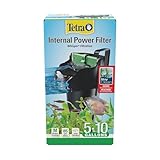
- INTERNAL POWER FILTER: Tetra Whisper Internal Power Filter for 5- to 10-gallon aquariums uses medium Whisper BioBag filter cartridges that are easy to change.
- QUIET 85 GPH MOTOR: The internal pump efficiently filters up to 85 gallons per hour.
- POWERFUL FILTRATION: Water flows through the cartridge floss, trapping debris and fish waste, while Ultra-activated carbon helps remove odor and discoloration.
- SPACE-SAVING DESIGN: Your aquarium can be 1” from the wall with the internal filter designed to clip directly on your aquarium wall and be hidden by décor.
- EASILY ADJUSTABLE: Adjustable clip allows for a variety of setups to easily adjust to high or low water levels.
Aqueon’s Corydoras Catfish Care Guide gives most captive-bred Corydoras and relatives a general range of 74–80°F and pH 7.0–8.0, while emphasizing pristine water and cautioning against adding them to a new aquarium.
Bottom-dwelling behavior does not mean Corydoras are a cleanup service. Corydoras still need species-appropriate food, stable water, filtration, and regular maintenance. A suitable substrate and hiding places also help create a safer, more natural bottom area.
Are goldfish good for a small freshwater aquarium?
Goldfish are not a good default choice for a small tropical freshwater aquarium. Goldfish need a dedicated setup with suitable cool-water conditions, substantial filtration, enough space for their adult size and waste production, and a long-term care plan.
Aqueon’s Goldfish Care Guide states that goldfish can live over 20 years in captivity when properly cared for. That lifespan is one reason a goldfish should not be treated as a disposable starter pet or kept in a bowl by default.
Goldfish may be hardy in an appropriate system, but “hardy” does not mean that a small, unfiltered, unheated container is suitable. Goldfish have different temperature, filtration, waste, space, and lifespan requirements from small tropical community fish.
What fish can live together in a freshwater tank?
Peaceful tetras or rasboras, compatible livebearers, and Corydoras can sometimes share a freshwater community aquarium, but compatibility cannot be promised from species names alone. Aquarium volume, fish numbers, adult size, temperature, water chemistry, sex ratio, swimming level, fin-nipping behavior, and individual temperament all matter.
Rank #4

- Powerful Pump: 300 GPH water pump effectively filters 55-150 gallons; ideal for large aquariums, turtle tanks, and ponds.
- Enhanced Aeration: Equipped with an adjustable valve to increase oxygen levels, promoting healthier, more active fish and turtles.
- Double Deep Filtration: Dual-stage black biochemical sponge removes odors and impurities; keeps water clear and fresh.
- Dynamic Water Flow: Boosts wave size and surface movement; improves circulation for a healthier aquatic environment.
- Adjustable Body: The aquarium filter features a detachable design. For tanks under 15 inches tall, you can lay the filter flat or remove the lower half of the filter sponge for a better fit.
| Compatibility question | Why the answer matters | Safe planning approach |
|---|---|---|
| Does the fish live alone or in a group? | A solitary fish and a school have different space and stocking demands | Plan the required group before purchasing any individual fish |
| Do the temperature ranges overlap? | Fish cannot thrive when the aquarium is kept for another species’ preferred temperature | Set the aquarium around an overlapping, species-appropriate range |
| Will adults fit the aquarium? | Store size can conceal future crowding and waste production | Use adult size and activity level, not juvenile size |
| Could one fish harass another? | Territorial behavior, pursuit, and fin-nipping can cause chronic stress or injury | Use a solitary setup for territorial fish when community compatibility is uncertain |
| Will the population grow? | Livebearer fry can create rapid overstocking | Choose a sex ratio and decide how surplus fish will be managed first |
| Is the aquarium established? | New tanks may not yet process fish waste reliably | Establish and test the aquarium before adding sensitive bottom fish or a full community |
What is the best fish for a 10-gallon tank?
There is no universally best fish for a 10-gallon tank because the answer depends on the aquarium’s actual dimensions, filtration, temperature, water chemistry, and the fish’s adult and social requirements. A single betta may be a more predictable focal-fish plan than a school that cannot be housed in an adequate group, but the tank still needs heating, filtration, a lid, testing, and maintenance.
What’s actually slowing this PC down?
Pick the symptom - the matching free tool is one click away.
A 10-gallon aquarium should not be stocked by applying a universal “one inch of fish per gallon” rule. The RSPCA presents a rough guideline of 11⁄2 to 2 litres per 1 cm of tropical-fish length, but also warns that filtration, water source, temperature, and maintenance affect water quality. The RSPCA guidance should therefore be treated as a starting point, not a stocking law.
Do not use a 10-gallon tank as a reason to keep a goldfish, a male betta with another male betta, or isolated schooling fish. When the required group and footprint do not fit, choose a different fish or a larger aquarium.
Independent reader supportYour contribution helps us test, update, and keep practical guides available for everyone.What equipment does a freshwater aquarium need?
A freshwater aquarium needs a stable aquarium and stand, secure lid, filter, thermometer, water conditioner, test supplies, a water-changing or gravel-vacuum tool, food, and suitable hiding places or plants. Tropical fish also need a species-appropriate heater matched to the aquarium’s size.
Aqueon’s freshwater aquarium setup guidance identifies the aquarium, filter, thermometer, tropical-fish heater, and water conditioner as core equipment. Chlorine and chloramine in municipal tap water can harm fish and other aquatic organisms, so replacement water must be treated according to the conditioner’s instructions.
Do these 3 things before closing this tab:
1Clear out junk files and repair common Windows errors2Fix the driver behind crashes, sound loss and screen glitches3Repair Windows errors before they cause bigger problems- Aquarium and secure stand: Choose a volume and footprint that accommodate the adult fish and their movement.
- Filter: Select filtration appropriate for the aquarium and its inhabitants; filtration is a husbandry requirement, not decoration.
- Heater and thermometer: Use a heater for tropical species and verify the actual water temperature rather than relying on the heater dial alone.
- Water conditioner: Treat municipal tap water before it reaches the fish.
- Water testing: Test the parameters relevant to the selected fish before stocking and during troubleshooting. A freshwater aquarium water test kit can be a practical starting point; Aqueon documents 7-in-1 aquarium test strips that check indicators including alkalinity, hardness, nitrate, nitrite, free chlorine, iron, and pH-related chemistry.
- Maintenance tools: A gravel vacuum or water changer removes debris during partial water changes. Aqueon documents aquarium water changers designed to siphon debris while retaining substrate.
- Food and furnishings: Use species-appropriate food and provide hiding places and plants suitable for the fish’s behavior.
A starter kit does not automatically make a suitable habitat. Adult size, group requirement, heat requirement, territorial behavior, and waste production still determine whether the setup is appropriate.
Best Value

- WITH ROTATING BIO-WHEEL: Patented Bio-Wheel technology provides excellent wet/dry biological filtration.
- MULTI-STAGE FILTRATION: Delivers mechanical, chemical and biological aquarium filtration to maintain a clean aquatic environment.
- MARINELAND FILTRATION PRODUCTS: Count on Marineland brand for the most reliable, technically advanced aquariums and accessories on the market.
- COMPATIBILITY: Use with Marineland Rite-Size Filter Cartridges (see individual filter for sizing recommendations).
- FIVE SIZES: Available in 75 GPH, 100 GPH, 150 GPH, 200 GPH and 350 GPH sizes.
How should you prepare the aquarium before adding fish?
Prepare the aquarium, install and test the equipment, condition the water, and verify stable water quality before buying fish. Fish should not be used to discover whether a new aquarium can process waste safely.
- Place the aquarium on a stable, level stand away from dangerous temperature changes and direct sunlight.
- Install the filter, thermometer, and any heater required by the chosen species. Use a secure lid, especially for bettas and other fish that may jump.
- Add the substrate, plants, and hiding places without creating unsafe gaps or unstable décor.
- Fill the aquarium with water treated to remove harmful chlorine and chloramine.
- Run the equipment and test the water. Confirm that the temperature and chemistry suit the intended fish.
- Establish the aquarium’s biological filtration before stocking fully, then add fish gradually rather than adding a complete population at once.
- Continue testing and perform routine partial water changes with conditioned replacement water.
The RSPCA states, “Water quality is the most important aspect of fish keeping,” in its freshwater fish care guidance. That principle is more useful than calling any species “low maintenance”: every fish requires appropriate water quality, filtration, feeding, observation, and maintenance.
Which fish should you choose?
Choose a single betta if you want one colorful focal fish and can provide warm, stable water. Choose guppies or platies if you want an active livebearer display and are prepared to control breeding. Choose tetras or rasboras if you have enough space for a proper school. Choose Corydoras only for an established, clean community aquarium with an appropriate group. Choose goldfish only when you are prepared to build a dedicated cool-water system.
Recommended Free Tools
The best freshwater aquarium fish is therefore a husbandry decision, not a beauty contest. Match the fish to the aquarium you can maintain consistently, and reject any species whose adult size, group requirement, temperature, compatibility, or breeding burden does not fit.
Frequently Asked Questions
What is the best fish for a freshwater aquarium?
The best fish for a freshwater aquarium depends on the aquarium and the keeper’s plan. A single betta is often the most predictable focal-fish choice for a beginner, while guppies, platies, schooling tetras or rasboras, Corydoras, and goldfish each require different group, temperature, space, and maintenance conditions.
Do freshwater fish need a heater and filter?
A heater and filter are needed for most tropical freshwater fish, including bettas. A thermometer verifies the water temperature, while filtration supports water quality; a betta should not be treated as suitable for an unheated, unfiltered bowl.
Can guppies, tetras, and Corydoras live together?
Guppies, tetras, and Corydoras can sometimes live together in a suitably sized, established community aquarium, but compatibility depends on group sizes, adult size, temperature, water chemistry, filtration, and individual behavior. The species should not be combined solely because each fish is small.
What is the best fish for a 10-gallon tank?
A 10-gallon tank does not have one universal best fish. A single betta may be a more predictable option than a school that cannot be kept in an adequate group, but the tank still needs stable heating, filtration, a lid, water testing, and routine maintenance. Goldfish are not appropriate as a default choice for a 10-gallon tropical aquarium.
The Bottom Line
Bottom line: For a first freshwater aquarium, a single betta is the simplest focal-fish option; guppies or platies suit a planned livebearer setup; tetras or rasboras suit a properly sized school; Corydoras suit an established community; and goldfish require their own dedicated cool-water plan. Aquarium size, water quality, social needs, and long-term maintenance should decide the purchase.
Quick Recap
Product prices and availability are accurate as of the date/time indicated and are subject to change. Any price and availability information displayed on Amazon at the time of purchase will apply.




