
What’s actually slowing this PC down?
Pick the symptom - the matching free tool is one click away.
Some links on this page are affiliate links: if you buy through them we may earn a commission, at no extra cost to you.
The best mental stimulation for a working retriever is a rotating mix of scent searches, food-foraging, retrieving with a reliable release cue, short training games, and useful household jobs. That combination gives the dog purposeful ways to sniff, carry, solve problems, cooperate and make choices instead of relying on repetitive, high-speed fetch alone. You can run most of these activities indoors with ordinary boxes, your dog’s meal and a safe toy.
Start with easy wins, reward the behaviour your dog offers, and increase only one difficulty factor at a time. Adult Labradors are commonly advised to receive at least 90 minutes of daily exercise, preferably split into two sessions, but age, health, conditioning, weather and whether the dog is field-bred change the right amount. Mental games should complement—not replace—appropriate physical exercise, sleep and veterinary care.
As an Amazon Associate I earn from qualifying purchases.
Why do working retrievers need more than a long game of fetch?
Retrievers were developed to notice, pursue, carry and return objects while working closely with a handler. A good enrichment plan channels each part of that sequence. Sniffing and searching let the dog gather information; food puzzles provide foraging; carrying and retrieving satisfy a strong motor pattern; training and household jobs add cooperation and decision-making.
Repeating one fast game can create a dog that is physically tired but still demanding activity, or one that becomes over-aroused by chasing. Alternating low-impact nose work and food puzzles with appropriately conditioned retrieving gives the nervous system different kinds of work. The American Animal Hospital Association notes that mental challenges can be just as tiring as physical exercise. The goal is not to keep a retriever busy every waking hour, but to provide purposeful outlets and then a clear chance to rest.
Popular on Amazon
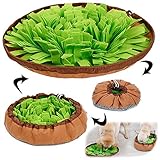
- ★ Dog Training Toys: It is a unique dog training mat that allows your dog to find snacks or small toys hidden in the mat. It helps to train your dog's smell, consume your dog's energy and lose weight. Keep your dog occupied and avoid your dog being bored and engaged in destructive behavior.
- ★ Non-slip & Large & Portable: The bottom is a non-slip cloth that effectively holds the mat and prevents the dog from moving the mat. The design is small and can be shrunk into a small storage bag. It can also be hung or set aside when not in use. Suitable for traveling.
- ★ Dual-use Design: The feeding mat can be folded into a bowl. Stick to the good habits of your dog or use it as an olfactory pad.
- ★ Easy to clean: The main fabric of the scent pad is felt cloth, environmentally friendly and easy to clean. It is suggested that washed by hand.
- ★ Guarantee: If you are not satisfied with our dog feeding snuffle mat, please feel free to contact us.
There is no controlled head-to-head trial proving that one of these games is universally superior. The choices below are practical guidance from veterinary, kennel and animal-welfare organizations, so adjust them to the individual dog.
Which mental game suits my retriever best?
Use the dog’s preferred reinforcer and your available space to choose a starting point. A food-driven dog may work longest for a snuffle mat; a toy-driven dog may learn a retrieve-and-return job faster. The table compares the main demands without ranking them.
Do these 3 things before closing this tab:
1Scan for outdated or missing drivers - takes under a minute2Repair Windows errors before they cause bigger problems3Fix the driver behind crashes, sound loss and screen glitches| Game | Main instinct | Food required | Handler involvement | Physical load | Indoor fit | Simple setup |
|---|---|---|---|---|---|---|
| Find-it scent search | Sniffing and searching | Optional | Medium | Low | High | Boxes or a small treat toy |
| Snuffle-mat meal | Foraging and sniffing | Yes | Low | Low | High | Snuffle mat |
| Treat-dispensing toy | Licking and problem-solving | Yes | Low | Low | High | Dispensing toy |
| Retrieve, return and drop-it | Carrying and retrieving | Optional | High | Medium to high | Medium | Soft retrieve toy |
| Hide-and-seek with the handler | Recall and social search | Optional | High | Medium | High | No special equipment |
| Household job | Carrying and cooperation | Optional | High at first | Low to medium | High | Toy basket or safe carry item |
| Trick or shaping session | Learning and cooperation | Usually | High | Low | High | Treats or a toy reward |
How do I teach an indoor find-it scent search?
Begin with a visible object and a simple cue, then progress to hidden searches. Scent work is especially useful on wet or very hot days because it provides nose-heavy, low-impact work in a small area.
Start with a visible find
- Choose a quiet room and prepare several pea-sized pieces of the dog’s normal food, or a favourite toy if food is not motivating.
- Let the dog see you place the item a short distance away. Say “find it” once, then allow the dog to investigate.
- Mark the discovery with calm praise and deliver the reward at the item. Keep the first repetitions almost effortless.
- After several successful repetitions, have the dog wait while you place the item just out of sight, such as behind a chair leg.
The University of Florida’s guidance recommends moving from visible objects to hidden searches and eventually shifting the reward to the handler once the dog understands the game. That change prevents the dog from believing that the hidden object itself must always be food.
Increase difficulty without creating frustration
Add only one challenge at a time: greater distance, a second room, more furniture, additional boxes or a less obvious hiding place. If the dog starts scanning randomly, returns to you repeatedly or abandons the search, make the hide visible again. End while the dog is still successful.
Use boxes for a clear indoor exercise
Place two open boxes on the floor, put a treat in one and cue the search. When the dog reliably checks both, add boxes and vary their positions. Keep the dog from watching every placement once the basic pattern is learned. AKC’s indoor guidance uses this two-box progression and then increases the number and difficulty of the searches.
Recommended Free Tools
Are snuffle mats good for Labradors and other retrievers?
Yes, a snuffle mat can turn part of a normal meal into a slow foraging task. It suits dogs that enjoy food and sniffing, and it is generally low impact. AAHA lists snuffle mats and scatter feeding as food and sensory enrichment, while AKC describes the mat as an interactive nose-work tool.
Also popular on Amazon

- Mental Stimulation & Enrichment: Keeps dogs engaged and mentally active, encouraging natural foraging instincts and reducing boredom and destructive behaviors by hiding treats for your pup to sniff out
- Slow Feeding & Better Digestion: Promotes healthy eating habits with a textured design that slows down fast eaters, preventing bloating and improving digestion for dogs that gobble their food too quickly
- Durable & Easy to Clean: Built to last with high quality materials, this snuffle mat is machine washable or hand-washable for hassle-free cleaning, ensuring long-lasting use
- Stress & Anxiety Relief: Calms anxious dogs by providing a soothing activity where sniffing and searching for treats releases endorphins, offering a relaxing experience for your pet
- Non-Slip & Portable Design: Non-slip backing keeps the mat firmly in place even during excited foraging, lightweight and foldable at 19.7 x 19.7 inches for indoor use, lawns, parks, and travel
How to use one safely
- Scatter a portion of the dog’s regular ration across the top rather than adding a second meal of treats.
- For a first session, leave some pieces easy to see so the dog learns to use its nose without becoming frustrated.
- As the dog improves, place pieces deeper in the fabric or combine the mat with a short settle period afterward.
- Stay nearby during initial sessions, inspect the mat for loose strands and wash it according to the manufacturer’s instructions.
Count every treat used in enrichment toward the daily calorie plan. A mat is not suitable for a dog that tears off and swallows fabric; use a supervised alternative such as a scatter feed on a washable floor.
How can a treat-dispensing toy provide quiet problem-solving?
A hollow, appropriately sized dispensing toy can occupy a retriever through licking, manipulating and persistence. Stuffing or freezing it makes the food last longer, but difficulty should rise gradually.
Build the challenge in stages
- Start with loose, easy-to-remove food so the dog learns that pushing and rolling the toy produces a payoff.
- Once the dog works confidently, pack the food more firmly or combine dry and moist portions.
- Freeze a meal-sized portion only after the dog understands the toy; a completely frozen, difficult toy can cause early frustration.
- Offer the toy on a non-slip surface and remove it when the session ends.
Select a size the dog cannot swallow and inspect it after every use. Powerful chewers may damage a toy quickly, so supervise and discard it when cracks or missing pieces appear. Food-dispensing toys are an enrichment option, not a substitute for checking that the dog’s total diet remains balanced.
The Tool Desk
Outbyte PC Repair FREERepair Windows errors before they cause bigger problemsFix Now →Outbyte Driver Updater FREEFix the driver behind crashes, sound loss and screen glitchesFind Drivers →How do I teach a complete retrieve, return and drop-it job?
Turn fetch into a sequence with a beginning, middle and end: wait, go, pick up, return, release and reset. AKC recommends establishing fetch and drop-it cues before asking for carrying jobs in other contexts. The Royal Kennel Club likewise advises teaching retrieving and tugging as useful toy-based rewards and teaching the dog to give the toy up on cue.
Teach the release before adding speed
- Use two identical soft toys or a toy and a piece of food. When the dog holds the first toy, present the second and say “drop” or “give” once.
- Reward the release by starting the next game or delivering food. Avoid chasing the dog for the toy.
- Practice a calm handoff at close range, then add one or two steps of distance.
- Introduce a brief wait before the send, and reset only after the dog returns and releases.
Keep repetitions short and use a safe, grippy surface. Avoid forced jumping, abrupt turns on slippery floors and very long, nonstop throws, particularly in young, older or overweight dogs. Mix a few retrieves with a scent search or a calm food puzzle so the session does not become a high-speed loop.
How does hide-and-seek improve recall indoors?
Ask the dog for a sit or stay, hide nearby, call once and reward the find with the reinforcer the dog values most. AKC describes this as an equipment-free indoor game. Begin behind an open doorway or piece of furniture where success is nearly certain.
Increase distance and hiding complexity only after the dog responds reliably in the current room. If the dog cannot find you, make your voice easier to follow rather than repeating the cue many times. For dogs that value sniffing more than food, reward arrival with permission to investigate a safe area.
Also popular on Amazon
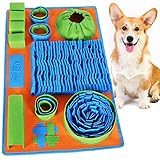
- SUITABLE FOR SMALL AND MEDIUM DOGS, CATS - The size of this snuffle mat is 26 x 16.5 inches, which is perfect for small dogs, medium dogs, cats and rabbits. It makes a wonderful gift for pet owners! NOT recommended for extra large and aggressive chewers dogs who could tear it up
- INTERACTIVE ACTIVITY MAT- If your dog always eat too fast, we recommend you try our enrichment training feeding mat. Dog snuffle mat simulate an environment for your dog to forage naturally, effectively slow down eating and prevent digestive problems
- 8 DIFFERENT PLACES TO HIDE TREATS - This sniff mat for dogs contains 8 different places to hide food or treats, increase the fun, challenge and training intensity of foraging. It allows you to enjoy the happy time of interacting with your dogs and avoid your dog destroys the furniture due to boredom
- SAFETY MATERIALS - The main material of the foraging mat is felt cloth, which is safety but not chewproof. When you receive this felt snuffle mat, machine wash it once to make the shape as good as the picture
- WASHABLE AND PORTABLE DESIGN - Easy to clean, hand wash and machine wash available. Two additional elastic straps can be fastened and easily wrapped around for storage
What household jobs can a working retriever learn?
Purposeful jobs provide structure and let a dog use natural carrying and cooperation behaviours. AKC examples include carrying a light item, putting toys in a box, finding a named object, nose targeting and searching rooms on cue.
Safe starter jobs
- Toy tidy-up: Teach the dog to carry one soft toy to a basket, then release it over the basket. Reward each approximation before expecting accuracy.
- Named-object search: Present one toy with a distinctive name, reward a nose touch or pickup, and later place it in an easy location.
- Light carry: Use a soft, intact item with no sharp edges, strings that can be swallowed or splintering parts.
- Nose target: Reward touching your palm or a target object, then use the behaviour to guide the dog to a mat, doorbell button or search start point.
- Room search: Send the dog to investigate a designated room, then call back and reward the return.
Never ask a dog to carry medication, knives, glass, batteries or anything that could splinter. A job should be easy to stop; if the dog guards the object, drops it defensively or becomes frantic, end the exercise and seek qualified help.
How do short trick and shaping sessions tire a retriever mentally?
Training itself is a problem-solving activity. Choose one behaviour, reward small steps and stop while the dog remains eager. Eye contact, a chin rest, a nose target, backing up, placing paws on a low platform or learning to close a cupboard can all be taught without strenuous exercise.
Use low-value kibble for familiar behaviours in a quiet room. Reserve higher-value food, a favourite toy, tug, praise or a release to sniff for new or distracting work. AKC guidance emphasizes that dogs differ in what they find rewarding, so rank food, toys, games, praise and sniffing opportunities for the individual dog rather than assuming every retriever prefers food.
If the dog offers frantic pawing, vocalizing or repeated guesses, lower the criteria and reinforce a calmer step. Several brief sessions spread through the day are usually easier to understand than one prolonged lesson.
How should I progress scent work from a game to a formal activity?
Keep home searches playful, or use the American Kennel Club’s Virtual Scent Work Test as a structured goal. The test is a home-based, video-submitted activity built around natural scent detection and has Beginner, Intermediate and Experienced levels.
The published guidelines state that eligible dogs must be at least four months old. Beginner searches use one ball, toy or treat in one search area; later levels add search areas, items and indoor or outdoor environments. The listed search times are one and a half minutes for Beginner, two and a half minutes for Intermediate and three minutes for Experienced. Check the current eligibility rules and submission requirements before planning around a test, because program details can change.
Also popular on Amazon

- TRAIN YOUR DOG’S SMELL TO HUNT: Boost your pet’s mental stimulation with a snuffle mat! Perfect enrichment toys for dogs and cats, hiding treats in messy grass for fun, scent-focused play.
- DIGESTION & MENTAL HEALTH IMPROVEMENT: The dog snuffle mat acts as a puzzle feeder dog, slowing eating and boosting digestion. These mentally stimulating toys for dogs aid in weight loss and reduce anxiety.
- SNUFFLE MAT AND FEEDING BOWL: This food puzzle for dogs doubles as a sniff mat for dogs and a feeding bowl. With size-adjustable PP belt, it's a convenient, stimulating dog toy for mental stimulation and puppy enrichment.
- ECO-FRIENDLY & WASHABLE MATERIAL: Made from eco-friendly, anti-pilling polar fleece, this dog food puzzle is machine or hand washable. It's a durable addition to dog brain stimulation toys and perfect for pet enrichment.
- NON-SLIP & PORTABLE DESIGN: This dog puzzle toy features a non-slip base and a portable, shrinkable design. Ideal as puppy puzzle toys and dog stimulation toys to keep your pet engaged.
For a young or inexperienced dog, success in a simple room search is more valuable than completing a difficult timed search. Build a clear start cue, let the dog work independently and reward the final indication without rushing the search.
Free tools Windows power users keep installed
One-click scans. No signup required.
How much exercise and rest should mental games replace?
They should not replace all physical activity. Guide Dogs gives adult Labradors a broad guideline of at least 90 minutes of exercise daily, preferably in two sessions, while VCA notes that Labradors need daily exercise plus mental work and that field-bred dogs are often more active. These are general breed references, not prescriptions.
Balance conditioned walks, retrieving, swimming where safe and free movement with low-impact scent searches, food puzzles and training. Adjust for age, body condition, heat, injury history and veterinary advice. A dog that pants heavily, loses coordination, becomes unusually irritable or cannot settle may need a break rather than another game.
Plan meals before choosing food enrichment. Subtract kibble used for searches, mats and training from the bowl, and use tiny pieces when possible. Consult a veterinarian about weight change, pain, exercise intolerance or a sudden increase in restlessness. A qualified trainer or veterinary behaviour professional is appropriate for obsessive chasing, resource guarding, anxiety or aggression.
What should I do when a game fails?
The dog ignores food
Try a toy, brief tug, praise or a release to sniff. Food may be less valuable in a distracting setting, after a full meal or when the dog is worried. Lower the environmental difficulty before changing the cue.
Windows Errors? Fix Them Before They Spread
Repair common Windows errors and clear accumulated junk for a smoother, more stable PC - no reinstall needed.Free scan · no reinstallCrashes, No Sound, or Screen Glitches?
Random freezes, missing sound and display glitches usually trace back to one bad driver. Find and replace yours safely.Free scan · under a minuteThe dog gives up on a search
Make the hide visible, reduce the room size or return to one box. Avoid pointing repeatedly at the answer; instead, reward any deliberate investigation and make the next repetition easier.
The dog becomes frantic about fetch
Stop throwing, wait for calm and switch to a stationary release game, a snuffle mat or a simple scent search. Reintroduce retrieves with a wait, one short throw and a clean drop-it.
Also popular on Amazon

- Engaging Dog Sniffing Mat Design: the dog activity mat features a variety of puzzles and different fabric textures, making the foraging process exciting for your furry friend, and keeping them busy
- Various Levels of Dog Enrichment and Mental stimulation: The dog foraging mat provides a range of puzzles with different levels of difficulty, suitable for dogs of various dog games experience
- Slows Down Fast Eating to Avoid Digestion Problems: Our dog sniffing mat encourages fast eaters to use their sense of smell, reduce anxiety and burn energy. No small plastic details
- Wider Dog Puzzle Sizes: This dog digging toy fits most dog muzzles. The dog treat mat is 39.4''x23.6'', has a non-slip bottom. It is made of soft material for pet comfort and safety. Machine washable
- Reduces Destructive and Anxious Behavior: Fights boredom by training your dog's brain, keeping them busy from exhibiting behaviors like chewing, digging, and excessive barking
The dog chews enrichment equipment
Supervise, use a sturdier or simpler option and remove damaged items. A scatter feed on a clean floor can replace a fabric mat, and hand-delivered training can replace a toy that cannot be used safely.
The dog seems tired but cannot settle
Finish with a predictable calm behaviour such as lying on a mat, licking a supervised food toy or resting after a slow sniff walk. More intensity is not always the answer; some dogs need a lower-arousal activity and sleep.
How can I build a simple weekly rotation?
Rotate the type of work rather than adding more and more repetitions. One possible pattern is a scent search on one day, a food-foraging meal on the next, a short retrieve-and-release lesson after a walk, then a household job or shaping session. Keep familiar activities easy and use new challenges sparingly.
- Nose days: visible finds, box searches, room searches and hide-and-seek.
- Foraging days: part of a meal in a snuffle mat, scatter feed or dispensing toy.
- Cooperation days: retrieve, drop-it, toy tidy-up and nose targeting.
- Recovery days: calm sniffing, a measured walk, chewing or licking enrichment and extra rest.
Watch the dog’s body language and next-day recovery. Enthusiastic participation, relaxed movement and an ability to settle are better guides than completing a preset number of games.
Frequently Asked Questions
Can mental games replace a walk for a working Labrador?
Usually not. Nose work and food puzzles can reduce arousal and provide meaningful work indoors, but most adult retrievers still need regular physical movement appropriate to their age and health. On restricted-activity days, ask your veterinarian which low-impact options are safe.
What is the safest reward if my retriever guards toys?
Use food delivered at a distance or a low-conflict activity such as searching for scattered kibble, and avoid taking a valued toy by force. Resource guarding warrants guidance from a veterinary behaviour professional or qualified trainer before continuing toy exchanges.
How do I mentally exercise a retriever after surgery or injury?
Ask the treating veterinarian for movement limits first. Stationary scent searches, chin rests, gentle targeting and supervised lick-based enrichment may be adaptable, but even a seemingly mild retrieve or puzzle can violate a recovery plan.
Why does my dog search better in one room than another?
Odours, flooring, airflow, furniture and previous reinforcement all change the difficulty. Practice in the easier room, then carry the same hide and cue to a new space in small steps rather than assuming the dog has forgotten.
Do scent-work games make a dog more likely to sniff on walks?
They can increase the dog’s interest in using its nose, which is generally useful, but a walk still needs practical leash and safety skills. Keep search cues distinct from permission to investigate everything in public.





Leave a Reply