
Some links on this page are affiliate links: if you buy through them we may earn a commission, at no extra cost to you.
The best milkweed seed is from a species native to your county or ecoregion, with seed collected or produced as close to your planting site as practical. Xerces Society guidance is to choose locally native milkweed for which regionally sourced seed or plants are available. A packet labeled only with a seller’s state is not enough: verify the species’ county range, the seed’s origin, and whether it is wild-type or a selected cultivar.
Milkweed is the required larval host for monarch caterpillars, while its flowers supply nectar for bees, butterflies, and other pollinators. The regional examples below are starting points, not universal substitutions; local range maps and site conditions decide whether a species belongs in your garden.
As an Amazon Associate I earn from qualifying purchases.
Quick wins for a faster PC:
Clear out junk files and repair common Windows errorsFree Scan →Fix the driver behind crashes, sound loss and screen glitchesFind Drivers →Repair Windows errors before they cause bigger problemsFix Now →Which milkweed seeds are best for monarchs?
The strongest choice is a locally native species matched to your soil moisture, drainage, sunlight, and available seed provenance. Native status matters because monarchs evolved with North American milkweeds, and regional plants are more appropriate for restoring habitat than a convenient but nonnative substitute.
Monarch Watch lists 73 milkweed species native to the United States and says monarchs use about 30 with some regularity. The National Wildlife Federation counts more than 100 milkweed species naturally occurring across North and Central America. Those totals describe overall diversity, not a shopping list: a species native somewhere in the United States may be absent from your county.
Popular on Amazon

- MONARCH BUTTERFLY HABITAT: Common milkweed (Asclepias syriaca) is a host plant for monarch butterfly larvae. Planting this native wildflower helps support monarch populations by providing a food source for caterpillars. Suitable for USDA Zones 3–9.
- FRAGRANT BLOOMS: This variety grows 3–5 ft. tall and produces scented pink to mauve flower clusters, 2–4 inches wide. Grows best in full sun to partial shade. The flowers attract various pollinators, including native bees, honeybees, hummingbirds, and hoverflies.
- PERENNIAL GROWTH HABIT: As a hardy perennial in USDA Zones 3–9, common milkweed typically returns each year through rhizomes and natural reseeding. Seeds are open-pollinated.
- PLANTING AND GERMINATION: Seeds can be direct sown in fall to allow for natural cold-stratification, or cold-stratified in the refrigerator for 30 days prior to spring planting. Plant seeds 1/8–1/4 inch deep in well-drained soil. Germination generally occurs at 60–70°F.
- ADAPTABLE TO VARIOUS SOILS: Once established, common milkweed is drought-tolerant and performs well in average to poor, well-drained soil. Requires little supplemental watering or fertilization once established. Seed pods may remain through the fall to provide interest in the landscape.
Use a county-level range map or ecoregion guide before ordering. Xerces directs gardeners to the Biota of North America Program (BONAP) county maps and its Milkweed Seed Finder; Monarch Watch also maintains a Milkweed Market. Inventory changes, so treat any listing as a lead and confirm the current species, origin, and form of the material.
What milkweed seeds are native to my state or region?
Regional names can narrow your search, but they cannot replace a county check. The following species are documented starting points from Monarch Watch and other conservation guidance.
What’s actually slowing this PC down?
Pick the symptom - the matching free tool is one click away.
| Region or site condition | Species to investigate | Why it is a starting point | What to verify |
|---|---|---|---|
| Midwest and Northeast | Common milkweed (Asclepias syriaca) | Monarch Watch identifies it as the main host plant in this broad region. | County range, available space, and whether the seed is regionally sourced. Swamp, butterflyweed, whorled, and poke milkweeds may also be regional options. |
| Southeast | Butterflyweed (A. tuberosa) and swamp milkweed (A. incarnata) | Monarch Watch describes both as widespread and comparatively easy choices in the region. | Dry versus wet soil, local distribution, and whether a Florida site calls for a more specialized species. Aquatic milkweed may suit some wetter sites. |
| South Central, Texas, and Oklahoma | Spider milkweed (A. viridis), antelopehorn (A. asperula), broadleaf (A. latifolia), and zizotes (A. oenotheroides) | These are among the region’s native candidates. | Exact ecoregion and county range. Conditions vary sharply across Texas and Oklahoma, so a statewide label is too broad. |
| West and Intermountain areas | Showy milkweed (A. speciosa) | Monarch Watch identifies it as a leading western restoration choice. | Elevation, soil moisture, drainage, and whether a lower-elevation or xeric native species is a better fit. |
| Wet or riparian garden | Swamp milkweed (A. incarnata) or another locally native wetland milkweed | Its moisture preference can fit wet ground when the local range supports it. | Drainage and seasonal water levels; do not treat a broad regional list as a site prescription. |
| Dry, sunny, well-drained garden | Butterflyweed (A. tuberosa) or another locally native dry-site milkweed | Butterflyweed is a useful dry-site candidate where it is native. | Local distribution before purchase. A species native in one state can be absent from a nearby county. |
How do I match a milkweed species to my garden?
Start with the planting site, then choose among species that are native there. A native label does not override a mismatch between the plant and the soil.
Check sunlight
Most garden milkweed decisions begin with a sunny opening rather than a shaded bed. Confirm the species’ light requirements in a regional guide and reserve the brightest, least competitive area for seed.
Check moisture and drainage
Separate wet, seasonally wet, and dry sites before selecting a packet. Swamp milkweed belongs in the conversation for suitable wet or riparian ground; butterflyweed is a candidate for dry, well-drained soil. If water stands where a dry-site species is planted, or a wetland species dries out quickly, germination and establishment can suffer even when the species is native to the wider region.
Also popular on Amazon

- Monarch Host Plant: Grow common milkweed plants that feed monarch caterpillars; blooms draw butterflies and honeybees. Perennial native wildflowers for USDA zones 2-8, 36 in tall. Great pollinator seeds.
- Cold Stratify for Success: For native milkweed seeds for planting, chill moist sand mix 30 days (cold and wet 4 weeks), then direct sow plant seeds just below surface. Germination 10-30 days after last frost.
- Planting Outdoors: These milkweed seeds for monarch butterflies give the pink blooms from early to late summer in full sun or part sun - ideal flower seeds to plant outside
- Low Disturbance Growing: Milkweed plant seeds resent transplanting - direct sow and thin to strongest. Space 12-24 in, water occasionally; common milkweed reseeds and spreads. Perennial seeds for planting flowers.
- Cut and Save Butterfly Milkweed Seeds: Cut stems when blooms just open. After bloom of milkweed for monarch butterflies, 3-4 in pods form - pick before split. Ideal for milkweed packets and seed packets.
Check local range
Use BONAP county maps, Xerces’ Seed Finder, or an equivalent local ecoregion reference. County-level confirmation is especially important in large states and along ecological transition zones.
Crashes, No Sound, or Screen Glitches?
Random freezes, missing sound and display glitches usually trace back to one bad driver. Find and replace yours safely.Free scan · under a minutePC Slower Than It Used to Be?
A free scan shows the junk files, broken settings and background clutter dragging Windows down - then fixes them in one click.Free scan · Windows 10 & 11Decide whether you are restoring habitat or planting ornamentally
For habitat restoration, Xerces’ technical guidance favors locally sourced wild-type material. Cultivars can have a place in ornamental gardens, but they are less appropriate near natural populations when the goal is to restore regional genetic material.
What should a milkweed seed packet tell me?
A trustworthy packet gives enough information to evaluate both identity and provenance. If several of these details are missing, ask the seller before buying.
- Scientific name: Look for the full Asclepias species name, not just “milkweed.” Common names can cover several species.
- Collection or production origin: Ask where the seed was wild-collected or produced. A vendor’s mailing address does not prove that the seed came from that state, county, or ecoregion.
- Local-range evidence: Compare the named species with a county or ecoregion map before sowing.
- Wild-type or cultivar status: Wild-type material is the more defensible choice for restoration and near natural populations. If a cultivar is offered for an ornamental bed, its status should be explicit.
- Harvest and storage information: Fresh, dry seed is preferable. Monarch Joint Venture advises removing seed from pods and storing it airtight in a cool, dry place; prolonged moisture can cause rot.
- Form and quantity: Confirm whether you are buying seed, plugs, or another plant form, and check the packet’s lot or harvest information when provided.
- Realistic availability: Xerces reports that fewer than 20 of more than 70 U.S.-native milkweed species are typically available commercially. Scarcity is common in parts of the West, Plains, and Southeast, so a local species may require a different supplier or plugs rather than a retail seed packet.
Where can I buy locally sourced milkweed seed?
Begin with region-filtered native-seed sources rather than a generic marketplace search. Xerces’ Milkweed Seed Finder and Monarch Watch’s Milkweed Market are useful starting pathways; confirm current inventory, origin, and whether the listing is seed or plants before ordering.
Using a general marketplace
If you search a marketplace such as Amazon, the defensible phrase is common milkweed seeds Asclepias syriaca—but only as a search term, not as proof that the product is appropriate. Homes & Gardens has mentioned common milkweed seed on Amazon, and common milkweed is a major host plant in the Midwest and Northeast. Before purchase, verify that A. syriaca is native to your county, ask for the seed’s collection or production origin, and check the seller’s current information.
The Tool Desk
Outbyte Driver Updater FREEFix the driver behind crashes, sound loss and screen glitchesFind Drivers →Outbyte PC Repair FREEClear out junk files and repair common Windows errorsFree Scan →Also popular on Amazon
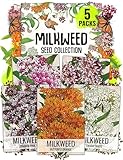
- Pollinator Attraction: Milkweed flowers are known for attracting a variety of pollinators, including bees, butterflies, and hummingbirds. They produce a sweet nectar that is particularly enticing to monarch butterflies, which lay their eggs exclusively on milkweed plants.
- 5 Packets: This collection includes Showy Milkweed Seeds (Asclepias speciosa), Pink Swamp Milkweed Seeds (Asclepias incarnata), White Swamp Milkweed Seeds (Asclepias incarnata), Orange Butterfly Milkweed Seeds (Asclepias tuberosa) & Common Milkweed Seeds (Asclepias syriaca.)
- Ecological Importance: Milkweed is crucial for the survival of monarch butterflies, providing not only nectar but also foliage for caterpillars to feed on. The presence of milkweed in an ecosystem supports biodiversity and is vital for the monarch's life cycle.
- Quality: All Milkweed seeds packaged by Seed Needs are intended for the current and the following growing seasons. All seeds are stored in a temperature controlled facility that is free of significant amounts of moisture.
- Quantity: Seed Needs offers generous quantities. You can share with friends and family, or you can save the extra seeds until the following season, if properly stored.
When local seed is scarce
Do not replace a hard-to-find native with tropical milkweed simply because it is widely stocked. Ask regional native-plant nurseries whether they offer seed or plugs from a documented local source, and compare the provenance before choosing the form that is actually available.
How do I plant native milkweed seeds?
Site preparation and timing matter as much as the packet. For most regions, direct sowing on the soil surface in fall or early spring is the simplest approach.
- Clear competition. Remove existing weeds and dense competing vegetation from the planting area. Seedlings need contact with soil rather than a thick thatch of leaves or live groundcover.
- Choose the sowing window. Fall and early spring are generally more reliable than late spring or summer. In dry regions, time sowing before expected rainfall.
- Place seed at the surface. Scatter seed on prepared soil and press it in for firm soil contact. Do not bury it deeply unless the species’ regional instructions specifically say otherwise.
- Mark the bed. Native milkweed can remain dormant through winter or emerge later than nearby weeds. A marker prevents accidental weeding.
- Protect the seed bed from prolonged saturation. Monarch Joint Venture warns that extended moisture can promote rot during storage; the same principle makes drainage important after sowing.
- Keep records. Note the species, source, origin, sowing date, and site conditions. Those details help you distinguish a poor site fit from a germination problem and make future seed purchases more precise.
Do milkweed seeds need cold stratification?
Northern-collected seed generally does. Monarch Joint Venture states that seeds collected in the Northern United States will not germinate without cold stratification.
Use natural winter
Fall sowing supplies the cold and moisture that northern seed needs. Surface-sow and press the seed into prepared soil before winter, then allow seasonal conditions to provide the stratification period.
Recommended Free Tools
Use refrigerator stratification when fall sowing is missed
Moist stratification in a refrigerator can simulate winter. Keep the seed moist but not waterlogged, use a sealed method that prevents drying, and follow the storage duration recommended for the particular species or regional seed source. After the cold period, sow promptly on the soil surface.
Also popular on Amazon

- The perennial common milkweed adds beautiful pink and lilac blooms to any garden; one of the easiest and fastest to establish of the milkweeds and it thrives in almost any well-drained soil
- Open pollinated & heirloom, Non-GMO, Native to the Midwest and eastern U.S. It prefers full sun and loamy, mesic soil, but it can tolerate a wide variety of conditions.
- Attracts monarch butterflies, bees and many other pollinating insects
- Easy to grow, requires little maintenance and thrives in zones 3-9
- If planting in Spring, Milkweed seeds need to go through a period of cold stratification for better germination
Do not assume every lot behaves identically
Collection latitude, species, storage history, and moisture all affect germination. If the packet or seller provides species-specific instructions, those instructions take precedence over a generic schedule.
What should I expect during the first year?
Native U.S. milkweeds are generally perennial and deciduous. They may remain dormant through winter, and first-year plants may not flower or produce seed even when their foliage is available as a monarch host.
Judge establishment by healthy emergence and continued survival rather than by flowers alone. Keep the bed identifiable, control competing weeds without disturbing seedlings, and avoid discarding a dormant plant simply because it is absent above ground in winter.
Do these 3 things before closing this tab:
1Clear out junk files and repair common Windows errors2Scan for outdated or missing drivers - takes under a minute3Repair Windows errors before they cause bigger problemsShould I avoid tropical milkweed?
Do not use tropical milkweed (Asclepias curassavica) as the default substitute in a U.S. native-plant garden. The National Wildlife Federation calls it nonnative and recommends milkweed native to your region.
Xerces describes preliminary evidence associating year-round foliage in warm areas with out-of-season egg laying and a higher prevalence of the protozoan parasite commonly called OE. On that evidence, Xerces recommends locally native species instead of relying on tropical milkweed. A native perennial that naturally becomes dormant is the more conservative choice for a regional habitat garden.
Also popular on Amazon

- 5 VARIETIES OF NATIVE MILKWEED - THE HEART OF YOUR POLLINATOR GARDEN. Supports the Monarch Life Cycle | Stunning Ornamental Contrast | Landscape Beauty. The most rewarding way to bring vibrant energy to your garden is by growing native milkweed from high-quality, fresh, Non-GMO American seeds. This curated collection includes over 500 seeds to ensure a lush, thriving habitat for seasons to come.
- AN ESSENTIAL FOR EVERY GARDEN. Milkweed is the cornerstone of a healthy pollinator ecosystem. These plants are vital for the survival of Monarch populations, providing a sanctuary where they can flourish. By planting milkweed wherever possible, you add multi-faceted color to your landscape while offering critical nectar and pollen resources to a diverse array of bees and butterflies.
- The legendary Monarch butterfly is a remarkably selective eater. During their caterpillar stage, they rely exclusively on milkweed as their host plant. This is not just a preference but a biological necessity, as larvae cannot survive without it. The large, nutrient-rich foliage serves as a vital food source and a lifeline for the next generation of butterflies.
- A VITAL BOND FOR NATURE. Every variety of milkweed provides immense value to the Monarch life cycle. These plants offer the specific nutrients needed for this iconic species to thrive. Monarchs rely solely on milkweed to lay their eggs and feed their larvae, which eventually create their intricate chrysalises right on the plant. This interdependent relationship is a crucial part of our natural world, and by supporting their habitat, we foster a healthier environment for everyone.
- THE FIVE STELLAR VARIETIES. BUTTERFLY MILKWEED offers compact growth up to 3 feet with striking fiery clusters of gold and orange. These vibrant umbels are packed with nectar and a light candy-like scent. Unlike its relatives, it lacks the milky sap and is exceptionally drought-tolerant.
What are the most common buying and planting mistakes?
- Choosing by common name alone: “Milkweed” does not identify a species. Require the scientific name.
- Assuming seller location equals seed origin: Ask for the collection or production region and compare it with your county.
- Buying a species from the wrong moisture regime: Match wetland, mesic, or dry-site conditions before ordering.
- Planting a nonnative substitute because it is available: Scarce native inventory is a sourcing problem, not a reason to default to tropical milkweed.
- Burying surface-sown seed: Press seed into soil for contact instead of covering it deeply.
- Sowing northern seed without a cold period: Use fall sowing or moist refrigerator stratification when appropriate.
- Expecting first-year flowers: Perennial milkweed may establish foliage before it flowers or produces seed.
- Ignoring wild-type status near natural populations: For restoration, prioritize documented locally sourced wild-type material over ornamental selections.
- Overlooking supply limits: Fewer than 20 of more than 70 U.S.-native milkweed species are typically sold commercially, according to Xerces. A responsible search may end with a regional nursery, a different native species that fits the same site, or plugs rather than seed.
How should I make the final seed decision?
Use this order: confirm county or ecoregion nativity, match soil moisture and drainage, verify sunlight, then compare seed provenance and wild-type status. Only after those checks should price, packet size, or marketplace convenience decide between otherwise suitable products.
| Decision question | Acceptable evidence | Stop and investigate if… |
|---|---|---|
| Is the species native here? | County range map or regional ecoregion guidance | The listing gives only a national or seller-state claim. |
| Will the site suit it? | Documented fit for your moisture, drainage, and sun | The packet and site conditions point in opposite directions. |
| Where did the seed originate? | Named collection or production region | Only the vendor’s mailing address is shown. |
| Is it appropriate for restoration? | Wild-type, locally sourced material | The seller does not identify cultivar or wild-type status. |
| Can I germinate it? | Fresh, dry seed and clear stratification guidance | Storage history, harvest information, or cold requirements are absent. |
A defensible purchase is therefore not “the most popular milkweed seed.” It is the locally native, site-compatible species whose origin and handling the seller can document.
Frequently Asked Questions
How many milkweed species are native to the United States?
Monarch Watch lists 73 native U.S. milkweed species and reports that monarchs use about 30 with some regularity. Xerces separately notes that fewer than 20 of more than 70 native species are typically available commercially, so biological diversity is much greater than retail availability.
What does “wild-type” mean on a milkweed packet?
Wild-type indicates material that has not been selected and marketed as an ornamental cultivar. Xerces favors locally sourced wild-type plants and seed for habitat restoration, while cultivars may be reserved for ornamental settings away from natural populations.
Can I combine more than one native milkweed species in one garden?
You can consider several species when each is documented as native to your county or ecoregion and each matches a distinct part of the site. Keep wet-site species in suitable moisture and dry-site species in well-drained soil rather than mixing them solely for variety.
What should I do if no locally sourced seed is available?
Check regional native-plant nurseries and conservation directories for plugs or a different locally native species suited to the same site. Xerces’ Milkweed Seed Finder and Monarch Watch’s Milkweed Market can help identify suppliers, but confirm current inventory and provenance directly.





Leave a Reply