Free tools Windows power users keep installed
One-click scans. No signup required.
Najas grass (Najas guadalupensis) has the strongest direct evidence for reducing nitrate among the plants compared in an aquarium experiment. Java moss (Taxiphyllum barbieri) also lowered nitrate relative to plant-free tanks, though less strongly. Those results come from a specific four-week study, not a guarantee for every home aquarium; plants support, but do not replace, routine water testing and aquarium maintenance.
Which aquarium plants have the best evidence for nitrate uptake?
The clearest head-to-head evidence comes from a 2024 study of Najas grass and Java moss in aquariums housing Endler guppies. At week four, the plant-free control tanks measured 33.75 and 35.00 mg/L nitrate, while the Najas-only tanks measured 8.75 and 11.50 mg/L. Java moss also reduced nitrate compared with controls, but nitrate in its tanks tended to be higher than in the other planted treatments. These are study results from one setup, not expected readings for all tanks. Read the study in North American Journal of Aquaculture.
As an Amazon Associate I earn from qualifying purchases.
Najas grass: strongest measured result
Najas was the strongest nitrate-reducing choice in that direct comparison. The study describes it as fast-growing, tolerant of a broad range of water conditions, and able to grow without substrate; it can also be attached to solid objects. Its reported biomass increased 1.6-fold in single-species tanks during the study.
The Tool Desk
Outbyte Driver Updater FREEScan for outdated or missing drivers - takes under a minuteDriver Scan →Outbyte PC Repair FREEClear out junk files and repair common Windows errorsFree Scan →Fast growth requires upkeep: trim it and keep it contained. Floating plant material can catch in filter intakes and disrupt operation. The authors describe securing plants, pruning, choosing an appropriate filter speed, and using intake mesh or inserts as possible mitigations. Najas may be invasive in some regions, so check local rules before acquiring it and never release aquarium plants into natural water.
#1 Best Overall
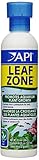
- Product Type: ARTIFICIAL PLANT
- Package length: 19.558 cm
- Package width: 3.048 cm
- Package height: 4.572 cm
Java moss: a useful alternative
Java moss reduced nitrate relative to plant-free controls, although its nitrate results tended to be higher than those of other planted treatments. The study describes it as commonly used in aquascaping, tolerant of a wide range of water hardness, and able to absorb nutrients directly from the water. Its biomass increased 1.2-fold in single-species tanks. Secure it rather than leaving it loose near a filter inlet, and keep the intake clear.
Duckweed, mosquito ferns, and other options
The study mentions duckweed and mosquito ferns as floating plants used for nutrient uptake. Purdue Extension also lists duckweed, water sprite, hornwort, and other aquarium plants, and notes that floating plants grow and reproduce quickly when light is plentiful. A dense duckweed mat can shade plants below it. The available sources do not establish a directly comparable nitrate ranking for these species against Najas, so treat them as possible aquarium plants, not proven nitrate-reduction winners. See Purdue Extension’s aquarium-plant guidance.
Rank #2

- Comprehensive supplement for the planted aquarium
- Provides micro elements, trace elements and other nutrients
- Does not contain significant levels of nitrogen or phosphorus
How strong is the evidence—and what does it not show?
The experiment ran for four weeks in 40 L aquariums with Endler guppies, with water quality measured weekly. The displayed methods describe four tanks per treatment in each of two experiments. The researchers detected no ammonia and observed no differences in guppy growth or survival between treatments over that period. Those observations do not establish long-term fish-health outcomes or directly measure filtration efficiency.
Quick wins for a faster PC:
Repair Windows errors before they cause bigger problemsFix Now →Scan for outdated or missing drivers - takes under a minuteDriver Scan →The authors caution that plant combinations do not necessarily perform as well as individual plants: in tanks containing both Najas and Java moss, Najas increased while Java moss decreased. As they write, “However, further research may be necessary to better understand the effects of different plant species and their combinations.”
Rank #3
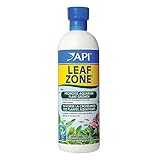
- Contains one (1) API LEAF ZONE Freshwater Aquarium Plant Fertilizer 16-Ounce Bottle
- Promotes strong, hardy and colorful leaves and prevents yellow, decaying leaves
- Contains essential nutrients including chelated iron and potassium
- Formulated for rapid absorption in freshwater aquarium plants
- Dose your aquarium weekly with 5 ml of API LEAF ZONE per 10 US gallons of aquarium water
How to choose a nitrate-absorbing plant for your tank
Use nitrate evidence as one consideration alongside the plant’s growth habit and your aquarium’s setup. Before choosing, compare:
- Evidence for nitrate uptake: Najas has the strongest direct result in the cited aquarium comparison; Java moss also reduced nitrate against controls.
- Growth and upkeep: Fast-growing plants can need frequent pruning and containment.
- Placement and substrate: Najas can grow without substrate and may be secured to objects; consider whether a floating plant or attached growth suits your layout.
- Light and surface cover: Floating plants can multiply quickly in ample light, and a thick duckweed layer can shade plants below.
- Filter compatibility: Keep loose plant material away from intakes; secure or trim growth and consider an intake guard.
- Local restrictions: Check whether a species is restricted where you live, and do not release aquarium plants outdoors.
Continue testing water and maintaining filtration and husbandry. The study supports plants as a complement to aquarium care, not a substitute for it.
Quick Recap
Best Value
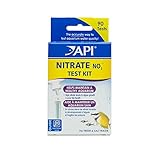
- Contains one (1) API NITRATE 90-Test Freshwater and Saltwater Aquarium Water Test Kit, including 2 bottles of testing solution, 2 color cards and 1 test tube with cap
- Helps monitor and adjust nitrates and prevent invisible water problems that can be harmful to fish
- Detects high nitrate levels from 0-160 ppm
- Prevents algae growth that can be damaging to fish health
- Use for weekly monitoring and when water or fish problems appear
Rank #4
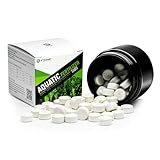
- Optimized NPK Ratio (1 : 0.3 : 2.6):FZONE root tabs feature a low-nitrogen, low-phosphorus, high-potassium formula that helps maintain stable water quality while fueling strong plant growth. Designed for freshwater aquariums, they support lush crypts, vibrant sword plants, and dense carpeting plants. Safe for all fish and shrimp.
- Direct-to-Root Aquarium Fertilizer : Designed to be placed in the substrate, these aquarium root tablets deliver nutrients directly to plant roots, ensuring fast absorption and strong root growth for aquatic plants.
- Slow Release Root Tabs Technology: Each aquarium fertilizer tab uses controlled release to provide consistent nutrients for up to 2-3 months, helping maintain stable water conditions in planted aquariums.
- Extra Dosage Upgrade 60g per Box: Each root tab weighs 0.8g for longer-lasting fertilization. Each tab covers approximately 5 square inches of planting area.– perfect for freshwater planted aquariums
- Sinkable & Easy Placement: These aquarium root tabs sink immediately without floating. Simply use aquascaping tweezers to place each tab about 3-5 cm from plant roots for the best results in your planted aquarium.
Product prices and availability are accurate as of the date/time indicated and are subject to change. Any price and availability information displayed on Amazon at the time of purchase will apply.




