Quick wins for a faster PC:
Fix the driver behind crashes, sound loss and screen glitchesFind Drivers →Repair Windows errors before they cause bigger problemsFix Now →For people who want a natural-leaning topical repellent, choose an EPA-registered product containing oil of lemon eucalyptus or para-menthane-3,8-diol (OLE/PMD)—not a bottle of unformulated lemon-eucalyptus essential oil. If protection from disease-vector sand flies matters more than a natural-only preference, DEET or picaridin are better-established choices. For the true sand flea, Tunga penetrans, a coconut-oil-based repellent has a narrower but meaningful role, particularly on exposed feet.
The most important step is identifying what someone means by sand flea. The term can describe an embedded flea, a biting sand fly, or a no-see-um. Those pests behave differently, so no single natural remedy works equally well against all of them. Pet owners should also avoid putting human repellents or essential-oil mixtures on dogs or cats unless a veterinarian and the product label specifically say they are appropriate.
As an Amazon Associate I earn from qualifying purchases.
First identify the pest called a sand flea
Beach travelers, gardeners, and pet owners often use sand flea as a catch-all name. That creates a prevention problem because the organisms may be entirely different:
Free tools Windows power users keep installed
One-click scans. No signup required.
| What the name may mean | What it does | Most useful prevention |
|---|---|---|
| True sand flea or chigoe flea (Tunga penetrans) | The female penetrates and remains embedded in skin. Lesions occur most often on the feet. | Covered feet, intact footwear, and a coconut-oil-based repellent formulated for this purpose. |
| Sand fly | A tiny flying insect that bites, usually from twilight through the night. In some regions, sand flies can transmit leishmaniasis. | An EPA-registered topical repellent, long clothing, fine screening, bed nets, and avoiding peak activity. |
| Biting midge or no-see-um | A very small biting fly that can get through ordinary insect screens. | Fine mesh—approximately 20-by-20 openings per square inch is recommended for biting midges—plus clothing, fans, and a registered repellent. |
These distinctions matter for pets, too. A dog or cat that is scratching may have an ordinary flea, mite, allergy, or skin problem rather than exposure to one of the pests above. A beach repellent for human skin is not a substitute for a veterinary flea-control plan.
#1 Best Overall

- MADE IN USA: Manufactured by Tessa Couture Corporation in Crystal Lake, IL with quality-controlled production
- CONVENIENT APPLICATION: 8 fluid ounce spray bottle allows for easy application and coverage when enjoying outdoor activities
- USAGE DIRECTIONS: Shake well before use, spray directly onto exposed skin, avoiding contact with eyes and mucous membranes
Best repellent choices, ranked by use case
1. Best natural-leaning general option: registered OLE or PMD
Look for an oil of lemon eucalyptus insect repellent whose label identifies the active ingredient as oil of lemon eucalyptus or para-menthane-3,8-diol. EPA lists OLE/PMD among active ingredients used in registered skin-applied repellents, and CDC recognizes this class as effective against biting arthropods, including sand flies.[C4][C5]
There is an important difference between a registered formulation and essential oil. Pure lemon-eucalyptus essential oil has not undergone the same standardized safety and efficacy testing and is not equivalent to an EPA-registered insect repellent. A product can smell botanical and still lack a validated concentration or reliable wear time.
- Follow the product label for where and how much to apply.
- Reapply only at the interval stated on the label; do not create a schedule from the scent or from how sweaty the skin feels.
- Do not use OLE/PMD products on children younger than 3 years.
- Do not apply the product to a dog, cat, or other animal unless the veterinary label specifically permits it.
OLE/PMD is the strongest answer for a reader who wants a plant-derived option for biting flies. It should not be described as a universal treatment or as proof against embedded Tunga penetrans.
Crashes, No Sound, or Screen Glitches?
Random freezes, missing sound and display glitches usually trace back to one bad driver. Find and replace yours safely.Free scan · under a minutePC Slower Than It Used to Be?
A free scan shows the junk files, broken settings and background clutter dragging Windows down - then fixes them in one click.Free scan · Windows 10 & 112. Best broadly established benchmark: DEET
DEET is not natural, but it remains an honest benchmark when avoiding bites is the priority. CDC identifies DEET as one of the principal effective repellents for sand-fly bite prevention and generally describes DEET-containing products as the most effective option in its leishmaniasis-prevention guidance.[C2] EPA-registered consumer DEET products range from approximately 5% to 99%, so the label and planned exposure matter more than choosing the highest number automatically.[C6]
Higher concentration generally extends protection time; it does not make a product inherently safer. Choose the lowest labeled concentration that suits the outing, then follow the product directions. DEET prevents bites; it does not remove an embedded flea, cure tungiasis, treat leishmaniasis, or disinfect an infected lesion.
3. Best non-DEET alternative: picaridin
Picaridin is a strong practical alternative for people who dislike DEET’s odor or skin feel. It is an EPA-listed skin-applied repellent ingredient, and CDC includes it among products that provide reasonably long-lasting protection against biting arthropods, including sand flies.[C4][C5] It is synthetic rather than natural, but a natural-only preference should not be confused with a guarantee of better protection.
For a trip where sand flies may transmit disease, a labeled DEET or picaridin insect repellent is usually a more defensible choice than an improvised essential-oil blend. Use the directions on the specific product because concentration and reapplication instructions vary.
Rank #2

- REPELS MOSQUITOES: Repels mosquitoes, including those that may transmit the Zika, West Nile, Dengue and Chikungunya viruses.
- CONTAINS 98.11% DEET: Formulated for protection in severe insect conditions.
- PROTECTS FOR UP TO 10 HOURS: Provides long-lasting protection, so you don't have to limit your family’s adventure because of mosquitoes.
- ALSO REPELS TICKS, GNATS, BITING FLIES, CHIGGERS & FLEAS: Repel these annoying bugs that can spoil the outdoors.
- PUMP SPRAY: Perfect for outdoor travel – the compact size stores perfectly with whatever adventure gear you're taking that day.
4. Other registered ingredients: IR3535, citronella, catnip oil, and 2-undecanone
EPA lists IR3535, citronella, catnip oil, 2-undecanone, OLE/PMD, picaridin, and DEET among active ingredients used in registered skin-applied repellents.[C4] That list does not mean that every product, concentration, or plant ingredient performs equally well against every species called a sand flea.
The useful distinction is not simply natural versus chemical. It is:
- Is the product registered and labeled for use on human skin?
- Does the evidence apply to the pest in the location being visited?
- Can the user follow the label for application, age, duration, and reapplication?
Where coconut oil fits—and where it does not
Coconut-oil-based repellent for true sand fleas
For true sand fleas, or Tunga penetrans, coconut oil has more specific support than many popular natural remedies. WHO reports that regular application of a coconut-oil-based repellent can help prevent these fleas from penetrating the skin. The prevention approach described repeated application to the feet, with twice-daily application associated with a rapid reduction in tungiasis-related morbidity over several weeks.[C1]
A controlled field study of a standardized plant-based coconut-oil formulation, Zanzarin, reported a 92% reduction in the attack rate of invading sand fleas in the setting studied.[C8] That is useful evidence for true sand fleas, but it does not prove that ordinary kitchen coconut oil offers the same standardized protection. It also does not establish equivalent protection against sand flies or biting midges.
What’s actually slowing this PC down?
Pick the symptom - the matching free tool is one click away.
A coconut-oil-based sand-flea repellent is therefore best viewed as a targeted option for suspected Tunga exposure, especially on the feet—not as a universal replacement for DEET, picaridin, or registered OLE/PMD products.
Why essential oils are not a dependable universal solution
Laboratory and field research has examined neem, lemongrass, marigold, oregano, allspice, catnip, peppermint, tea tree, and other plant oils against particular sand-fly species. Some studies found meaningful repellency under particular conditions, but a systematic review found that relatively few studies have assessed natural products against sand-fly vectors and that the evidence remains limited.[C7][C9]
Do not put undiluted essential oils on skin. They can irritate or sensitize skin, vary in composition from one batch to another, evaporate quickly, and lack the standardized exposure information found on registered repellent labels. Diluting an oil at home does not turn it into an EPA-registered repellent.
Rank #3

- REPELS MOSQUITOES: Repels mosquitoes, including those that may transmit the Zika, West Nile, Dengue and Chikungunya viruses
- CONTAINS 98.11% DEET: Formulated for protection in severe insect conditions
- PROTECTS FOR UP TO 10 HOURS: Provides long-lasting protection, so you don't have to limit your family’s adventure because of mosquitoes
- ALSO REPELS TICKS, GNATS, BITING FLIES, CHIGGERS & FLEAS: Repel these annoying bugs that can spoil the outdoors
- TRAVEL-SIZE PUMP SPRAY: This compact 1 oz flip-cap bottle is perfect for travel and outdoor adventures. Its portable design fits easily into your backpack, pocket, or gear, making it a convenient companion wherever your day takes you.
Be equally cautious with pets. Essential oils, scented sprays, lotions, and diffusers should not be assumed safe for dogs or cats simply because they are plant-derived. Never use a human skin product or homemade oil mixture on an animal without veterinary direction.
The Tool Desk
Outbyte Driver Updater FREEFix the driver behind crashes, sound loss and screen glitchesFind Drivers →Outbyte PC Repair FREEClear out junk files and repair common Windows errorsFree Scan →Plants, candles, and diffusers
Planting lavender, rosemary, citronella, or another aromatic plant near a patio may be pleasant, but it should not be presented as reliable personal protection. Candles, diffusers, homemade sprays, and scented lotions can have variable effects and should not replace clothing, screening, or a labeled repellent when exposure risk is substantial.[C7] They are especially poor substitutes when the concern is a sand fly that may transmit disease or a true flea capable of embedding in the feet.
Physical prevention often matters more than the bottle
Protect feet and lower legs
For true sand fleas, the feet are the principal exposure site. Wear closed-toe shoes, socks that cover the ankles, and long pants. Water shoes or other closed-toe water shoes are more defensible for beach or soil exposure than flip-flops when penetration by Tunga penetrans is the concern. Footwear should be intact; cracked or worn material provides less reliable coverage.
For sand flies, CDC likewise recommends long pants, socks, and minimizing exposed skin.[C1][C2] Apply topical repellent to exposed skin according to the label, but do not treat clothing or footwear with a skin product unless the label specifically says to do so.
Avoid the peak hours for sand flies
Sand flies are typically most active from dusk through dawn or during twilight. In regions where they are present, avoid unnecessary outdoor activity during those hours, or combine clothing, a registered topical repellent, and a physical barrier.[C2][C3] This timing advice is sand-fly-specific; it should not be treated as a universal rule for every organism informally called a sand flea.
Use fine mesh, not just ordinary mosquito screening
Ordinary mosquito screens and nets may have openings large enough for tiny sand flies or biting midges. Use a well-screened or air-conditioned room whenever possible. For sleeping areas, use a small-mesh bed net and ensure that it is properly tucked or sealed around the sleeping space. Sand flies can pass through ordinary mosquito-net openings, making mesh size important.[C2][C3]
For biting midges, CDC Yellow Book guidance identifies approximately 20-by-20 openings per square inch as a useful screening barrier.[C5][C13] A fine-mesh bed net or 20-by-20 window screen can be especially useful in unscreened accommodation, cabins, tents, and sleeping areas near water or vegetation.
Rank #4
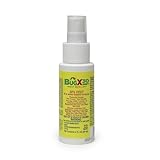
- AMERICAN MANUFACTURER - Our entire line of Bug X 30 Insect Repellent is proudly made in the USA
- UP TO 7 HOURS OF PROTECTION - Our low odor insect repellent spray contains 30% DEET and provides up to 7 hours of complete protection from mosquito bites. Bug X 30 is just the right protection around the home and backyard
- TRAVEL READY - Bug X 30 Insect Repellent offers a convenient and light weight pump spray bottle for easy application. Take Bug X 30 on your next hike, camping trip, pool day or outdoor adventure
- NON-GREASY & NON-OILY FORMULA - Bug X 30 Insect Repellent spray does not feel greasy or oily, that won’t stain and resists perspiration. Our pump spray bottle also provides a more controlled application compared to aerosol products
- EFFECTIVE & DEPENDABLE PROTECTION - Bug X 30 contains 30% DEET, providing effective protection against mosquitoes, gnats, no-see-ums, sand flies, biting flies, deer flies, stable flies, black flies, ticks, chiggers, red bugs and fleas
Use moving air where practical
Fans can help in sleeping or outdoor seating areas because these tiny flies are weak fliers. CDC notes that fans or ventilators may inhibit sand-fly movement.[C3] A fan is a supplementary measure, not a replacement for screening or topical repellent.
Treat clothing and gear correctly
CDC guidance supports products containing 0.5% permethrin for treating clothing and camping gear in flea-bite prevention, and its sand-fly guidance notes that clothing, bed nets, curtains, sheets, and screens may be treated with a pyrethroid insecticide according to directions.[C2][C10]
Do these 3 things before closing this tab:
1Scan for outdated or missing drivers - takes under a minute2Clear out junk files and repair common Windows errors3Fix the driver behind crashes, sound loss and screen glitchesA permethrin clothing treatment belongs on clothing or gear only when the product label permits it. Do not spray a clothing-treatment product directly onto skin, and do not apply it to a pet unless the veterinary product label specifically authorizes that use. Allow treated items to dry exactly as directed before wearing or packing them.
A practical prevention plan for a beach trip or tropical stay
- Find out what pest is present. Ask a local health authority, travel clinic, accommodation host, or veterinary professional whether the local problem is true tungiasis, sand flies, biting midges, or ordinary fleas.
- Choose the topical repellent. For a natural-leaning human option, select registered OLE/PMD. For the strongest broadly established sand-fly protection, consider DEET. Choose picaridin if you want a non-DEET alternative.
- Cover the feet first. Pack closed-toe shoes, ankle-covering socks, and long trousers. Do not rely on flip-flops where true sand-flea exposure is possible.
- Plan around sand-fly activity. At dusk, overnight, and near dawn, use long clothing, repellent, screened rooms, and a fine-mesh sleeping barrier.
- Inspect the accommodation. Look for intact screens, air conditioning, and a suitable bed net. Tiny biting flies can pass through larger mesh.
- Add treated gear if exposure will be substantial. Use labeled permethrin products on clothing and gear, never as an improvised skin treatment.
- Use a fan indoors or outdoors when possible. Moving air may make it harder for weak-flying sand flies and midges to reach people.
- Keep pet protection separate. Ask a veterinarian for a species-, size-, and exposure-appropriate flea and parasite-control plan. Do not share human repellent with a pet.
- Check feet and skin after travel. A painful, itchy lesion with a pale or white circular elevation and a central dark point deserves medical assessment rather than home extraction.
What not to use or do
- Do not equate lemon-eucalyptus essential oil with OLE/PMD repellent. The registered formulation, active ingredient, concentration, and label matter.
- Do not treat every sand-flea claim as interchangeable. Evidence for coconut-oil-based protection against Tunga penetrans does not establish protection against sand flies or no-see-ums.
- Do not assume a higher concentration is automatically better. Follow the product label and choose a duration-appropriate formulation.
- Do not apply human repellents to pets. Dogs and cats require products labeled for the correct species and weight range, with veterinary guidance when exposure or symptoms are unusual.
- Do not depend on patio plants, candles, diffusers, or homemade sprays. These methods have variable, species-specific effects and are not a reliable substitute for barriers.
- Do not dig out a suspected embedded flea with a needle, pin, knife, or household tool. Nonsterile extraction can injure tissue and introduce secondary infection.
- Do not mistake prevention for treatment. Repellent will not treat tungiasis, leishmaniasis, an infected wound, or a parasite already embedded in skin.
When to seek medical or veterinary care
For people
Seek medical care for a suspected embedded parasite, particularly after travel or residence in parts of the Caribbean, South America, or sub-Saharan Africa. A small painful or itchy foot lesion with a white circular elevation and a central dark point can be consistent with tungiasis. Possible complications include secondary bacterial infection, abscesses, difficulty walking, and more serious tissue problems.[C1]
Professional care is also warranted for spreading redness, warmth, swelling, pus, fever, severe pain, multiple lesions, or a worsening wound. CDC describes treatment as professional extraction using sterile technique when necessary, evaluation for secondary infection, and review of tetanus protection.[C11]
A persistent ulcer or skin sore after sand-fly exposure should be evaluated even if it appeared weeks or months after the trip. Cutaneous leishmaniasis lesions can develop after a delay, so a persistent sore should not be dismissed as an ordinary insect bite.[C2][C11]
Recommended Free Tools
For dogs and cats
Contact a veterinarian if a pet develops persistent scratching, hair loss, skin sores, swollen or painful paws, or a lesion that appears embedded. Do not try to remove a suspected parasite with a household tool, and do not use a human repellent as a quick fix. The veterinarian can determine whether the problem is a flea, another parasite, an allergic reaction, infection, or something associated with travel.
Best Value

- Non-greasy, lightweight bug repellent spray dries quickly, not sticky
- Long-lasting protection from this OFF! mosquito repellent spray lasts up to 8 hours to keep you protected from mosquito bites day or night
- Odorless formula that helps you avoid mosquito bites during mosquito season
- OFF insect repellent spray is proven to repel mosquitoes, and ticks
- Easy-to-apply aerosol bug spray makes it simple to spray, spread and go
Evidence notes
This guide follows WHO guidance on tungiasis prevention and complications; CDC guidance on sand flies, leishmaniasis, repellents, screening, and clothing barriers; EPA information on registered skin-applied repellent ingredients; and the cited research on coconut-oil-based and other plant repellents. The key limitation is terminology: evidence for one organism called a sand flea cannot automatically be transferred to another.
Frequently Asked Questions
What is the best natural repellent for sand fleas?
For biting sand flies, the best-supported natural-leaning choice is an EPA-registered product containing oil of lemon eucalyptus or PMD. Pure lemon-eucalyptus essential oil is not equivalent. For true sand fleas, or Tunga penetrans, a standardized coconut-oil-based repellent has more specific evidence, especially for protecting the feet.
Does coconut oil repel no-see-ums and sand flies?
That has not been established reliably. Coconut-oil-based repellents have specific support for preventing true sand-flea penetration, but that evidence should not be generalized to sand flies or biting midges. Use a registered repellent and fine physical barriers when those biting flies are the concern.
Can I use DEET, picaridin, or lemon eucalyptus repellent on my dog or cat?
Do not apply a human repellent to a pet unless the product label specifically authorizes that species and use. Ask a veterinarian for an appropriate flea or parasite-control product, particularly for cats, puppies, kittens, or pets with skin lesions.
How can I tell whether a lesion might be a true sand flea?
After exposure in a region where tungiasis occurs, a small painful or itchy foot lesion with a white circular elevation and central dark point may be suspicious. Do not dig it out yourself. Seek medical care, especially if there is redness, warmth, pus, fever, severe pain, difficulty walking, or more than one lesion.
What mesh keeps no-see-ums out?
CDC Yellow Book guidance identifies approximately 20-by-20 openings per square inch as useful for biting midges. Use fine-mesh screening or a small-mesh bed net, and combine it with clothing, a labeled repellent, and—when practical—a fan or air conditioning.
The Bottom Line
The right answer depends on the pest. Choose EPA-registered OLE/PMD for a natural-leaning human repellent, DEET or picaridin when broadly established bite protection is the priority, and a coconut-oil-based formulation specifically for true sand-flea exposure on the feet. Add closed footwear, socks, long clothing, fine mesh, fans, and sensible timing. Never put human repellents or homemade essential-oil mixtures on pets, and seek professional care for a suspected embedded flea or a persistent post-travel skin lesion.
Quick Recap
Product prices and availability are accurate as of the date/time indicated and are subject to change. Any price and availability information displayed on Amazon at the time of purchase will apply.




