
Outdated Drivers Are Slowing You Down
One free scan finds every outdated or missing driver and matches the right update for your exact hardware.Free scan · exact hardware matchPC Slower Than It Used to Be?
A free scan shows the junk files, broken settings and background clutter dragging Windows down - then fixes them in one click.Free scan · Windows 10 & 11Some links on this page are affiliate links: if you buy through them we may earn a commission, at no extra cost to you.
The safest setup for hiking with a dog in moose country is not a gadget that scares wildlife away. It is a correctly fitted harness, a durable six-foot leash, enough distance to avoid a moose, and a pack that covers visibility, hydration, first aid and communication. Keep your dog beside you and under physical control, follow the local minimum separation rule—at least 25 yards in Alaska National Park Service guidance and at least 30 metres in BC Parks guidance—and give cows with calves or agitated animals more room. Reflective gear helps you find your dog in dim light, but it does not make approaching wildlife safe. The checklist below explains what to carry, how to choose each item and what to do if a moose detects your group.
What gear keeps a dog safest around moose?
Prioritize equipment that prevents a chase or escape, keeps the dog visible, and helps you handle an injury or delayed return. A simple, reliable kit is safer than a collection of novelty products.
As an Amazon Associate I earn from qualifying purchases.
Recommended Free Tools
| Safety job | Practical choice | What it cannot do |
|---|---|---|
| Physical control | Snug, escape-resistant harness and durable six-foot leash | It cannot replace distance, attention or obedience |
| Visibility | Reflective vest, bright collar or leash, and a small light for low light | It does not make a dog safe to approach a moose |
| Trail injury response | Compact canine first-aid kit with paw protection | It is not veterinary treatment |
| Hydration and energy | Water, collapsible bowl and extra food | Natural water may be absent or unsafe |
| Recovery and communication | ID, current photo, GPS tracker or beacon, map/GPS and satellite communicator on remote routes | Battery life and cellular coverage can limit performance |
| Terrain and weather | Conditioned booties or a non-snagging insulating coat when appropriate | Unconditioned gear can distract or distress a dog |
Alberta wildlife guidance cautions that dogs, even on a leash, can scare wildlife or attract predators. Treat the leash and harness as tools for preventing your dog from adding pressure to an encounter, not as permission to get closer.
How much distance should a dog keep from a moose?
Use the local park or land manager’s rule and choose the more conservative buffer when guidance differs. Alaska National Park Service guidance says to stay at least 25 yards from a moose; BC Parks says at least 30 metres from moose and other large herbivores. Thirty metres is the larger distance, so follow it where it applies and increase the buffer around calves, a cow with a calf, or any animal showing agitation.
Popular on Amazon

- SIZING - Medium Vest Fits Dogs 35lbs - 60lbs; Top of Shoulders/Base of Neck Measuring a Diameter 19.0" - 23.5"; Chest Measuring a Diameter 24.5" - 30.75"
- BRIGHT AND VISIBLE, DAY OR NIGHT – The SafetyPUP URBAN reflective dog vest is engineered to provide superior visibility around the clock, minimizing the risk of automotive accidents
- TOUGH ENOUGH TO USE EVERY DAY – Our vest is built from premium quality rip-resistant 300D Oxford Weave fabric with double stitched straps for maximum durability and weather protection
- UTILITY STRAP INCLUDED – For added convenience we've added a utility strap to the side of the vest. Hang a poop bag or carabineer to hold lightweight accessories.
- HARNESS COMPATIBLE - Void of bulky material, our lightweight dog vest can easily be worn under any dog harness you choose with comfort and style.
Why distance outranks equipment
A moose can react to a dog as a threat even when the dog is small. The Alaska National Park Service notes that moose can weigh up to 1,600 pounds and may charge what they perceive as threatening. A vest, light or tracker cannot change that behavior. Distance gives you time to turn around, use cover and keep the dog from lunging.
How to create a workable buffer on a narrow trail
- Stop before the dog reaches the animal’s space; do not walk past to “see whether it is calm.”
- Move the dog to the side of the trail farthest from the moose and shorten the leash without jerking.
- Back away slowly toward an open route or solid cover. If the trail is blocked, wait at a safe distance rather than edging forward.
- Give extra room when vegetation, wind or terrain prevents you from seeing the moose’s body language.
What leash and harness are safest on a moose-country trail?
A correctly fitted harness paired with a durable six-foot leash is the practical baseline. The harness should be snug enough that the dog cannot reverse out of it, yet loose enough to avoid rubbing or restricting normal movement. Check the fit before every hike, especially if the dog’s coat is wet, clipped or wearing an additional layer.
Choosing the harness
- Look for secure adjustment points and hardware that cannot be opened by a twisting pull.
- Run two fingers under the straps as a basic fit check, then test by gently backing the dog out of the harness while stationary.
- Inspect webbing, stitching and buckles for fraying, cracks or grit before leaving.
- Choose a design that does not snag readily in brush. Remove dangling accessories that can catch on branches.
A collar can carry identification, but it should not be your only escape-prevention plan on a wildlife trail. The American Hiking Society warns against choke collars because they can snag. A harness distributes force more safely when you need to stop a lunge or hold the dog close.
Choosing and handling the leash
The National Park Service uses a six-foot leash as a practical standard. That length allows the dog to walk naturally while keeping the handler close enough to block a chase. Hold the leash so a sudden pull cannot wrap around your wrist, another person or a tree. Avoid retractable lines in moose habitat: their extra reach and thin cord make it harder to stop a fast approach and easier for the line to catch on vegetation.
Should a dog wear a reflective vest or light in wildlife country?
Yes, reflective or bright gear is useful when it helps you keep track of the dog and makes the pair visible to other trail users. The Capital Regional District recommends reflective collars, leashes and bright gear, while National Park Service guidance includes reflective clothing among useful visibility measures. Visibility is a handling aid, not a wildlife deterrent.
Which visibility items work together
- Reflective vest: Gives a broad reflective surface when a headlamp or another person’s light reaches the dog.
- Bright collar or leash: Makes the dog easier to identify in brush and among multiple dogs.
- Small light: Helps you locate the dog in dusk, shade or an emergency stop; secure it so it cannot dangle into the dog’s legs.
Check that reflective strips and lights do not interfere with the harness, rub the skin or produce a dangling loop. In daylight, bright color helps human trail users see the dog; it does not signal that wildlife should move away.
Do these 3 things before closing this tab:
1Repair Windows errors before they cause bigger problems2Scan for outdated or missing drivers - takes under a minute3Clear out junk files and repair common Windows errorsAlso popular on Amazon

- LARGE FITS DOGS 61 LBS TO 100 LBS: Chest Measuring a Diameter 27.5" - 36.75"
- HI VIS BLAZE ORANGE: Superior visibility in both urban and rural areas. The blaze orange dog vest keeps your pup visible to you and others up to 500 feet away, maintaining your line of sight and helping to prevent automobile and hunting accidents on or off leash
- DURABILITY: Water-resistant 300D Oxford Weave and reinforced stitching ensure a more durable dog reflective vest able to withstand the activity of a playful pup in any condition
- HARNESS COMPATIBLE: Void of bulky material, our lightweight dog vest can easily be worn under any dog harness you choose with comfort and style
- UTILITY STRAP INCLUDED: For convenience, we've added a utility strap to the side of the vest. Hang a poop bag or carabiner to hold lightweight accessories on walks and hikes
What should go in a canine first-aid and hydration kit?
Pack for ordinary trail injuries as well as a longer-than-planned return. A compact kit should let you protect a paw, control minor bleeding and keep the dog hydrated until professional care is available.
| Item | Use on the trail | Important limitation |
|---|---|---|
| Gauze and bandages | Cover a cut or provide light pressure for minor bleeding | Seek veterinary care for deep, persistent or contaminated wounds |
| Rounded-tip scissors | Trim bandage material or fur away from a small injury | Use cautiously around a moving dog |
| Tweezers | Remove a visible thorn or splinter that can be safely grasped | Do not dig into tissue |
| Protective sock or bootie | Cover a sore or wounded paw for the walk out | It is temporary protection, not a cure |
| Water and collapsible bowl | Provide a known, clean source of drinking water | Do not assume streams are safe or available |
| Extra food | Cover a delay, detour or unplanned overnight wait | It does not replace an emergency plan |
Carry waste bags or a small spade as well. Removing waste keeps designated trails cleaner and prevents you from leaving an attractant near a wildlife route. Keep the kit where you can reach it without unpacking the whole bag.
Is a GPS tracker or satellite communicator worth carrying?
For remote routes, yes. A GPS dog tracker or beacon can help locate a separated dog, while a human map or GPS unit and a satellite communicator support the people making decisions. They solve different problems: the tracker follows the dog, and the human device helps the group navigate or call for assistance.
Check these limits before departure
- Confirm the tracker’s battery is charged and that its attachment cannot slip from the harness.
- Check whether the route has cellular coverage; a cellular tracker may not transmit outside that coverage.
- Test the satellite communicator’s subscription, messaging function and emergency contacts before leaving.
- Carry a physical map or downloaded route information in case electronics fail.
- Follow local regulations for devices and protected areas.
Identification remains essential even with electronics. Use a secure ID tag, keep microchip information current, and carry a recent photo of the dog. A tracker can run out of power or be separated from the dog; a visible tag and an accurate photo still help other people return the dog.
What’s actually slowing this PC down?
Pick the symptom - the matching free tool is one click away.
When should a dog wear booties or an insulating coat?
Match paw and weather protection to the terrain and the dog. Booties can help on icy or abrasive surfaces, but a dog should be conditioned to wear them before a remote hike. An insulating coat can help a short-haired dog in cold conditions. In either case, select gear that does not snag in brush and inspect the dog for rubbing during breaks.
Conditioning booties
- Introduce the booties indoors for brief periods, rewarding calm standing and walking.
- Check that each bootie stays secure without twisting or cutting into the leg.
- Progress to short, familiar walks before using them on ice, rock or a long route.
- Stop if the dog shows persistent distress, altered gait or rubbing; remove and refit the gear.
Do not add a coat or booties simply because a product is marketed for adventure. Extra layers can catch on branches, and an unfamiliar item can make a dog less responsive when you need close control.
Also popular on Amazon

- LARGE: Fits dogs (for Reference Only) 45–80 lbs — Neck circumference: 16–24" | Torso circumference: 28–37" | Vest Back Length: 16"
- Hi-Visibility Expert Feature: The contrast two-tone reflective tape ensures your dog is highly visible both day and night, enhancing safety during walks and outdoor activities. Specially around moving objects.
- Comfortable & Lightweight: Crafted from premium 120 GSM 100% polyester knit fabric, this vest feels soft to the touch and gentle on your dog’s skin. The breathable, lightweight material keeps your pup cool and comfortable during walks, runs, or playtime — no matter the season.
- Adjustable Fit: Equipped with Specially long Velcro hook and loops to suit varying sizes, this vest easily fits dogs of various sizes, from small to large breeds, ensuring a snug and comfortable fit. Each size can be adjusted to around 8" variation.
- Easy Maintenance: The vest is easy to clean which a wet cloth or quick hand wash, making it easy to keep clean and fresh for your dog’s next adventure.
Should you carry bear spray for a hike with a dog?
Bear spray is a human-carried tool for bear country, not equipment to put on a dog. Where it is legal and recommended, keep it immediately accessible and follow the manufacturer’s directions and local park instructions. Carrying it does not reduce the need to avoid moose, maintain distance or keep the dog leashed.
Do not rely on a spray canister as a general wildlife solution. Know which animals and situations local authorities address with it, and keep your dog positioned so you can reach the spray without releasing the leash.
What should you do when a moose detects your dog?
Keep the dog beside you, prevent barking or lunging, and increase distance. The Alaska National Park Service advises speaking softly and moving away slowly if the moose has detected you. If a charge appears likely, get behind solid cover or run away; if you are knocked down, curl up and protect your head until the animal backs off.
If the moose has not noticed you
- Stop the dog before it sees or approaches the animal.
- Keep voices low and avoid drawing attention to the moose.
- Backtrack or take a wide route that preserves the required buffer.
- Do not let the dog sniff toward, bark at or circle the animal.
If the moose has noticed you but is not charging
- Shorten the leash and place the dog behind or immediately beside your legs.
- Speak softly; do not shout, wave equipment or encourage the dog to look brave.
- Move away slowly, watching your route rather than turning the dog loose.
- Continue until you have substantial distance and a clear exit.
If a charge appears likely
- Move toward solid cover such as a substantial tree, large rock or sturdy structure, if one is immediately available.
- If cover is not available, run away from the moose rather than toward it, keeping the leash under control.
- If the moose knocks you down, curl into a protective position and shield your head.
- Wait until the animal backs off before standing and leaving the area.
Never send the dog forward to distract a moose. A chase can draw the animal back to you, and a loose dog may be unable to find its way back.
How do noise and route choices reduce surprise encounters?
Travel in daylight on designated trails with open sight lines when possible. Call out, talk or sing near blind corners, dense vegetation, streams and windy sections where a moose—or your group—may not hear the other approaching. Parks Canada states that bear bells are not effective; human awareness and deliberate noise are the more dependable practices described in official guidance.
Choose routes that support control
- Prefer trails where you can see around bends and identify animals before the dog is close.
- Avoid pushing through dense vegetation when an open alternative exists.
- Keep the dog on the trail and close enough that a sudden wildlife sighting does not create a long chase.
- Plan turnaround points before daylight fades or weather reduces visibility.
Noise is not a license to approach wildlife. Its purpose is to reduce the chance of surprising an animal, not to announce that you intend to pass close by.
Also popular on Amazon

- WATER RESISTANT - Water repellent that also resists soil.
- RUGGED, TEAR-RESISTANT DURABILITY - Ideal for all conditions. Reinforced stitching and 300D Oxford weave with PU coating fabric ensures durability to withstand support active dogs
- NIGHTTIME ENHANCED SAFETY & VISIBILITY - Idea for low light or dark. Highly visible Reflective Neon Yellow fabric and reflective trim makes your pet visible to both cars and hunters to help prevent accidents.
- ADJUSTABLE STRAP TO FIT DIFFERENT GIRTHS - Easy adjustable straps and dual sided fabric keeps the vest comfortably in place eliminating chaffing and resistance to wearing protective apparel.
What is the complete packing checklist for a remote dog hike?
Use this checklist before leaving the trailhead. Adjust quantities and clothing to the route, weather and time away, while keeping the control and communication items together where they are easy to reach.
| Category | Pack | Pre-hike check |
|---|---|---|
| Control | Secure harness or collar and durable six-foot leash | Fit is snug; buckles and leash clips are intact |
| Visibility | Reflective vest, bright collar or leash, small light | No dangling parts or rubbing points |
| Identification | ID tag, current microchip information and recent dog photo | Tag is readable and contact details are current |
| Hydration and food | Water, collapsible bowl and extra food | Water supply covers delays; bowl opens easily |
| First aid | Gauze, bandages, rounded-tip scissors, tweezers, protective sock or bootie | Kit is stocked and reachable |
| Cleanup | Waste bags or small spade | Enough for the full outing |
| Navigation and recovery | GPS tracker or beacon, human map/GPS and satellite communicator for remote routes | Batteries, subscriptions and coverage limits checked |
| Weather and terrain | Conditioned booties or insulating coat where appropriate | Dog has worn each item before the trip |
| Human wildlife protection | Bear spray where legal and recommended | Accessible to the handler; local instructions reviewed |
What mistakes make wildlife gear less safe?
Relying on visibility gear to solve a wildlife problem
Reflective material and lights help people see the dog. They do not deter a moose, create distance or prevent a charge. Keep the same leash discipline in bright daylight as you would at dusk.
Using a long or retractable leash near wildlife
Extra line gives a dog more opportunity to approach before the handler can react. A six-foot leash keeps the control zone predictable and is the practical standard cited by the National Park Service.
Taking a dog past a moose because it appears calm
Calm behavior is not an invitation to pass. Turn around or wait at the required distance, increasing the buffer for calves and agitated animals.
Treating bear bells as a complete alert system
Parks Canada says bear bells are not effective. Use human conversation or singing near areas with poor visibility, and keep your attention on the trail and surrounding vegetation.
Testing new booties or clothing on the remote route
Unconditioned gear can cause an altered gait, distress or a rubbing injury. Introduce it on short, familiar walks and remove it if the dog cannot move comfortably.
Also popular on Amazon
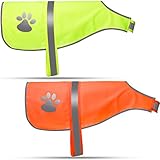
- Size: different breeds of dogs have different sizes; Please check neck and waist circumference before buying; Size M fits dog 36-60lb, size L fits dog 60-100lb, size XL fits dog 100-130lb; Please check the size chart before purchasing; The dog reflective vest is easy to put on and take off with adjustable fasteners on the neck and chest
- 2 Colors: you will get 2 pieces dog safety vests in bright colors, enough quantity to use and replace, bright and vivid colors help to draw attention of passerby
- Durable material: the reflective vests are made of 300D Oxford weave fabric, durable and easy to clean, can be applied for a long time and many times
- Safety and visibility: bright colors combining with reflective strips, the reflective pet vest makes your pet can be noticed easily in and makes your pet more safe, helps to avoid accidents
- Adjustable and comfortable: the pet dog high visibility apparel is lightweight and soft, will not burden your pet; The adjustable straps provide convenience to make the apparel fit the pet well, give your pet comfy wearing experience
Leaving without a recovery plan
A tracker is only useful if it has power and a suitable signal. Pair it with identification, a current photo, a human navigation device and a satellite communicator when the route is remote.
How can you make the setup work for a multi-dog group?
Give each dog its own fitted harness, leash and identification, and keep every handler responsible for one dog’s control. Bright or reflective differences make it easier to identify dogs quickly, while a shared plan prevents one dog from pulling another toward wildlife. If one dog becomes vocal or fixated, turn the entire group away rather than trying to pass with several leashes tangled together.
The Tool Desk
Outbyte PC Repair FREEClear out junk files and repair common Windows errorsFree Scan →Outbyte Driver Updater FREEScan for outdated or missing drivers - takes under a minuteDriver Scan →What should you do after a close encounter?
Once you have reached a safe distance, check the dog for cuts, paw injuries, overheating or gear damage. Replace a frayed leash or compromised harness before continuing. Record the location and report a dangerous wildlife encounter through the park or land manager’s preferred channel so other trail users can make informed route choices.
Frequently Asked Questions
Can I let my dog off leash if the trail appears empty?
An empty-looking trail is not proof that wildlife is absent, especially near blind corners or dense vegetation. Keeping the dog leashed preserves control if a moose, bear or another trail user appears suddenly, and local park rules may require a leash regardless of conditions.
What if my phone has no signal on the trail?
Do not treat loss of cellular service as a navigation plan. Carry a map or GPS with the route available offline, and use a satellite communicator for remote trips when you need two-way messaging or an emergency contact method.
How can I tell whether a harness is becoming unsafe?
Inspect the webbing, stitching, adjustment points and leash clip before each outing. Replace the harness if the dog can back out, the straps rub despite correct adjustment, or any buckle or stitch is cracked, stretched or frayed.
Quick wins for a faster PC:
Clear out junk files and repair common Windows errorsFree Scan →Fix the driver behind crashes, sound loss and screen glitchesFind Drivers →Is a reflective vest enough for hiking after sunset?
Reflective material needs a light source to work, so it may not be visible to every person in darkness. Pair it with a securely attached small light and choose routes and timing that keep the dog under direct observation.





Leave a Reply