
Quick wins for a faster PC:
Fix the driver behind crashes, sound loss and screen glitchesFind Drivers →Repair Windows errors before they cause bigger problemsFix Now →Scan for outdated or missing drivers - takes under a minuteDriver Scan →Some links on this page are affiliate links: if you buy through them we may earn a commission, at no extra cost to you.
Molt is a bird’s process of replacing feathers. It is not a minor cosmetic change: producing a complete set of flight and body feathers consumes substantial energy, feather loss can increase exposure to cold and predators, and the schedule may compete with breeding or migration. In the American Birding Association podcast excerpt presented by Nate Swick and Danielle “Dani” Kaschube on September 2, 2021, molt is used as an accessible way to understand why birds can look “messy,” move to unexpected places, and reveal age-related clues to careful observers.
What is molt?
Molt is the controlled replacement of feathers. A bird grows a new feather from a follicle, allows it to mature, and eventually sheds the old feather so the new one can take its place. Because feathers are dead keratin once fully grown, they cannot be repaired internally; worn, broken or faded feathers must be replaced.
As an Amazon Associate I earn from qualifying purchases.
PC Slower Than It Used to Be?
A free scan shows the junk files, broken settings and background clutter dragging Windows down - then fixes them in one click.Free scan · Windows 10 & 11Crashes, No Sound, or Screen Glitches?
Random freezes, missing sound and display glitches usually trace back to one bad driver. Find and replace yours safely.Free scan · under a minuteReplacement does not always happen all at once. Birds may renew body feathers, wing feathers and tail feathers on different schedules. The pattern depends on species, age, sex, geography, health and the bird’s annual cycle. A bird in active molt can therefore show a mixture of old, sun-faded feathers and fresh, better-coloured ones rather than a uniformly new coat.
Why molting birds look untidy
Birders often notice gaps, uneven wing edges, short new feathers in sheaths, or contrasting shades across the body. These are normal consequences of replacing feathers at different times. The American Birding Association describes late summer and fall as a period when molt can make birds seem confusing or intimidating in the field. A ragged appearance is not, by itself, evidence of disease or poor condition.
Popular on Amazon

- MOLTING & PLUCKING SUPPORT: Daily nutritional support for parrots and pet birds during seasonal molts and feather changes. Provides amino acids, vitamins and minerals used in normal feather formation and healthy plumage.
- BIOTIN + KEY NUTRIENTS: Includes biotin, B-complex vitamins, vitamins A, C, D3, E and K2, plus essential minerals and amino acids to support normal skin and feather health.
- FOR DULL OR DAMAGED FEATHERS: Nutritional support for birds with dull, brittle or uneven feathers and during normal feather replacement. Designed to support healthy new feather growth as part of a balanced diet.
- EASY TO SERVE ON MOIST FOOD: Sprinkle the recommended amount over chop, soft food or moist vegetables. Start with 25% of a serving for picky birds and gradually increase. Do not add to drinking water.
- MADE IN USA & THIRD-PARTY TESTED: Made in the USA in an FDA-registered facility and third-party tested for quality and consistency. Certificate of Analysis available.
Why do birds molt?
Feathers gradually lose performance. Sunlight, abrasion, preening, weather and everyday flight wear down the structure that provides insulation, waterproofing and aerodynamic lift. Fresh feathers restore those functions. Wing and tail feathers are especially important because their shape and stiffness affect maneuverability and energy use in flight.
The Institute for Bird Populations (IBP) describes molt as one of the resource-intensive parts of a bird’s life cycle. Feather production requires nutrients and energy, and IBP reports that the process can draw on muscle protein. Its program page characterizes the demand as potentially involving “a quarter or more” of a bird’s total body protein mass; that figure is presented by IBP as a general statement, not as a measurement from Kaschube’s podcast episode.
The costs of growing feathers
| Aspect of molt | What changes for the bird | Why it matters |
|---|---|---|
| Energy and nutrients | New feathers require protein and sustained energy intake. | Food shortages or illness can slow growth or reduce feather quality. |
| Flight performance | Missing or unfinished wing and tail feathers can alter lift, manoeuvrability and endurance. | Foraging, escaping predators and long flights may become more demanding. |
| Thermal protection | Temporary gaps in the plumage can reduce insulation. | Birds may be more exposed to heat loss, especially in cool or wet conditions. |
| Predation risk | Uneven plumage and reduced agility can make evasion harder. | Cover, timing and behaviour become especially important. |
| Scheduling | Molt competes for time and resources with reproduction and migration. | Many species separate these activities or adjust their timing. |
These trade-offs explain why a bird cannot simply replace every feather whenever one becomes worn. Molt has to fit around nesting, raising young, migration and seasonal food availability. The exact compromise differs among species and populations.
When do birds replace their feathers?
There is no single “molt season” for all birds. The episode’s public description highlights late summer and fall because many temperate songbirds complete a major annual molt after breeding and before, or while preparing for, autumn movement. That timing lets adults finish the demanding work of raising young before investing heavily in new plumage.
Other patterns are possible. Some birds replace selected feathers more than once a year; others have a single complete molt or spread replacement over a longer period. Young birds may undergo a partial replacement as they transition from juvenile plumage, while adults follow a different sequence. Tropical species, seabirds and birds in regions with unusual rainfall or food cycles can have schedules that do not match the familiar North American late-summer pattern.
Also popular on Amazon

- Rapid Calcium Digestion: This 2 oz liquid calcium supplement offers quick and effective calcium uptake and supports strong bones, healthy muscles, and overall health and vitality
- Fast-Acting Liquid Bioavailability: Readily Absorbed Liquid Matrix Enriched With Vitamin D3 And Magnesium For Instant Metabolic Availability
- Great For All Companion Birds: Perfect For All Adult Birds, Senior Birds, Breeding Birds, Moulting Birds, Growing Fledglings, And Hookbills Needing Fast Skeletal Support Including Parakeets, Cockatiels, Lovebirds, African Greys, Macaws, Finches, and Canaries
- Convenient Water, Food, or Crop Feeding: Mix one teaspoon per cup of clean drinking water OR Mix one teaspoon per cup of food OR Add one drop per 2 ounces (56g) of body weight directly to the crop
- Why Choose Morning Bird: High Quality Standards - Proudly Crafted In The USA Under High-Purity Standards, Providing Safe And Reliable Daily Health Support
Why breeding and migration affect timing
Breeding requires territory defence, courtship, egg production and care of offspring. Migration requires fuel, efficient flight and the ability to respond quickly to weather and predators. IBP notes that the energetic demands of molt may be incompatible with either activity. A bird that is replacing many flight feathers may not be able to sustain a long-distance journey safely, while a parent feeding nestlings may not have enough surplus energy for a complete replacement.
Timing is therefore an evolutionary compromise rather than a rule on a calendar. Weather, latitude, age, sex and local food conditions can shift the start or finish of molt. When identifying a bird, treat the season as a useful context, not proof of a particular molt stage.
What is molt migration?
Molt migration means moving to a different area specifically, or in substantial part, to undergo molt. The movement may take a bird away from its breeding grounds, its wintering grounds or both. It is distinct from ordinary dispersal and from migration undertaken primarily to breed or spend winter.
What the available evidence shows
IBP reports evidence that most North American landbirds at least sometimes move or disperse to areas separate from their breeding or wintering grounds to molt. The wording matters: this is a report about evidence across landbird research, not a claim that every individual of every species makes a dedicated molt journey. Some birds remain near their breeding territory; others make short or long movements that are easy to miss without banding, tracking or repeated surveys.
Why might birds move?
IBP identifies access to food as the most likely explanation for molt migration. A location with abundant insects, fruit or other suitable food could allow a bird to meet the exceptional nutritional demands of feather growth. However, IBP also states that this explanation has not been rigorously tested. Food availability is a plausible hypothesis, not an established universal mechanism. Water, predator pressure, climate, social conditions and the quality of cover may also influence where birds molt, but the cited material does not determine how much each factor contributes.
Also popular on Amazon
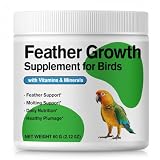
- For Birds During Molting & Feather Changes: Molting and seasonal feather changes can increase daily nutritional demands. This feather support powder helps maintain feather condition, healthy-looking plumage, and everyday wellness as part of a consistent feeding routine
- Amino Acids, Vitamins & Minerals for Feather Nutrition: Formulated with lysine, vitamins A, D3, E, C, and B-complex, plus zinc, copper, and calcium to provide targeted nutritional support during molting and routine feather maintenance
- Supports Plumage Condition & Daily Bird Nutrition: Feather appearance can reflect overall dietary balance. This formula helps support normal feather maintenance, even-looking plumage, and steady daily condition for companion birds
- Protease & FOS in a Broader Nutrition Blend: Includes protease and fructooligosaccharides (FOS) alongside the amino acid, vitamin, and mineral blend, providing broader nutritional support in one daily bird powder
- Easy to Add to Common Bird Foods: Mix with fresh chop, moistened pellets, vegetables, or soft foods according to the feeding directions. Suitable for parrots, cockatiels, budgies, conures, lovebirds, canaries, finches, pigeons, macaws, African greys, and other pet birds
How to interpret an unexpected sighting
Finding a species in a place where it does not breed or winter can be consistent with molt-related movement, but location alone cannot prove the purpose of the movement. Look for independent evidence such as timing, known regional patterns, banding recoveries or tracking studies. Record the date, habitat and plumage details, and avoid assigning a molt-migration explanation when ordinary post-breeding dispersal is equally possible.
How molt helps birders understand age and plumage
Molt terminology gives birders a precise way to describe what they see. Instead of saying that a bird looks “scruffy,” an observer can note whether the bird is retaining juvenile feathers, replacing body feathers, growing a particular wing feather or showing a contrast between older and fresher feather groups. These observations can support age assessments when combined with species-specific criteria.
What field observation can and cannot do
- It can: document feather wear, active growth, missing feathers, limits between feather generations and changes in colour or shape.
- It can: help distinguish a young bird from an adult when the species has reliable age-related plumage differences.
- It cannot: provide a certain age from “messiness” alone.
- It cannot: identify a molt stage reliably without knowing the species’ normal sequence and timing.
- It should not: justify handling a wild bird merely to inspect feathers. Follow local wildlife laws and ethical birding practices.
Reference terminology and ageing codes
IBP identifies the second edition of Peter Pyle’s Identification Guide to North American Birds, Part 1 as a detailed reference for readers and banders. The edition includes revised and consistent molt and plumage terminology, WRP age and plumage codes, 21 new species accounts, comparative measurement tables, additional measurements and 15 new figures. It is a supporting reference, not a requirement for casual birding, and it is a book by Peter Pyle rather than by Dani Kaschube. IBP directs readers to Slate Creek Press for ordering; availability and purchasing terms can change.
A guide is most useful when paired with repeated observation. Learn the normal adult and juvenile plumages of a few local species, note which feathers change, and compare observations across dates. Banders should use the current protocols and codes required by their program rather than relying on memory or a single photograph.
What Dani Kaschube’s episode contributes
The IBP page identifies the program as an excerpt from the American Birding Association podcast, presented by Nate Swick and Danielle Kaschube on September 2, 2021. The ABA description introduces Kaschube as the MAPS coordinator and an experienced bird-banding instructor, and frames molt as a subject that can be confusing in practical birding.
Also popular on Amazon

- (1 CASE OF 12 PACKS) DIETARY SUPPLEMENT: Use Wild Harvest Molting Supplement to provide added vitamins and minerals to your bird’s regular daily diet.
- FOR ALL BIRDS: Specially designed blend of ingredients, including millet, oat groats and canary grass seed.
- VITAMIN AND MINERAL ENRICHED: Supports colorful and healthy plumage.
- MOLTING SUPPLEMENT: Birds often have additional nutritional needs during molting.
- WILD HARVEST BRAND: Offers a full assortment of nutritional and interactive engagement products.
The public pages establish the episode’s subject, guest and educational framing, but they do not provide a full transcript. They therefore support the broad lessons in this article—what molt is, why it is costly, how it can affect movement and why terminology matters—without verifying every example or teaching sequence used in the audio. Treat any species-specific example as belonging to the recording only after listening to it directly.
IBP also lists Kaschube’s related presentation, Basics of Passerine Molt: Theory and Examples, as an introductory resource for songbird molt and banders. That title signals a practical focus on passerines, but it should not be read as evidence that all bird groups follow the same molt pattern.
Why molt belongs in conservation planning
Protecting a species only on its breeding grounds can leave a major part of its annual needs uncovered. IBP argues that conservation must account for the full life cycle, including places where birds molt. A site that appears unimportant during nesting or winter may provide the concentrated food, shelter or low-risk conditions needed for feather replacement.
The Tool Desk
Outbyte PC Repair FREERepair Windows errors before they cause bigger problemsFix Now →Outbyte Driver Updater FREEScan for outdated or missing drivers - takes under a minuteDriver Scan →Questions conservationists need to ask
- Where do individuals go between breeding and wintering seasons?
- Do birds gather in particular habitats while replacing feathers?
- Are those areas protected from habitat loss, pesticides, disturbance and extreme weather?
- Does a shortage of food during molt affect later survival or migration?
- Do young and adult birds use the same molt sites?
Answering these questions requires more than a single-season count. Banding, stable-isotope work, tracking, repeated surveys and habitat studies can reveal movements and conditions that ordinary breeding or wintering surveys miss. Because the food explanation for molt migration remains untested rigorously, conservation decisions should be based on measured habitat use rather than assumption.
Independent reader supportYour contribution helps us test, update, and keep practical guides available for everyone.A practical way to study molt in the field
- Start with species and season. Identify the bird as accurately as possible and note the date and location. Use regional timing only as a starting point.
- Observe without chasing. Watch from a respectful distance. Photograph only when it does not disturb feeding, roosting or nesting.
- Describe feather condition. Record worn edges, missing feathers, visible feather sheaths, fresh versus faded generations, and any asymmetry.
- Separate observation from interpretation. Write “two new-looking tail feathers” rather than immediately assigning an age or molt name.
- Check a specialist reference. Compare the observation with species accounts and accepted molt terminology, including the codes used by your banding program.
- Look for repeated patterns. Observations on several dates or at several sites are more informative than one unusual-looking individual.
- Share uncertainty. When reporting a sighting, distinguish a documented feature from a hypothesis about age, movement or molt purpose.
Common misunderstandings about molt
“A ragged bird must be sick.”
Not necessarily. Active replacement naturally produces uneven plumage. Illness, parasites or injury are possible alternatives, but appearance alone cannot separate them.
Also popular on Amazon

- SUPPORTS JOINT AND EASES INFLAMMATION: Regular feeding helps ease everyday inflammation and joint pain through hemp's natural calming properties, giving your bird the gentle support it needs to move, perch, and rest with greater comfort day after day
- MADE WITH REAL OMEGA-RICH HEMP: Organic hemp hearts provide a balanced ratio of Omega-3 & Omega-6 fatty acids with naturally occurring compounds that support everyday relaxation and overall wellness, including birds prone to feather plucking
- FEATHER AND SKIN CARE SUPPORT: Help maintain feather luster and skin health with nutrient-dense hemp hearts suited for parrots, cockatiels, parakeets, and other birds. Make this a supportive part of routines during molting seasons
- EASY TO ADD TO YOUR BIRD'S ROUTINE: Simply sprinkle these hemp hearts over your bird's regular seed or pellet mix as a daily topper, adding variety and nutrition without disrupting a familiar diet, then reseal the bag to keep every serving fresh
- ORGANICALLY GROWN AND GMO-FREE: Made with USA-grown organic hemp and GMO-free ingredients using sustainable farming practices, these hemp hearts are suitable for parrots, parakeets, conures, and other birds when served as part of their daily diet
“All birds molt in late summer.”
Late summer and fall are prominent periods for many North American landbirds, yet molt schedules vary widely with species, age, geography and life history.
“Every bird leaves to molt.”
IBP reports that most North American landbirds at least sometimes show movement or dispersal associated with molt, but that does not mean every individual makes a dedicated journey.
What’s actually slowing this PC down?
Pick the symptom - the matching free tool is one click away.
“Food is proven to cause molt migration.”
Food access is IBP’s leading proposed explanation, not a rigorously confirmed cause. Keep the distinction between evidence of movement and a hypothesis about why it occurs.
“Molt tells you a bird’s exact age.”
Molt and plumage can provide age clues when interpreted with species-specific criteria. They rarely establish an exact age from a casual view.





Leave a Reply