Crashes, No Sound, or Screen Glitches?
Random freezes, missing sound and display glitches usually trace back to one bad driver. Find and replace yours safely.Free scan · under a minutePC Slower Than It Used to Be?
A free scan shows the junk files, broken settings and background clutter dragging Windows down - then fixes them in one click.Free scan · Windows 10 & 11Training a pet bird means teaching it that a specific behavior leads to something it values, and doing so in a way that builds trust rather than a contest over who is in control. For companion parrots, which have the most documented guidance on this, the core method is positive reinforcement: you mark the behavior you want and follow it promptly with a reward the bird enjoys. Species and individual birds differ, so the timing and pace below are starting points, not fixed schedules.
What bird training is (and isn’t)
Good bird training is communication. You are showing the bird which actions earn good outcomes, and the bird is learning that your hands, your voice and your presence are predictable and safe. VCA Animal Hospitals’ pet-bird guidance by Gregory Rich, DVM, and Rick Axelson, DVM, frames the work this way: “Training takes patience, but the rewards of your new relationship will be fulfilling and long-lasting.”
Training is not about forcing a bird to do something it does not want to do. A bird that is pushed, grabbed or sprayed may comply briefly, but it learns to fear the situation, which makes the next lesson harder.
Why train your pet bird?
Routine training gives a bird structured mental activity and gives you a reliable way to handle it. World Parrot Trust’s April 18, 2024 article on the benefits of a training routine presents daily training as enrichment for companion parrots. Practically, a bird that has learned to step up, to move onto a target, and to stay calm near things that worry it is easier to clean around, to take to the vet, and to live with day to day.
#1 Best Overall

- New communication tool about you and your puppy.
- Pet Dog Training Clickers for Puppy, Cat, Potty, Bird, Horse, Pet, Trainer Training Tools, Behavior Aids
- Just press to mark desired behavior, then reward for faster learning.
- The spring wrist length : 16cm/6.3inches and can strength to 25cm/9.84inches.
- Package include : Black + Blue,each color 1 pcs.
How positive reinforcement works
Positive reinforcement means arranging for a desired behavior to be followed by something the bird values. World Parrot Trust’s May 9, 2024 article “The Power of Positive Reinforcement,” by Michelle Kooistra, describes rewarding desired behaviors such as stepping up or remaining calm near a feared object. The reward does not have to be food. Depending on the bird, it might be attention, a toy, or another preferred consequence.
The reward works only if the bird connects it with the behavior, so timing matters. Deliver it immediately after the behavior, while the bird is still doing it or has just finished.
Finding a reward your bird values
Start by watching what your bird enjoys and what it finds worrying. A reward is only useful if the bird wants it at that moment. A bird that has just eaten may ignore a food treat that it would work hard for before breakfast. If food does not motivate your bird, try attention, a favorite toy, or a chance to forage.
Rank #2

- A parrot training stick is a tool designed to train and guide your bird’s behavior. It helps establish basic command responses and serves as a bridge for building trust between you and your bird.
- This beginner-friendly bird training kit includes 1 training clicker and 1 target stick, making it easy to conduct effective bird training using positive reinforcement.
- The target stick is approximately 13.8 inches long, coated with resin and built with an internal steel core. It is lightweight, easy to hold, durable, wear-resistant, and easy to clean—making it an ideal choice for both indoor and outdoor training sessions.
- Train your bird to step up, turn around, stop biting, or even perform fun tricks. This tool helps instill discipline and improve behavioral habits in your parrot.
- Suitable for all bird species, including parrots, budgies, cockatiels, conures, and other pet birds. Especially recommended for first-time bird owners and training beginners.
Marking the moment: a clicker or a consistent word
A marker signals the instant the bird did the right thing, before the reward arrives. A marker is optional. World Parrot Trust’s owner guidelines, first published in 2005, explain that a click can mark the correct behavior, but a consistent word such as “good” or a whistle can serve the same purpose.
- Pick one marker and use only that one for training.
- Use the same marker for everyone who handles the bird, so the signal means the same thing to the bird each time.
- Follow every marker with the reward, or the marker loses its meaning.
Keep sessions short
Short sessions suit most birds. VCA’s guidance recommends beginning with one or two sessions per day of five to ten minutes each, then gradually building toward two sessions of about 20 minutes. This is general guidance from one veterinary source, not a rule for every bird; a shy or new bird may need even shorter sessions, and a confident bird may progress faster.
| Stage | Sessions per day | Length of each session |
|---|---|---|
| Starting out | One or two | Five to ten minutes |
| Building up (VCA’s end point for this schedule) | Two | About 20 minutes |
End each session while the bird is still engaged and succeeding. Stopping on a good repetition is more useful than stopping after the bird has become bored or stressed.
Rank #3

- Practical Bird Training Stand Kit: the package contains 1 piece of bird stand, 1 piece of clicker for training, 1 piece of target stick, 1 piece of screwdriver and mounting accessories for auxiliary installation, a nice kit to meet your bird's training needs
- Add More Fun: the training perch can help train your birds to rotate and perch on it, place them on your workbench while you are working, keeping your lovely parakeet at your side, to ensure that they are in your line of sight at all times, adding more fun to your daily life
- Useful for Birds Training: these parrot training tools can be applied to teach your parrot or parakeet, etc. to stand up, get out of the cage, grab someone's hand, even put on a harness; And you can also use the clickers and target stick to teach your parrot skills, such as turning around, walking through tubes, going down slides, crossing obstacles, etc., ideal for many kinds of parrots and parakeets, effectively train your bird pets
- Quality and Reliable Material: the target stick and bird perch stand are made of quality wood, which has no strange smell after being ventilated and dried, lightweight and easy to carry, not easy to wear or break; And the bird trainer clicker is not electric, which has an iron plate inside that you can press to make a sound, reliable and safe for your pet birds to use
- Portable Size: the parrot stand is approx. 7.9 inches long, 4.7 inches wide and 6 inches high, proper size for most birds to perch on; The target stick bird training is about 8 inches long, lightweight and small, convenient to transfer and carry in the room, outdoors and other training places; And the clicker training for birds with a wrist strap can be hung from the backpack or worn over your hand, handy for daily parrot training
How do I train my bird to target?
Targeting teaches the bird to orient toward and touch a chosen object. Once it does that reliably, you can use the object to guide movement, which is the basis for step-up and for moving the bird where you want it to go. World Parrot Trust describes this in its step-up guidance by bird trainer Barbara Heidenreich, owner of Good Bird Inc. (PsittaScene, May 2007).
- Present the target at a comfortable distance from the bird. A target stick, a spoon or any suitable object already at hand can work.
- Mark and reward any orientation toward the target, such as a glance or a head turn.
- When the bird reliably looks at the target, reward it for approaching the target.
- Next, reward touching the target with a beak or foot.
- Only then begin to move the target gradually closer to your hand, rewarding each approximation.
Reward small steps. If the bird hesitates, step back to the last step it managed comfortably. Respect hesitation rather than waiting it out.
How do I teach my bird to step up?
Step-up is the behavior of moving from a perch onto a hand or a stick. Heidenreich’s guidance recommends allowing the bird to choose to move toward the hand, using a target if that helps, rather than moving your hand into the bird. As the 2007 article puts it: “A key component of training with positive reinforcement is giving the bird choice.”
Rank #4
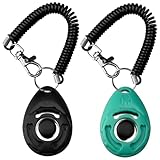
- Instant Attention & Clear Sound: This dog clicker for training produces a sharp, consistent sound that’s perfect for clicker training dogs, puppies, cats, and even birds or horses. Works great as a dog clicker to stop barking and reinforce positive behaviors quickly.
- Lightweight, Durable & Easy to Carry: Made from sturdy, lightweight materials, this pet training clicker is built to last. Comes with a convenient wrist strap so your dog training tools are always within reach during walks, obedience classes, or home sessions.
- Simple One-Button Operation: Whether you’re a new dog trainer or a pro, the large button makes this puppy training clicker and cat training clicker easy to use—just press to mark desired behavior, then reward for faster learning.
- Versatile for Multiple Pets & Purposes: More than just a dog training clicker—this tool is perfect as a cat clicker trainer, training clicker for puppies, or even a clicker cat trainer. Works for potty training, obedience, tricks, and behavior correction.
- Positive Reinforcement Training Made Easy: Trusted by professionals, this dog training & behavior aids device supports humane, reward-based training. Ideal as puppy training tools, dog training aids, or dog training clickers to create a strong bond with your pet.
The aim is voluntary participation. A bird that steps up because it chose to will generally be more willing than one that was lifted. Work in approximations, marking and rewarding each partial movement toward your hand, and stop before the bird shows signs of fear or aggression. A bird that has been successful is more likely to try again next session.
What equipment do I need?
You need very little to begin. The tool is secondary to timing, consistency, gradual steps and the bird’s willingness to take part.
- A marker: a clicker is optional. A consistent word or whistle works as well.
- Rewards: VCA lists small, healthy training treats including almond slivers, carrot pieces, Nutri-Berries and sunflower seeds. Not every food suits every bird, so check diet choices with your avian veterinarian, particularly for seeds and nuts, which are calorie-dense.
- A target: a bird-training target stick is convenient and World Parrot Trust describes it as a practical way to fit training into a routine. It is not required; a suitable object already in the room can serve the same purpose.
Safety: biting, handling and avoiding punishment
Birds can bite. VCA warns that even a small bird can break skin. Gloves may seem protective, but VCA notes they can frighten a bird or change how it responds to hands, so the decision to use them should consider your bird’s comfort. Move at the bird’s pace, and use distance, a perch or a target when those help.
Quick wins for a faster PC:
Clear out junk files and repair common Windows errorsFree Scan →Scan for outdated or missing drivers - takes under a minuteDriver Scan →Best Value
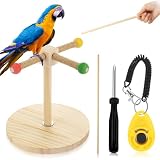
- Practical Bird Training Stand Kit: the package includes 1 piece of rotating colorful interactive bird perch, 1 clicker for training, 1 target stick, 1 screwdriver, and mounting accessories for easy installation—a complete kit to fulfill all your bird training needs
- Rotating Interactive Bird Perch: this innovative rotating perch features a stable base, allowing your playful bird to climb and spin it for endless fun; It creates a comfortable and engaging environment for your feathered friend while you work or cook; Simply place it on your table to keep your bird companion close, enabling bonding, playtime, or training sessions—adding more joy to you and your pet's daily life
- Useful for Birds Training: these parrot training tools can be applied to teach your parrot or parakeet, etc. to stand up, get out of the cage, grab someone's hand, even put on a harness; And you can also use the clickers and target stick to teach your parrot skills, such as turning around, walking through tubes, going down slides, crossing obstacles, etc., ideal for many kinds of parrots and parakeets, effectively train your bird pets
- Quality and Reliable Material: the target stick and bird perch stand are made of quality wood, which has no strange smell after being ventilated and dried, lightweight and easy to carry, not easy to wear or break; And the bird trainer clicker is not electric, which has an iron plate inside that you can press to make a sound, reliable and safe for your pet birds to use
- Portable Size: the bird perch measures approximately 8.66 inches in base diameter, 6.7 inches in height, suitable for most birds; The lightweight 8-inch target stick is easy to carry for indoor, outdoor, and on-the-go training; The clicker comes with a wrist strap, allowing you to attach it to your backpack or wear it for convenient daily parrot training
Do not respond to fear, biting or vocal behavior with punishment. World Parrot Trust’s May 9, 2024 article states it plainly: “Never shout at, hit, or aggressively spray your parrot with water.” Punishment teaches the bird to distrust you and tends to make the problem harder to solve.
Screaming and other vocal behavior
Not every noise is a training failure. VCA’s biting and screaming guidance says screaming can be normal communication. Instead of trying to eliminate all noise, reward calm behavior with attention, praise, a favorite treat or an activity such as foraging. Also allow your bird to entertain itself. VCA cautions that excessive attention can contribute to overdependence.
When to get professional help
- Medical problems or sudden behavior changes: see an avian veterinarian before attributing the change to training or temperament.
- Persistent behavior problems: ask your avian veterinarian for guidance and ask about a referral to a qualified avian behaviorist. VCA’s biting and screaming guidance recommends this route.
Training books and manuals are a useful secondary resource. World Parrot Trust’s owner guidelines list titles on positive-reinforcement training, but those listings date from 2005, so confirm that a given book is still in print before buying.
Quick Recap
Product prices and availability are accurate as of the date/time indicated and are subject to change. Any price and availability information displayed on Amazon at the time of purchase will apply.
Do these 3 things before closing this tab:
1Clear out junk files and repair common Windows errors2Scan for outdated or missing drivers - takes under a minute3Repair Windows errors before they cause bigger problems



