
Some links on this page are affiliate links: if you buy through them we may earn a commission, at no extra cost to you.
There is no single winner in every situation. In Yellowstone, bison are the strongest documented direct-injury hazard: the National Park Service says they have injured more visitors than any other animal there. For vehicle collisions, elk were the most frequently recorded of the three in the Wyoming and Grand Teton figures available, while moose appeared less often but are still large, high-consequence obstacles. Treat bison, elk and moose as dangerous whenever you encounter them, with the greatest driving risk from dusk through dawn, during twilight, and wherever animals are moving across roads.
Which is more dangerous: a bison, elk or moose?
The answer depends on whether you mean a person approaching an animal on foot or a vehicle striking one. Bison have the clearest record of direct visitor injuries in Yellowstone. Elk were involved in more reported collisions than moose or bison in the Wyoming and Grand Teton records cited here. No official source provides a standardized, species-by-species ranking of injury severity after a crash, so a lower moose count does not make moose objectively safe.
As an Amazon Associate I earn from qualifying purchases.
| Risk question | What the available official data show | Practical implication |
|---|---|---|
| Which animal has injured the most Yellowstone visitors? | Bison, according to current Yellowstone National Park Service guidance. | Give bison at least 25 yards (23 meters) and never assume a calm-looking animal is harmless. |
| Which is most often recorded in the cited road-crash data? | Elk: 165 Wyoming crashes in 2023, compared with 42 involving moose and one involving bison; Grand Teton averaged 23 elk, 4.8 moose and four bison collisions annually from 2019–2023. | Expect elk most often in those locations, but scan for all three. |
| Which has the highest crash injury severity? | Not established by the cited sources on a standardized basis. | Do not use frequency as a safety ranking; every large ungulate can destroy a vehicle and injure occupants. |
| When is collision risk elevated? | Wyoming and Grand Teton reports associate collisions with darkness, night and twilight. | Reduce speed and scan both shoulders from dusk through dawn. |
How dangerous are bison to people on foot?
Bison are the most clearly documented direct-contact threat in Yellowstone. The National Park Service warns that “Bison may appear tranquil, but these large animals have injured more people in Yellowstone than any other animal.” A bison can run about three times faster than a human, so being able to see one is not the same as having time to escape.
Keep the required distance
Stay at least 25 yards (23 meters) from every bison, including animals that are lying down, grazing or facing away. Distance is a minimum, not a target for photography. A bison can close the gap quickly, and a person who walks closer removes the reaction time that makes an encounter survivable.
Popular on Amazon

- EPA REGISTERED TO PROTECT AGAINST 9 SPECIES: Approved by the EPA to deter Bears, Mountain Lions, Coyotes, Feral Dogs, Moose, Bison, Wild Boars, Possums & Raccoons. Maximum-strength formula with 2.0% Major Capsaicinoids and HPLC lab-tested performance
- PROTECTION FROM A SAFE DISTANCE: Powerful spray deploys a dense 6ft-wide fog with an effective range up to 40 feet (12 m), with 6-7 seconds of total spray time, giving you more time and space to react to a bear attack or deter a charging mountain lion
- FAST, RELIABLE ACCESS IN BEAR COUNTRY: Quiet quick‑draw elastic belt holster for a secure & accessible carry while hiking or camping, the glow‑in‑the‑dark safety clip helps locate the spray at night, the bell helps to warn bears that you’re in the area
- EVERY BATCH VERIFIED FOR PERFORMANCE: Manufactured in the USA and HPLC lab tested to verify strength and consistency in every batch. Features a glow-in-the-dark safety wedge for fast identification in low-light conditions
- FIELD-TESTED & ENVIRONMENTALLY RESPONSIBLE: Federal EPA and Health Canada approved. Features eco-friendly 1234ze propellant and proven bear deterrent performance, delivering trusted protection without long-term environmental impact
Recognize an escalation
- Bluff charging or a sudden short rush.
- Head bobbing while staring at you.
- Pawing the ground.
- Bellowing.
- A raised tail.
These signs mean you are too close or the animal is becoming agitated. Do not wait to see whether the display stops. Move away immediately while keeping obstacles such as trees or a vehicle between you and the bison when possible.
What if a bison follows you?
Move or run away and seek cover behind trees or cars, following Yellowstone’s guidance. The National Park Service identifies bear spray as a last-resort tool while moving away from a bison that follows a person; it does not replace distance, shelter or a prompt retreat. Never approach a bison to touch it, feed it or pose beside it.
The Tool Desk
Outbyte Driver Updater FREEScan for outdated or missing drivers - takes under a minuteDriver Scan →Outbyte PC Repair FREEClear out junk files and repair common Windows errorsFree Scan →Are elk more likely than moose or bison to hit a car?
In the records cited here, yes. Wyoming recorded 165 elk, 42 moose and one bison wildlife crash in 2023. Within Grand Teton National Park, the National Park Service reported annual averages from 2019 through 2023 of 23 elk collisions, 4.8 moose collisions and four bison collisions. Those are observed counts, not a probability for every road or driver; traffic volume, animal distribution and reporting practices affect them.
Why elk behavior changes by season
Elk are not predictable simply because they are common. Cow elk are especially protective of calves from May through early July. A female that appears to be standing at the roadside may turn aggressively toward a person or vehicle if a calf is nearby.
Also popular on Amazon

- EPA REGISTERED TO PROTECT AGAINST 9 SPECIES: Approved by the EPA to deter Bears, Mountain Lions, Coyotes, Feral Dogs, Moose, Bison, Wild Boars, Possums & Raccoons. Maximum-strength formula with 2.0% Major Capsaicinoids and HPLC lab-tested performance
- PROTECTION FROM A SAFE DISTANCE: Powerful spray deploys a dense 6ft-wide fog with an effective range up to 40 feet (12 m), with 6-7 seconds of total spray time, giving you more time and space to react to a bear attack or deter a charging mountain lion
- FAST, RELIABLE ACCESS IN BEAR COUNTRY: Quiet quick‑draw elastic belt holster for a secure & accessible carry while hiking or camping, the glow‑in‑the‑dark safety clip helps locate the spray at night, the bell helps to warn bears that you’re in the area
- EVERY BATCH VERIFIED FOR PERFORMANCE: Manufactured in the USA and HPLC lab tested to verify strength and consistency in every batch. Features a glow-in-the-dark safety wedge for fast identification in low-light conditions
- FIELD-TESTED & ENVIRONMENTALLY RESPONSIBLE: Federal EPA and Health Canada approved. Features eco-friendly 1234ze propellant and proven bear deterrent performance, delivering trusted protection without long-term environmental impact
Bull elk become stressed and unpredictable during the September–October rut. Large antlers make the hazard obvious, but a rutting bull may charge a car or person that approaches too closely. Give both sexes the same 25-yard minimum used for bison when outside a vehicle.
Are moose safer than elk in a roadside collision?
Moose were less frequent than elk in the Wyoming and Grand Teton datasets, but the sources do not establish that moose are safer per crash. A moose is a very large animal with a high body mass and long legs; an impact can be severe even when the animal was encountered only briefly or at low speed. Use the lower observed frequency as a warning about likelihood in those datasets, not as permission to drive faster or approach closer.
Recommended Free Tools
Why crash totals cannot rank injury risk
A count does not include the number of miles driven where each species lives, the number of animals present, vehicle speeds, road design or whether minor incidents were reported. Without those denominators and consistent injury measurements, it is not defensible to claim that one of the three is universally “safest” or “most lethal” in a crash.
Why are darkness and twilight the highest-risk driving periods?
Wyoming found most wildlife collisions in darkness or low-light conditions, and Grand Teton reported that bison, elk and moose collisions were concentrated at night or twilight. Animals can be difficult to distinguish against vegetation or pavement, while headlights may reveal them only when stopping distance is already limited.
Also popular on Amazon

- Outdoor adventure self-defense: Having a sense of security in the wild, such as camping, hiking or fishing
- Regarding portability: Small in size, lightweight and easy to carry, it can be placed in the outer pocket of a backpack
- Regarding usage: Pull out the upper buckle and it will spray forward. After use, plug it back into the buckle and it can be carried
- Pepper Spray: Simple and compact, a safety spray that focuses on functionality. The designed system is easy to use, even for women
The broader scale is substantial. Wyoming reported 2,467 wildlife crashes in 2024, 19.6% of all reported traffic crashes that year. The Federal Highway Administration’s current program overview estimates more than 1,000,000 wildlife-vehicle collisions annually in the United States, costing over $8 billion and causing tens of thousands of serious injuries and hundreds of fatalities. Other state reports illustrate the regional variation: wildlife crashes account for 13% of reported crashes in Montana; Idaho averages about 1,010 wildlife crashes a year, with one to four human deaths in most years; and Colorado reports an average of 3,300 wildlife hits annually over the past decade.
Times and places to slow down first
- From dusk through dawn, including twilight before sunrise and after sunset.
- Where warning signs, fencing breaks, stream crossings or open meadows indicate animal movement.
- During migration periods or seasonal activity, when animals cross roads repeatedly.
- At the edge of a visible herd: more animals may follow the first one across.
Scan both shoulders, not only the lane ahead. If one animal crosses, keep watching for others and be prepared to stop.
Quick wins for a faster PC:
Fix the driver behind crashes, sound loss and screen glitchesFind Drivers →Repair Windows errors before they cause bigger problemsFix Now →Scan for outdated or missing drivers - takes under a minuteDriver Scan →What should you do when bison, elk or moose are near the road?
Slow, predictable driving and patience reduce the chance of turning a wildlife sighting into a crash or a dangerous crowding incident.
- Reduce speed before you reach the animals. Ease off the accelerator and cover the brake. Keep enough following distance to stop if the vehicle ahead brakes suddenly.
- Scan both shoulders and the space beyond the first animal. Herds and calves may be hidden in brush, and another animal may enter from the opposite side.
- Hold your lane and avoid aggressive maneuvers. Do not race through a gap, pass a stopped vehicle near animals or use the horn to force an animal to move.
- Use a pullout for a wildlife jam. Yellowstone advises remaining in the vehicle, driving slowly and waiting. Stopping in a travel lane creates a second collision hazard and encourages people to walk toward the herd.
- Leave extra room at night. Bison are large and dark-colored, making them especially difficult to see after sunset.
Should you swerve to avoid a moose, elk or bison?
If a collision is unavoidable, do not make a sudden steering move that sends your vehicle into oncoming traffic, a ditch or another obstacle. Montana Department of Transportation guidance recommends holding the roadway, braking in a controlled manner and pulling off safely after impact.
Also popular on Amazon

- LONG RANGE PROTECTION: This Mace bear deterrent spray provides protection from a safe distance with a powerful fogger pattern, giving you more time to react to a charging bear with up to 9 seconds of total spray time.
- MAX STRENGTH FORMULA: Made with 20% OC bear safe formula for maximum heat and potency, helping deter attacks and giving you time to retreat to safety.
- ALWAYS BE PREPARED: Essential for hiking, camping, and hunting. Its potent formula and long range spray coverage offers reliable protection so you can always be prepared for bear encounters.
- EASY TO USE: Designed with a finger loop handle for easy carrying and quick deployment in critical moments. To use, pull off the orange safety wedge and press down on the actuator.
- INCLUDES HOLSTER: Durable, heavy-duty nylon spray holster keeps your bear deterrent canister secure and within reach. Hook-and-loop closure allows for quick and easy access.
After a collision
- Bring the vehicle to a safe stop off the travel lane if possible and turn on hazard lights.
- Check occupants for injuries and call emergency services when anyone is hurt or the vehicle is blocking traffic.
- Do not approach, touch or try to move a wounded animal. Contact the relevant highway or wildlife authority instead.
- Remain alert for additional animals and traffic while waiting for assistance.
Even a collision that appears minor can damage steering, cooling or airbags. Have the vehicle inspected before continuing a long trip.
How should you behave during a roadside wildlife viewing stop?
Stay inside the vehicle during a bison or elk traffic jam unless officials direct otherwise. Use designated pullouts, keep doors closed and leave the animals a clear route. Approaching for a closer photograph, surrounding an animal or blocking the lane increases stress on the animal and removes your escape options.
What’s actually slowing this PC down?
Pick the symptom - the matching free tool is one click away.
If you are already outside
Back away to restore at least 25 yards from bison or elk. Do not run toward a herd, calf or apparently resting animal. If a bison follows, move toward cover behind a tree or vehicle and use bear spray only as the last-resort close-encounter measure described by Yellowstone.
Independent reader supportYour contribution helps us test, update, and keep practical guides available for everyone.What does the evidence support—and what does it not?
The defensible conclusion is conditional. Bison lead for documented direct visitor injuries in Yellowstone; elk lead the cited collision counts in Wyoming and Grand Teton; and all three are serious hazards in low light. The available official reports do not provide one national, species-normalized table that measures injury severity for bison, elk and moose, so any universal ranking would overstate what the data can show.
Also popular on Amazon
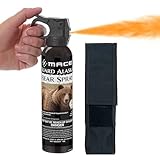
- LONG RANGE PROTECTION: This Mace bear deterrent spray provides protection from a safe distance with a powerful fogger pattern, giving you more time to react to a charging bear with up to 9 seconds of total spray time.
- MAX STRENGTH FORMULA: Made with 20% OC bear safe formula for maximum heat and potency, helping deter attacks and giving you time to retreat to safety.
- ALWAYS BE PREPARED: Essential for hiking, camping, and hunting. Its potent formula and long range spray coverage offers reliable protection so you can always be prepared for bear encounters.
- EASY TO USE: Designed with a finger loop handle for easy carrying and quick deployment in critical moments. To use, pull off the orange safety wedge and press down on the actuator.
- INCLUDES HOLSTER: Durable, heavy-duty nylon spray holster keeps your bear deterrent canister secure and within reach. Hook-and-loop closure allows for quick and easy access.
Frequently Asked Questions
Do wildlife-crash numbers tell me the risk on my exact road?
Not by themselves. The published totals combine different traffic volumes, habitats, reporting rules and speed environments, so they describe the places and periods covered rather than your exact route. Use them to identify the need for low-light caution, then follow local warning signs and current park or highway notices.
Why can one animal cross safely while another suddenly runs into traffic?
Large ungulates react to vehicles, people and one another in different ways, and a herd can hide animals behind the first one you see. A calf, a protective cow or a rutting bull may change direction abruptly, which is why drivers should keep watching after an animal appears to have crossed.
Is stopping in the lane to watch wildlife ever a good idea?
No. A stopped vehicle can be struck from behind and can trap animals or other drivers between lanes. Use a marked pullout, stay inside, and wait until the roadway is clear.
What should I do if an animal is injured but traffic is still moving?
Do not go into the roadway or attempt to move it. Pull off safely, warn other occupants to remain in the vehicle, and notify emergency services or the responsible highway or wildlife authority so trained personnel can respond.





Leave a Reply