
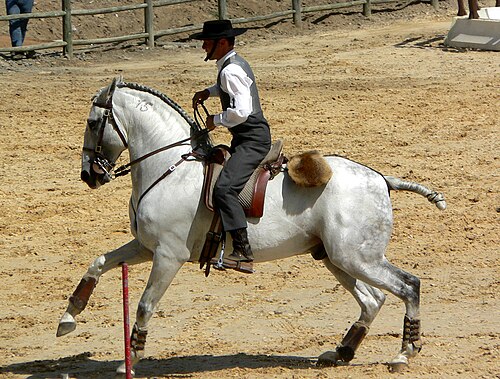
 Photo: Lbpetersen · CC BY-SA 3.0
horse breed · 671 on Animalso
Lusitano Horse: Origin, Type and History
- Animal
- Horse
- Type
- Baroque horse
- Origin
- Portugal
From Portugal, the Lusitano—also called the Pure Blood Lusitano or PSL—is a horse breed. Its name comes from Lusitania, the Roman name for the region that modern Portugal occupies. Horses from this region became known for war, dressage and bull fighting. Four main lineages remain, with slight differences among them.
What the Lusitano is
Known as the Pure Blood Lusitano or PSL, the Lusitano is a horse breed from Portugal. It is classed as a baroque horse.
Its history links it to horses on the Iberian Peninsula, where war horses were renowned by about 800 BC.
Getting to know the breed
The name Lusitano refers to Lusitania, the ancient Roman name for the area now occupied by Portugal. Arabian horses brought during the Muslim invasion of Iberia were crossed with native horses.
Today the breed has four main Lusitano lineages. Their characteristics differ slightly from one lineage to another.
Historical roles
Lusitano horses developed as useful war horses and were also used for dressage and bull fighting.
The historical record includes Iberian horses, Roman-era accounts and Arabian crosses.
What varies
The four main lineages are not identical. Characteristics can change slightly between them, so the lineage matters when comparing individual Lusitanos.
The breed’s historical record covers several roles, rather than one single original purpose.
Price
No purchase price or ownership cost is provided here. For wider context, browse horse breeds or horse breeds from Portugal.
When this page is not enough
Do not use this page alone if you need a recorded height, weight or lifespan for a buying decision; those figures are not included here.
Compare other entries in horse breeds when you need details beyond the Lusitano’s origin, type and historical roles.
Verdict
The Lusitano is a Portuguese baroque breed with deep Iberian roots and a name tied to ancient Lusitania. Its recorded history includes war, dressage and bull fighting, and its four main lineages bring modest differences in characteristics.
It suits readers seeking a breed defined by Portuguese origin and long historical use. Anyone making a practical ownership choice will need more information than this profile provides.
What stands out
- Portuguese origin is clearly established.
- Classified as a baroque horse.
- Historical roles include war, dressage and bull fighting.
- Four main lineages are recognized.
Worth knowing
- Lineages differ slightly in characteristics.
- No height, weight or lifespan figures are provided.
- No purchase price information is given.
Suits
- Readers tracing a horse breed to Portugal
- People interested in Iberian horse history
- Those comparing baroque horse breeds
Think twice if
- You need recorded size or lifespan figures before choosing a horse.
- You need purchase costs or detailed ownership information.
In short
The Lusitano stands out as a horse from Portugal with a long Iberian story. Its development combined native horses with Arabian blood introduced during the Muslim invasion, while Roman-era accounts helped establish the region’s reputation for war horses. The breed later served in dressage and bull fighting. Four principal lineages are recognized today, and they are not completely alike. This profile identifies the breed and its background, but it does not supply measurements, lifespan or purchase costs, so those decisions require additional breed-specific information.
Questions
Where does the Lusitano come from?
The Lusitano is a horse breed from Portugal. Its name comes from Lusitania, the ancient Roman name for the region that modern Portugal occupies.
What other name is used for the Lusitano?
It is also called the Pure Blood Lusitano or PSL.
What type of horse is a Lusitano?
The Lusitano is classified as a baroque horse.
What was the Lusitano bred or used for?
Its historical uses include war, dressage and bull fighting.
How many Lusitano lineages are there?
The breed has four main lineages today, with slight differences in characteristics.
How old is the Lusitano’s history?
Horses were present on the Iberian Peninsula as far back as 20,000 BC, and the region was known for war horses by about 800 BC.
Does this profile list the Lusitano’s height or lifespan?
No. Height, weight and lifespan figures are not included in the available facts.
More horse breeds from Portugal
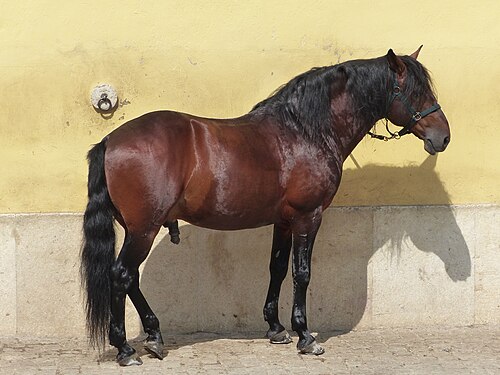
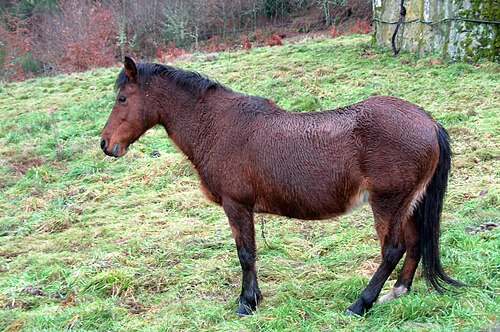


Other Baroque horse breeds
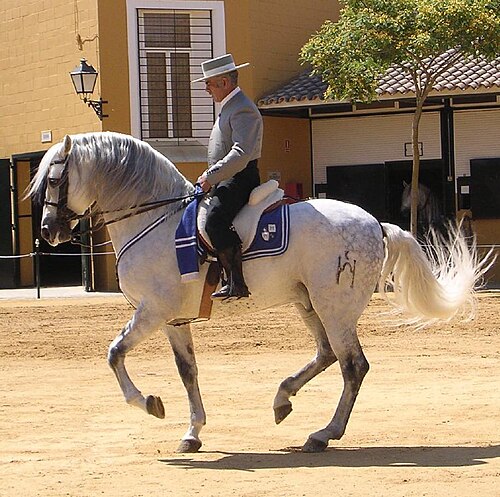 Andalusian horse Spain Photo: Fresco Tours · CC BY 2.0

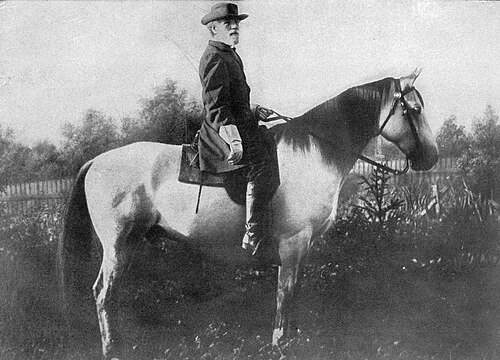 Georgian Grande Horse United States Photo: Michael Miley · Public domain
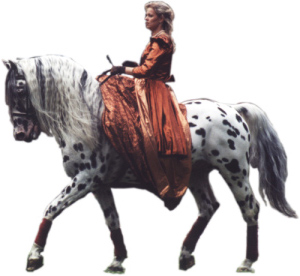 Knabstrupper Denmark Photo: Hackmann · CC BY-SA 3.0
 Lipizzaner Austria Weight 550 kg Photo: Srdjan Živulovič · Attribution
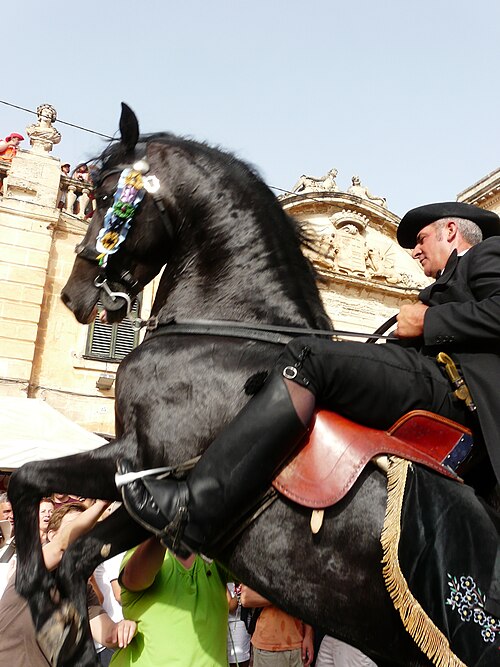
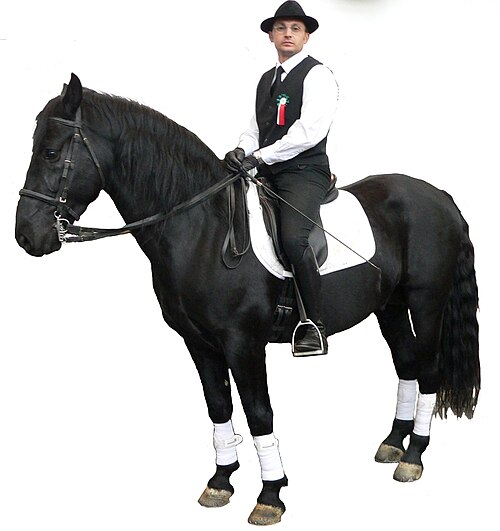 Murgese Italy Photo: BS Thurner Hof · CC BY-SA 3.0
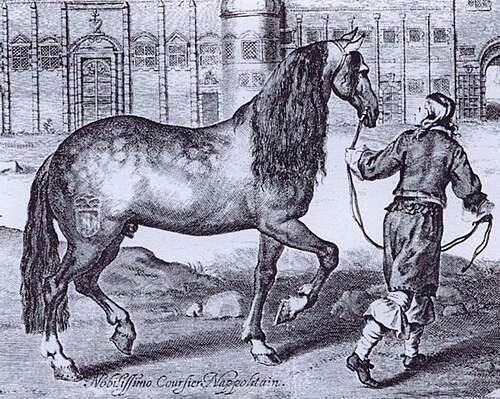 Neapolitan horse Italy Photo: Abraham van Diepenbeeck · Public domain
Photo credits13 photographs on this page
- Lusitano — Lbpetersen · CC BY-SA 3.0 · file page
- Alter Real — Tsaag Valren · CC BY-SA 4.0 · file page
- Garrano — Maria Lemos · CC BY-SA 2.0 · file page
- Pónei da Terceira — Feliciano Guimarães · CC BY 2.0 · file page
- Sorraia — Hardy Oelke · CC BY 3.0 · file page
- Andalusian horse — Fresco Tours · CC BY 2.0 · file page
- Friesian horse — Drwho1972 · CC BY-SA 4.0 · file page
- Georgian Grande Horse — Michael Miley · Public domain · file page
- Knabstrupper — Hackmann · CC BY-SA 3.0 · file page
- Lipizzaner — Srdjan Živulovič · Attribution · file page
- Menorquín horse — Marta Ensesa · CC BY-SA 4.0 · file page
- Murgese — BS Thurner Hof · CC BY-SA 3.0 · file page
- Neapolitan horse — Abraham van Diepenbeeck · Public domain · file page
Photographs come from Wikimedia Commons under the licence each one names. How Animalso credits photographs.