
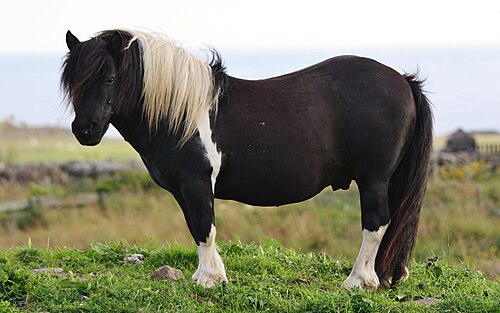
 Photo: Ronnie Robertson · CC BY-SA 2.0
horse breed · 671 on Animalso
Shetland Pony: The Scottish Island Pony
- Animal
- Horse
- Type
- Pony
- Origin
- Scotland
The Shetland pony, also called the Sheltie, is a small pony from Scotland's Shetland Islands. It has lived there since at least the Bronze Age. People used it for farm work, carrying peat and seaweed, and later in coal mines. Today, Shetland ponies are used for driving and children's riding, while a few still do traditional island work.
What it is
The Shetland pony is a small horse breed from the Shetland Islands of Scotland. Its recorded roles include farm work, carrying peat and seaweed, coal-mine work, driving, and children's riding.
Where it began
Shetland ponies have been present on the islands since at least the Bronze Age. Their history is tied to the islands' harsh climate and working life; a few still perform traditional work there today.
Why people choose it
The breed is known for strength and a dense coat, and it can thrive in harsh climates. Modern uses include driving and children's riding.
Points to weigh
This is a pony rather than a full-sized horse. Its present-day roles center on driving and children's riding, while only a few still carry out traditional island work.
Price
No purchase price is provided here.
Who may want another type
Someone seeking a full-sized horse or a breed intended for work beyond the roles listed here should compare other horse breeds.
Our take
The Shetland pony fits readers looking for a small Scottish breed with a long working history and current use in driving or children's riding. Its place as a pony and its specific modern roles should guide the choice.
What stands out
- Small pony with roots in Scotland's Shetland Islands
- Known for strength and a dense coat
- Can thrive in harsh climates
- Used for driving and children's riding
- Long working history on the islands
Worth knowing
- It is a pony, not a full-sized horse
- Modern roles focus on driving and children's riding
- Only a few still perform traditional island work
- Its recorded background centers on specific working roles
Suits
- Families considering a children's riding pony
- Owners interested in driving
- Readers drawn to Scottish working breeds
Think twice if
- You need a full-sized horse
- You want a breed for roles outside those recorded here
- You are looking for detailed size or lifespan figures before choosing
In short
Choose a Shetland pony if you want a small Scottish breed connected to island work, driving, or children's riding. Its history reaches back at least to the Bronze Age, and its strength, dense coat, and ability to live in harsh climates are central parts of its identity. Look elsewhere if your plans call for a full-sized horse or a different working role. The available facts do not give height, weight, or lifespan figures, so those details need checking before you decide.
Questions
Where does the Shetland pony come from?
It comes from the Shetland Islands of Scotland.
What was the Shetland pony bred or used for?
Its recorded work includes farming, carrying peat and seaweed, and later serving as a pit pony in coal mines.
How is the Shetland pony used today?
Today it is used for driving and as a children's riding pony. A few still do traditional work on the islands.
What is the Shetland pony known for?
The breed is described as small and hardy, with strength, a dense coat, and the ability to thrive in harsh climates.
How long has it been on the Shetland Islands?
It has been present there since at least the Bronze Age.
Is the Shetland pony a horse or a pony?
It belongs to the horse family and is classified as a pony.
More horse breeds from Scotland
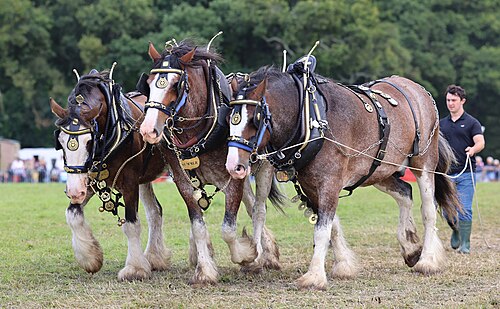 Clydesdale horse Scotland Photo: Geni · CC BY-SA 4.0
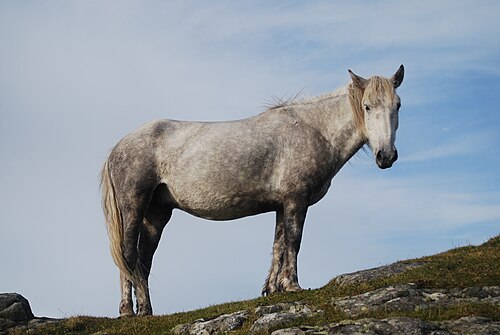 Eriskay Pony Scotland Photo: Mipmapped · CC BY-SA 3.0
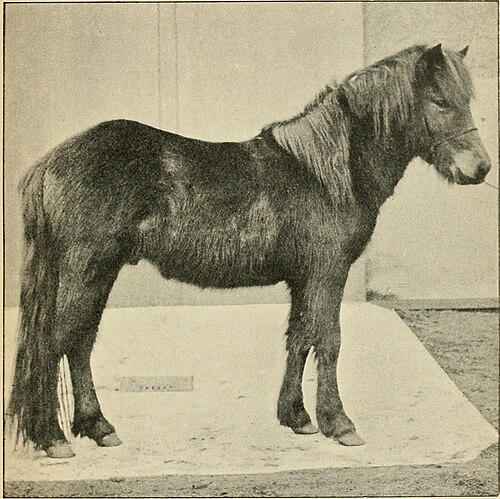 Hebridean pony Scotland Photo: William Ridgeway · Public domain
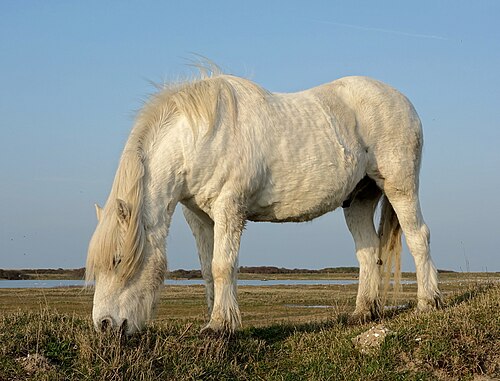
Other pony breeds
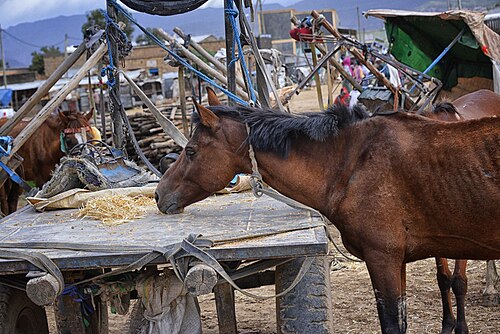
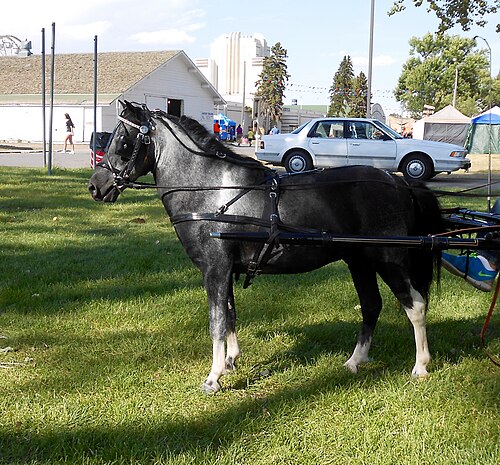
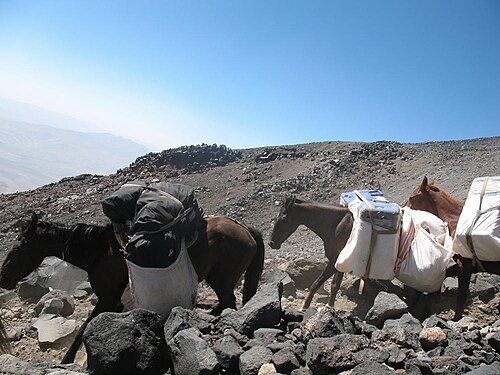 Anadolu Pony Turkey Photo: CrniBombarder!!! · Public domain
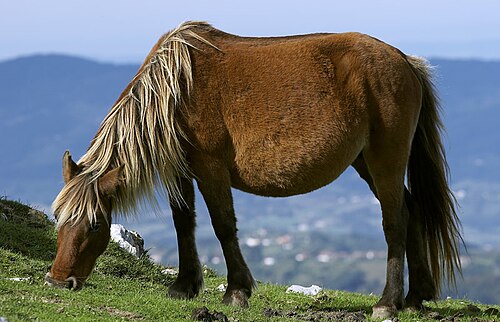 Asturcón Spain Photo: fagf · Public domain
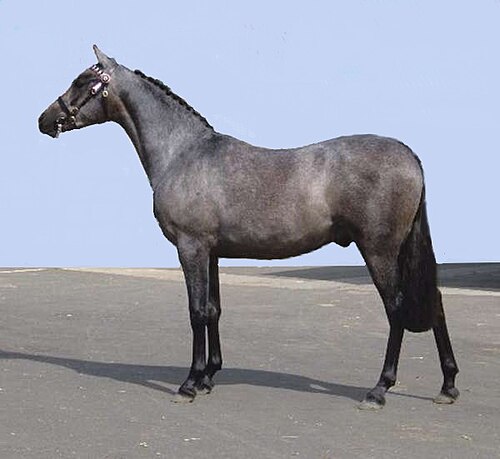
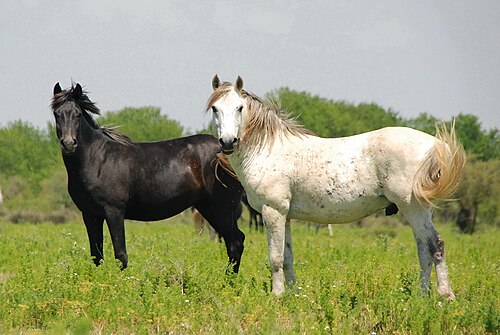
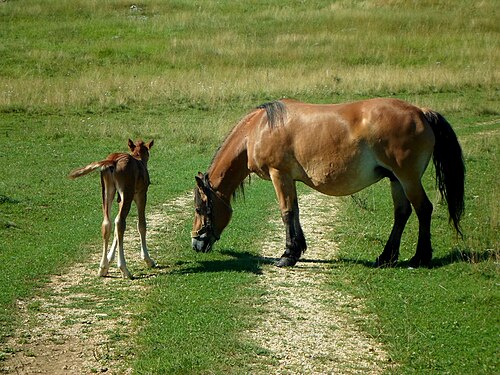 Balkan Pony Balkans Photo: MilanK Kralj · CC BY-SA 4.0
Photo credits12 photographs on this page
- Shetland pony — Ronnie Robertson · CC BY-SA 2.0 · file page
- Clydesdale horse — Geni · CC BY-SA 4.0 · file page
- Eriskay Pony — Mipmapped · CC BY-SA 3.0 · file page
- Hebridean pony — William Ridgeway · Public domain · file page
- Highland pony — Velvet · CC BY-SA 3.0 · file page
- Abyssinian horse — Rod Waddington · CC BY-SA 2.0 · file page
- American Shetland Pony — Montanabw · CC BY-SA 4.0 · file page
- Anadolu Pony — CrniBombarder!!! · Public domain · file page
- Asturcón — fagf · Public domain · file page
- Australian Pony — Cgoodwin · CC BY-SA 3.0 · file page
- Axios horses — Lia Papadranga · CC BY-SA 4.0 · file page
- Balkan Pony — MilanK Kralj · CC BY-SA 4.0 · file page
Photographs come from Wikimedia Commons under the licence each one names. How Animalso credits photographs.