
The Tool Desk
Outbyte PC Repair FREERepair Windows errors before they cause bigger problemsFix Now →Outbyte Driver Updater FREEFix the driver behind crashes, sound loss and screen glitchesFind Drivers →Some links on this page are affiliate links: if you buy through them we may earn a commission, at no extra cost to you.
Do not make an injured dog walk to the vet when a broken bone, spinal or neck injury, major trauma, paralysis, severe pain, collapse, or breathing trouble is possible. Call the veterinary hospital, keep movement to a minimum, and carry the dog or move them on a flat support. A small dog can go in a top-opening carrier or sturdy box; a large dog that cannot walk can be slid onto a blanket, coat, board, or rigid stretcher with help.
A dog with only a mild, stable limp may be gently helped into the vehicle after you speak with the veterinary team, but should not walk farther than necessary. Dogs can still walk with fractures or internal injuries, so walking ability does not prove that an injury is minor.
As an Amazon Associate I earn from qualifying purchases.
Can my injured dog walk to the vet?
Usually, no. The safest transport method is the one that causes the least movement while getting veterinary advice quickly. If the dog cannot stand, is in severe pain, has sudden weakness or paralysis, was hit by a car or suffered a major fall, or may have a fracture or spinal injury, do not test the leg or ask the dog to walk.
VCA Animal Hospitals advises transporting an injured dog to a veterinary hospital as soon as possible. Veterinary Specialty & Emergency Center guidance likewise treats suspected fractures, major trauma, and neurologic problems as reasons to minimize movement. A veterinarian still needs to examine a dog that appears able to walk, because adrenaline and partial weight-bearing can mask serious damage.
Popular on Amazon

- 【For Large Dogs】: 264lbs max load | 45" x 22" "golden size" fits 90% of medium & large breeds (Golden Retrievers, Labradors, Huskies); Adjustable padded shoulder straps make this pet transport stretcher safer and easier
- 【Foldable & Portable Design】: Foldable compact structure saves space and simplifies transport; This portable pet stretcher fits easily in cars, RVs, and narrow storage corners—ideal for outdoor rescue and on-the-go pet care
- 【Durable & sturdy Construction】: High-strength steel pipe with titanium alloy brackets provides heavy duty support and rust resistance; The PVC load-bearing surface is waterproof, moisture-proof, stain-resistant, and easy to clean
- 【Upgraded Smooth Quiet Wheels】: Premium silent wheels (far superior to standard hard plastic) deliver quieter, smoother, and more wear-resistant performance; They glide gently on rough ground without startling injured or anxious pets
- 【Safe and Comfortable】: 3 easy-to-use safety belts secure pets firmly, prevent slipping or secondary injuries, and improve rescue efficiency; The breathable grid design enhances comfort and airflow during transport
| What you see | Safer choice before veterinary advice | Why |
|---|---|---|
| Severe pain, crying, panic, or guarding the body | Carry or use a stretcher | Forced movement can worsen pain or an unstable injury. |
| Cannot stand, suddenly weak, paralyzed, or repeatedly falls | Carry or use a rigid, flat support | These signs can indicate spinal, neurologic, orthopedic, or circulatory emergencies. |
| Car strike, major fall, crush injury, collapse, altered awareness, breathing difficulty, or heavy bleeding | Emergency transport with movement minimized | Internal injuries may exist even when no obvious bone is exposed. |
| Mild, stable limp; alert; breathing normally; able to bear weight on three legs | Only limited assisted walking after calling the veterinary team | VCA Canada describes helping a stable, larger dog into the vehicle, not taking a walk to the clinic. |
There is no published population statistic showing what percentage of injured dogs can safely walk to a clinic. The decision depends on the suspected injury, the dog’s signs, the distance and hazards, the dog’s size, available helpers, and whether a flat support is ready.
What signs mean I should carry my dog immediately?
Carry or use a stretcher whenever walking could add movement to a potentially unstable injury. Treat the following as transport emergencies rather than situations to “watch” by making the dog take a few steps.
Possible fracture or dislocation
A limb held up, an abnormal angle, swelling, severe tenderness, or a wound with bone visible can indicate a fracture. Do not straighten the limb, splint it without veterinary instructions, or push exposed bone back inside. Veterinary Specialty & Emergency Center specifically warns never to straighten a broken limb or replace a protruding bone.
Possible spinal, neck, or back injury
Dragging a limb, inability to rise, sudden wobbling, loss of coordination, or paralysis warrants a flat, firm support and careful alignment of the head, neck, and spine. Merck Veterinary Manual says movement of those areas should be minimized when trauma is known or suspected. Do not bend or twist the neck, jerk the body, or lift by the collar.
Major trauma or altered awareness
After a vehicle strike, high fall, crush injury, or collapse, a dog may have chest, abdominal, or head injuries that are not visible. Breathing difficulty, pale or blue gums, unusual drowsiness, confusion, or unresponsiveness make this an emergency. Move the dog only enough to reach the vehicle and hospital.
Also popular on Amazon

- Load Capacity & Durability: High-strength aluminum alloy frame reinforced with dual steel bars supports up to 260 lbs, delivering high load capacity that outperforms standard stretchers—engineered to withstand real emergencies without bending or warping
- Designed for Safe Transport: Three adjustable quick-release safety straps (one on chest, two on legs) securely immobilize patients. Wide non-slip rubber grip handles on both ends ensure a secure hold and protect hands, even in wet conditions
- Wipes Clean in Seconds: Premium 600D Oxford fabric with waterproof, fireproof, and anti-stain coating ensures hygiene across any environment. Wipes clean in seconds—ideal for hospitals, clinics, and ambulances where rapid sanitization between uses is essential
- Ready in Seconds, Stows Anywhere: Collapses from full size (84" × 22") to a compact 42" × 8" in under 10 seconds—no tools or assembly required. The lightweight, space-saving design fits easily into any vehicle trunk or emergency kit
- Built for Any Setting: Designed for hospitals, clinics, ambulances, fire stations, gyms, hiking trails, and home care. Ideal for EMTs, first responders, caregivers, and outdoor rescue teams. Rubber non-slip feet provide stable ground contact during pet transfer on any surface.
Severe bleeding
Press a clean cloth or gauze gently but continuously over external bleeding while arranging transport. Do not spend time washing a deep wound or searching for a missing object. If blood soaks through, add another layer rather than lifting the first one away.
Recommended Free Tools
How do I move an injured dog safely?
Call the hospital before lifting if circumstances allow. Tell the team what happened, whether the dog is breathing normally, where the pain appears to be, whether there is bleeding, and whether the dog can stand. Staff can prepare for arrival and give instructions suited to the case.
- Make the scene safe. Stop traffic, remove hazards, and check that you can lift without falling. A frightened, painful dog may bite even if normally gentle. Keep children and other animals away.
- Choose the least-movement route. Bring the carrier, blanket, board, or stretcher to the dog instead of making the dog cross a room, climb stairs, or jump into a vehicle.
- Use a top-opening carrier for a small dog. Remove the carrier’s top if possible and lower the dog in gently. A strong box can work temporarily if it is ventilated and secure. Never force a painful dog through a narrow front door.
- Use two people for a large or non-walking dog. Slide a thick blanket, coat, board, or rigid stretcher under the body. One person controls the head and shoulders while the other supports the pelvis and hindquarters. Lift with your knees, keep the body level, and move slowly without jolts.
- Keep the spine aligned. With suspected spinal trauma, place the dog on a flat, firm support and prevent rolling. Merck’s trauma guidance allows the head to remain level with the body or to be elevated about 20 degrees in an altered-mentation case; it also cautions against jerking, neck manipulation, and pressure on the jugular veins.
- Control external bleeding. Apply gentle direct pressure with cloth or gauze. Do not probe a wound, pull out an embedded object, straighten a limb, or push bone beneath the skin.
- Consider a muzzle only when safe. A muzzle may protect the handler from a panicked or painful dog, but never muzzle a dog with breathing difficulty, facial injury, or unconsciousness. Do not delay emergency care while trying to fit one.
- Secure the transport. Place a carrier on the vehicle floor or secure it so it cannot slide. A stretcher should be held or tied down. Keep the car quiet and at a comfortable temperature; a second person can watch breathing and awareness during the drive.
- Withhold food, water, and medication unless the veterinarian directs otherwise. Emergency sedation, anesthesia, or surgery may be needed, and giving something by mouth can create additional risk.
How should I handle common injury scenarios?
“My dog was hit by a car but can still walk.”
Do not let the dog walk around to prove they are fine. Call an emergency veterinary hospital, prevent further movement, and carry or slide the dog onto a firm support. Vehicle impacts can cause internal injury or spinal damage without an obvious fracture.
“My dog is limping after a minor-looking incident.”
First call the veterinary team. If the dog is alert, breathing normally, stable, and can bear weight on three legs, the team may advise gently assisting the dog a short distance into the vehicle. Avoid stairs, slippery floors, running, jumping, and any attempt to make the dog “walk it off.”
“My dog fell and now cannot stand.”
Assume a serious orthopedic or spinal problem until examined. Keep the head, neck, and spine aligned, use a flat support, and have another person help if available. Do not pull the dog upright by the legs, tail, or collar.
Also popular on Amazon

- Designed for Large Dogs: 0.98" steel frame supports large breeds. Works as a dog trolley or pet carrier on wheels for injured or post-surgery dogs.
- Smooth Silent Wheels: 5" diameter silent wheels glide across indoor floors and rough outdoor surfaces without startling your dog. Ideal for vet clinics, home care, or emergency rescue.
- Secure Safety Straps: Three buckle straps keep your dog firmly in place, preventing secondary injuries during transport. Reduces stress for both pet and handler.
- Foldable & Portable: Folds to 21.7"x22.8"x2.8" and weighs only 11 lbs. Easy storage in cars, RVs, or closets.
- Durable & Easy Clean: Breathable mesh and waterproof surface resist stains and allow airflow. Ideal for post-surgery recovery.
“My dog is bleeding but fighting me.”
Protect yourself and apply pressure only if you can do so safely. Call ahead so the hospital can prepare staff to help unload the dog. A muzzle is inappropriate if the dog has breathing trouble, facial trauma, or is unconscious.
What is safer: walking or carrying?
Walking is acceptable only in the narrow situation where the dog is stable, alert, breathing normally, and has a mild limp, and the veterinary team has advised limited assistance. Carrying is safer whenever the cause or severity is uncertain and movement could worsen a fracture, spinal injury, or internal trauma.
| Decision factor | Limited assisted walking | Carry or stretcher |
|---|---|---|
| Weight-bearing | Dog can stand and move on three legs without collapsing | Cannot stand, repeatedly falls, drags limbs, or refuses all weight |
| Pain and behavior | Mild discomfort, calm and responsive | Severe pain, panic, guarding, altered awareness, or collapse |
| Mechanism | No known major trauma | Vehicle strike, high fall, crush injury, or other major trauma |
| Route | Very short, level, nonslip path to the vehicle | Stairs, slippery flooring, long distance, or any route requiring jumping |
| Support available | Handler can steady the dog without forcing a step | Blanket, board, rigid stretcher, carrier, or additional helper is available |
What equipment can I use as a dog stretcher?
A rigid veterinary stretcher is useful, but an emergency substitute can be a thick blanket, coat, wooden board, or other firm, flat support that keeps the body level. The support must be wide enough for the dog and strong enough not to fold or sag under its weight.
- Small dogs: a top-opening carrier or sturdy ventilated box.
- Large dogs: a rigid stretcher or a blanket carried by two people.
- Bleeding wounds: clean cloth or gauze for direct pressure.
- Handler protection: a basket-style muzzle only when breathing is normal and there is no facial injury or unconsciousness.
Do not attempt to lift a heavy dog alone. PDSA’s 2020 rough guide says a person should not try to lift a pet heavier than 15 kg (33 lb) without another person or help. An unsafe lift can injure both the dog and the handler.
What mistakes can make an injury worse?
- Making the dog walk, run, climb stairs, jump, or bear weight “to test” the leg.
- Pulling on a limb, collar, or tail to reposition the dog.
- Straightening a bent leg or pushing exposed bone back into a wound.
- Twisting the neck or allowing the head and spine to flop during lifting.
- Using a muzzle on a dog with respiratory distress, facial trauma, or unconsciousness.
- Giving painkillers, sedatives, food, or water without veterinary direction.
- Driving with an unsecured carrier or stretcher, loud music, or extreme temperatures.
- Waiting for swelling or bruising to appear after a high-impact accident.
Can my dog walk after fracture treatment?
Ability to move after treatment does not mean unrestricted exercise is safe. The American College of Veterinary Surgeons recommends confinement after a fracture; a dog may need help standing and walking during the first days or weeks. Light support can reduce slipping and falls on smooth floors or stairs.
Also popular on Amazon
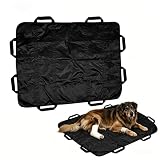
- 300 LBS Large Weight Capacity This dog stretcher for large dogs is made of high-quality durable Oxford fabric, strong enough to support pets up to 300 pounds. It provides safe and reliable support for transporting large, senior, injured, or post-operation dogs without tearing or deformation.
- Flexible Soft Design with 8 Comfort Handles Unlike rigid stretchers, this soft emergency dog carrier adapts to narrow spaces, stairs, and complex outdoor terrain. Equipped with 8 reinforced handles, it allows balanced lifting by multiple people, reducing strain and ensuring pet stability during transport.
- Spacious 48 x 30 Inch Size Measuring 48 x 30 inches, this large pet stretcher offers ample space for most large dog breeds including Labradors, German Shepherds, Golden Retrievers, and other big breeds. It is widely used for animal rescue, emergency carrying, and daily safe transfer.
- Lightweight & Foldable for Easy Storage Our portable dog stretcher weighs only 800g and features a foldable design, making it ultra-light and easy to carry, store, and travel with. It takes minimal space at home or in your car, ideal for both indoor and outdoor use.
- Stylish Pattern & Wide Application Designed with a modern, delicate pattern, this pet rescue stretcher is both practical and attractive. Perfect for pet emergency, animal rescue, vet visits, injury recovery, and daily mobility assistance for senior or disabled dogs.
Keep activity restricted until the veterinary surgeon confirms healing. Follow the discharge plan for toileting, confinement, rehabilitation, and recheck appointments rather than increasing walks because the dog appears more comfortable.
When should I call an emergency veterinary hospital?
Call immediately for suspected fracture or spinal injury, paralysis or sudden weakness, inability to stand, severe pain, major trauma, collapse, altered mentation, breathing difficulty, or heavy bleeding. Call before moving whenever possible, then follow the hospital’s instructions. Even a dog with a mild limp should be assessed if the limp persists, worsens, or follows a significant incident.
Frequently Asked Questions
Can one person lift an injured dog heavier than 15 kg (33 lb)?
PDSA’s 2020 rough guide says not to attempt that lift alone. Ask another person to help or call the veterinary hospital for assistance; a failed lift can cause a second injury or a fall.
Crashes, No Sound, or Screen Glitches?
Random freezes, missing sound and display glitches usually trace back to one bad driver. Find and replace yours safely.Free scan · under a minutePC Slower Than It Used to Be?
A free scan shows the junk files, broken settings and background clutter dragging Windows down - then fixes them in one click.Free scan · Windows 10 & 11Is a soft-sided carrier suitable for a suspected spinal injury?
A soft carrier may bend and allow the spine to flex. For suspected spinal trauma, use the flat, firm support described by Merck Veterinary Manual, then secure the dog for transport.
What if my dog keeps trying to stand while I wait for help?
Block access to stairs, furniture, and slippery flooring, and keep the surroundings quiet. Do not repeatedly let the dog stand to check progress; move the support to the dog and follow the hospital’s instructions.
How can I prepare a carrier before an injury happens?
Choose a carrier whose top can be removed or opened widely, and practice placing calm treats inside so the dog accepts it without force. Keep a folded blanket and basic gauze nearby so you can bring the equipment to the dog instead of making the dog walk.





Leave a Reply