Free tools Windows power users keep installed
One-click scans. No signup required.
No reliable evidence establishes that cats can detect carbon monoxide (CO) or warn people about it. CO is odorless and colorless, so a cat’s nose, actions, or apparent lack of distress cannot replace a working CO alarm. A lack of feline-specific evidence is not proof that a tested study established cats are biologically unable to sense it.
Can cats smell carbon monoxide or warn you about a leak?
There is no reliable evidence in the available sources that cats can smell CO or consistently signal that it is present. Carbon monoxide is odorless and colorless; the National Institute of Standards and Technology notes that it cannot be seen, smelled, or tasted (NIST: How Do Carbon Monoxide Detectors Work?).
As an Amazon Associate I earn from qualifying purchases.
That distinction matters: the sources do not establish feline CO detection, but they also do not report a direct test proving cats cannot detect it. Either way, a cat’s behavior is not a dependable warning system. Use a purpose-built CO alarm and respond to an alarm or suspected exposure without waiting for an animal or person to show symptoms.
Can carbon monoxide poison cats?
Yes. Carbon monoxide can harm animals as well as people. The ASPCA lists possible signs in animals that include depression, vomiting, weakness, seizures, labored breathing, and coma; severe outcomes can include death. Possible effects also include cardiac arrhythmias, acute lung injury, acute respiratory distress syndrome, and lasting deafness or blindness (ASPCA: What You Need to Know About Carbon Monoxide Poisoning in Pets, 2017).
#1 Best Overall

- Electrochemical sensor technology detects CO gas
- Easy installation, no wiring needed, detects during a power failure by operating on 2-AA batteries (included); Install on a wall of your home or place on a tabletop
- Green LED indicates power to the carbon monoxide detector, while an 85-decibel alarm & a red LED indicates the presence of carbon monoxide
- Event Memory records the last time carbon monoxide was detected or when the unit was last tested
These signs are not a diagnosis, and the ASPCA notes that comparable annual statistics for pets may not be available. Its guidance says animals close to the ground are not at greater risk solely because of their height. It describes birds as more sensitive than other animals because of their respiratory system; that comparison does not mean cats are protected.
How to protect your household and your cat
Carbon monoxide can come from fuel-burning sources such as furnaces, portable generators, charcoal grills, stoves, fireplaces, and vehicles. The CDC describes CO as an odorless, colorless gas that can cause sudden illness and death (CDC: Carbon Monoxide Poisoning Basics, updated and reviewed January 12, 2026).
Rank #2

- Keep your family safe with this easy to use plug in carbon monoxide alarm; It works with any standard outlet and also has a battery backup for continuous monitoring of Carbon Monoxide levels, even if there's a power failure
- Features an advanced electrochemical carbon monoxide sensor that accurately detects carbon monoxide levels, no matter where the detector is placed in the room
- Simple to use, with a single test/silence button; a loud 85 decibel alarm sounds when Carbon Monoxide levels reach dangerous levels. Low battery signal mute, quiets low battery signal for upto 8 hours
- To ensure complete protection make sure to place one on each level of your home and in each bedroom
- 7 year limited warranty; Equipped with end of life signal chirp, so you know when it’s time to replace the unit for safety
Install and maintain CO alarms
- Install battery-operated or battery-backup CO detectors near every sleeping area, following the manufacturer’s placement instructions and applicable local requirements.
- Check alarm batteries when clocks change in spring and fall.
- Replace detectors according to the manufacturer’s instructions or every five years.
- Have heating systems, water heaters, and other gas-, oil-, or coal-burning appliances serviced annually by a qualified technician.
- A detector with a digital readout can show the highest measured CO concentration, according to the CDC. Choose alarms based on local requirements, power and backup options, alert and display features, maintenance needs, and the manufacturer’s stated replacement life.
The CDC reports that unintentional CO poisoning not linked to fires causes more than 400 deaths, more than 100,000 emergency-department visits, and more than 14,000 hospitalizations annually in the United States. These are U.S. human figures, not statistics for cats or other pets.
What’s actually slowing this PC down?
Pick the symptom - the matching free tool is one click away.
Quick Recap
Best Value
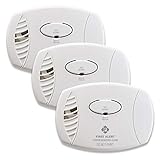
- Keep your family safe from carbon monoxide in multiple rooms with this convenient plug in carbon monoxide alarm 3 pack; The alarms work with any standard outlet and also have a battery backup for continuous monitoring of CO levels, even if there's a power failure
- Features an advanced electrochemical carbon monoxide sensor that accurately detects carbon monoxide levels, no matter where the detector is placed in the room
- Simple to use, with a single test/silence button; A loud 85 decibel alarm sounds when Carbon Monoxide levels reach dangerous levels
- To ensure complete protection make sure to place 1 on each level of your home and in each bedroom
- 7 year limited warranty; Equipped with end of life signal chirp, so you know when it’s time to replace the unit for safety
Rank #4

- DETECTS CARBON MONOXIDE: Model COB monitors CO and sounds a loud 85 dB alarm to signal evacuation to fresh air; LED warning light indicates hazard; Test/Hush button allows quick checks or temporary silencing
- AA BATTERY POWERED: This CO detector is battery-powered, installs without wiring, mount it on the wall or set it on a table, and operates during outages using two included AA batteries
- TRAVEL-READY DESIGN*: Compact carbon monoxide detector is suitable for use at home or for travel; lightweight design allows you to take it on the go to use in hotels or vacation rentals when detection is needed away from home
- TESTED & TRUSTED: This carbon monoxide alarm is rigorously tested to meet UL 2034 5th Edition standards, and is ETL Listed; includes a 10-year limited warranty on alarm
- BUILT FOR EVERY HOUSEHOLD: Designed to help provide dependable carbon monoxide monitoring for everyday residential use; supports renters, homeowners, and pet owners seeking added awareness and protection from CO hazards in the home
Rank #3

- DETECTS CARBON MONOXIDE: With backlit display that shows CO levels & sounds a loud 85 dB alarm when CO is detected to signal evacuation; sleep peacefully with no nighttime chirps; LED warning light indicates hazard; Test/Hush button for quick checks
- PLUG-IN POWER WITH BATTERY BACKUP: CO detector plug-in operates on 120V AC with 2 AA backup batteries (included) for detection during outages; rotating plug fits vertical or horizontal outlets; includes power surge immunity to help maintain performance
- TRAVEL-READY DESIGN*: Compact carbon monoxide detector is suitable for use at home or for travel; lightweight design allows you to take it on the go to use in hotels or vacation rentals when detection is needed away from home
- TESTED & TRUSTED: This carbon monoxide alarm is rigorously tested to meet UL 2034 5th Edition standards, and is ETL Listed; includes a 10-year limited warranty on alarm
- BUILT FOR EVERY HOUSEHOLD: Designed to help provide dependable carbon monoxide monitoring for everyday residential use; supports renters, homeowners, and pet owners seeking added awareness and protection from CO hazards in the home
Keep combustion sources outside or properly serviced
- Never operate a generator inside a home or garage, even if doors or windows are open. Run it outdoors more than 20 feet from windows, doors, and vents.
- Never burn charcoal indoors or use a portable gas camp stove indoors.
- Arrange annual qualified service for fuel-burning appliances rather than relying on a pet’s behavior or smell to identify a problem.
What to do if an alarm sounds or exposure is suspected
- Leave the affected area immediately. Get people and pets outside into fresh air.
- Contact emergency services as appropriate. Do not re-enter until responders or qualified professionals say it is safe.
- Get veterinary care for an exposed or symptomatic cat. The ASPCA advises immediate emergency veterinary care when pet poisoning is suspected.
- Do not wait for symptoms. In people, CO poisoning can cause headache, dizziness, weakness, upset stomach, vomiting, chest pain, and confusion, but an alarm or suspected leak warrants action even before anyone looks ill.
Product prices and availability are accurate as of the date/time indicated and are subject to change. Any price and availability information displayed on Amazon at the time of purchase will apply.




