Extra body fat can harm a dog’s overall health and quality of life, but veterinary guidance does not establish that obesity directly causes canine dementia or other brain disease. If an overweight or older dog becomes confused, restless at night, anxious, withdrawn or loses house training, treat the weight change and behavior change as related clinical questions—not as proof that one caused the other.
What the evidence actually says
There is no published canine figure or authoritative statement establishing a direct causal pathway from excess body weight to canine cognitive dysfunction (CCD) or structural brain disease. The Association for Pet Obesity Prevention (APOP) describes clinical obesity as a systemic illness when excess adiposity is linked to demonstrable tissue, organ or whole-animal dysfunction, or reduced quality of life. That definition identifies when obesity is clinically harmful; it does not establish that obesity causes CCD.
As an Amazon Associate I earn from qualifying purchases.
The American Animal Hospital Association (AAHA) characterizes CCD as an age-related neurodegenerative disorder. Its 2022 Senior Care Guidelines report that “Approximately 14–22.5% of dogs older than 8 yr suffer from age-related cognitive impairment.” Age is therefore the established context for CCD, while a dog’s body-condition score alone cannot diagnose a brain disorder.
Quick wins for a faster PC:
Fix the driver behind crashes, sound loss and screen glitchesFind Drivers →Repair Windows errors before they cause bigger problemsFix Now →Overweight, descriptive obesity and clinical obesity are different
A high body-condition score (BCS) is a finding that should trigger assessment, not an automatic disease label. APOP’s 2026 Pet Obesity Communication Guidelines separate descriptive body-fat categories from clinical obesity:
#1 Best Overall

- Breakthrough formula made to positively impact the unique cell function of overweight pets, and support healthy metabolism and body weight
- Safe and effective weight loss with visible results within 10 weeks
- Made with natural ingredients
- Made in the USA with global ingredients you can trust
- Hill's Pet Nutrition is the US Veterinarians' #1 recommended brand
| Assessment | Typical finding | What it means |
|---|---|---|
| Overweight | Usually BCS 6–7 on a 9-point scale | More body fat than ideal; requires nutritional and health assessment. |
| Descriptive obesity | Usually BCS 8–9/9 | Obesity-range adiposity is present, but the score alone does not prove illness or identify its cause. |
| Clinical obesity | Excess adiposity plus a meaningful abnormality and plausible patient-specific attribution | Obesity is being treated as a chronic systemic illness because function, organs or quality of life are affected. |
Body weight and BCS should be interpreted alongside muscle-condition score, weight trend, mobility, breathing, diet, activity and quality of life. A dog can carry excess fat while losing muscle, so weight reduction must not be pursued by numbers alone.
Could an older dog’s confusion be related to weight?
Possibly in the broad clinical sense that both problems deserve attention at the same visit, but the evidence does not show that extra fat is the direct cause of cognitive decline. Signs commonly associated with CCD include:
Rank #2
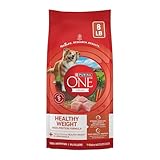
- Weight control dog food made with high-quality protein sources, including real turkey as the number 1 ingredient, to promote strong muscles including a healthy heart
- Four antioxidant sources in this wholesome dog food for immune support for dogs, and natural glucosamine sources support dog joint health
- Deliciously crunchy dog kibble and tender meaty morsels combine for a taste and texture dogs love and work with added calcium for a premium dog food that supports strong teeth and healthy gums
- Purina ONE Plus Healthy Weight High-Protein Formula dog food features omega-6 fatty acids, vitamins and minerals to support a shiny, healthy skin and coat for dogs
- Adult dog food is crafted in Purina-owned U.S. facilities and supplies 100 percent complete and balanced nutrition for adult dogs with 0 percent fillers, meaning every ingredient has a purpose
- Disorientation or getting stuck in familiar places
- Nighttime waking, restlessness or pacing
- Reduced interaction with family
- New anxiety or altered responses to familiar people and surroundings
- Loss of previously reliable house training
- Changes in sleep–wake patterns or daily activity
Those signs are not specific to CCD. Pain, sensory decline, urinary or metabolic disease, organ dysfunction, medication effects and intracranial disease can produce similar behavior. A dog that is heavy and confused may have two concurrent conditions, one condition affecting both mobility and behavior, or a problem unrelated to body fat.
When behavior changes warrant a veterinary appointment
Arrange an examination when an older dog develops new disorientation, sleep–wake changes, anxiety, pacing, reduced social interaction or house-training accidents. Seek prompt advice as well when weight gain is substantial or when excess weight is accompanied by reduced mobility, exercise intolerance or breathing difficulty. Do not assume that a behavior change is “just aging” or “just the weight.”
Rank #3
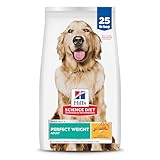
- Breakthrough formula made to positively impact the unique cell function of overweight pets, and support healthy metabolism and body weight
- Safe and effective weight loss with visible results within 10 weeks
- Made with natural ingredients
- Made in the USA with global ingredients you can trust
- Hill's Pet Nutrition is the US Veterinarians' #1 recommended brand
AAHA’s recommended CCD workup is a diagnosis-of-exclusion process:
- History: Record when the behavior began, how it is changing, sleep, appetite, thirst, urination, medications, pain signs and daily function.
- Physical examination: Have the veterinarian assess weight trend, BCS, muscle-condition score, joints, pain, vision, hearing and other systems.
- Neurologic examination: Look for deficits that could indicate a problem other than uncomplicated age-related cognitive change.
- Laboratory testing: AAHA recommends biochemical evaluation and urinalysis to identify metabolic, organ or urinary disease.
- Advanced imaging when indicated: Magnetic resonance imaging (MRI) may be recommended when the history or examination raises concern for structural intracranial disease.
How to help a dog lose weight without sacrificing muscle
Start with an individualized assessment
Ask the veterinary team to document the dog’s weight trend, BCS, muscle-condition score, current food, treats, supplements, activity, mobility and quality of life. APOP cautions against relying on BCS alone. The target should reflect the dog’s ideal weight, health conditions, lifestyle and ability to exercise.
Rank #4

- Weight control dog food made with high-quality protein sources, including real turkey as the number 1 ingredient, to promote strong muscles including a healthy heart
- Four antioxidant sources in this wholesome dog food for immune support for dogs, and natural glucosamine sources support dog joint health
- Deliciously crunchy dog kibble and tender meaty morsels combine for a taste and texture dogs love and work with added calcium for a premium dog food that supports strong teeth and healthy gums
- Purina ONE Plus Healthy Weight High-Protein Formula dog food features omega-6 fatty acids, vitamins and minerals to support a shiny, healthy skin and coat for dogs
- Adult dog food is crafted in Purina-owned U.S. facilities and supplies 100 percent complete and balanced nutrition for adult dogs with 0 percent fillers, meaning every ingredient has a purpose
Use a veterinary feeding plan
Do not adopt a calorie target from a general article. AAHA’s 2021 guidelines report a recent mean canine weight-loss intake of 63 ± 10.2 kcal/kg0.75, but explicitly state that plans must be based on ideal weight and adjusted to the individual dog’s lifestyle and response. Your veterinarian may change the food, portion, treat allowance or feeding schedule as the dog’s weight and muscle condition change.
The Tool Desk
Outbyte PC Repair FREEClear out junk files and repair common Windows errorsFree Scan →Outbyte Driver Updater FREEScan for outdated or missing drivers - takes under a minuteDriver Scan →Make activity safe and achievable
Exercise should match joint comfort, cardiovascular ability, age and any underlying disease. A gradual activity or rehabilitation plan can improve function while avoiding pain or injury. Weight loss should preserve lean tissue, not simply produce a lower scale reading.
Best Value

- High protein formula, with real Chicken as the first ingredient
- Fortified with live probiotics to support digestive and immune health
- Used to be known as FOCUS Weight Management Large Breed Formula
- Optimal protein-to-fat ratio helps maintain muscle mass during weight loss
- Natural prebiotic fiber, sourced from wheat bran, helps promote digestive health
Make feeding easier to control
AAHA notes that “Puzzle toys and automated feeders continue to be invaluable resources to achieve successful weight loss via improved ease of plan implementation by owners.” These tools can slow eating, provide measured portions and add mental engagement, but they work best as part of the veterinarian’s calorie and monitoring plan.
Independent reader supportYour contribution helps us test, update, and keep practical guides available for everyone.What to monitor together
Keep a simple record for veterinary follow-up. Bring changes rather than isolated observations:
- Body weight and the direction of change
- BCS and muscle-condition score
- Food, treats, chews and supplements, including amounts
- Walking tolerance, stairs, grooming and other daily functions
- Sleep, nighttime pacing, anxiety, interaction and house training
- Appetite, thirst, urination, bowel habits and medication changes
- Overall quality of life for the dog and household
Tracking both physical and cognitive signs helps the veterinarian determine whether a weight plan is working, whether muscle is being maintained and whether a separate neurologic or medical investigation is needed.
PC Slower Than It Used to Be?
A free scan shows the junk files, broken settings and background clutter dragging Windows down - then fixes them in one click.Free scan · Windows 10 & 11Outdated Drivers Are Slowing You Down
One free scan finds every outdated or missing driver and matches the right update for your exact hardware.Free scan · exact hardware matchQuick Recap
How to interpret the two issues without jumping to conclusions
| Question | What is established | Practical response |
|---|---|---|
| Does obesity cause dementia in dogs? | Direct canine causation has not been established. | Do not diagnose CCD from body condition; evaluate new behavior clinically. |
| Is a high BCS itself a disease diagnosis? | No. APOP requires adiposity, abnormality and plausible attribution for clinical obesity. | Assess function, organs, muscle and quality of life. |
| What is the strongest evidence for CCD? | AAHA describes it as age-related and reports impairment in approximately 14–22.5% of dogs over 8. | Use a diagnosis-of-exclusion workup. |
| What should happen if a dog is both heavy and showing cognitive signs? | Both concerns can be addressed in parallel. | Book a veterinary assessment and begin a monitored, individualized weight plan. |
Product prices and availability are accurate as of the date/time indicated and are subject to change. Any price and availability information displayed on Amazon at the time of purchase will apply.




