In laboratory studies, migratory grasshoppers acquired vesicular stomatitis virus (VSV), and one of three cattle in an experiment developed the disease after eating infected grasshopper cadavers. Whether this pathway contributes to natural livestock outbreaks—and how often—has not been established. The findings concern a particular grasshopper species and experimental conditions, not grasshoppers generally.
What virus is involved?
The best-documented example is vesicular stomatitis virus (VSV), which can cause painful blisters in cattle, horses, and other hoofed mammals. Infected animals may salivate heavily and shed virus; direct animal-to-animal spread can also occur. Outbreaks can lead to quarantines, but this evidence is not a current outbreak alert. USDA Agricultural Research Service (USDA-ARS) describes the disease and the experimental grasshopper findings.
How could grasshoppers become part of the transmission cycle?
Two laboratory studies examined related parts of a possible VSV cycle. They did not document one complete transmission chain unfolding in a pasture.
Virus on rangeland plants
In 2009, researchers exposed 14 rangeland plant species to VSV and tested whether infectious virus remained. For some tested species, viable virus was recovered from as many as 73% of samples 24 hours after exposure. Grasshoppers fed contaminated western wheatgrass or needle and thread had infection rates of 44–50% when assessed three weeks later. These measurements show plant-to-grasshopper acquisition under the experimental conditions; they are not estimates of infection during ordinary grazing. Drolet, Stuart, and Derner, Applied and Environmental Microbiology (2009).
#1 Best Overall

- PROTECTS ANIMALS - This water-based formula protects horses, beef & dairy cattle, goats, sheep, swine, poultry, & dogs. It can be sprayed directly on livestock when used as directed.
- BUG KILLER - Our product controls horn flies, face flies, house flies, horse flies, fruit flies, stable flies, & deer flies. It also controls species of mosquito, gnat, poultry lice, mite, flea, tick, cockroach, spider, cricket, ant, & more.
- INDOOR & OUTDOOR USE - Horse & Stable Fly Spray can be used indoors for spot applications only. Outdoor applications include lawn & soil treatment & around building foundations to prevent insect infestations.
- LONG-LASTING RESULTS - Horse & Stable Fly Spray's fast-acting formula will keep working up to 4 weeks.
- READY TO USE - This product is conveniently ready to use when it arrives. The spray nozzle makes this product easy to deploy.
Grasshoppers and cattle
A separate 2003 experiment tested a chain involving migratory grasshoppers, Melanoplus sanguinipes. Of the grasshoppers fed VSV from cell culture, 62% became infected, with virus titers reaching 40,000 times the inoculative dose. When grasshoppers cannibalized infected grasshopper cadavers, 40% became infected, and virus amplified up to 1,000-fold.
One of three cattle that consumed infected grasshopper cadavers developed typical vesicular stomatitis and shed virus in its saliva. Grasshoppers fed saliva from that cow had a 15% infection rate. These results support biological possibility; the small experimental groups do not show how often this full sequence occurs in nature. Nunamaker et al., Journal of Medical Entomology (2003).
Rank #2
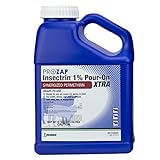
- Ready-To-Use as a pour-on, spray or mist
- Contains 1% Permethrin and 1% PBO
- For use on lactating and non-lactating dairy cattle, beef cattle and calves
- Controls lice, horn flies, face flies, horse flies, stable flies, house flies, mosquitoes and black flies
- Mix with mineral oil for use with backrubbers
What the evidence does—and does not—show
- Shown in experiments: VSV can remain infectious on some tested plants, be acquired by the studied grasshoppers, and infect cattle that consume infected grasshopper cadavers.
- Not established: whether this route occurs often enough in the field to materially contribute to natural outbreaks. The 2003 study authors wrote, “Field studies will be required to show these findings are relevant to the natural epidemiology of VSV.”
- Species and exposure matter: the experiments focused on Melanoplus sanguinipes, not every grasshopper species. The proposed route involves ingestion and contaminated material; it is not evidence that ordinary grasshopper bites transmit VSV.
- Risk figures are not field-risk estimates: the reported percentages and virus levels come from laboratory experiments, and the cited sources establish no contemporary field incidence or population-level livestock risk.
Does this mean grasshoppers are a common cause of livestock infection?
No such conclusion is supported by these studies. They demonstrate possible transmission steps in controlled experiments, but do not establish the importance or frequency of the grasshopper pathway during natural outbreaks. USDA-ARS summarized the findings as supporting the hypothesis that “grasshopper-cattle-grasshopper transmission of VSV is possible”—a statement of possibility, not proof of a common field route.
Independent reader supportYour contribution helps us test, update, and keep practical guides available for everyone.Should ranchers use pesticide to prevent this route?
No. A 2009 laboratory assay found that contact with a commonly used grasshopper pesticide completely inactivated VSV. USDA-ARS cautioned that using that pesticide or a similar virus-inactivating spray for this purpose would require additional U.S. Environmental Protection Agency registration. This historical assay is not an approved pasture-treatment recommendation. USDA-ARS’s summary provides that qualification.
Recommended Free Tools
Quick Recap
Best Value

- For Barn Fly Control and Pasture Insect Management: Suitable for stable, turnout, and pasture environments as a regular equine fly spray and mosquito repellent spray for consistent fly protection and horse care
- Horse Fly Spray & Equine Insect Control with Permethrin Concentrate: Repel-X pe helps protect horses against barn flies, gnats, mosquitoes, ticks, & lice as a concentrated horse fly repellent that mixes with water for economical, ready-to-use spray
- Multi-purpose horse fly repellent & flea and tick spray for dogs that also helps protect against flies & mosquitoes. Great for outdoor and farm dogs.
- No Mixing Required, Just Spray and Go: Repel-X Ready-to-Use delivers full equine fly and mosquito spray protection straight from the bottle and refills with Repel-X pe concentrate
- Use on Horses, Dogs or Livestock or Around the Barn and Home: Ready-to-use Farnam Fly Spray for dogs and horses, or use as a house, barn, and stable fly repellent spray to help reduce flying pests in your animals' environment
Rank #4

- Controls Flies & Lice: CyLence Pour-On Insecticide controls face flies, horn flies, biting lice and sucking lice on beef and dairy (including lactating)
- Ready-To-Use: There's no mixing required and only a small amount of material is required per treatment
- Use Any Time of Year: Apply any time of year and on cattle of all ages and sizes
- Use as Directed: Apply the product directly along the top of the back and top of the head of the animal; See label for complete directions for use and application instructions
- Contains one (1) 1 pint bottle of CyLence Pour-On Cattle Insecticide (also available in a 6 pint jug)
Rank #3
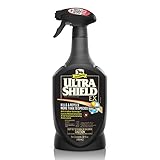
- USA-MADE FORMULA: Kills & repels 70+ species of insects: flies, mosquitoes, ticks, gnats, ants & more
- WEATHERPROOF: Protection up to 17 days with UltraBond Technology; ideal for the most challenging conditions
- NO MIXING: Ready to use, water-based formula for horses, ponies, dogs, barns, or on premise
- BUGS & SUN: Advanced formula contains protection against insects plus multiple sunscreens and coat conditioners
- AWARD WINNING: Consistently voted The Chronicle of the Horse Reader's Choice for favorite fly sprays multiple years running
Product prices and availability are accurate as of the date/time indicated and are subject to change. Any price and availability information displayed on Amazon at the time of purchase will apply.




