Can you farm fish at home? Yes, but the realistic version is a small recirculating aquaculture system or aquaponics setup—not an unattended aquarium. Home fish farming requires a tank, filtration, aeration, feed, water testing, temperature control when needed, legal species, and backup plans for power or equipment failure.
A useful way to think about the project is as a small livestock-and-water-treatment system. Fish are living animals whose survival depends on stable water chemistry and oxygen, while aquaponics adds plants that use some nutrients from fish waste.
As an Amazon Associate I earn from qualifying purchases.
Key takeaways
- A small tank-based recirculating aquaculture system or aquaponics system can raise fish at home, but neither system is unattended.
- Aquaponics adds vegetables to a fish-and-water-treatment loop; fish-only recirculating systems are usually more direct when the goal is fish production alone.
- Ammonia, nitrite, nitrate, pH, temperature, and dissolved oxygen are the core water-quality measurements for a home system.
- Tilapia are popular warm-water fish, but Oklahoma State University Extension says tilapia have limited growth below 68°F.
- Fish species, transport, stocking, possession, and release rules vary by location, so check state and local authorities before buying live fish.
- A small home system is best treated as supplemental food production unless a documented production plan supports a larger claim.
What does fish farming at home involve?
Home fish farming means keeping aquatic livestock in a managed production system rather than simply putting fish in an aquarium. A practical home setup needs a tank or reservoir, circulation, filtration, aeration, feed, water testing, and a plan for equipment or power failure.
Do these 3 things before closing this tab:
1Fix the driver behind crashes, sound loss and screen glitches2Repair Windows errors before they cause bigger problems3Scan for outdated or missing drivers - takes under a minuteUSDA APHIS describes aquaculture containment options including ponds, tanks, raceways, and recirculating aquaculture systems. Aquaculture covers the breeding, rearing, and harvesting of fish and other aquatic organisms for food and other purposes; the agency’s Homegrown Aquaculture guidance is a useful starting point for the regulatory and husbandry issues involved.
#1 Best Overall
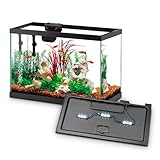
- PERFECT FOR BEGINNERS AND SEASONED AQUATIC HOBBYISTS: User-friendly setup designed for quick aquarium assembly and maintenance.
- COMPLETE STARTER KIT: Includes a 10-gallon glass rectangle aquarium, low profile hood with cool white LED lighting and feeding door, SmartClean filtration, EcoRenew cartridge, preset heater 50W, thermometer, fish net, premium fish food and a water conditioner.
- SIMPLE MAINTENANCE: SmartClean internal power filter provides quick and easy water changes to help improve water quality.
- IDEAL TEMPERATURE: Preset heater keeps your aquarium temperature at a constant 78 degrees, appropriate for most tropical fish.
- DURABLE GLASS CONSTRUCTION: Ensures clarity and durability, providing a safe environment for your fish. Made from high-quality materials for long-lasting use.
For a home or small-property project, “farming” usually means one of three things:
| Approach | Primary output | Where it fits | Main management concern |
|---|---|---|---|
| Fish-only tank or indoor RAS | Fish | Indoor rooms, garages, basements, or other protected spaces | Keeping filtration, oxygen, and water chemistry stable |
| Aquaponics | Fish and soil-free plants | Indoor systems, greenhouses, or suitable outdoor spaces | Balancing fish biomass, feed, bacteria, plants, oxygen, and water flow |
| Backyard pond | Fish, usually seasonally or ornamentally | Yards and properties with suitable climate and containment | Predators, runoff, temperature swings, escapes, and stocking rules |
How does home aquaponics work?
Home aquaponics circulates water between fish, biological filtration, and soil-free plant-growing areas. Fish waste and uneaten feed add organic load; beneficial bacteria convert ammonia first into nitrite and then nitrate; plants can use some nitrate while filtration and solids management help keep the water suitable for fish.
USDA describes home aquaponics as a closed-loop arrangement in which fish and soil-free plants are grown together. The USDA National Agricultural Library’s home-aquaponics project explains the household-scale concept, while Oklahoma State University Extension provides practical material on small-scale aquaponics principles and nitrification and maintenance.
Aquaponics can be attractive when the goal includes vegetables because one water loop supports two forms of production. Aquaponics is not a substitute for filtration, testing, aeration, feeding, cleaning, or observation. Overfeeding or adding too many fish can load the system faster than bacteria, plants, and mechanical filtration can process the waste.
A fish-only recirculating aquaculture system may be the more straightforward choice when the only objective is raising fish. USDA Agricultural Research Service explains that recirculating aquaculture treats used water, captures waste, and returns treated water to the fish-production system, allowing systems to operate in many locations. In the agency’s words, “The recirculating aquaculture systems are designed so that the water used to rear the fish can exit the system, be treated, capture waste, and then be restored to a quality to where it can be returned to the fish production system,” said Caird Rexroad III, USDA Agricultural Research Service National Program Leader, in the agency’s article on sustainable fish farming.
If a ready-made platform suits your space, a small aquaponics kit can simplify the physical layout. A kit is only the hardware platform: the operator still has to cycle the biological filter, test water, provide aeration, choose legal and suitable fish, control stocking, and maintain the system.
What equipment does a home fish farm need?
A basic home system normally needs the following equipment and operating supplies:
- Tank or reservoir: Use a container made from materials appropriate for aquatic use and sized for the intended species, adult fish size, and total biomass.
- Pump and plumbing: Water must move reliably through the filter, grow bed, or other treatment stages.
- Biological filtration: Provide suitable media or a media bed where nitrifying bacteria can establish.
- Mechanical filtration or solids management: Remove suspended waste and uneaten feed before solids accumulate or decompose in the wrong place.
- Aeration: An air pump, air stones, or another oxygenation method is usually essential. Penn State Extension’s introduction to aquaculture identifies adequate oxygen as critical in high-density recirculating systems.
- Water-quality test equipment: Test ammonia, nitrite, nitrate, pH, temperature, and dissolved oxygen as appropriate for the system.
- Species-appropriate feed: Feed must match the fish and production purpose; ornamental feed should not automatically be treated as suitable for food fish.
- Temperature control: Use heating or cooling only when the chosen species and local conditions require it.
- Covers or netting: Protect fish from pets and wildlife and reduce jumping or escape risk.
- Emergency equipment: Keep a plan for power interruptions, pump failure, leaks, oxygen loss, and emergency water changes.
A water test kit for aquaponics is one of the most useful recurring tools because fish can be in danger before water looks visibly dirty. An aquarium air pump or backup aeration kit is also a sensible resilience purchase when a system depends on electrically powered oxygenation.
Why is water quality the hardest part?
Water quality is the central determinant of fish health because fish continuously live in the water that carries their oxygen, waste, and chemical exposure. Oklahoma State University Extension recommends monitoring ammonia, nitrite, nitrate, pH, temperature, and dissolved oxygen in aquaponics systems; poorly managed conditions can stress fish and plants, contribute to disease, reduce growth, or cause death.
The nitrogen cycle is easier to manage when its sequence is clear:
Rank #2

- 【𝐀 𝐅𝐫𝐢𝐞𝐧𝐝𝐥𝐲 𝐒𝐭𝐚𝐫𝐭𝐞𝐫 𝐊𝐢𝐭 𝐟𝐨𝐫 𝐅𝐢𝐬𝐡𝐤𝐞𝐞𝐩𝐢𝐧𝐠】Everything you need to start a thriving aquarium is right here: a crystal-clear fish tank, a multi-stage filtration system, a heater, a digital thermometer, a LED light with Timer, a water changer, and a net. It eliminates worries about water quality, temperature, or light, making it the perfect gift for a kid, a beginner, or anyone desiring the serenity of nature without the hassle.
- 【𝐇𝐢𝐝𝐝𝐞𝐧 & 𝐏𝐫𝐨𝐭𝐞𝐜𝐭𝐞𝐝】eWonLife small aquarium features a hidden multi-storage design that neatly tucks away all essential gear, including heaters and filters. This gives you a clutter-free view and allows your curious fish to explore happily, fearlessly, and free from harm from the pump
- 【𝐌𝐨𝐫𝐞 𝐅𝐢𝐥𝐭𝐞𝐫 𝐌𝐞𝐝𝐢𝐚, 𝐅𝐞𝐰𝐞𝐫 𝐖𝐚𝐭𝐞𝐫 𝐂𝐡𝐚𝐧𝐠𝐞𝐬】After the initial sponge filter, we've added ceramic rings and quartz balls to create a paradise for beneficial bacteria. Think of them as a tiny, powerful cleanup crew that constantly removes invisible toxins from fish waste. This creates a clear and stable environment where your aquatic friends can thrive, and far less work for you
- 【𝟕𝟖°𝐅 𝐂𝐨𝐧𝐬𝐭𝐚𝐧𝐭 𝐓𝐞𝐦𝐩𝐞𝐫𝐚𝐭𝐮𝐫𝐞 & 𝐄𝐚𝐬𝐲 𝐑𝐞𝐚𝐝𝐢𝐧𝐠𝐬】The included heater creates a stable, ideal 78°F world for your Betta fish and tropical fish to thrive. The clear LED thermometer instantly confirms the perfect conditions, so you can sit back and enjoy watching your fish swim happily
- 【𝐂𝐨𝐦𝐩𝐚𝐜𝐭 & 𝐂𝐫𝐲𝐬𝐭𝐚𝐥-𝐂𝐥𝐞𝐚𝐫 𝐃𝐞𝐬𝐤𝐭𝐨𝐩 𝐀𝐪𝐮𝐚𝐫𝐢𝐮𝐦】Made from high-clarity, durable plastic, this lightweight tank (15"L x 7.9"W x 8.3"H) fits perfectly on any desk or balcony. The 3.5 gallon swimming space is an ideal home for a Betta, small schooling fish (like Cardinal Tetra or Zebra Danios), and ornamental shrimp (such as Red Cherry or Blue Velvet)
- Fish excrete waste, and uneaten feed adds further organic material.
- Nitrifying bacteria convert toxic ammonia into nitrite.
- Other nitrifying bacteria convert nitrite into nitrate.
- Plants can absorb some nitrate, while filtration and water management handle the remaining load.
- Testing reveals whether the biological system is keeping pace before severe distress becomes obvious.
The system must be biologically established before it is heavily stocked. Fish biomass, feed rate, water volume, temperature, filtration capacity, plant uptake, and oxygen availability all interact. There is no honest universal stocking density or fixed water-change schedule for every home system: the appropriate limit depends on species, tank volume, filtration, temperature, feed rate, and target harvest size.
Quick wins for a faster PC:
Clear out junk files and repair common Windows errorsFree Scan →Scan for outdated or missing drivers - takes under a minuteDriver Scan →Repair Windows errors before they cause bigger problemsFix Now →Oxygen deserves special attention. A pump failure, blocked airline, failed air stone, or power outage can become an emergency quickly, particularly in a densely stocked system. Check that water still moves and fish are behaving normally, and design a backup response before adding livestock.
Which fish can you raise indoors?
The best indoor fish depends on legal availability, adult size, water temperature, oxygen demand, feeding behavior, intended use, and the equipment you can operate reliably. Oklahoma State University Extension lists tilapia, trout, catfish, bass, goldfish, koi, and pacu among fish commonly used in aquaponics, while emphasizing that fish choice depends on the purpose of the system and the water temperature.
| Fish | Typical fit | Important constraint | Food-production note |
|---|---|---|---|
| Tilapia | Warm-water aquaponics and food-fish systems | Oklahoma State University Extension says growth is limited below 68°F | Check species legality and maintain warm enough water |
| Trout | Purpose-built cold-water systems | Needs cold, highly oxygenated water; demanding in a warm home | Not the default beginner fish for a typical heated indoor setup |
| Catfish | Suitable systems with enough space and oxygen | Adult size, oxygen needs, and feeding behavior must be planned | Juvenile suitability does not guarantee adult suitability |
| Bass | Suitable larger or purpose-built systems | Size, tank dimensions, oxygen, and feeding behavior matter | Requires a documented plan rather than casual stocking |
| Goldfish or koi | Ornamental systems and learning projects | Can grow large and should not be assumed to be food-fish substitutes | Use only where ornamental-fish goals are appropriate |
| Pacu | Specialized systems where legal and properly sized | Potential adult size and local restrictions require careful checking | Not a default choice for a small beginner system |
Are tilapia the easiest fish to farm at home?
Tilapia are often a practical warm-water choice, but tilapia are not automatically the easiest or legal choice for every home. Tilapia have limited growth below 68°F according to Oklahoma State University Extension, so a cool garage, basement, or winter greenhouse may need heating or a different species.
Before buying tilapia, check state wildlife, agriculture, and aquaculture authorities for rules on possession, transport, sale, propagation, and release. Tilapia species can be restricted in some jurisdictions, and the U.S. Fish and Wildlife Service’s ecological risk screening material for banded tilapia illustrates why species and location matter.
Free tools Windows power users keep installed
One-click scans. No signup required.
An adjustable aquarium heater can be useful for a warm-water species such as tilapia when the room cannot maintain the required temperature. A heater is not a universal recommendation: adding heat to a cold-water species or an already warm system can create a new problem.
Can a home aquaponics system feed a family?
A home aquaponics system can produce edible fish and vegetables, but a small setup should normally be described as supplemental food production rather than a dependable replacement for a family’s seafood supply.
Output depends on tank volume, species, stocking density, temperature, feed, growing time, harvest size, mortality, filtration, oxygen, and daily management. The USDA National Agricultural Library’s fish-gardening project frames household aquaculture around supplementing diets with home-grown animal protein and fresh vegetables. The project does not establish that a simple three-drum or small-tank design will feed a family year-round.
A home fish farm is not free food. Operating costs include fish feed, electricity, pumps, aeration, heating or cooling when needed, test supplies, replacement parts, water, cleaning, and the operator’s labor. USDA APHIS reports approximately $2 billion in U.S. farm-gate aquaculture value in 2022 on its 2025 Homegrown Aquaculture page; that national industry figure is not a home-system yield, cost, or payback estimate.
Recommended Free Tools
How many fish can you raise in a 100-gallon tank?
There is no responsible universal fish count for a 100-gallon tank. The safe number depends on species, adult size, water temperature, filtration, aeration, feed rate, plant uptake, water chemistry, and the size at which fish will be harvested.
Rank #3

- Compact: Dimension: 7.9"x5.9"x5.9"; 1 Gallon tank; ideal for small spaces, aquarium beginners caring for a single betta, a few shrimp, snails, or a tiny goldfish. Also works as a temporary hospital tank, quarantine tank, or desktop decor (After deducting the filter part, the actual usable volume is approximately 0.8 gal and it will further decrease after adding substrate)
- Customizable Lighting: features a 3-color LED hood with 10 adjustable brightness levels to showcase your fish and tank décor
- Self-Cleaning Filtration: Hidden filter keeps tank clean for easier maintenance. Note: Clean filter sponge and pump regularly to avoid clogging; regular water changes are required — this small tank does not support zero-maintenance use
- Thoughtful Design: its top feeding hole allows for easy feeding without removing the lid; four silicone feet for stability and quiet operation
- Complete Starter Kit: 1x 1 gallon Fish Tank, 1x Filter Sponge, 1x Adjustable Water Pump, 1x LED Hood (Note: The light requires a power transformer (not included) for use. Compatible transformers include 5V 0.5A, 5V 1A, 5V 1.5A, and 5V 2A)
Do not calculate capacity from tank volume alone or stock according to the size of juvenile fish at purchase. Start conservatively, cycle and test the system, account for adult size, and increase biomass only when filtration and measured water quality show that the system can handle the additional load. If ammonia or nitrite rises, fish show oxygen stress, or solids accumulate, reduce loading and correct the underlying problem rather than adding more equipment blindly.
Independent reader supportYour contribution helps us test, update, and keep practical guides available for everyone.What legal and biosecurity checks are required?
Legal requirements vary by state, province, municipality, species, and intended activity. Before acquiring live fish, check whether the rules cover possession, interstate transport, importation, sale, propagation, private-pond stocking, disease certification, exotic species, invasive species, or release into private or public waters.
U.S. Fish and Wildlife Service materials show that private-pond permits, fish transport, stocking, and aquatic-nuisance-species controls can be jurisdiction-specific. State-level plans, such as the agency’s Idaho fisheries management plan and North Carolina aquatic nuisance species plan, should be treated as examples of why local verification is necessary, not as a single nationwide rule.
Use a reputable, legally operating hatchery; retain purchase and health records; ask what disease documentation applies; and never release cultured fish into natural waters. USDA APHIS emphasizes aquatic-livestock health management and identifies pathogen entry and movement as important aquaculture risks. A regional hatchery may be a future source of fingerlings, but availability, shipping geography, legal status, and health documentation must be verified before purchase.
Is fish from home aquaponics safe to eat?
Fish from home aquaponics can be part of a safe food system only when the water, equipment, fish handling, and cooking practices are managed appropriately. A recirculating system is not sterile, and warm, nutrient-rich water can support bacterial growth.
- Use clean, food-safe tanks, plumbing, grow media, and other materials.
- Keep pets, wildlife, manure, and dirty tools away from production areas.
- Wash hands before handling fish, plants, feed, and harvest equipment.
- Prevent dirty system water from splashing onto edible plant surfaces.
- Clean and sanitize hydroponic containers and associated parts as appropriate; University of Minnesota Extension’s small-scale hydroponics guidance discusses this sanitation issue.
- Follow basic garden hygiene and contamination prevention practices described by Penn State Extension.
- Handle harvested fish promptly and cook fish to 145°F (63°C), the temperature recommended by Penn State Extension’s fish care and handling guidance.
How should a beginner start?
- Choose the objective. Decide whether the priority is edible fish, vegetables, ornamental fish, education, or a hobby. The answer determines the system and species.
- Confirm local rules first. Identify legal species, permits, transport requirements, stocking restrictions, and any disease documentation before ordering fish.
- Choose the environment. An indoor system offers more control but occupies living or utility space and depends on electricity. A pond offers more volume but exposes fish to weather, predators, runoff, and escapes.
- Design for adult fish. Plan tank dimensions, filtration, oxygen, temperature, and harvest size around mature fish rather than the small juveniles sold by a supplier.
- Build and leak-test without fish. Verify plumbing, drains, covers, electrical safety, and access for cleaning.
- Establish biological filtration. Cycle the system and use water testing to confirm that the biofilter is processing waste before adding a full intended load.
- Add equipment redundancy. Prepare backup aeration and a response for power loss, pump failure, leaks, and water-quality emergencies.
- Stock conservatively. Add a manageable number of legally obtained fish, feed carefully, and observe water measurements and fish behavior.
- Keep records. Record feed, tests, temperature, mortalities, maintenance, treatments, purchases, and harvests. Records make trends and failures easier to diagnose.
The practical verdict is simple: start with a low-biomass, well-tested system and treat fish as livestock whose survival depends on daily management. A small aquaponics kit can make construction easier, but reliable fish farming comes from water-quality control, oxygen, legal stocking, and a contingency plan—not from the kit alone.
Frequently Asked Questions
Can I raise fish in my backyard?
Yes, you can raise fish in a backyard pond, but ponds have greater exposure to predators, runoff, temperature swings, escapes, and local stocking rules than indoor tanks. Check local regulations and choose a species suited to the climate and pond size.
The Tool Desk
Outbyte PC Repair FREEClear out junk files and repair common Windows errorsFree Scan →Outbyte Driver Updater FREEFix the driver behind crashes, sound loss and screen glitchesFind Drivers →How many fish can I raise in a 100-gallon tank?
A 100-gallon tank has no universal safe fish count. Capacity depends on species, adult size, filtration, aeration, temperature, feed rate, plant uptake, and harvest size, so stocking should be conservative and guided by water testing rather than tank volume alone.
Is aquaponic fish safe to eat?
Aquaponic fish can be safe to eat when operators use food-safe materials, prevent contamination, handle fish properly, and cook fish to 145°F (63°C). A recirculating system is not sterile, and ornamental fish feed or chemicals should not automatically be considered suitable for food production.
Can home aquaponics replace buying fish?
A small home aquaponics system can supplement a family’s food with fish and vegetables, but it should not be assumed to replace regular seafood purchases. Output depends on species, biomass, tank volume, feed, temperature, system design, mortality, and daily management.
The Bottom Line
Bottom line: Yes, you can farm fish at home, most realistically in a small recirculating tank or aquaponics system. The project is feasible but not maintenance-free: choose a legal species, design for adult size, cycle the biofilter, test water, protect oxygen, and regard the harvest as supplemental food unless your documented system output proves otherwise.
What’s actually slowing this PC down?
Pick the symptom - the matching free tool is one click away.
Quick Recap
Product prices and availability are accurate as of the date/time indicated and are subject to change. Any price and availability information displayed on Amazon at the time of purchase will apply.




